eu-charter

Euroopa Liidu põhiõiguste harta

Artikkel 26 - Puuetega inimeste integreerimine ühiskonda

Artikkel 26 - Puuetega inimeste integreerimine ühiskonda

Liit tunnustab ja austab puuetega inimeste õigust saada kasu meetmetest, mille eesmärk on tagada nende iseseisvus, sotsiaalne ja tööalane integratsioon ning osalemine ühiskonnaelus.

Selgitused

  • Text:

    Käesolevas artiklis sätestatud põhimõte põhineb Euroopa sotsiaalharta artiklil 15 ning toetub samuti töötajate sotsiaalseid põhiõigusi käsitleva ühenduse harta punktile 26.

    Source:
    Euroopa Liidu Teataja C 303/17 - 14.12.2007
    Preamble - Explanations relating to the Charter of Fundamental Rights:
    Käesolevad selgitused valmistati algselt ette Euroopa Liidu põhiõiguste harta koostanud konvendi presiidiumi juhtimisel. Selgitusi ajakohastati Euroopa Konvendi presiidiumi vastutusel, pidades silmas nimetatud konvendi poolt harta tekstis (eelkõige artiklites 51 ja 52) tehtud kohandusi ning liidu õiguse arengut. Kuigi selgitustel endil pole õigusjõudu, on nad harta tõlgendamisel väärtuslikuks vahendiks, mille eesmärk on selgitada harta sätteid.

Pretsedendiõigus

Siseriiklik konstutsionaalne õigus

42 results found

  • Grundgesetz für die Bundesrepublik Deutschland
    Riik:
    Germany

    Artikel 3 (3) (...) Niemand darf wegen seiner Behinderung benachteiligt werden.

  • Konstytucja Rzeczypospolitej Polskiej
    Riik:
    Poland

    Art. 68 (...) 3. Władze publiczne są obowiązane do zapewnienia szczególnej opieki zdrowotnej dzieciom, kobietom ciężarnym, osobom niepełnosprawnym i osobom w podeszłym wieku. (...)Art. 69Osobom niepełnosprawnym władze publiczne udzielają, zgodnie z ustawą, pomocy w zabezpieczaniu egzystencji, przysposobieniu do pracy oraz komunikacji społecznej.

  • Latvijas Republikas Satversme
    Riik:
    Latvia

    110. (..) Valsts īpaši palīdz bērniem invalīdiem, bērniem, kas palikuši bez vecāku gādības vai cietuši no varmācības.

  • Lietuvos Respublikos Konstitucija
    Riik:
    Lithuania

    52 straipsnis. Valstybė laiduoja piliečių teisę gauti senatvės ir invalidumo pensijas, socialinę paramą nedarbo, ligos, našlystės, maitintojo netekimo ir kitais įstatymų numatytais atvejais.

  • Luxembourg / Constitution of the Grand Ducal of Luxembourg
    Riik:
    Luxembourg

    Art. 15. ... (6) Toute personne handicapée a le droit de jouir de façon égale de tous les droits.

  • Magyarország Alaptörvénye
    Riik:
    Hungary

    XV. cikk (SZABADSÁG ÉS FELELŐSSÉG)(…)(2) Magyarország az alapvető jogokat mindenkinek bármely megkülönböztetés, nevezetesen faj, szín, nem, fogyatékosság, nyelv, vallás, politikai vagy más vélemény , nemzeti vagy társadalmi származás, vagyoni, születési vagy egyéb helyzet szerinti kűlönbségtétel nélkül biztosítja.(…)(5) Magyarország külön intézkedésekkel védi a gyermekeket, a nőket, az időseket és a fogyatékkal élőket. XIX. cikk (SZABADSÁG ÉS FELELŐSSÉG) (1) Magyarország arra törekszik, hogy minden állampolgárának szociális biztonságot nyújtson. Anyaság, betegség, rokkantság, özvegység, árvaság és önhibáján kívül bekövetkezett munkanélküliség esetén minden magyar állampolgár törvényben meghatározott támogatásra jogosult.

  • Portugal / Constitution of the Portuguese Republic
    Riik:
    Portugal

    Article 59 (Workers' rights) (2) It is the duty of the State to guarantee the conditions of work, remuneration and rest to which workers are entitled, in particular by: (c) Special protection at work for women during pregnancy and after childbirth, for minors and disabled person and for those engaged in especially strenuous activity or working in unhealthy, toxic or dangerous conditions.
    ...
    Article 71 (Disable citizens) (1) Citizens who have physical or mental disabilities shall enjoy all the rights and be subject to all the duties contained in this Constitution, except to the extent that their disability renders them unfit to exercise or perform them. (2) The State shall implement a national policy for the prevention of disability, and for the treatment, rehabilitation and integration of citizens with disabilities and support for their families, shall educate the community to be aware of its duties of respect for them and solidarity with them, and shall ensure that they enjoy their rights to the full extent subject to the rights and duties of their parents or guardians. (3) The State shall provide assistance to organisations for citizens with disabilities.

  • Preamble to the Constitution of 27 October 1946
    Riik:
    France

    § 11.It shall guarantee to all, notably to children, mothers and elderly workers, protection of their health, material security, rest and leisure. All people who, by virtue of their age, physical or mental condition, or economic situation, are incapable of working, shall have to the right to receive suitable means of existence from society.

  • Préambule de la Constitution du 27 Octobre 1946
    Riik:
    France

    § 11.Elle garantit à tous, notamment à l'enfant, à la mère et aux vieux travailleurs, la protection de la santé, la sécurité matérielle, le repos et les loisirs. Tout être humain qui, en raison de son âge, de son état physique ou mental, de la situation économique, se trouve dans l'incapacité de travailler a le droit d'obtenir de la collectivité des moyens convenables d'existence.

  • Puuetega inimeste sotsiaaltoetuse seadus
    Riik:
    Estonia

    § 1. Seaduse reguleerimisala ja eesmärk.
    (1) Käesolev seadus sätestab puuetega inimeste sotsiaaltoetuste liigid, nende saamise tingimused, nende suurused ning määramise ja maksmise korra.
    (2) Käesoleva seaduse eesmärk on puuetega inimeste iseseisva toimetuleku, sotsiaalse integratsiooni ja võrdsete võimaluste toetamine ning õppimise ja töötamise soodustamine puudest tingitud lisakulude osalise hüvitamise kaudu.

  • Romania / Constitution of Romania
    Riik:
    Romania

    Article 50 Disabled persons shall enjoy special protection. The State shall provide the accomplishment of a national policy of equal opportunities, disability prevention and treatment, so that disabled persons can effectively participate in community life, while observing the rights and duties of their parents or legal guardians.

  • Services and Assistance for the Disabled Act
    Riik:
    Finland

    (3 April 1987/380)Purpose of the ActThe purpose of this Act is to improve the ability of a disabled person to live and act as a member of society in equality with others and to prevent and eliminate the disadvantages and obstacles caused by disability.

  • Slovakia / Constitution of the Slovak Republic
    Riik:
    Slovakia

    Article 38 (1) Women, minors, and persons with disabilities are entitled to an enhanced protection of their health at work, as well as to special working conditions. (2) Minors and persons with disabilities are entitled to special protection in labor relations as well as to assistance in professional training. (3) Details concerning rights listed in paragraphs 1 and 2 shall be laid down by law.

  • Slovenia / Constitution of the Republic of Slovenia
    Riik:
    Slovenia

    Article 52 Disabled persons shall be guaranteed protection and work-training in accordance with the law.Physically or mentally handicapped children and other severely disabled persons have the right to education and training for an active life in society.The education and training referred to in the preceding paragraph shall be financed from public funds.

  • Social Benefits for Disabled Persons Act
    Riik:
    Estonia

    § 1. Scope of application and purpose of Act
    (1) This Act provides the classes of social benefits for disabled persons, the conditions of entitlement thereto, the amounts of benefits and the procedure for the grant and payment thereof.
    (2) The purpose of this Act is to support the ability of disabled persons to cope independently, social integration and equal opportunities and to promote studies and work through partial compensation for the additional expenses caused by the disability.

  • Spain / Constitution of the Kingdom of Spain
    Riik:
    Spain

    Section 49 The public authorities shall carry out a policy of preventive care, treatment, rehabilitation and integration of the physically, sensorially and mentally handicapped by giving them the specialized care they require, and affording them special protection for the enjoyment of the rights granted by this Part to all citizens.

  • Suomen perustuslaki
    Riik:
    Finland

    6 § Yhdenvertaisuus (...) Ketään ei saa ilman hyväksyttävää perustetta asettaa eri asemaan sukupuolen, iän, alkuperän, kielen, uskonnon, vakaumuksen, mielipiteen, terveydentilan, vammaisuuden tai muun henkilöön liittyvän syyn perusteella. 17 § Oikeus omaan kieleen ja kulttuuriin (...) Viittomakieltä käyttävien sekä vammaisuuden vuoksi tulkitsemis- ja käännösapua tarvitsevien oikeudet turvataan lailla. 19 § Oikeus sosiaaliturvaan Jokaisella, joka ei kykene hankkimaan ihmisarvoisen elämän edellyttämää turvaa, on oikeus välttämättömään toimeentuloon ja huolenpitoon.

  • The Fundamental Law of Hungary
    Riik:
    Hungary

    Article XV (Freedom and Responsibility) […] (2) Hungary shall guarantee the fundamental rights to everyone without discrimination and in particular without discrimination on grounds of race, colour, sex, disability, language, religion, political or other opinion, national or social origin, property, birth or any other status. […]
    (5) By means of separate measures, Hungary shall protect families, children, women, the elderly and those living with disabilities.

    Article XIX (Freedom and Responsibility) (1) Hungary shall strive to provide social security to all of its citizens. Every Hungarian citizen shall be entitled to assistance in the event of maternity, illness, invalidity, disability, widowhood, orphanage and unemployment for reasons outside of his or her control, as provided for by an Act. […]

  • To Σύνταγμα της Ελλάδας
    Riik:
    Greece

    Άρθρο 21(2) Πολύτεκνες οικογένειες, ανάπηροι πολέμου και ειρηνικής περιόδου, θύματα πολέμου, χήρες και ορφανά εκείνων που έπεσαν στον πόλεμο, καθώς και όσοι πάσχουν από ανίατη σωματική ή πνευματική νόσο έχουν δικαίωμα ειδικής φροντίδας από το Κράτος. [...] (6)Τα άτομα με αναπηρίες έχουν δικαίωμα να απολαμβάνουν μέτρων που εξασφαλίζουν την αυτονομία, την επαγγελματική ένταξη και τη συμμετοχή τους στην κοινωνική, οικονομική και πολιτική ζωή της Χώρας.

  • Ustav Republike Hrvatske
    Riik:
    Croatia

    Članak 58.
    (2) Posebnu skrb država posvećuje zaštiti osoba s invaliditetom i njihovu uključivanju u društveni život.
    (3)Posebnu skrb država posvećuje zaštiti hrvatskih branitelja, hrvatskih ratnih vojnih invalida, udovica, roditelja i djece poginulih hrvatskih branitelja.

ELi õigus

3 results found

  • Community Charter of the Fundamental Social Rights of Workers (not in force)

    Disabled persons
    26. All disabled persons, whatever the origin and nature of their disablement, must be entitled to additional concrete measures aimed at improving their social and professional integration. These measures must concern, in particular, according to the capacities of the beneficiaries, vocational training,
    ergonomics, accessibility, mobility, means of transport and housing.

  • Directive (EU) 2019/882 of the European Parliament and of the Council of 17 April 2019 on the accessibility requirements for products and services

    .

  • Council Directive 2000/78/EC of 27 November 2000 establishing a general framework for equal treatment in employment and occupation

    Preamble  

    (2) The principle of equal treatment between women and men is well established by an important body of Community law, in particular in Council Directive 76/207/EEC of 9 February 1976 on the implementation of the principle of equal treatment for men and women as regards access to employment, vocational training and promotion, and working conditions(5).

    (3) In implementing the principle of equal treatment, the Community should, in accordance with Article 3(2) of the EC Treaty, aim to eliminate inequalities, and to promote equality between men and women, especially since women are often the victims of multiple discrimination.

    (4) The right of all persons to equality before the law and protection against discrimination constitutes a universal right recognised by the Universal Declaration of Human Rights, the United Nations Convention on the Elimination of All Forms of Discrimination against Women, United Nations Covenants on Civil and Political Rights and on Economic, Social and Cultural Rights and by the European Convention for the Protection of Human Rights and Fundamental Freedoms, to which all Member States are signatories. Convention No 111 of the International Labour Organisation (ILO) prohibits discrimination in the field of employment and occupation.

    (6) The Community Charter of the Fundamental Social Rights of Workers recognises the importance of combating every form of discrimination, including the need to take appropriate action for the social and economic integration of elderly and disabled people.

    (8) The Employment Guidelines for 2000 agreed by the European Council at Helsinki on 10 and 11 December 1999 stress the need to foster a labour market favourable to social integration by formulating a coherent set of policies aimed at combating discrimination against groups such as persons with disability. They also emphasise the need to pay particular attention to supporting older workers, in order to increase their participation in the labour force.

    (10) On 29 June 2000 the Council adopted Directive 2000/43/EC(6) implementing the principle of equal treatment between persons irrespective of racial or ethnic origin. That Directive already provides protection against such discrimination in the field of employment and occupation.

    (11) Discrimination based on religion or belief, disability, age or sexual orientation may undermine the achievement of the objectives of the EC Treaty, in particular the attainment of a high level of employment and social protection, raising the standard of living and the quality of life, economic and social cohesion and solidarity, and the free movement of persons.

    (12) To this end, any direct or indirect discrimination based on religion or belief, disability, age or sexual orientation as regards the areas covered by this Directive should be prohibited throughout the Community. This prohibition of discrimination should also apply to nationals of third countries but does not cover differences of treatment based on nationality and is without prejudice to provisions governing the entry and residence of third-country nationals and their access to employment and occupation.

    Article 1: Purpose

    The purpose of this Directive is to lay down a general framework for combating discrimination on the grounds of religion or belief, disability, age or sexual orientation as regards employment and occupation, with a view to putting into effect in the Member States the principle of equal treatment.

    Article 2: Concept of discrimination

    1. For the purposes of this Directive, the "principle of equal treatment" shall mean that there shall be no direct or indirect discrimination whatsoever on any of the grounds referred to in Article 1.

    2. For the purposes of paragraph 1:

    (a) direct discrimination shall be taken to occur where one person is treated less favourably than another is, has been or would be treated in a comparable situation, on any of the grounds referred to in Article 1;

    (b) indirect discrimination shall be taken to occur where an apparently neutral provision, criterion or practice would put persons having a particular religion or belief, a particular disability, a particular age, or a particular sexual orientation at a particular disadvantage compared with other persons unless:

    (i) that provision, criterion or practice is objectively justified by a legitimate aim and the means of achieving that aim are appropriate and necessary, or

    (ii) as regards persons with a particular disability, the employer or any person or organisation to whom this Directive applies, is obliged, under national legislation, to take appropriate measures in line with the principles contained in Article 5 in order to eliminate disadvantages entailed by such provision, criterion or practice.

    3. Harassment shall be deemed to be a form of discrimination within the meaning of paragraph 1, when unwanted conduct related to any of the grounds referred to in Article 1 takes place with the purpose or effect of violating the dignity of a person and of creating an intimidating, hostile, degrading, humiliating or offensive environment. In this context, the concept of harassment may be defined in accordance with the national laws and practice of the Member States.

    Article 5: Reasonable accommodation for disabled persons

    In order to guarantee compliance with the principle of equal treatment in relation to persons with disabilities, reasonable accommodation shall be provided. This means that employers shall take appropriate measures, where needed in a particular case, to enable a person with a disability to have access to, participate in, or advance in employment, or to undergo training, unless such measures would impose a disproportionate burden on the employer. This burden shall not be disproportionate when it is sufficiently remedied by measures existing within the framework of the disability policy of the Member State concerned.

    Article 9: Defence of rights

    1. Member States shall ensure that judicial and/or administrative procedures, including where they deem it appropriate conciliation procedures, for the enforcement of obligations under this Directive are available to all persons who consider themselves wronged by failure to apply the principle of equal treatment to them, even after the relationship in which the discrimination is alleged to have occurred has ended.

    2. Member States shall ensure that associations, organisations or other legal entities which have, in accordance with the criteria laid down by their national law, a legitimate interest in ensuring that the provisions of this Directive are complied with, may engage, either on behalf or in support of the complainant, with his or her approval, in any judicial and/or administrative procedure provided for the enforcement of obligations under this Directive.

    3. Paragraphs 1 and 2 are without prejudice to national rules relating to time limits for bringing actions as regards the principle of equality of treatment.

Rahvusvaheline õigus

8 results found

Tooted

  • Handbook / Guide / Manual
    8
    October
    2025
    The Entry/Exit System (EES), launching in 2025, will register non-EU nationals crossing the EU’s external borders. This FRA guidance helps border guards apply the new rules in line with EU fundamental rights. It offers practical tips on informing people, collecting biometric data and supporting people with specific needs. Based on fieldwork at 10 border crossing points in 6 Member States, the guidance will ensure rights are respected under the new system. A separate guidance publication for managers accompanies this publication.
  • Handbook / Guide / Manual
    8
    October
    2025
    The Entry/Exit System (EES), launching in 2025, will register non-EU nationals crossing the EU’s external borders. This FRA guidance supports managers overseeing the operation of the new system. It helps them to ensure compliance with EU fundamental rights. It outlines operational considerations: clear communication, dignified biometric data collection and data protection. It also addresses staff training needs. Based on fieldwork at 10 border crossing points in 6 Member States, the guidance will ensure rights are respected under the new system. A separate guidance publication for border guards accompanies this publication.
  • Report / Paper / Summary
    17
    September
    2025
    This report highlights the discrimination, harassment, violence, and non-consensual medical interventions faced by intersex people across 30 European countries, based on responses from nearly 2,000 participants in FRA's 2023 EU LGBTIQ Survey III. It reveals that many intersex individuals also identify as trans, non-binary, gender-diverse and have varied sexual orientations, which further compounds their experiences of discrimination. The report aims to support the development of laws and policies that promote the inclusion and dignity of intersex people.
  • Opinion / Position Paper
    23
    July
    2025
    This position paper examines how the EU can counter the instrumentalisation of migrants while also upholding fundamental rights. Instrumentalisation refers to countries outside the EU using migration to exert political pressure. This position paper defines the phenomenon, provides examples, and outlines legal obligations under EU law. It provides legal analysis and warns that some responses risk undermining fundamental rights at the EU’s external borders, including the right to asylum. To counter instrumentalisation and uphold fundamental rights, the position paper proposes practical measures for Member States to take, such as sanctions, border controls, and cooperation with private operators.
  • Fundamental Rights Report
    10
    June
    2025
    The Fundamental Rights Report 2025 is the annual report of the European Union Agency for Fundamental Rights (FRA). It provides an overview of the state of fundamental rights in the EU and highlights selected critical developments and trends in 2024. The report covers issues such as inclusive elections, gender-based violence, and the implementation of the EU Charter of Fundamental Rights. It presents FRA’s opinions on these developments, setting out the actions that the EU and Member States should take. This annual publication is a valuable resource for those seeking to stay informed about the EU’s shifting landscape of fundamental rights.
  • Opinion / Position Paper
    6
    February
    2025
    This FRA Position Paper outlines the Agency’s position on the creation of 'return hubs' in non-EU countries for migrants who have been ordered to leave the EU. Considering the serious fundamental rights risks connected with running return hubs, this legal analysis presents the conditions that would have to be met for return hubs to respect fundamental rights and comply with EU law. These include setting up agreements with the host countries and creating independent human rights monitoring mechanisms. The position paper does not examine centres in third countries that process asylum applications.
  • Fundamental Rights Report
    5
    June
    2024
    FRA’s Fundamental Rights Report 2024 analyses the year’s developments in fundamental rights. It focuses on the most pressing fundamental rights concerns facing Europe in 2023: the cost-of-living crisis, rights concerns at the EU’s external borders and migration, and threats to democracy. Re-structured, this year’s new approach is a shorter and sharper analysis. It also presents FRA’s opinions on these developments, including a summary of the evidence supporting these opinions.
  • Report / Paper / Summary
    29
    May
    2024
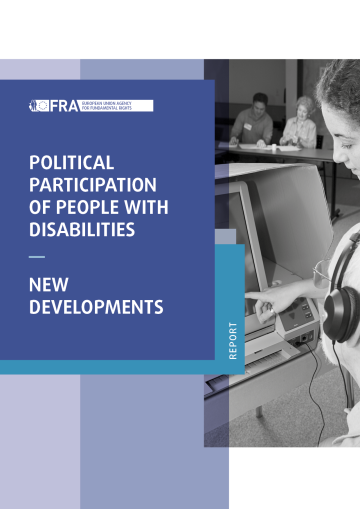
    Ahead of the EU elections, this report explores the political participation of people with disabilities. Although some Member States removed restrictions on the right to vote and to stand for elections, barriers still exist. This report is an update of new developments following FRA’s last report published in 2014. It sets out ways forward to ensure people with disabilities have equal opportunities, in line with the EU Charter of Fundamental Rights and the Convention on the Rights of Persons with Disabilities.
    Lisa F. Young/Adobe Stock
  • Periodic updates / Series
    29
    September
    2023
    Russia’s invasion of Ukraine posed new challenges for the EU. Millions were forced to flee the war. As a result of the scale of people’s displacement, the EU activated for the first time the Temporary Protection Directive (TPD). More than 1.3 million children sought international protection in the EU. This bulletin explores the respect, protection and fulfilment of the fundamental rights of displaced children and ways to safeguard their rights. The third in a series, this bulletin builds on the evidence in FRA’s Bulletin #1 and #2 on the experiences of displaced people seeking safety in the EU.