
Home

User menu

Select site language

  • Български
  • Čeština
  • Dansk
  • Deutsch
  • Ελληνικά
  • English
  • Español
  • Eesti
  • Suomi
  • Français
  • Gaeilge
  • Hrvatski
  • Magyar
  • Italiano
  • Lietuvių
  • Latviešu
  • Malti
  • Nederlands
  • Polski
  • Português
  • Română
  • Slovenčina
  • Slovenščina
  • Svenska

Custom topbar revamped

Home

Search the FRA website

  • Work on rights
    • Asiel, migratie en grenzen
      • Toegang tot asiel
      • Grenzen en informatiesystemen
      • Kinderbescherming
      • Irreguliere migratie, terugkeer en immigratiedetentie
      • Legale migratie en integratie
      • Mensenhandel en arbeidsuitbuiting
    • Gegevensbescherming, privacy en nieuwe technologieën
      • Kunstmatige intelligentie en big data
      • Grenzen en informatiesystemen
      • Gegevensbescherming
      • Onrechtmatige profilering
    • Environmental and social sustainability
      • Business and human rights
      • Climate change and environmental protection
      • Consumer protection
      • Human rights due diligence
      • Just and green transition
    • Gelijkheid, non-discriminatie en racisme
      • Kinderen, jongeren en ouderen
      • Haatmisdrijf
      • Mensen met een handicap
      • Ras en etnische afstamming
      • Godsdienst en overtuiging
      • Roma
      • Geslacht, seksuele geaardheid en gender
    • Rechtspraak, rechten van slachtoffers en justitiële samenwerking
      • Bedrijfsleven en mensenrechten
      • Civiel recht
      • Rechten van de verdachte
      • Justitiële samenwerking en rechtsstaat
      • Beveiliging
      • Slachtofferrechten
    • Steun voor mensenrechtensystemen en mensenrechtenverdedigers
      • Maatschappelijk middenveld
      • Handvest van de grondrechten van de EU
      • Intergouvernementele mensenrechtensystemen
      • Nationale mensenrechtensystemen en -organen
  • Article Het EU - Handvest van de grondrechten
    • Preambule
    • Titel I: Waardigheid
      • Article 1 - De menselijke waardigheid
      • Article 2 - Het recht op leven
      • Article 3 - Het recht op menselijke integriteit
      • Article 4 - Het verbod van folteringen en van onmenselijke of vernederende behandelingen of bestraffingen
      • Article 5 - Het verbod van slavernij en dwangarbeid
    • Titel II: Vrijheden
      • Article 6 - Het recht op vrijheid en veiligheid
      • Article 7 - De eerbiediging van het privé-leven en van het familie
      • Article 8 - De bescherming van persoonsgegevens
      • Article 9 - Het recht te huwen en het recht een gezin te stichten
      • Article 10 - De vrijheid van gedachte, geweten en godsdienst
      • Article 11 - De vrijheid van meningsuiting en van informatie
      • Article 12 - De vrijheid van vergadering en vereniging
      • Article 13 - De vrijheid van kunsten en wetenschappen
      • Article 14 - Het recht op onderwijs
      • Article 15 - De vrijheid van beroep en het recht te werken
      • Article 16 - De vrijheid van ondernemerschap
      • Article 17 - Het recht op eigendom
      • Article 18 - Het recht op asiel
      • Article 19 - Bescherming bij verwijdering, uitzetting en uitlevering
    • Titel III: Gelijkheid
      • Article 20 - Gelijkheid voor de wet
      • Article 21 - Non-discriminatie
      • Article 22 - Verscheidenheid van cultuur, godsdienst en taal
      • Article 23 - De gelijkheid van vrouwen en mannen
      • Article 24 - De rechten van het kind
      • Article 25 - De rechten van ouderen
      • Article 26 - De integratie van personen met een handicap
    • Titel IV: Solidariteit
      • Article 27 - Het recht op informatie en raadpleging van de werknemers binnen de onderneming
      • Article 28 - Het recht op collectieve onderhandelingen en op collectieve actie
      • Article 29 - Het recht op toegang tot arbeidsbemiddeling
      • Article 30 - Bescherming bij kennelijk onredelijk ontslag
      • Article 31 - Rechtvaardige en billijke arbeidsomstandigheden en -voorwaarden
      • Article 32 - Het verbod van kinderarbeid en de bescherming van jongeren op het werk
      • Article 33 - Het beroeps
      • Article 34 - Sociale zekerheid en sociale bijstand
      • Article 35 - De gezondheidszorg
      • Article 36 - De toegang tot diensten van algemeen economisch belang
      • Article 37 - Milieubescherming
      • Article 38 - Consumentenbescherming
    • Titel V: Burgerschap
      • Article 39 - Actief en passief kiesrecht bij de verkiezingen voor het Europees Parlement
      • Article 40 - Actief en passief kiesrecht bij de gemeenteraadsverkiezingen
      • Article 41 - Recht op behoorlijk bestuur
      • Article 42 - Recht van inzage in documenten
      • Article 43 - Europees Ombudsman
      • Article 44 - Recht van petitie
      • Article 45 - Vrijheid van verkeer en van verblijf
      • Article 46 - Diplomatieke en consulaire bescherming
    • Titel VI: Rechtspleging
      • Article 47 - Recht op een doeltreffende voorziening in rechte en op een onpartijdig gerecht
      • Article 48 - Vermoeden van onschuld en rechten van de verdediging
      • Article 49 - Legaliteitsbeginsel en evenredigheidsbeginsel inzake delicten en straffen
      • Article 50 - Recht om niet tweemaal in een strafrechtelijke procedure voor hetzelfde delict te worden berecht of gestraft
    • Titel VII: Algemene bepalingen
      • Article 51 - Toepassingsgebied
      • Article 52 - Reikwijdte en uitlegging van de gewaarborgde rechten en beginselen
      • Article 53 - Beschermingsniveau
      • Article 54 - Verbod van misbruik van recht
  • Producten
    • Publication types
      • Report / Paper / Summary
      • Guide / Handbook / Manual
      • Fundamental Rights Report
      • Opinion / Position paper
      • Factsheet / In Brief
    • All publications and data
      • Publications
      • Data
      • Videos
  • Tools
    • Anti-Muslim hatred database
    • Case-law database
    • Charterpedia
    • Criminal detention database
    • Data visualisation
    • Equality data collection: promising practices
    • EU Fundamental Rights Information System - EFRIS
    • Fighting hate crime: promising practices
    • FRA e-learning platform
    • National human rights structures navigator
  • Newsroom
    • Media contacts
    • News
    • Press releases
    • Stories
    • Events
      • Past Events
    • FRA products 2026
      • FRA products 2025
      • FRA products 2024
      • FRA products 2023
      • FRA products 2022
      • FRA products 2021
      • FRA Products 2020
      • FRA Products 2019
    • Multimedia
      • Videos
      • Infographics
      • Podcasts
    • Speeches
    • Press packs
      • EU LGBTIQ survey - Press pack
      • Fundamental Rights Survey
      • EU LGBTI survey II
      • From institutions to community living for persons with disabilities: perspectives from the ground
      • Second European Union Minorities and Discrimination Survey – Main results
      • Second European Union Minorities and Discrimination Survey (EU-MIDIS II) Muslims
      • Together in the EU: Promoting the participation of migrants and their descendants
      • Second European Union Minorities and Discrimination Survey (EU-MIDIS II) Roma
      • Severe labour exploitation in the EU
      • Child-friendly justice – perspectives and experiences of professionals: Press pack
      • Fundamental rights at EU borders
      • Violence against women press pack
      • Jewish people’s experiences and perceptions of hate crime, discrimination and antisemitism
      • EU LGBT Press pack
      • Child-friendly justice – perspectives and experiences of children
    • Newsletter
  • Samenwerking
  • Over FRA
    • Who we are
      • Structure of FRA
      • Management Board
        • Management Board members
        • Management Board meeting documents
      • Executive Board
      • Scientific Committee
        • Scientific Committee members
      • Director
      • Management team
    • What we do
      • Research and data
      • FRA for children
        • What are my rights?
        • Where do my rights come from?
      • Areas of work
      • Work Programme
        • Archive
      • Annual Activity report
        • Archive
      • Projects
    • Working at FRA
      • Vacancies and selections
        • Previous vacancies
      • What we offer
      • Work-life balance
      • Application instructions
      • Seconded National Experts
      • Traineeship
      • Study visits at FRA
    • Procurement
      • Ongoing procedures
      • Closed procedures
      • Contracts awarded
    • Finance and budget
      • Financial Rules
      • Financial documents
    • Inzage in documenten
      • Access to documents
      • Aanvraag voor toegang tot documenten
    • Data protection within FRA
      • Records registry
  • Account
    • Log in

Main Revamped menu

  • Work on rights

    Work on Rights

    FRA aims to build a culture of fundamental rights in the EU.

    Browse all work areas
    • Asiel, migratie en grenzen
    • Gegevensbescherming, privacy en nieuwe technologieën
    • Environmental and social sustainability
    • Gelijkheid, non-discriminatie en racisme
    • Rechtspraak, rechten van slachtoffers en justitiële samenwerking
    • Steun voor mensenrechtensystemen en mensenrechtenverdedigers
    Asiel, migratie en grenzen
    • Toegang tot asiel
    • Grenzen en informatiesystemen
    • Kinderbescherming
    • Irreguliere migratie, terugkeer en immigratiedetentie
    • Legale migratie en integratie
    • Mensenhandel en arbeidsuitbuiting
    Gegevensbescherming, privacy en nieuwe technologieën
    • Kunstmatige intelligentie en big data
    • Grenzen en informatiesystemen
    • Gegevensbescherming
    • Onrechtmatige profilering
    Environmental and social sustainability
    • Business and human rights
    • Climate change and environmental protection
    • Consumer protection
    • Human rights due diligence
    • Just and green transition
    Gelijkheid, non-discriminatie en racisme
    • Kinderen, jongeren en ouderen
    • Haatmisdrijf
    • Mensen met een handicap
    • Ras en etnische afstamming
    • Godsdienst en overtuiging
    • Roma
    • Geslacht, seksuele geaardheid en gender
    Rechtspraak, rechten van slachtoffers en justitiële samenwerking
    • Bedrijfsleven en mensenrechten
    • Civiel recht
    • Rechten van de verdachte
    • Justitiële samenwerking en rechtsstaat
    • Beveiliging
    • Slachtofferrechten
    Steun voor mensenrechtensystemen en mensenrechtenverdedigers
    • Maatschappelijk middenveld
    • Handvest van de grondrechten van de EU
    • Intergouvernementele mensenrechtensystemen
    • Nationale mensenrechtensystemen en -organen
  • Het EU-Handvest van de grondrechten

    EU Charter of Fundamental Rights

    • EU Charter and Charter resources
    • Explore the EU Charter through Charterpedia
    • FRA Charter material and tools
    • Preambule
    • Titel I: Waardigheid
    • Titel II: Vrijheden
    • Titel III: Gelijkheid
    • Titel IV: Solidariteit
    • Titel V: Burgerschap
    • Titel VI: Rechtspleging
    • Titel VII: Algemene bepalingen
    Titel I: Waardigheid
    • Article 1 - De menselijke waardigheid
    • Article 2 - Het recht op leven
    • Article 3 - Het recht op menselijke integriteit
    • Article 4 - Het verbod van folteringen en van onmenselijke of vernederende behandelingen of bestraffingen
    • Article 5 - Het verbod van slavernij en dwangarbeid
    Titel II: Vrijheden
    • Article 6 - Het recht op vrijheid en veiligheid
    • Article 7 - De eerbiediging van het privé-leven en van het familie
    • Article 8 - De bescherming van persoonsgegevens
    • Article 9 - Het recht te huwen en het recht een gezin te stichten
    • Article 10 - De vrijheid van gedachte, geweten en godsdienst
    • Article 11 - De vrijheid van meningsuiting en van informatie
    • Article 12 - De vrijheid van vergadering en vereniging
    • Article 13 - De vrijheid van kunsten en wetenschappen
    • Article 14 - Het recht op onderwijs
    • Article 15 - De vrijheid van beroep en het recht te werken
    • Article 16 - De vrijheid van ondernemerschap
    • Article 17 - Het recht op eigendom
    • Article 18 - Het recht op asiel
    • Article 19 - Bescherming bij verwijdering, uitzetting en uitlevering
    Titel III: Gelijkheid
    • Article 20 - Gelijkheid voor de wet
    • Article 21 - Non-discriminatie
    • Article 22 - Verscheidenheid van cultuur, godsdienst en taal
    • Article 23 - De gelijkheid van vrouwen en mannen
    • Article 24 - De rechten van het kind
    • Article 25 - De rechten van ouderen
    • Article 26 - De integratie van personen met een handicap
    Titel IV: Solidariteit
    • Article 27 - Het recht op informatie en raadpleging van de werknemers binnen de onderneming
    • Article 28 - Het recht op collectieve onderhandelingen en op collectieve actie
    • Article 29 - Het recht op toegang tot arbeidsbemiddeling
    • Article 30 - Bescherming bij kennelijk onredelijk ontslag
    • Article 31 - Rechtvaardige en billijke arbeidsomstandigheden en -voorwaarden
    • Article 32 - Het verbod van kinderarbeid en de bescherming van jongeren op het werk
    • Article 33 - Het beroeps
    • Article 34 - Sociale zekerheid en sociale bijstand
    • Article 35 - De gezondheidszorg
    • Article 36 - De toegang tot diensten van algemeen economisch belang
    • Article 37 - Milieubescherming
    • Article 38 - Consumentenbescherming
    Titel V: Burgerschap
    • Article 39 - Actief en passief kiesrecht bij de verkiezingen voor het Europees Parlement
    • Article 40 - Actief en passief kiesrecht bij de gemeenteraadsverkiezingen
    • Article 41 - Recht op behoorlijk bestuur
    • Article 42 - Recht van inzage in documenten
    • Article 43 - Europees Ombudsman
    • Article 44 - Recht van petitie
    • Article 45 - Vrijheid van verkeer en van verblijf
    • Article 46 - Diplomatieke en consulaire bescherming
    Titel VI: Rechtspleging
    • Article 47 - Recht op een doeltreffende voorziening in rechte en op een onpartijdig gerecht
    • Article 48 - Vermoeden van onschuld en rechten van de verdediging
    • Article 49 - Legaliteitsbeginsel en evenredigheidsbeginsel inzake delicten en straffen
    • Article 50 - Recht om niet tweemaal in een strafrechtelijke procedure voor hetzelfde delict te worden berecht of gestraft
    Titel VII: Algemene bepalingen
    • Article 51 - Toepassingsgebied
    • Article 52 - Reikwijdte en uitlegging van de gewaarborgde rechten en beginselen
    • Article 53 - Beschermingsniveau
    • Article 54 - Verbod van misbruik van recht
  • Producten

    Producten

    • Fundamental Rights Report - Challenges and Achievements in 2025 - Cover
      Fundamental Rights Report

      Fundamental Rights Report - Challenges and achievements in 2025

      11
      June
      2026

    Publication types

    • Report / Paper / Summary
    • Guide / Handbook / Manual
    • Fundamental Rights Report
    • Opinion / Position paper
    • Factsheet / In Brief

    All publications and data

    • Publications
    • Data
    • Videos
    Search publication and data
  • Tools

    Tools

    A collection of tools and databases by the FRA on various human rights-related topics.

    • Data explorer

      EU Survey on Immigrants and Descendants of Immigrants (EU-MIDIS III)

    • Anti-Muslim hatred database
    • Case-law database
    • Charterpedia
    • Criminal detention database
    • Data visualisation
    • Equality data collection: promising practices
    • EU Fundamental Rights Information System - EFRIS
    • Fighting hate crime: promising practices
    • FRA e-learning platform
    • National human rights structures navigator
  • Newsroom
  • Samenwerking
  • Over FRA

You are here

  • Home
  • Work On Rights
  • Environmental and social sustainability
  • Just and green transition
  • Fundamental rights and housing in the EU’s climate and energy transition
Report / Paper / Summary
29
January
2026

Fundamental rights and housing in the EU’s climate and energy transition
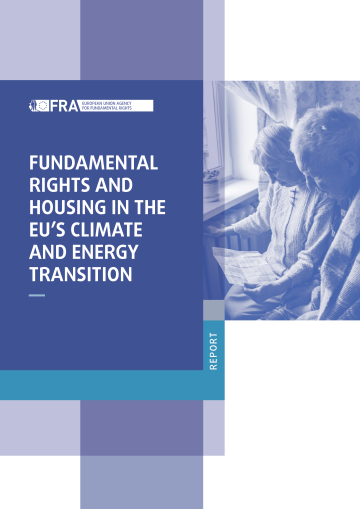
Making homes energy efficient and equipping them with clean energy can help the EU to reach its climate and energy goals. These measures improve living conditions and support fighting energy poverty, but they can also compromise affordability and displace low-income families. This report looks at housing renovation and clean energy installation programmes and wider EU climate and energy transition policies. It analyses their impact on fundamental rights. It finds that measures often inadvertently exclude people or risk exacerbating existing inequalities. Climate and social policies must comply with fundamental rights obligations. This report builds on FRA’s 2025 publication: Towards a fundamental rights-compliant European Green Deal.
Cover with title and image showing elderly couple with blankets around their shoulders sitting in front of  radiator and holding a energy bill in their hand.
AdobeStock@Solarisys
Read Press Release
  • Read Online
  • Country Research
  • Related Content

TABLE OF CONTENT

  • Key findings and FRA opinions
    • Integrating fundamental rights into the climate and energy transition
      • FRA opinion 1
    • Strengthening fundamental rights safeguards in designing and implementing energy renovation policies
      • FRA opinion 2
      • FRA opinion 3
    • The lack of equal access to renovation measures impacts the right to housing
      • FRA opinion 4
    • Protecting the rights of tenants in energy renovations
      • FRA opinion 5
    • People confronted with housing deprivation are at risk of being left behind in the climate and energy transition
      • FRA opinion 6
    • Participation and stakeholder engagement in the energy transition is often a one-off exercise and is not inclusive
      • FRA opinion 7
    • Lack of transparency and information for complaint mechanisms hinder access to justice
      • FRA opinion 8
    • Need for integrated and systematic monitoring and data collection for a just climate and energy transition
      • FRA opinion 9
  • Introduction
  • 1. Access to energy and the right to housing in the climate and energy transition
    • 1.1 International framework on access to affordable and sustainable energy
    • 1.2 The link between the right to housing and sustainability
    • 1.3 Energy as an essential service in the European Union’s framework
      • 1.3.1 Addressing energy poverty to ensure health and an adequate standard of living
      • 1.3.2 Right of access to energy – including renewable energy – and users’ rights
    • 1.4 Energy renovations for achieving affordable and sustainable housing in the European Union
    • 1.5 Conclusion
  • 2. Fundamental rights in the European Union climate and energy governance
    • 2.1 Fundamental rights in the National Energy and Climate Plans
      • 2.1.1 Equality and non-discrimination in national energy and climate plans
      • 2.1.2 Gender equality
      • 2.1.3 Vulnerability and equal access to energy
      • 2.1.4 Access to affordable housing
    • 2.2 National Energy and Climate Progress Reports
    • 2.3 Conclusion
  • 3. Non-discrimination and leaving no one behind in the energy transition
    • 3.1 Equal access to renovation and energy transition measures
      • 3.1.1 Target groups and access criteria
      • 3.1.2 Tenure status and renovations: exclusion of tenants
      • 3.1.3 Support measures essential for ensuring equal access to the programmes in practice
      • 3.1.4 Funding is necessary to ensure access for people with lower incomes
    • 3.2 Energy poverty and attention to people in situations of vulnerability
      • 3.2.1 Risks and prevalence of energy poverty in the European Union
      • 3.2.2 Tackling energy poverty among people in vulnerable situations
    • 3.3 Conclusion
  • 4. Participation and stakeholder engagement in the energy transition
    • 4.1 Ensuring the right to information: transparency and awareness
    • 4.2 Participation and stakeholder engagement
    • 4.3 Conclusion
  • 5. Accountability: effective structures for fundamental-rights-compliant energy policy implementation
    • 5.1 Fundamental-rights-compliant funding and finances
    • 5.2 Monitoring and data collection
    • 5.3 Access to justice and complaints mechanisms
      • 5.3.1 Complaint and review mechanisms in energy renovation programmes lack consistency and transparency
      • 5.3.2 The role of ombudsperson institutions, equality bodies, national human rights institutions and other stakeholders
    • 5.4 Conclusion
  • Conclusions
  • Annex 1 – Methodology
  • Acronyms and abbreviations
  • About this publication
Search inside this publication
Export to PDF


4. Participation and stakeholder engagement in the energy transition


Meaningful participation, transparency and accountability are central principles of a HRBA. Their application at all stages of the design and implementation as well as transparent monitoring of measures are fundamental to ensure effectiveness and social acceptance of the transition. This chapter analyses how elements of stakeholder engagement and participation are applied in practice in the context of energy transition and renovation measures at the EU and the national levels and how this may impact on the effectiveness of the policies.


4.1 Ensuring the right to information: transparency and awareness

The Aarhus Convention, to which the EU and all Member States are parties, enshrines the right of access to information in environmental matters (Article 4). The EED in Article 22 requires Member States to ensure that the public is informed in a transparent and accessible way about the available energy efficiency improvement measures. Article 18 EPBD requires Member States to establish one-stop shops to provide information about the energy performance of buildings and offer dedicated services for vulnerable households, people affected by energy poverty or in low-income households.

FRA’s fieldwork findings show limited efforts with regards to awareness-raising and information campaigns. All too often available information was online-only, formulated in technical language or did not present the programmes’ complexities in a clear manner. Without targeted communication strategies, people belonging to specific groups may not be aware of energy transition programmes, even less so how to benefit from them. At the same time, promising practices were identified, including targeted outreach efforts that take into account the different situations of potential applicants.

Table 6 – Information campaign and channels

Member State

Information campaign dedicated to programme

Information campaign tailored to vulnerable groups

Information channels

Information available in other languages

Belgium

Yes

No information available

Websites, local consultants and local advice centres, public events, radio, television, print

Yes, German

Czechia

Yes, including localised campaigns

No

Website, social media, television, local consultants

No

Estonia

Yes

Yes

Websites, press releases, information days in regional centres, regional consultants

Yes, Russian and English

France

Yes

Yes

Websites, radio, television, newspapers, local advice centres and consultants

No

Germany

No

No

Website

No

Greece

Yes

No

Website, technical consultants, radio, television, print

No

Poland

Yes

No

Website, advertisements in the press

Partially in Ukrainian

Romania

Yes

No

Website, press statements

No

Spain

Yes

Yes

Website, social media, posters, energy one-stop shops, special events, educational and community activities, local media outlets, local organisations

No information available

Sweden

Yes

No

Website, social media, printed leaflets

Partially in several languages

Source: FRA, based on Franet (2024) country reports.

A survey in France showed that the programme MaPrimeRénov’ was among the most well-known aid programmes in France. Agence nationale de l’habitat (ANAH), the operator of the programme, raised public awareness of the programme itself but also of the topic of energy efficiency, via local mobile outreach initiatives, local advice centres and regional advisors throughout the country. Targeted communication and guidance for vulnerable groups was mainly provided by associations such as Solidaires pour l’Habitat.

ANAH is carrying out a ‘tour de France’ to reach out to users. In fact, I think there is a dual interest: first, to go and educate, to explain, to present the systems, so it is also an approach to ‘reach out’ or to inform. But these are also approaches that allow [them] to recover information and elements of satisfaction in all ways.

France, public authority.

In Czechia, interviewees pointed to the 2024 educational television series broadcast on Czech television as a successful dissemination tool and a driver for increasing public awareness on energy efficiency topics (see Promising practice – Educational TV series in Czechia).

Promising practice – Educational TV series in Czechia

The six-episode educational television series ‘Šetrný a Platil’ (Mr Saver and Mr Payer) was organised in collaboration with the Czech State Environmental Fund and the New Green for Savings programme. In six short episodes the series explains in an engaging and accessible way the cost and environmental benefits of energy-saving renovations for homes such as insulation, heat pumps and solar panels.

Source: Šetrný a Platil; based on Franet Czechia country report (2024).

The research also points to the importance of targeted efforts at the local level. In some programmes, while targeted and accessible information campaigns to reach marginalised communities are largely missing, local stakeholders contribute to outreach. For example, in Poland, collaboration with parish priests helped to promote the programme in smaller communities. In Romania, a civil society organisation (Greenpeace Romania) has, on its own initiative, developed  a website about the programme informing potential applicants about the benefits of producing their own energy and how to handle the administrative requirements of the programme.

Promising practice – Engaging consultation on the local level in Romania

In the municipality of Arad, local authorities implemented targeted awareness-raising activities to help residents understand the programme and apply successfully. This included organising meetings, explaining the benefits of photovoltaic systems, providing personalised consultancy, and simplifying the process by offering assistance with collecting documents and completing applications. These actions helped to reach groups who might otherwise have been unaware of the programme (including, but not only, older people). The municipal team helped 119 households to apply to the programme – with 107 successful applications.

Source: Greenpeace Romania; based on Franet Romania country report (2024).

Interviews highlighted that in many cases, the programmes are broadly accepted in society. Related major challenges are often linked to problems with their implementation. For example, insufficient technical advice (e.g. on the most suitable heating technology), concerns about fairness and equal access to the programmes, instances of fraud and lack of related safeguards, along with unpredictability related to funding.


4.2 Participation and stakeholder engagement

Participation is a key element of a human-rights-based approach, and is an international obligation under the Aarhus Convention (Articles 6 to 8). The European Green Deal recognises that active public participation, involvement and commitment of the public and of all stakeholders is crucial to the success of the transition, with EU citizens as its driving force. Public consultation is one mechanism to enable participation. The Governance Regulation requires Member States to ensure that the public is given early and effective opportunities to participate in the preparation of the integrated national energy and climate plans and long-term strategies (Article 10) and to establish multilevel climate and energy dialogue bringing together different stakeholders from all levels of governance (Article 11). The EPBD obliges Member States to carry out public consultations in preparation of NBRPs, involving in particular local and regional authorities and other socioeconomic partners, including civil society and bodies working with vulnerable households to facilitate the effective implementation of the directive (Articles 3(4), 29–30).

The EEA briefing on public participation in sustainability transitions stresses that involving the public is essential in designing and implementing these transitions. The Eurofound brief emphasises that multistakeholder partnerships are essential for a socially just transition and identifies enablers and barriers to strengthen such partnerships.

FRA’s research has identified that stakeholder consultations were in place in preparation for some of the programmes, for example in Czechia through the State Environmental Fund and by consulting key stakeholders of the programme in Estonia.

In Belgium, various stakeholders were consulted during the design and implementation phases of Rénopack. Measures were taken to ensure accessibility for people with disabilities, and people with lower digital skills, through phone assistance and face-to-face support.

[These] consultations […] had the merit of being truly open, of bringing together a huge number of stakeholders and of having a dialogue between consumer associations, anti-poverty associations, real estate agencies, social agencies, the entire social housing sector too [… as] it is also a big issue in renovation for disadvantaged groups.

Belgium, expert.

Participation during the implementation, monitoring and evaluation of programmes, or regular consultations with the Member State’s authorities, are not foreseen in the majority of the programmes, with the exception of the French programme MaPrimeRénov’, which is subject to review by the National Housing Council (Conseil national de l’habitat), a multi-stakeholder consultative body of the Ministry of Housing.

The findings in Spain point to the importance of continuous engagement activities to build and maintain trust (Parreño-Rodriguez et al., 2023). Interviews confirmed the importance of local political commitment in fostering stakeholder engagement and the need for more personnel to effectively and sustainably engage with the affected communities.

In countries where consultations were organised, interviewees often pointed to the lack of transparency in the processes and clarity about why certain inputs are reflected and others are not. In Romania, the programme draft was open to public consultation as required by national law and published on the website of the Ministry of Environment, Water and Forests. However, it was seen as a ‘tick-box’ exercise, with 10 days to submit feedback via email and lacking genuine effort to engage with stakeholders. Programmes in Greece and Poland lacked structured public consultations – experts highlighted that only ad hoc consultations were conducted with stakeholders, often selected in a discretionary way and without sufficient public information about the processes and decisions.


4.3 Conclusion

The right to participation and access to information is key to ensuring a just climate and energy transition. However, programmes assessed across the EU often fall short of ensuring meaningful and inclusive engagement. Information about programmes is frequently inaccessible or overly technical, and targeted outreach to vulnerable groups is rare, diminishing the ability of those most affected to access the programmes. Strengthening rights-based, inclusive participation and transparent communication is essential to ensuring that all rights holders can contribute to and benefit from the energy transition in the EU.


Previous Section3. Non-discrimination and leaving no one behind in the energy transitionNext Section5. Accountability: effective structures for fundamental-rights-compliant energy policy implementation

Country Research

Country Study
27 February 2026

Fundamental rights and housing in the EU’s climate and energy transition - Country research

These documents were commissioned under contract by FRA as background material for the project "Ensuring environmental protection - the just transition of the European Green Deal". The information and views contained in the documents do not necessarily reflect the views or the official position of FRA. The documents are made publicly available for transparency and information purposes only and do not constitute legal advice or legal opinion.
Downloads

Fundamental rights and housing in the EU's climate and energy transition - Country research - Belgium (913.55 KB)

EN

Fundamental rights and housing in the EU's climate and energy transition - Country research - Czechia (753.83 KB)

EN

Fundamental rights and housing in the EU's climate and energy transition - Country research - Estonia (863.98 KB)

EN

Fundamental rights and housing in the EU's climate and energy transition - Country research - France (983.87 KB)

EN

Fundamental rights and housing in the EU's climate and energy transition - Country research - Germany (927.48 KB)

EN

Fundamental rights and housing in the EU's climate and energy transition - Country research - Greece (846.02 KB)

EN

Fundamental rights and housing in the EU's climate and energy transition - Country research - Poland (946.64 KB)

EN

Fundamental rights and housing in the EU's climate and energy transition - Country research - Romania (752.36 KB)

EN

Fundamental rights and housing in the EU's climate and energy transition - Country research - Spain (1.44 MB)

EN

Fundamental rights and housing in the EU's climate and energy transition - Country research - Sweden (1.09 MB)

EN

Rights Work Areas

Just and green transition
Environmental and social sustainability

Related Content

Fundamental Rights Report
11
June
2026

Fundamental Rights Report - Challenges and achievements in 2025

The Fundamental Rights Report: Challenges and Achievements in 2025 is FRA’s flagship annual publication. It provides an overview of the state of fundamental rights in the EU and highlights selected critical developments from 2025. This year, it focuses on four areas: rights protection in a rapidly changing digital environment; the housing crisis and rising homelessness rates; employment challenges for people from non-EU countries; and the implementation of the EU Charter of Fundamental Rights. The publication is a valuable resource for those seeking to stay informed about the EU’s shifting landscape of fundamental rights.
Woman holding European Union flag against blue sky
New Africa / adobestock.com, 2026
Report / Paper / Summary
15
January
2025

Towards a fundamental rights-compliant European Green Deal

Climate change affects the daily lives of everyone in the EU and has significant environmental, economic, social and health impacts. To tackle this, the European Green Deal was adopted in 2019. This report examines the Green Deal from a fundamental rights perspective, with the aim of protecting the right to a safe, clean, healthy and sustainable environment for all. It highlights the lack of fundamental rights in EU climate policy and the need to incorporate these rights into future legislation. It also considers how applying a human-rights-based approach to climate policy could support a fair and inclusive transition.
Planting a seedling
lovelyday12 / Adobestock
Over FRA

Hier vindt u meer informatie over het Bureau en zijn werkzaamheden.

  • Over FRA
  • EU-Handvest van de Grondrechten
  • Tot wie u zich kunt wenden voor hulp
  • Nieuws
  • Abonneren op updates
Contact

Address

European Union Agency for Fundamental Rights
Rennweg 12
1030 Vienna, Austria

E-mail

Neem contact met ons op

Newsletter

Abonneren op updates

  • Facebook
  • Twitter
  • LinkedIn
  • YouTube
  • Newsletter
  • E-mail
  • RSS

© European Union Agency for Fundamental Rights, 2007-2026

  • About this website
  • Legal notice
  • Cookies
  • Data Protection
  • Accessibility

Custom Topbar

Home

Search the FRA website

    • Work on rights
    • Het EU-Handvest van de grondrechten
      • Wat zijn grondrechten?
      • What is the EU Charter of Fundamental Rights?
      • Preambule
      • Titel I: Waardigheid
        • 1 - De menselijke waardigheid
        • 2 - Het recht op leven
        • 3 - Het recht op menselijke integriteit
        • 4 - Het verbod van folteringen en van onmenselijke of vernederende behandelingen of bestraffingen
        • 5 - Het verbod van slavernij en dwangarbeid
      • Titel II: Vrijheden
        • 6 - Het recht op vrijheid en veiligheid
        • 7 - De eerbiediging van het privé-leven en van het familie
        • 8 - De bescherming van persoonsgegevens
        • 9 - Het recht te huwen en het recht een gezin te stichten
        • 10 - De vrijheid van gedachte, geweten en godsdienst
        • 11 - De vrijheid van meningsuiting en van informatie
        • 12 - De vrijheid van vergadering en vereniging
        • 13 - De vrijheid van kunsten en wetenschappen
        • 14 - Het recht op onderwijs
        • 15 - De vrijheid van beroep en het recht te werken
        • 16 - De vrijheid van ondernemerschap
        • 17 - Het recht op eigendom
        • 18 - Het recht op asiel
        • 19 - Bescherming bij verwijdering, uitzetting en uitlevering
      • Titel III: Gelijkheid
        • 20 - Gelijkheid voor de wet
        • 21 - Non-discriminatie
        • 22 - Verscheidenheid van cultuur, godsdienst en taal
        • 23 - De gelijkheid van vrouwen en mannen
        • 24 - De rechten van het kind
        • 25 - De rechten van ouderen
        • 26 - De integratie van personen met een handicap
      • Titel IV: Solidariteit
        • 27 - Het recht op informatie en raadpleging van de werknemers binnen de onderneming
        • 28 - Het recht op collectieve onderhandelingen en op collectieve actie
        • 29 - Het recht op toegang tot arbeidsbemiddeling
        • 30 - Bescherming bij kennelijk onredelijk ontslag
        • 31 - Rechtvaardige en billijke arbeidsomstandigheden en -voorwaarden
        • 32 - Het verbod van kinderarbeid en de bescherming van jongeren op het werk
        • 33 - Het beroeps
        • 34 - Sociale zekerheid en sociale bijstand
        • 35 - De gezondheidszorg
        • 36 - De toegang tot diensten van algemeen economisch belang
        • 37 - Milieubescherming
        • 38 - Consumentenbescherming
      • Titel V: Burgerschap
        • 39 - Actief en passief kiesrecht bij de verkiezingen voor het Europees Parlement
        • 40 - Actief en passief kiesrecht bij de gemeenteraadsverkiezingen
        • 41 - Recht op behoorlijk bestuur
        • 42 - Recht van inzage in documenten
        • 43 - Europees Ombudsman
        • 44 - Recht van petitie
        • 45 - Vrijheid van verkeer en van verblijf
        • 46 - Diplomatieke en consulaire bescherming
      • Titel VI: Rechtspleging
        • 47 - Recht op een doeltreffende voorziening in rechte en op een onpartijdig gerecht
        • 48 - Vermoeden van onschuld en rechten van de verdediging
        • 49 - Legaliteitsbeginsel en evenredigheidsbeginsel inzake delicten en straffen
        • 50 - Recht om niet tweemaal in een strafrechtelijke procedure voor hetzelfde delict te worden berecht of gestraft
      • Titel VII: Algemene bepalingen
        • 51 - Toepassingsgebied
        • 52 - Reikwijdte en uitlegging van de gewaarborgde rechten en beginselen
        • 53 - Beschermingsniveau
        • 54 - Verbod van misbruik van recht
    • Tools
      • EU Fundamental Rights Information System - EFRIS
      • Criminal detention database
      • Anti-Muslim hatred database
      • National human rights structures navigator
      • Case-law database
      • Charterpedia
      • FRA e-learning platform
      • Data visualisation
      • Equality data collection: promising practices
      • Fighting hate crime: promising practices
    • Producten
  • About FRA
    • Who we are
      • Structure of FRA
      • Management Board
        • Management Board members
        • Management Board meeting documents
      • Executive Board
      • Scientific Committee
        • Scientific Committee members
      • Director
      • Management team
    • What we do
      • Research and data
      • FRA for children
        • What are my rights?
        • Where do my rights come from?
      • Areas of work
      • Work Programme
        • Archive
      • Annual Activity report
        • Archive
      • Projects
    • Working at FRA
      • Vacancies and selections
        • Previous vacancies
      • What we offer
      • Work-life balance
      • Application instructions
      • Seconded National Experts
      • Traineeship
      • Study visits at FRA
    • Procurement
      • Ongoing procedures
      • Closed procedures
      • Contracts awarded
    • Finance and budget
      • Financial Rules
      • Financial documents
    • Inzage in documenten
      • Access to documents
      • Aanvraag voor toegang tot documenten
    • Data protection within FRA
      • Records registry
  • Cooperation
    • EU-instellingen en andere organen
      • European Parliament
      • Council of the European Union
      • European Commission
      • EU agencies
        • Justice and Home Affairs Agencies Network
      • European Committee of the Regions
      • European Economic and Social Committee
      • European Ombudsman
      • EU CRPD Framework
        • Promotion
        • Protection
        • Monitoring
        • Review process
        • Resources
    • Lidstaten van de EU
      • National Liaison Officers
      • National Parliaments
    • Raad van Europa
    • EEA and Norway Grants
    • Maatschappelijk middenveld en platform voor de grondrechten
      • FRP organisations
      • Activities
      • Civic space
      • Platform library
      • How to register
    • Nationale mensenrechteninstituten, gelijkheidsorganen en ombudsinstellingen
    • VN, OVSE en andere internationale organisaties
  • Newsroom
    • Media contacts
    • News
    • Press releases
    • Stories
    • Events
      • Past Events
    • FRA products 2026
      • FRA products 2025
      • FRA products 2024
      • FRA products 2023
      • FRA products 2022
      • FRA products 2021
      • FRA Products 2020
      • FRA Products 2019
    • Multimedia
      • Videos
      • Infographics
      • Podcasts
    • Speeches
    • Press packs
      • EU LGBTIQ survey - Press pack
      • Fundamental Rights Survey
      • EU LGBTI survey II
      • From institutions to community living for persons with disabilities: perspectives from the ground
      • Second European Union Minorities and Discrimination Survey – Main results
      • Second European Union Minorities and Discrimination Survey (EU-MIDIS II) Muslims
      • Together in the EU: Promoting the participation of migrants and their descendants
      • Second European Union Minorities and Discrimination Survey (EU-MIDIS II) Roma
      • Severe labour exploitation in the EU
      • Child-friendly justice – perspectives and experiences of professionals: Press pack
      • Fundamental rights at EU borders
      • Violence against women press pack
      • Jewish people’s experiences and perceptions of hate crime, discrimination and antisemitism
      • EU LGBT Press pack
      • Child-friendly justice – perspectives and experiences of children
    • Newsletter
  • Account
    • Log in

Top Menu

  • Over FRA
  • Samenwerking
  • Newsroom
  • Cookies
  • Contact

Main menu

Home
  • Work on rights
  • Het EU-Handvest van de grondrechten
    Het EU-Handvest van de grondrechten
    • Wat zijn grondrechten?
    • What is the EU Charter of Fundamental Rights?
    • Preambule
    • Titel I: Waardigheid
      • 1 - De menselijke waardigheid
      • 2 - Het recht op leven
      • 3 - Het recht op menselijke integriteit
      • 4 - Het verbod van folteringen en van onmenselijke of vernederende behandelingen of bestraffingen
      • 5 - Het verbod van slavernij en dwangarbeid
    • Titel II: Vrijheden
      • 6 - Het recht op vrijheid en veiligheid
      • 7 - De eerbiediging van het privé-leven en van het familie
      • 8 - De bescherming van persoonsgegevens
      • 9 - Het recht te huwen en het recht een gezin te stichten
      • 10 - De vrijheid van gedachte, geweten en godsdienst
      • 11 - De vrijheid van meningsuiting en van informatie
      • 12 - De vrijheid van vergadering en vereniging
      • 13 - De vrijheid van kunsten en wetenschappen
      • 14 - Het recht op onderwijs
      • 15 - De vrijheid van beroep en het recht te werken
      • 16 - De vrijheid van ondernemerschap
      • 17 - Het recht op eigendom
      • 18 - Het recht op asiel
      • 19 - Bescherming bij verwijdering, uitzetting en uitlevering
    • Titel III: Gelijkheid
      • 20 - Gelijkheid voor de wet
      • 21 - Non-discriminatie
      • 22 - Verscheidenheid van cultuur, godsdienst en taal
      • 23 - De gelijkheid van vrouwen en mannen
      • 24 - De rechten van het kind
      • 25 - De rechten van ouderen
      • 26 - De integratie van personen met een handicap
    • Titel IV: Solidariteit
      • 27 - Het recht op informatie en raadpleging van de werknemers binnen de onderneming
      • 28 - Het recht op collectieve onderhandelingen en op collectieve actie
      • 29 - Het recht op toegang tot arbeidsbemiddeling
      • 30 - Bescherming bij kennelijk onredelijk ontslag
      • 31 - Rechtvaardige en billijke arbeidsomstandigheden en -voorwaarden
      • 32 - Het verbod van kinderarbeid en de bescherming van jongeren op het werk
      • 33 - Het beroeps
      • 34 - Sociale zekerheid en sociale bijstand
      • 35 - De gezondheidszorg
      • 36 - De toegang tot diensten van algemeen economisch belang
      • 37 - Milieubescherming
      • 38 - Consumentenbescherming
    • Titel V: Burgerschap
      • 39 - Actief en passief kiesrecht bij de verkiezingen voor het Europees Parlement
      • 40 - Actief en passief kiesrecht bij de gemeenteraadsverkiezingen
      • 41 - Recht op behoorlijk bestuur
      • 42 - Recht van inzage in documenten
      • 43 - Europees Ombudsman
      • 44 - Recht van petitie
      • 45 - Vrijheid van verkeer en van verblijf
      • 46 - Diplomatieke en consulaire bescherming
    • Titel VI: Rechtspleging
      • 47 - Recht op een doeltreffende voorziening in rechte en op een onpartijdig gerecht
      • 48 - Vermoeden van onschuld en rechten van de verdediging
      • 49 - Legaliteitsbeginsel en evenredigheidsbeginsel inzake delicten en straffen
      • 50 - Recht om niet tweemaal in een strafrechtelijke procedure voor hetzelfde delict te worden berecht of gestraft
    • Titel VII: Algemene bepalingen
      • 51 - Toepassingsgebied
      • 52 - Reikwijdte en uitlegging van de gewaarborgde rechten en beginselen
      • 53 - Beschermingsniveau
      • 54 - Verbod van misbruik van recht
  • Tools
    Tools
    • EU Fundamental Rights Information System - EFRIS
    • Criminal detention database
    • Anti-Muslim hatred database
    • National human rights structures navigator
    • Case-law database
    • Charterpedia
    • FRA e-learning platform
    • Data visualisation
    • Equality data collection: promising practices
    • Fighting hate crime: promising practices
  • Producten