Equality

Pochodzenie rasowe i etniczne

Highlights

    PRODUKTY

    Publications and Data

    Displaying results 41 - 50 of 55
    Report / Paper / Summary
    26
    January
    2010
    The European Agency for Fundamental Rights (FRA) conducted European-wide research in 2009 on the contribution of memorial sites to Holocaust education and human rights education in the European Union (EU). This summary report, derived from the main report 'Discover the past for the future. The role of historical sites and museums in Holocaust education and human rights education in the EU', provides selected findings, discussion points and recommendations.
    Report / Paper / Summary
    May
    2009
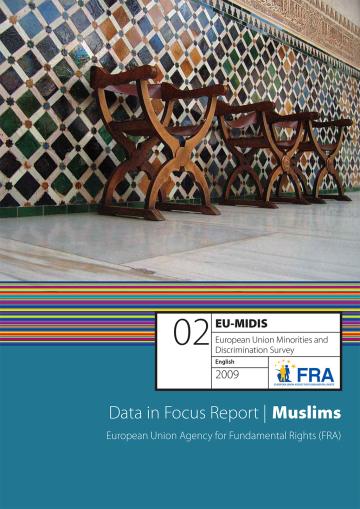
    This report focuses on respondents who identified themselves as Muslims, and is the second in a series of EU-MIDIS ‘Data in Focus' reports exploring different results from the survey. Up to nine ‘Data in Focus' reports are planned. Given the shortage of extensive, objective and comparable data on Muslims in the European Union, EU-MIDIS provides, for the first time, comparable data on how Muslims across the EU experience discrimination and victimisation.

    Report / Paper / Summary
    2
    February
    2011
    The Fundamental Rights Agency publishes its first report on multiple discrimination: EU-MIDIS Data in Focus 5: ‘Multiple Discrimination' which focuses on perceptions of multiple discrimination experiences by respondents of ethnic or immigrant origin, compared with the general population.
    Report / Paper / Summary
    21
    July
    2011
    The 2003-2008 update on the exclusion and discrimination of migrants, minorities and employment in the 27 EU Member States provides a comparative overview and analysis of data and information documenting discrimination in the workplaces and labour markets across the European Union.
    Report / Paper / Summary
    25
    January
    2012
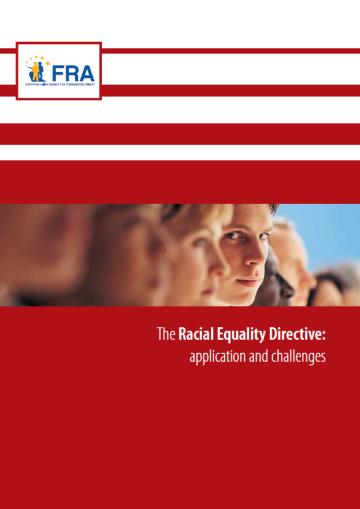
    The Racial Equality Directive (2000/43/EC) is the key piece of EU legislation for combating discrimination on the grounds of racial or ethnic origin and for giving effect to the principle of equal treatment. The present report discusses the application of the directive through the laws and practices in the 27 EU Member States.
    Report / Paper / Summary
    11
    October
    2010
    When a decision to stop an individual is motivated solely or mainly by virtue of a person's race, ethnicity or religion, this constitutes discriminatory ethnic profiling. Such practices can serve to alienate certain communities in the EU, and in turn can contribute to inefficient policing. The FRA guide aims to help the police address and avoid discriminatory ethnic profiling, and is designed to be used as a tool for more effective policing.
    Report / Paper / Summary
    9
    November
    2010
    To mark the 2010 anniversary of "the night of the broken glass", the European Union Agency for Fundamental Rights (FRA) publishes a handbook for teachers: Excursion to the past - teaching for the future. The handbook emphasises the link between teaching about the Holocaust and other Nazi crimes, and teaching about human rights and democracy.
    Report / Paper / Summary
    7
    May
    2010
    EU-MIDIS "Data in Focus" report 3 focuses on respondents' knowledge about their rights in the field of non-discrimination, including knowledge about Equality Bodies in Member States. This Data In Focus report on 'Rights Awareness and equality bodies' relates to Article 21, on 'non-discrimination', as enrshrined in the Charter of Fundamental Rights of the European Union.
    Report / Paper / Summary
    23
    May
    2012
    Roma - Europe's largest minority of 10-12 million people - continue to experience discrimination and social exclusion; and they are not sufficiently aware of their rights guaranteed by EU law, such as the Racial Equality Directive. This report presents the first results of the FRA Roma pilot survey and the UNDP/World Bank/European Commission regional Roma survey carried out in 2011.
    In brief / Factsheet
    23
    May
    2012
    This factsheet presents the first results of the surveys based on an analysis of only part of the available data. The results presented are a first step in addressing the severe lack of data on the socio-economic situation of Roma in the EU and the fulfilment of their rights.