This report looks at five core aspects of detention conditions in EU Member States: the size of cells; the amount of time detainees can spend outside of these cells, including outdoors; sanitary conditions; access to healthcare; and whether detainees are protected from violence. For each of these aspects of detention conditions, the report first summarises the minimum standards at international and European levels. It then looks at how these standards are translated into national laws and other rules of the EU Member States.
Growing global efforts to encourage responsible business conduct that respects human rights include steps to ensure access to effective remedies when breaches occur. In 2017, the European Commission asked the EU Agency for Fundamental Rights (FRA) to collect evidence on such access in the EU Member States, with the ultimate goal of identifying the EU actions most needed in this field. FRA’s resulting research involved two phases: desk research on different incidents of abuse; and interview-based fieldwork on professionals’ views on the availability and effectiveness of different complaint avenues.
Facial recognition technology (FRT) makes it possible to compare digital facial images to determine whether they are of the same person. Comparing footage obtained from video cameras (CCTV) with images in databases is referred to as ‘live facial recognition technology’. Examples of national law enforcement authorities in the EU using such technology are sparse – but several are testing its potential. This paper therefore looks at the fundamental rights implications of relying on live FRT, focusing on its use for law enforcement and border-management purposes.
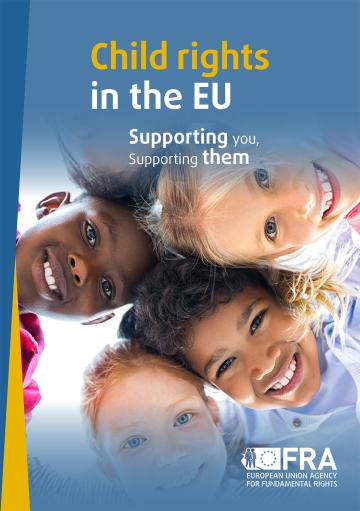
Child rights come first. Measures to ensure child protection and participation apply to all children in the EU. This brochure guides you to relevant FRA reports and tools that can support you when promoting and protecting the rights of all children in the EU.
Wir sind anerkannt als einzigartiges und unabhängiges Referenz- und Exzellenzzentrum zur Förderung und zum Schutz der Menschenrechte in der EU.
Wir wurden geschaffen, um zu besseren Lebens- und Arbeitsbedingungen in Europa beizutragen. Wir setzen uns für den Schutz der Grundrechte aller in der EU lebenden Menschen ein.
We are acknowledged as a unique and independent centre of reference and excellence for promoting and protecting human rights in the EU. We were created to help make Europe a better place to live and work. We help defend the fundamental rights of all people living in the EU.
Nous sommes reconnus comme un centre de référence et d’excellence unique et indépendant au service de la promotion et de la protection des droits de l’homme dans l’nion européenne (UE).
L’Agence a été créée pour contribuer à améliorer les conditions de vie et de travail
en Europe.
Nous aidons à défendre les droits fondamentaux de toutes les personnes vivant dans l’UE.
Menschen afrikanischer Abstammung stoßen EU-weit auf ausgeprägte und tief sitzende Vorurteile und Ausgrenzung. Rassendiskriminierung
und rassistisch motivierte Belästigung
sind an der Tagesordnung. Die Erfahrungen mit rassistisch
motivierter Gewalt nehmen unterschiedliche
Formen an, betreffen jedoch immerhin 14 %.
Diskriminierendes Profiling durch die Polizei gehört
ebenfalls zum Alltag. Die Hindernisse, die einer Integration
im Weg stehen, sind vielfältig, insbesondere
dann, wenn es um die Suche nach Arbeitsplätzen
und Wohnraum geht.
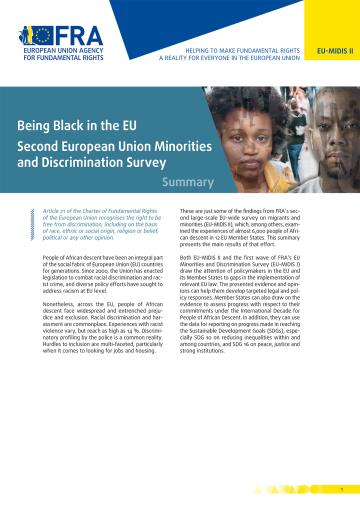
Across the EU, people of African descent face widespread and entrenched prejudice and exclusion. Racial discrimination and harassment are commonplace. Experiences with racist violence vary, but reach as high as 14 %. Discriminatory profiling by the police is a common reality. Hurdles to inclusion are multi-faceted, particularly when it comes to looking for jobs and housing.
Partout dans l’UE, les personnes d’ascendance
africaine doivent faire face à des préjugés
largement répandus et fermement ancrés
ainsi qu’à l’exclusion. La discrimination et le harcèlement
à caractère racial sont monnaie courante.
Le taux d’expériences de violence raciste varie, mais
atteint jusqu’à 14 %. Le profilage discriminatoire par
la police est une réalité commune. Les obstacles
à l’inclusion prennent de multiples formes, particulièrement
lorsqu’il s’agit de chercher un emploi
et un logement.
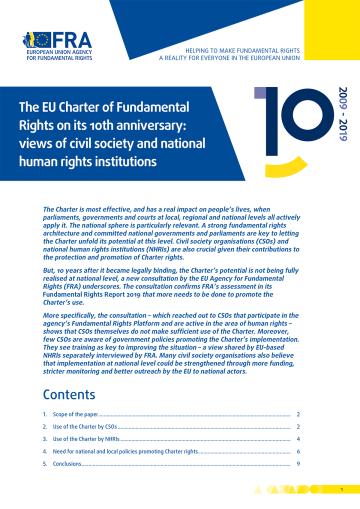
The Charter is most effective, and has a real impact on people’s lives, when parliaments, governments and courts at local, regional and national levels all actively apply it. The national sphere is particularly relevant. A strong fundamental rights architecture and committed national governments and parliaments are key to letting the Charter unfold its potential at this level. Civil society organisations (CSOs) and national human rights institutions (NHRIs) are also crucial given their contributions to the protection and promotion of Charter rights.
This annual overview provides an update of the most recent figures on antisemitic incidents, covering the period 1 January 2008 – 31 December 2018, across the EU Member States, where data are available. It includes a section that presents evidence from international organisations. In addition, for the first time, it provides an overview of how Member States that have adopted or endorsed the non-legally binding working definition of antisemitism adopted by the International Holocaust Remembrance Alliance (IHRA) (2016) use or intend to use it.