Zivilgesellschaftliche Organisationen in der Europäischen Union spielen bei der Förderung
der Grundrechte eine entscheidende Rolle, doch gestaltet sich dies – aufgrund rechtlicher
und praktischer Einschränkungen – für sie immer schwieriger. In der vorliegenden Zusammenfassung werden die
wichtigsten Ergebnisse des Berichts und die Stellungnahmen
der FRA zu den Fragen, die damit aufgeworfen
werden, skizziert.
In 2006 the EU issued its Data Retention Directive. According to the Directive, EU Member States had to store electronic telecommunications data for at least six months and at most 24 months for investigating, detecting and prosecuting serious crime. In 2016, with an EU legal framework on data retention still lacking, the CJEU further clarified what safeguards are required for data retention to be lawful.This paper looks at amendments to national data retention laws in 2016 after the Digital Rights Ireland judgment.
In view of the increasing numbers of refugees, asylum seekers and migrants entering the EU, the European Commission asked FRA to collect data about the fundamental rights situation of people arriving in those Member States that have been particularly affected by large migration movements. The countries covered are Austria, Bulgaria, Denmark, Finland, France, Germany, Greece, Hungary, Italy, the Netherlands, Poland, Slovakia, Spain and Sweden.

Der Zugang zur Justiz ist ein bedeutendes Element der Rechtsstaatlichkeit. Einzelne erhalten so die
Möglichkeit, sich gegen eine Verletzung ihrer Rechte zu schützen, im Falle unerlaubter Handlungen
Rechtsbehelfe geltend zu machen, die Exekutive zur Verantwortung zu ziehen und sich selbst in
Strafsachen zu verteidigen. Dieses Handbuch fasst die zentralen Grundsätze des europäischen
Rechts im Bereich des Zugangs zur Justiz zusammen.
In view of the increasing numbers of refugees, asylum seekers and migrants entering the EU, the European Commission asked FRA to collect data about the fundamental rights situation of people arriving in those Member States that have been particularly affected by large migration movements.
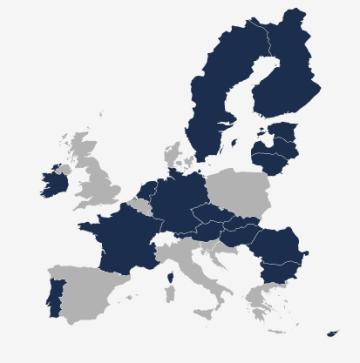
In view of the increasing numbers of refugees, asylum seekers and migrants entering the EU, the European Commission asked FRA to collect data about the fundamental rights situation of people arriving in those Member States that have been particularly affected by large migration movements. The countries covered in 2015 are Austria, Bulgaria, Croatia, Germany, Greece, Hungary, Italy and Slovenia.
Children and young people are increasingly involved in research and decision making on different aspects of rights which relate to them. EU Member States have different rules, regulations and guidelines regarding the participation of children in research, in particular concerning ethics approval and informed consent.
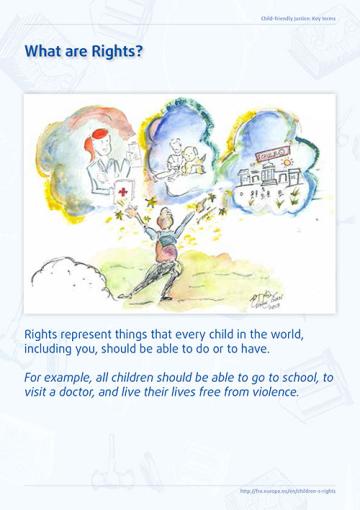
This document provides clear explanations for children of the key terms used in the child-friendly justice project. It explains what rights are and how these rights should be protected during legal proceedings.
This technical report and the survey questionnaire are intended for reference and to encourage further survey development and implementation by interested parties.
In 2007 the European Parliament requested the newly established Fundamental Rights Agency to develop a comprehensive comparative report relating to the existence of homophobia and discrimination based on sexual orientation in all EU Member States. In response the Agency carried out a large-scale legal and social research project during 2007 and 2008. This summary report provides an overview of the results of the social analysis.
The European Union Agency for Fundamental Rights presents in this paper the fourth brief update of its 2004 extensive report "Manifestations of anti-Semitism in the European Union". The overview contains the latest governmental and non-governmental statistical data covering 2001 to 2007 for those EU Member States that have official or unofficial data and statistics on anti-Semitic incidents.