Avizul nr. 1/2021 al Agenției pentru Drepturi Fundamentale a Uniunii Europene (FRA) ilustrează amploarea și natura experiențelor de inegalitate și discriminare trăite pe teritoriul UE. Acesta se raportează la motivele de discriminare și la aspectele de viață vizate de directivele privind egalitatea rasială și egalitatea de tratament, precum și de propunerea de directivă privind egalitatea de tratament. Avizul a fost emis la 30 aprilie 2021. Sinteza prezintă principalele recomandări („Principalele constatări și opinii”) evidențiate în Avizul nr. 1/2021 al FRA.
V stanovisku FRA 1/21 je vyjadrený rozsah a povaha skúseností s nerovnosťou a diskrimináciou zažitých v celej EÚ. Uvádzajú sa v ňom dôvody diskriminácie a oblasti života, na ktoré sa vzťahuje smernica o rasovej rovnosti a smernica o rovnakom zaobchádzaní v zamestnaní, ako aj navrhovaná smernica o rovnakom zaobchádzaní. Bolo vydané 30. apríla 2021. V tomto súhrne sa uvádzajú hlavné odporúčania („kľúčové zistenia a stanoviská“) uvedené v stanovisku agentúry FRA 1/21.
V Mnenju agencije FRA 1/2021 sta predstavljena obseg in narava doživetih izkušenj neenakosti ter diskriminacije po vsej EU. Pri tem se sklicuje na razloge za diskriminacijo in področja življenja, ki so obravnavani v direktivah o rasni enakosti in enakosti pri zaposlovanju, pa tudi v predlagani direktivi o enakem obravnavanju. Mnenje je bilo izdano 30. aprila 2021. V tem povzetku so predstavljena glavna priporočila („Ključne ugotovitve in mnenja“) iz Mnenja agencije FRA 1/2021.
FRA Opinion 1/21 illustrates the extent and nature of lived experiences of inequality and discrimination across the EU. It does so with reference to the grounds of discrimination and areas of life covered by the racial and employment equality directives, as well as by the proposed Equal Treatment Directive. It was issued on 30 April 2021. This summary presents the main recommendations (‘Key findings and opinions’) outlined in FRA Opinion 1/21.
В Становище 1/21 на Агенцията на Европейския съюз за основните права (FRA) са илюстрирани степента и естеството на преживените случаи на неравенство и дискриминация в ЕС. Становището посочва основанията на дискриминация и областите на живот, обхванати в директивите за равенство между расите и за равно третиране во бластта на заетостта, както и в предложената Директива за равно третиране. То е издадено на 30 април 2021 г. В настоящото резюме са представени основните препоръки („Основни констатации и становища“), описани в Становище 1/21 на FRA.
Stanovisko agentury FRA č. 1/21 dokládá rozsah a povahu každodenních zkušeností s nerovností a diskriminací v celé EU. Činí tak s ohledem na důvody diskriminace a na oblasti života, na něž se vztahují směrnice o rasové rovnosti a směrnice o rovnosti v zaměstnání, jakož i navrhovaná směrnice o rovném zacházení. Stanovisko bylo vydáno dne 30. dubna 2021. Toto shrnutí předkládá hlavní doporučení („klíčová zjištění a stanoviska“) uvedená ve stanovisku agentury FRA č. 1/21.
FRA’s udtalelse 1/21 viser omfanget og arten af de faktiske erfaringer med ulighed og forskelsbehandling i hele EU. Det gør den med henvisning til de grunde til forskelsbehandling og de livsområder, der er omfattet af direktivet om racelighed og direktivet om ligebehandling på beskæftigelsesområdet, samt det foreslåede ligebehandlingsdirektiv. Den blev udfærdiget den 30. april 2021. Dette sammendrag indeholder de vigtigste anbefalinger (»Vigtigste resultater og udtalelser«), der er beskrevet i FRA’s udtalelse 1/21.
Im FRA-Gutachten 1/2021 werden Ausmaß und Formen der gelebten Erfahrungen mit Ungleichbehandlung und Diskriminierung in der EU aufgezeigt. Hierzu werden die Diskriminierungsgründe und Lebensbereiche herangezogen, die Gegenstand der Richtlinie zur Gleichbehandlung ohne Unterschied der Rasse, der Richtlinie zur Gleichbehandlung in Beschäftigung und Beruf sowie der vorgeschlagenen Gleichbehandlungsrichtlinie sind. Das Gutachten wurde am 30. April 2021 vorgelegt. In dieser Zusammenfassung werden die wichtigsten Empfehlungen („Wichtigste Ergebnisse und Stellungnahmen“) des FRA-Gutachtens 1/2021 vorgestellt.
Η γνωμοδότηση 1/21 του FRA αποτυπώνει την έκταση και τις μορφές ανισότητας και διακρίσεων που βιώνουν οι πολίτες σε όλες τις χώρες της ΕΕ. Πιο συγκεκριμένα, εστιάζεται στους λόγους διάκρισης και στους τομείς της καθημερινής ζωής που καλύπτονται τόσο από τις οδηγίες για τη φυλετική ισότητα και για την ισότητα στην απασχόληση, όσο και από την πρόταση οδηγίας για την ίση μεταχείριση. Η γνωμοδότηση εκδόθηκε στις 30 Απριλίου 2021. Η παρούσα σύνοψη παρουσιάζει τις σημαντικότερες συστάσεις («Κύρια ευρήματα και γνώμες») που περιλαμβάνονται στη γνωμοδότηση 1/21 του FRA.
FRA Opinion 1/21 illustrates the extent and nature of lived experiences of inequality and discrimination across the EU. It does so with reference to the grounds of discrimination and areas of life covered by the racial and employment equality directives, as well as by the proposed Equal Treatment Directive. It was issued on 30 April 2021. This summary presents the main recommendations (‘Key findings and opinions’) outlined in FRA Opinion 1/21.
El dictamen 1/21 de la FRA ilustra el alcance y la naturaleza de las experiencias vividas de desigualdad y discriminación en toda la UE. Lo hace en relación con los motivos de discriminación y los ámbitos de la vida cubiertos por las directivas sobre igualdad racial y relativa a la igualdad de trato en el empleo, así como por la propuesta de Directiva sobre la igualdad de trato. Se emitió el 30 de abril de 2021. En este resumen se presentan las principales recomendaciones («Principales conclusiones y dictámenes») esbozadas en el dictamen 1/21 de la FRA.
FRA arvamuses 1/2021 kirjeldatakse ebavõrdsuse ja diskrimineerimise all kannatavate inimeste kogemuste ulatust ja olemust kogu ELis. Selles viidatakse diskrimineerimise alustele ja eluvaldkondadele, mida hõlmavad rassilise võrdõiguslikkuse ja võrdse tööalase kohtlemise direktiivid ning samuti kavandatud võrdse kohtlemise direktiiv. Arvamus avaldati 30. aprillil 2021. Käesolevas kokkuvõttes esitatakse peamised soovitused (peamised järeldused ja arvamused), mis on esitatud FRA arvamuses 1/2021.
This report examines the EU’s main criminal law instrument in the field of counter-terrorism, Directive (EU) 2017/541. Specifically, it considers how the directive engages issues of fundamental rights, affecting individuals, groups and society as a whole.
Antisemitic incidents and hate crimes violate fundamental rights, especially the right to human dignity, the right to equality of treatment, and the freedom of thought, conscience and religion. This report provides an overview of available data on antisemitism as recorded by official and unofficial sources in the EU Member States as well as Albania, North Macedonia and Serbia. The data provided by the countries are supplemented with information from international organisations.
This report examines why victims do not report bias-motivated incidents and the barriers that they face when reporting incidents through national crime reporting systems. By mapping existing practices that have a bearing on the victim’s experiences when reporting bias-motivated violence and harassment, it aims to provide evidence to support national efforts to encourage and facilitate reporting – and ultimately assist Member States in delivering on their duties with regard to combating hate crime.
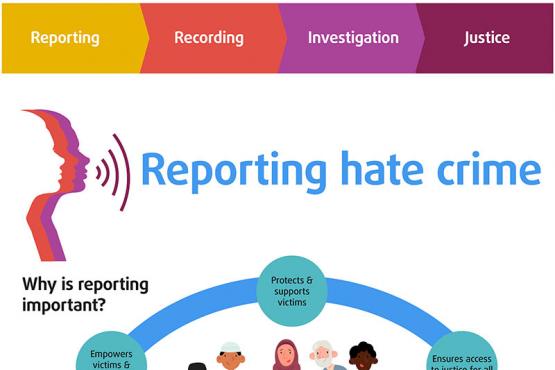
Drawing on the ‘Encouraging hate crime reporting: the role of law enforcement and other authorities' report, in this infographic FRA outlines why reporting is so important and what must change to encourage hate crime reporting.
This Coronavirus Bulletin focuses on equitable access to vaccines. It outlines the situation in the 27 EU Member States from 1 March to 30 April 2021. The bulletin looks at two main areas: planning and prioritisation in deploying Covid-19 vaccinations and their rollout in the countries. It covers information and communication campaigns, as well as (pre)registration channels for and the administration of vaccinations.
This focus looks at COVID-19’s impact on fundamental rights. It underscores that a human rights-based approach to tackling the pandemic requires balanced measures that are based on law, necessary, temporary and proportional. It also requires addressing the pandemic’s socio-economic impact, protecting the vulnerable and fighting racism.
There are many reasons for the police to stop someone. But prejudice should not be one of them. Find out what FRA is doing to end discriminatory police stops.
This paper presents statistical survey data for the EU on how often people are stopped by the police, in what kind of situations they are stopped, the action taken by the police during stops, and views on whether or not the police acted respectfully.