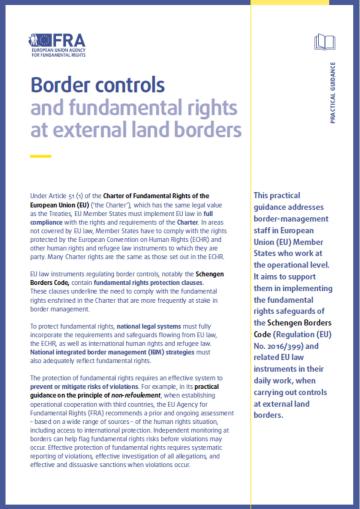
Niniejsze wskazówki są skierowane do personelu zarządzającego granicami w państwach członkowskich UE pracującego na poziomie operacyjnym. Mają pomóc mu wdrażać w codziennej pracy środki zabezpieczające prawa podstawowe, przewidziane w kodeksie granicznym Schengen (rozporządzenie (UE) 2016/399) oraz w powiązanych aktach prawa UE.
Esta orientação destina-se ao pessoal de gestão de fronteiras nos Estados-Membros da União Europeia (UE) que trabalha a nível operacional. Visa ajudá-los a implementar, no seu trabalho diário, as salvaguardas dos direitos fundamentais do Código das Fronteiras Schengen [Regulamento (UE) 2016/399] e a legislação conexa da UE.
Acest ghid se adresează membrilor personalului responsabil de gestionarea frontierelor statelor membre ale UE care își desfășoară activitatea la nivel operațional. Ghidul își propune să îi ajute să pună în aplicare, în activitatea lor zilnică, garanțiile privind drepturile fundamentale prevăzute de Codul Frontierelor Schengen [Regulamentul (UE) 2016/399] și de legislația conexă a UE.
Toto praktické usmernenie je určené zamestnancom povereným riadením hraníc v členských štátoch Európskej únie (EÚ), ktorí pracujú na operačnej úrovni. Cieľom je podporiť ich pri implementácii záruk na ochranu základných práv zakotvených v Kódexe schengenských hraníc [nariadenie (EÚ) č. 2016/399] a súvisiacich právnych predpisov EÚ pri ich každodennej práci.
Te smernice so namenjene uslužbencem na področju upravljanja meja v državah članicah EU, ki delajo na operativni ravni. Pri vsakodnevnem delu naj bi jim pomagale pri izvajanju zaščitnih ukrepov v zvezi s temeljnimi pravicami iz zakonika o schengenskih mejah (Uredba (EU) št. 2016/399) in povezanega prava EU.
Denna vägledning riktar sig till gränsförvaltningspersonal i EU:s medlemsstater som arbetar på operativ nivå. Syftet är att de i sitt dagliga arbete ska få hjälp att genomföra de skyddsåtgärder för grundläggande rättigheter som fastställs i kodexen om Schengengränserna (förordning (EU) 2016/399) och i relaterad EU-lagstiftning.
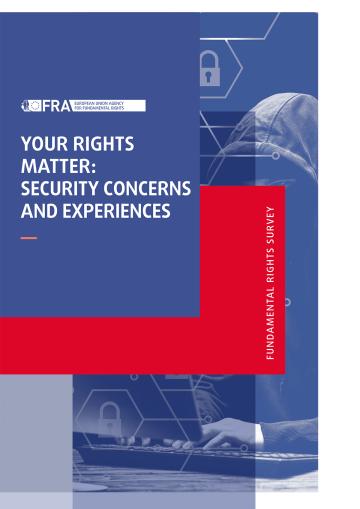
This paper presents people’s concerns and experiences relating to security. It covers worry about crime, including terrorism and online fraud; experience of online fraud; experience of cyberharassment; and concern about illegal access to data.
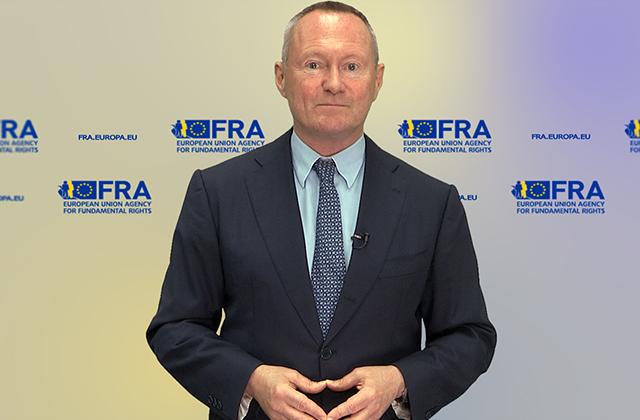
What are the next steps in the digitalisation of justice and of access to justice? This impulse video statement by FRA Director Michael O’Flaherty was recorded for the online conference “Access to Justice in the Digital Age”. The conference takes place on 16 July and is organised by the German Federal Ministry for Justice and Consumer Protection during the German Council Presidency.
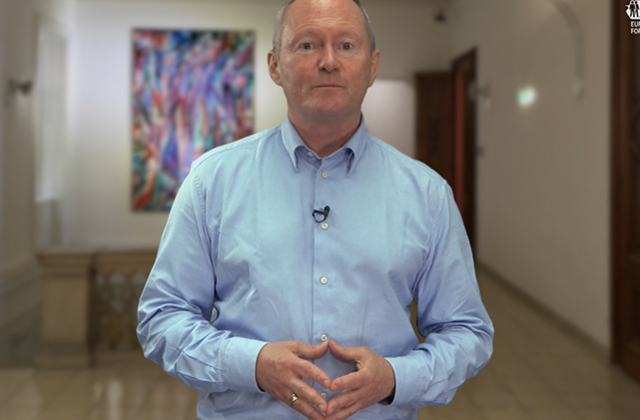
Michael O'Flaherty introduces the July edition of FRA's bulletin on the impact for fundamental rights of Covid-19. In this vlog he talks about the important role that people play who are engaged with the promotion and the protection of human rights in these times.
The July edition of the COVID-19 bulletin will be available from 30 July.
The EU Return Directive introduced an important fundamental rights safeguard for third-country nationals ordered to leave the EU because they do not or no longer fulfil the conditions for entry and/or stay. According to the Directive, Member States must provide for an effective forced-return monitoring system.
The EU Return Directive (2008/115/EC) in Article 8 (6) introduced an important fundamental rights safeguard for third-country nationals ordered to leave the EU because they do not or no longer fulfil the conditions for entry and/or stay. According to the directive, Member States must provide for an effective forced-return monitoring system.
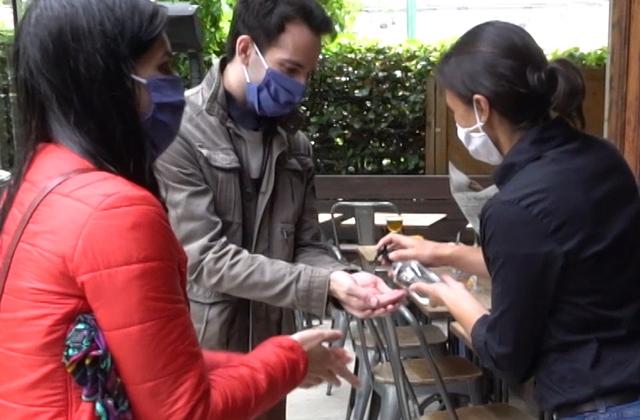
The Coronavirus pandemic continues to interrupt everyday life in the EU in unprecedented ways. But the way it affects our societies is shifting. As governments gradually lift some of the measures put in place to contain the spread of COVID-19, new fundamental rights concerns arise: how to ensure that the rights to life and health are upheld as daily life transitions to a ‘new normal’. This Bulletin looks at declarations of states of emergency, or equivalent, and how they came under scrutiny. It considers
the impact on fundamental rights in important areas of daily life, and includes a thematic focus on the pandemic's impact on older people.
In this video message to the Equality2020 conference on 29 June, FRA Director Michael O'Flaherty speaks about our shared struggle for a Europe that honours everybody in their diversity, in their equality and in their dignity.
In this video message FRA Director Michael O'Flaherty speaks about LGBTI equality on the occasion of the Global Pride 2020:
https://www.globalpride2020.org/
FRA’s Fundamental Rights Survey collected data from 35,000 people about their experiences, perceptions and opinions on a range of issues that are variously encompassed by human rights. This report presents a small selection of the survey results. It focuses on findings with respect to respondents’ opinions about human – or fundamental rights; their views and perceptions on the functioning of democratic societies – as a pillar on which human rights can flourish; and on their thoughts on and engagement with public services that have a duty to enforce human rights law and to protect people’s rights.
In 2019, the International Organization for Migration estimated that 1,866 people have died or gone missing while crossing the Mediterranean Sea to reach Europe to escape war or persecution or to pursue a better life. This is an average of five people per day. In recent years, a significant proportion of migrants in distress at sea have been rescued by civil society vessels deployed with a humanitarian mandate to reduce fatalities and bring rescued migrants to safety. Since 2018, however, authorities in some EU Member States started viewing civil society-deployed rescue vessels with hostility. As a reaction, national authorities initiated about 40 administrative and criminal proceedings against crew members or vessels, including seizing the latter. In some cases, rescue vessels were blocked in harbours due to flag issues or the inability to meet technical requirements.
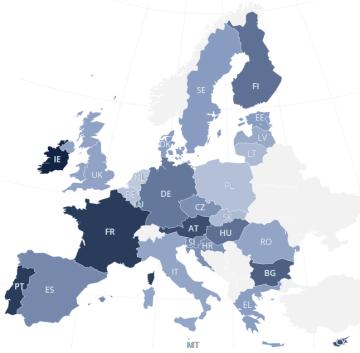
This document presents data from the FRA Fundamental Rights Survey. It includes data on opinions and experiences of people in the European Union (EU) linked to data protection and technology.
The Consolidated Annual Activity Report (CAAR) 2019 provides an overview of the activities and achievements of the European Union Agency for Fundamental Rights (FRA) in that year. It follows the guidelines established by the European Commission.