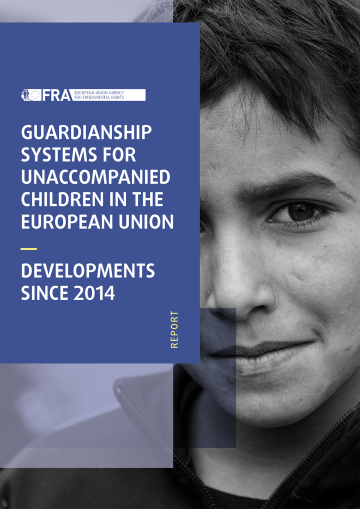
In 2015 and 2016, the numbers of unaccompanied children arriving in Europe increased dramatically, straining national guardianship systems. This report looks at how EU Member States, as well as North Macedonia and Serbia, have adapted their guardianship systems for unaccompanied children since that time.
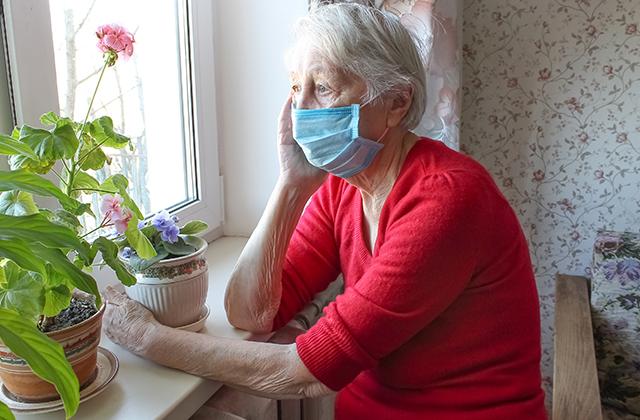
The Coronavirus pandemic continues to interrupt everyday life in the EU in unprecedented ways. But the way it affects our societies is shifting. As governments gradually lift some of the measures put in place to contain the spread of COVID-19, new fundamental rights concerns arise: how to ensure that the rights to life and health are upheld as daily life transitions to a ‘new normal’. This Bulletin looks at declarations of states of emergency, or equivalent, and how they came under scrutiny. It considers
the impact on fundamental rights in important areas of daily life, and includes a thematic focus on the pandemic's impact on older people.
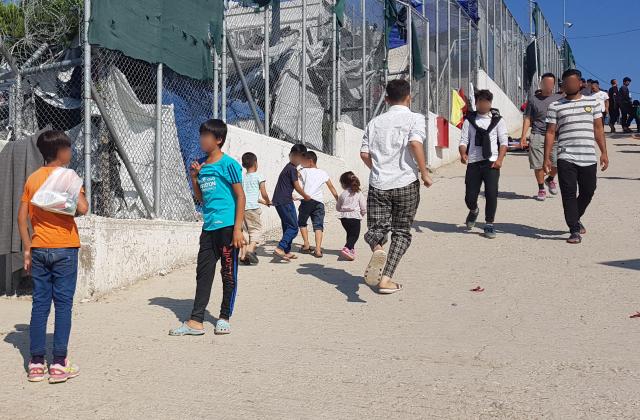
In recent years, thousands of girls and boys have reached Europe without their parents, and sought international protection. Many of them experienced violence, abuse and neglect in their home countries, and while in transit. They have the right to be protected in line with the provisions of the UN Convention on the Rights of the Child, the European Convention on Human Rights, and European Union law. This report explores the challenges and good practices gathered in the implementation of such relocation programmes. Based on information FRA collected in 10 EU Member States, it aims to help national authorities to support the relocation of unaccompanied children by taking measures that are fully rights compliant and practically feasible.
The EU Agency for Fundamental Rights (FRA) urges Member States to agree on a simple and practical workflow as soon as possible, to avoid lack of clarity and delays in the relocation process. This paper provides practical suggestions on relocation of unaccompanied children from Greece, building on lessons learned from previous mandatory and voluntary relocation schemes. The paper provides FRA input on the initiative of the European Commission and a group of Member States to relocate unaccompanied children.
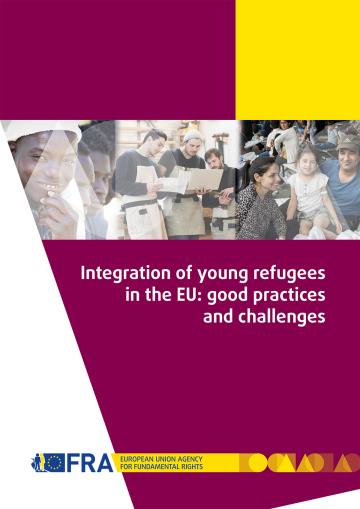
Over 2.5 million people applied for international protection in the 28 EU Member States in 2015 and 2016. Many of those who were granted some form of protection are young people, who are likely to stay and settle in the EU. The EU Agency for Fundamental Rights interviewed some of them, as well as professionals working with them in 15 locations across six EU Member States: Austria, France, Germany, Greece, Italy and Sweden. This report presents the result of FRA’s fieldwork research, focusing on young people between the
ages of 16 and 24.
Child rights come first. Measures to ensure child protection and participation apply to all children in the EU. This brochure guides you to relevant FRA reports and tools that can support you when promoting and protecting the rights of all children in the EU.
Individuals who are not entitled to stay in the European Union are typically subject to being returned to their home countries. This includes children who are not accompanied by their parents or by another primary caregiver. But returning such children, or finding another durable solution, is a delicate matter, and doing so in full compliance with fundamental rights protections can be difficult. This focus paper therefore aims to help national authorities involved in return-related tasks, including child-protection services, to ensure full rights compliance.
Based on FRA’s second large-scale survey on experiences and perceptions of antisemitism, this report focuses on the perspectives of young Jewish Europeans (aged 16-34) living in twelve EU Member States. It first describes this particular group and takes a look at defining antisemitism and understanding the place of Israel in it.



 Report / Paper / Summary13September2023
 Handbook / Guide / Manual7April2022