• Handbook / Guide / Manual
    23
    October
    2018
    UA version now available
    30 April 2026
    As a very modern human rights catalogue containing many rights not found in established bills of rights, the Charter indeed looks good on paper. Those familiar with the main principles of EU law can usually quickly recite that the Charter is always binding on the EU, and binding on Member States only when they are "implementing EU law". But what does this often-quoted language from Article 51 of the Charter actually mean?
  • Report / Paper / Summary
    17
    October
    2018
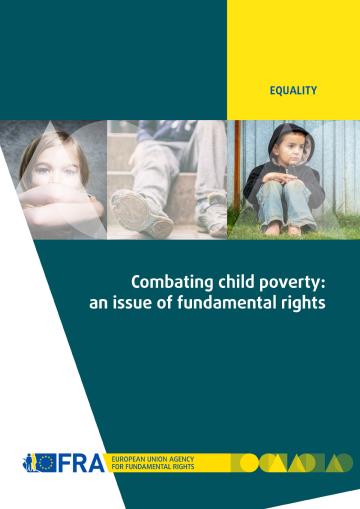
    Almost 25 million children under 18 are at risk of poverty or social exclusion in the EU. Poverty deprives children of educational
    opportunities, childcare, access to health care, adequate food and housing, family support and even protection from violence.
    This report outlines data and survey findings that highlight the magnitude of child poverty in the EU, but also presents tools
    available to counter this phenomenon and keep track of progress made.
  • Opinion / Position Paper
    1
    October
    2018
    With this Opinion, FRA aims to contribute to the European Parliament's own-initiative report on the “Implementation of the Charter of Fundamental Rights of the European Union in the EU institutional framework”, being prepared in the Parliament’s Committee for Constitutional Affairs (AFCO). The request aims at understanding the interaction between the Charter’s implementation at national and EU level, and whether there are “instruments, mechanisms and practices” available at EU level to assist Member States to better implement the Charter.
  • Handbook / Guide / Manual
    26
    September
    2018
    These 10 keys sum up the core points
    communicators and practitioners in various fields
    raised in FRA’s expert meetings, practitioners’
    seminars and focus groups in 2017 and 2018.
  • Periodic updates / Series
    21
    September
    2018
    The EU Agency for Fundamental Rights has been collecting relevant data since September 2015, in light of the increasing numbers of refugees, asylum seekers and migrants entering the EU. This report focuses on the fundamental rights situation of people arriving in Member States particularly affected by large migration movements. The countries covered are: Austria, Bulgaria, Croatia, Denmark, Finland, France, Germany, Greece, Hungary, Italy, the Netherlands, Poland, Spain and Sweden.

  • In brief / Factsheet
    20
    September
    2018
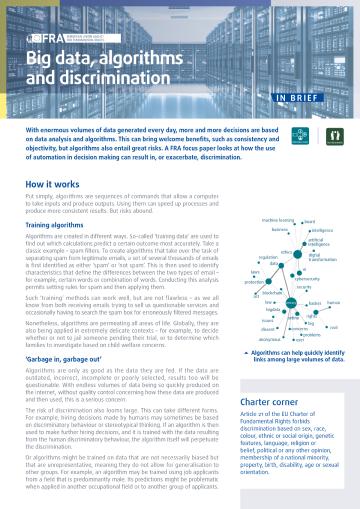
    With enormous volumes of data generated every day, more and more decisions are based on data analysis and algorithms. This can bring welcome benefits, such as consistency and objectivity, but algorithms also entail great risks. A FRA focus paper looks at how the use of automation in decision making can result in, or exacerbate, discrimination.
  • Opinion / Position Paper
    14
    September
    2018
    This Opinion by the European Union Agency for Fundamental Rights (FRA) aims to inform the European Parliament’s position concerning the legislative proposal for a Regulation on strengthening the security of identity cards of European Union (EU) citizens and of residence documents issued to EU citizens and their family members exercising their right of free movement. It focuses on the processing of biometric data and complements the opinion published by the European Data Protection Supervisor (EDPS).
  • Report / Paper / Summary
    12
    September
    2018
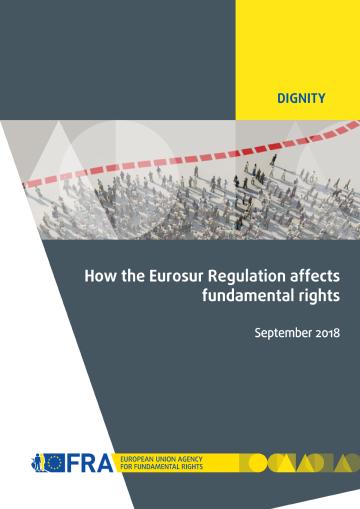
    In November 2017, the European Commission requested FRA’s support in evaluating the impact on fundamental rights of the European Border Surveillance System (Eurosur) Regulation. Further to this request, FRA reviewed the work of the European Border and Coast Guard Agency (Frontex) and analysed cooperation agreements concluded by EU Member States with third countries which are relevant for the exchange of information for the purposes of Eurosur. This report presents the main findings of such review.
  • Opinion / Position Paper
    10
    September
    2018
    This Opinion aims to
    inform the European Parliament’s position on the legislative proposal amending the
    Visa Information System, the Visa Code and other related provisions of EU law. The
    European Commission presented the proposal on 16 May 2018 and EU legislators are
    currently discussing it.
  • Report / Paper / Summary
    5
    September
    2018
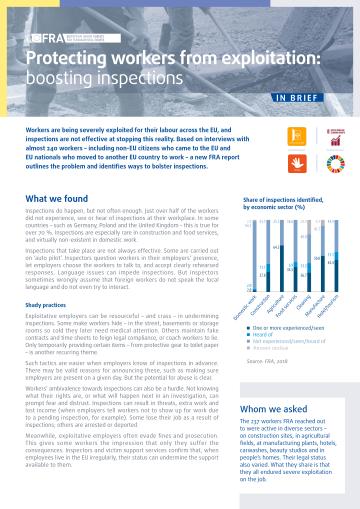
    Severe labour exploitation is widespread across the European Union. While workplace inspections can help counter this phenomenon, they need to be strengthened to do so effectively. Based on interviews and focus group discussions with almost 240 exploited workers active in diverse economic sectors, this report provides important evidence on how unscrupulous employers manipulate and undermine inspections, and on what can be done to counteract such efforts.
  • In brief / Factsheet
    6
    September
    2018
    Workers are being severely exploited for their labour across the EU, and
    inspections are not effective at stopping this reality. Based on interviews with
    almost 240 workers – including non-EU citizens who came to the EU and
    EU nationals who moved to another EU country to work – a new FRA report
    outlines the problem and identifies ways to bolster inspections.
  • Report / Paper / Summary
    29
    August
    2018
    The founding treaties, the EU Charter of Fundamental Rights and secondary EU law all provide for EU citizens’ freedom to move and reside freely in any EU country of their choice. Growing numbers of citizens, and their family members, are making use of this freedom and related rights, such as the right not to be discriminated against based on nationality and the right to vote in certain elections in the host Member State. But making these rights a reality remains a challenge. This report presents an EU-wide, comparative overview of the application of the Free Movement Directive (2004/38/EC) across the 28 Member States based on a review of select case law at national level.
  • Periodic updates / Series
    23
    July
    2018
    The EU Agency for Fundamental Rights has been collecting relevant data since September 2015, in light of the increasing numbers of refugees, asylum seekers and migrants entering the EU. This report focuses on the fundamental rights situation of people arriving in Member States particularly affected by large migration movements. The countries covered are: Austria, Bulgaria, Croatia, Denmark, Finland, France, Germany, Greece, Hungary, Italy, the Netherlands, Poland, Spain and Sweden.
  • Report / Paper / Summary
    19
    July
    2018
    Across the European Union, Member States are faced with the challenge of integrating Europe’s most deprived
    and disenfranchised minority groups. As a follow up to the EU-MIDIS II findings on Roma, this report presents
    FRA’s findings relating to the issues of education and employment. Encouraging Roma participation in education
    and employment equips communities with higher incomes, better life opportunities and greater social inclusion.
  • Report / Paper / Summary
    21
    June
    2018
    The EU Return Directive (2008/115/EC) in Article 8 (6) introduced an important fundamental rights safeguard for third-country nationals ordered to leave the EU because they do not or no longer fulfil the conditions for entry and/or stay. According to the Directive, Member States must provide for an effective forced-return monitoring system.
  • Report / Paper / Summary
    21
    June
    2018
    Across the European Union, people face hatred because of their skin colour, ethnicity, religion, gender or sexuality. In response, the EU and its Member States have introduced laws against hate crime and support services for victims. But these will only fulfil their potential if victims report hate-motivated harassment and violence to the police, and if police officers record such incidents as hate crimes. This report provides rich and detailed information on hate crime recording and data collection systems across the EU, including any systemic cooperation with civil society.