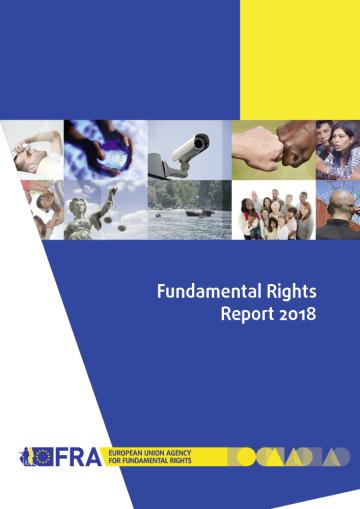
Across the European Union, people face hatred because of their skin colour, ethnicity, religion, gender or sexuality. In response, the EU and its Member States have introduced laws against hate crime and support services for victims. But these will only fulfil their potential if victims report hate-motivated harassment and violence to the police, and if police officers record such incidents as hate crimes. This report provides rich and detailed information on hate crime recording and data collection systems across the EU, including any systemic cooperation with civil society.
The year 2017 brought both progress and setbacks in terms of rights protection. The European Pillar of Social Rights marked an important move towards a more ‘social Europe’. But, as experiences with the EU Charter of Fundamental Rights underscore, agreement on a text is merely a first step. Even in its eighth year as the EU's binding bill of rights, the Charter's potential was not fully exploited, highlighting the need to more actively promote its use.
Civil society organisations in the European Union play a crucial role in promoting fundamental
rights, but it has become harder for them do so – due to both legal and practical restrictions.
This summary outlines the main
findings and FRA’s opinions on the different
types and patterns of challenges faced by civil society
organisations across the EU,
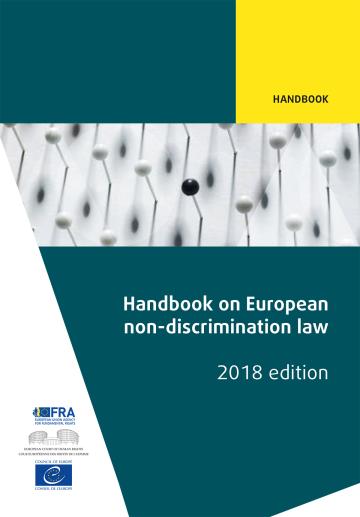
Id-dritt Ewropew tan-nondiskriminazzjoni, kif ikkostitwit b’mod partikolari mid-direttivi tal-UE dwar in-nondiskriminazzjoni, u l-Artikolu 14 u l-Protokoll 12 tal-Konvenzjoni Ewropea dwar id-Drittijiet tal-Bniedem, jipprojbixxi d-diskriminazzjoni f’firxa ta’ kuntesti u raġunijiet. Dan il-manwal jeżamina d-dritt Ewropew tan-nondiskriminazzjoni li jirriżulta minn dawn iż-żewġ sorsi bħala sistemi
komplementari, u jużahom b’mod interkambjabbli sal-punt li jikkoinċidu, filwaqt li jenfasizza d-differenzi fejn dawn jeżistu.
Seventeen years after adoption of EU laws that forbid discrimination, immigrants, descendants of immigrants, and minority ethnic groups continue to face widespread discrimination across the EU and in all areas of life – most often when seeking employment. For many, discrimination is a recurring experience. This is just one of the findings of FRA’s second European Union Minorities and Discrimination Survey (EU-MIDIS II), which collected information from over 25,500 respondents with different ethnic minority and immigrant backgrounds across all 28 EU Member States.


 Report / Paper / Summary7July2021
 Report / Paper / Summary21June2018