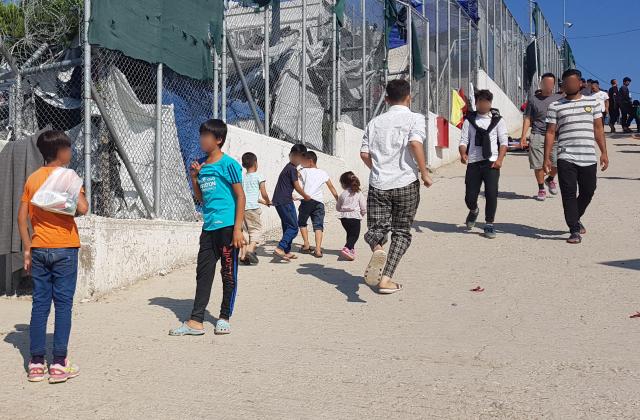
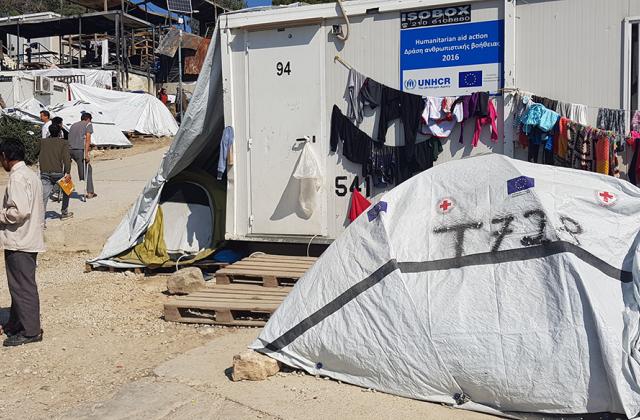
The EU Agency for Fundamental Rights (FRA) urges Member States to agree on a simple and practical workflow as soon as possible, to avoid lack of clarity and delays in the relocation process. This paper provides practical suggestions on relocation of unaccompanied children from Greece, building on lessons learned from previous mandatory and voluntary relocation schemes. The paper provides FRA input on the initiative of the European Commission and a group of Member States to relocate unaccompanied children.
Over 2.5 million people applied for international protection in the 28 EU Member States in 2015 and 2016. Many of those who were granted some form of protection are young people, who are likely to stay and settle in the EU. The EU Agency for Fundamental Rights interviewed some of them, as well as professionals working with them in 15 locations across six EU Member States: Austria, France, Germany, Greece, Italy and Sweden. This report presents the result of FRA’s fieldwork research, focusing on young people between the
ages of 16 and 24.
Child rights come first. Measures to ensure child protection and participation apply to all children in the EU. This brochure guides you to relevant FRA reports and tools that can support you when promoting and protecting the rights of all children in the EU.
The EU Agency for Fundamental Rights has been regularly collecting data on asylum and
migration since September 2015. This report focuses on the fundamental rights situation
of people arriving in Member States and EU candidate countries particularly affected by
migration. It addresses fundamental rights concerns between 1 July and 30 September 2019.
Individuals who are not entitled to stay in the European Union are typically subject to being returned to their home countries. This includes children who are not accompanied by their parents or by another primary caregiver. But returning such children, or finding another durable solution, is a delicate matter, and doing so in full compliance with fundamental rights protections can be difficult. This focus paper therefore aims to help national authorities involved in return-related tasks, including child-protection services, to ensure full rights compliance.
Podręcznik Dzieci pozbawione opieki rodzicielskiej znajdujące się w innym państwie członkowskim
UE niż ich własne ma na celu wzmocnienie reakcji wszystkich podmiotów zaangażowanych
w ochronę dzieci. Ochrona tych dziewcząt i chłopców ma nadrzędne znaczenie i jest wynikającym
z międzynarodowych i europejskich ram prawnych obowiązkiem państw członkowskich
UE. W podręczniku skoncentrowano się na dzieciach będących ofiarami handlu ludźmi i dzieciach
zagrożonych, wdrażając działanie określone w komunikacie z 2017 r. w sprawie nasilenia działań
UE wymierzonych przeciwko handlowi ludźmi, oraz uwzględniono określone wzorce, w tym
w odniesieniu do aspektu płci przestępstwa.
In November 2016, FRA formulated 21 individual opinions to address the fundamental rights shortcomings identified in the implementation of the hotspot approach in Greece and Italy. Despite genuine efforts to improve the situation since November 2016, many of the suggestions contained in the 21 opinions FRA formulated at the time remain valid.
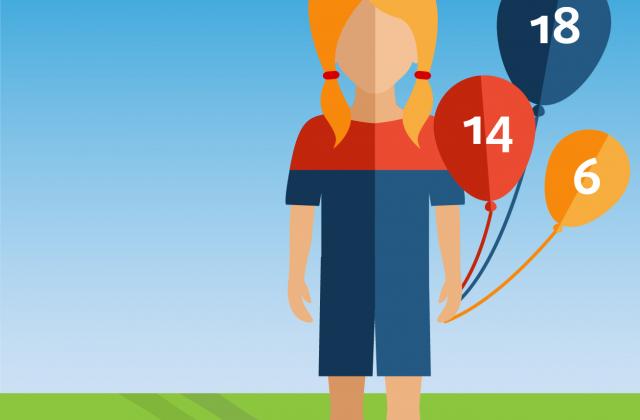
The methods used to determine the age of
an applicant may include “invasive” medical tests which interfere with the rights of the child, including their right to dignity,
integrity and privacy. It is often a challenge to find the right balance between protecting children from harm and promoting
their participation in these procedures. This report provides important insights and identifies the implications of collecting
children’s biometric data and conducting age assessments.
Guardians are a key element of a protection system for children who are temporarily or
permanently deprived of their family environment and cannot have their interests represented
by their parents. Great disparities exist between the types of guardianship provided
to children in and within European Union (EU) Member States. This report explores the key
features of guardianship systems put in place to cater for the needs of all children in need
of protection, including child victims and those at risk of becoming victims of trafficking in
human beings or of other forms of exploitation.


 Handbook / Guide / Manual1March2023