This paper presents statistical survey data for the EU on how often people are stopped by the police, in what kind of situations they are stopped, the action taken by the police during stops, and views on whether or not the police acted respectfully.
This opinion illustrates the extent and nature of lived experiences of inequality and discrimination across the EU. It does so with reference to the grounds of discrimination and areas of life covered by the racial and employment equality directives, as well as in relation to the grounds and areas covered by the proposed Equal Treatment Directive.
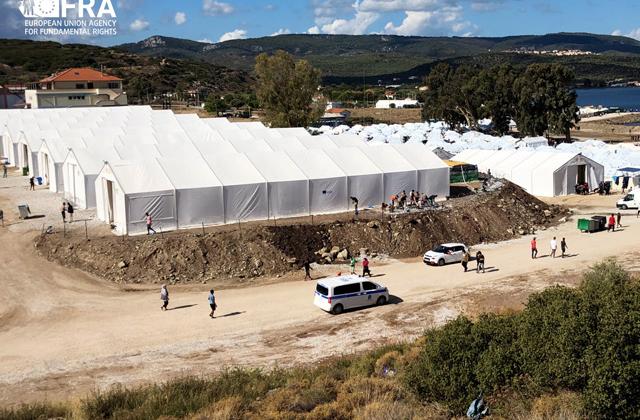
FRA Director Michael O'Flaherty visited the island of Samos, Greece, in April 2021 to get a sense of the reception facilities there. In this video, he acknowledges the efforts being made to improve facilities. He offers the Agency’s continued commitment to support these supports. As an example, he refers to FRA’s guidance on respecting fundamental rights at such facilities that could benefit both migrants and locals.
FRA’s 2019 survey on Roma and Travellers in Belgium, France, Ireland, the Netherlands, Sweden and the United Kingdom interviewed almost 4 700 Roma and Travellers, collecting information on more than 8 200 individuals living in their households.
FRA Director Michael O'Flaherty, in his latest vlog, reflects on the migration situation at the EU’s external borders. He highlights the need for sustained joined-up efforts from all relevant bodies, including civil society, to protect the wellbeing and human rights of migrants. He underlines the importance of working with local communities as we receive migrants into our communities. He also points to room for improvement is our treatment of unaccompanied children.
This note outlines how to help ensure a dignified stay for third-country nationals who are apprehended or intercepted at external borders. Specifically, FRA identifies twelve points for protection-sensitive and fundamental rights-compliant planning and design of initial-reception facilities at such borders. These are based on the agency’s work at external borders, including data collection and research activities.
FRA Director Michael O'Flaherty visited the Canary Islands in March 2021 to get a sense of the migration situation there. He highlights the need to support the Canary Islands in relocating unaccompanied children and providing clear procedures on asylum applications.
The EU Agency for Fundamental Rights has been regularly collecting data on asylum and migration since September 2015. This report focuses on the fundamental rights situation of people arriving in Member States and EU candidate countries particularly affected by migration. It addresses fundamental rights concerns between 1 October and 31 December 2020.
This is the second main report from FRA’s Fundamental Rights Survey, which collected data from 35,000 people on a range of issues. This report focuses on respondents’ experiences as victims of selected types of crime, including violence, harassment, and property crime. The report also examines how often these crimes are reported to the police, and presents further details relating to harassment and violence, such as the perpetrators and where the incidents took place.
Lots of small, positive acts can lead to great things. FRA’s Friso Roscam Abbing explains how you can defend human rights by something as simple as voting. Friso shares all he learned from the fall of the Iron Curtain. And how you too can affect such world-changing events by exercising your rights at home. By using your right to vote, you too can make a difference.
FRA’s report on artificial intelligence and fundamental rights presents concrete examples of how companies and public administrations in the EU are using, or trying to use, AI. This summary presents the main insights from the report. These can inform EU and national policymaking efforts to regulate the use of AI tools in compliance with human and fundamental rights.
National Human Rights Institutions (NHRIs) are a vital part of the country-level human rights protection system. By raising awareness, providing advice, monitoring and holding authorities to account, they have a central role in navigating the great human rights challenges of our day – tackling both persistent concerns like discrimination and inequality, and novel issues such as the rights implications of artificial intelligence and of the COVID-19 pandemic.
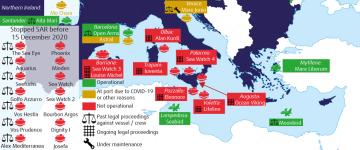
In 2020 (until 15 December), the International Organization for Migration estimated that about 1,054 people have died or gone missing while crossing the Mediterranean Sea to reach Europe to escape war or persecution or to pursue a better life. This is an average of almost three people per day. In the past years, a significant number of migrants in distress at sea have been rescued by civil society vessels deployed with a humanitarian mandate to reduce fatalities and bring rescued migrants to safety. Since 2018, however, national authorities initiated some 50 administrative and criminal proceedings against crew members or vessels, also seizing the latter. In some cases, rescue vessels were blocked in harbours due to flag issues or the inability to meet maritime safety-related and other technical requirements.
Европейската конвенция за защита на правата на човека (ЕКПЧ) и правото на Евро- пейския съюз (ЕС) предоставят рамка за защита на правата на чужденците, чието значение непрестанно се повишава. Законодателството на Европейския съюз относно убежището, границите и имиграцията се развива бързо. Съществува вну- шителна по обем съдебна практика на Европейския съд по правата на човека във връзка по-специално с членове 3, 5, 8 и 13 от ЕКПЧ. Към Съда на Европейския съюз биват отправяни все повече искания да се произнесе по отношение на тълкуването на разпоредбите на правото на Европейския съюз в тази област. Третото издание на този наръчник, актуализирано до юли 2020 г., предоставя по достъпен начин това законодателство на Европейския съюз и съвкупността от съдебната практика на европейските съдилища. Наръчникът е предназначен за практикуващи юристи, съдии, прокурори, служители на имиграционните служби и неправителствени орга- низации в държавите — членки на ЕС, и на Съвета на Европа.
Evropská úmluva o lidských právech a právo Evropské unie poskytují stále důležitější rámec pro ochranu práv cizinců. Právní předpisy Evropské unie týkající se azylu, hranic a přistěhovalectví se rychle vyvíjejí. Existuje rozsáhlá judikatura Evropského soudu pro lidská práva týkající se zejména článků 3, 5, 8 a 13 EÚLP. Soudní dvůr Evropské unie je stále častěji žádán, aby se vyjádřil k výkladu ustanovení práva Evropské unie v této oblasti. Třetí vydání této příručky, aktualizované k červenci 2020, představuje tyto právní předpisy Evropské unie a judikaturu obou evropských soudů přístupným způsobem. Příručka je určena právníkům, soudcům, státním zástupcům, imigračním úředníkům a nevládním organizacím v členských státech EU a Rady Evropy.
Den europæiske menneskerettighedskonvention og Den Europæiske Unions lovgivning udgør en stadigt vigtigere ramme for beskyttelse af udlændinges rettigheder. Den Europæiske Unions lovgivning vedrørende asyl, grænser og indvandring udvikler sig hurtigt. Der er en imponerende mængde retspraksis fra Den Europæiske Menneskerettighedsdomstol vedrørende navnlig artikel 3, 5, 8 og 13 i EMRK. Den Europæiske Unions Domstol bliver oftere og oftere anmodet om at fortolke bestemmelserne i EU-retten på dette område. Den tredje udgave af denne håndbog, der er opdateret frem til juli 2020, fremlægger denne EU-lovgivning og retspraksis fra de to europæiske domstole på en lettilgængelig måde. Håndbogen er tiltænkt aktører inden for retsvæsenet, anklagere, indvandringsmedarbejdere og ikkestatslige organisationer i EU’s og Europarådets medlemsstater.
Η Ευρωπαϊκή Σύμβαση Δικαιωμάτων του Ανθρώπου και το δίκαιο της Ευρωπαϊκής Ένω- σης παρέχουν ένα όλο και πιο σημαντικό πλαίσιο για την προστασία των δικαιωμάτων των αλλοδαπών. Η νομοθεσία της Ευρωπαϊκής Ένωσης σχετικά με το άσυλο, τα σύνορα και τη μετανάστευση εξελίσσεται με ταχείς ρυθμούς. Υπάρχει ένα εντυπωσιακό σώμα νομολογίας του Ευρωπαϊκού Δικαστηρίου Ανθρωπίνων Δικαιωμάτων που αφορά ειδικό- τερα τα άρθρα 3, 5, 8 και 13 της ΕΣΔΑ. Το Δικαστήριο της Ευρωπαϊκής Ένωσης καλείται όλο και περισσότερο να αποφανθεί σχετικά με την ερμηνεία των διατάξεων του δικαίου της Ευρωπαϊκής Ένωσης στον τομέα αυτό. Η τρίτη έκδοση του παρόντος εγχειριδίου, που επικαιροποιήθηκε έως τον Ιούλιο του 2020, παρουσιάζει την εν λόγω νομοθεσία της Ευρωπαϊκής Ένωσης και το σώμα της νομολογίας των δύο ευρωπαϊκών δικαστηρίων με εύχρηστο τρόπο. Απευθύνεται σε επαγγελματίες του νομικού κλάδου, δικαστές, εισαγ- γελείς, υπαλλήλους στον τομέα της μετανάστευσης και μη κυβερνητικές οργανώσεις, στα κράτη μέλη της ΕΕ και του Συμβουλίου της Ευρώπης.
The European Convention on Human Rights and European Union law provide an increasingly important framework for the protection of the rights of foreigners. European Union legislation relating to asylum, borders and immigration is developing fast. There is an impressive body of case law by the European Court of Human Rights relating in particular to Articles 3, 5, 8 and 13 of the ECHR. The Court of Justice of the European Union is increasingly asked to pronounce on the interpretation of European Union law provisions in this field. The third edition of this handbook, updated up to July 2020, presents this European Union legislation and the body of case law by the two European courts in an accessible way.
Euroopa inimõiguste konventsioon ja Euroopa Liidu õigus moodustavad üha olulisema raamistiku välismaalaste õiguste kaitseks. Varjupaiga, piiride ja sisserändega seotud Euroopa Liidu õigusaktid arenevad kiiresti. Euroopa Inimõiguste Kohtu kohtupraktika
on ulatuslik, eelkõige seoses Euroopa inimõiguste konventsiooni artiklitega 3, 5, 8 ja 13. Euroopa Liidu Kohtul palutakse üha sagedamini võtta seisukoht Euroopa Liidu õiguse sätete tõlgendamise kohta selles valdkonnas. Käsiraamatu kolmandas väljaandes, mida on ajakohastatud kuni juulini 2020, tutvustatakse arusaadavalt Euroopa Liidu õigusakte ja Euroopa mõlema kohtu kohtupraktikat. See on ette nähtud ELi ja Euroopa Nõukogu liikmesriikide õigusala töötajatele, kohtunikele, prokuröridele, sisserändeametnikele ja vabaühendustele.
Euroopan ihmisoikeussopimus ja Euroopan unionin oikeus sisältävät yhä tärkeämmäksi käyvän ulkomaalaisten oikeuksien suojaamista koskevan säännöstön. Euroopan unionin oikeus turvapaikkaoikeudesta, rajoista ja maahanmuutosta kehittyy nopeasti. Euroopan ihmisoikeustuomioistuimessa on kertynyt runsaasti oikeuskäytäntöä, erityisesti Euroopan ihmisoikeussopimuksen 3, 5, 8 ja 13 artiklasta. Euroopan unionin tuomioistuimelta pyydetään yhä useammin lausuntoa unionin oikeuden tämän alan säännösten tulkinnasta. Käsikirjan kolmannessa painoksessa, jota on päivitetty heinäkuuhun 2020 saakka, esitetään EU:n lainsäädäntöä ja molempien tuomioistuinten oikeuskäytäntöä helposti saatavilla olevassa muodossa.