Migration and Fundamental Rights Bulletin - 3/2026

TABLE OF CONTENT
Search inside this publication
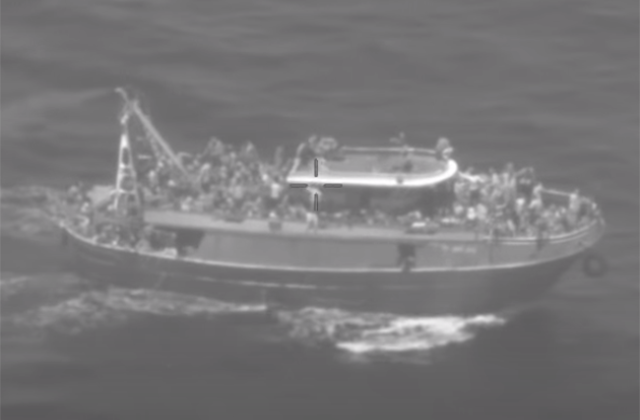
Although arrivals by sea decreased in 2026, deaths and disappearances remained high. According to data the International Organization for Migration provided to FRA on 1 October, between 1 July and 30 September 2026, at least 852 people were reported dead or missing on migration routes to Europe in the Mediterranean Sea and along the Atlantic Ocean route to the Spanish Canary Islands. The highest numbers were recorded on the West Africa-Atlantic Route (283 dead or missing, including 5 children), followed by the Western Mediterranean route (229, including 8 children), the Eastern Mediterranean route (199, including 36 children), and the Central Mediterranean route (141, including 4 children). Search and rescue operations, disembarkation practices and delayed or hindered humanitarian assistance continue to raise serious fundamental-rights concerns.
2.1.1. Restrictions on civil society actors involved in search and rescue at sea
People attempting to cross the Central Mediterranean continue to face a highly dangerous environment. Restrictions on civil society search and rescue organisations affected the ability of people in distress at sea to receive timely assistance and reach a place of safety.
At the end of June 2026, civil society organisations had deployed 21 operational rescue vessels and five reconnaissance aircraft, as listed in FRA’s 2026 update on search and rescue operations in the Central Mediterranean. Since 2017, 105 administrative or criminal proceedings have been opened against civil society organisations involved in search and rescue, which hinder such missions.
In Italy, imposed measures usually involve the temporary blocking of vessels in ports for periods of 20 or 60 days and fines of 2,000 to 10,000 EUR, as FRA’s report describe. In July 2026 CompassCollective reported the blocking of Trotamar III, and posted on social media about the detention and the fining of its vessel Louise Michel. Sea Watch reported the detention of their vessel following a rescue operation in August 2026 and SOS Humanity reported the blocking of Humanity 2 in September 2026. Sea Punk I was detained and fined, according to a post on social media.
The search and rescue cases often concern an alleged failure to communicate with the Libyan Maritime Rescue Coordination Centre. Civil society organisations continue to contest the requirement to cooperate with Libyan rescue authorities, calling for an end to such cooperation. In July 2026, Médecins Sans Frontières urged the European Commission to decide on complaints concerning Italy’s search and rescue rules that had been pending for three years.
2.1.2. Courts as safeguards
Judicial review remains an important counterweight to restrictions affecting civilian search and rescue operations. Courts continue to examine measures and proceedings targeting search and rescue actors.
In Catania, Italy, a court dismissed proceedings concerning waste management on the ‘Aquarius’, bringing to an end nearly nine years of criminal proceedings, as Médecins Sans Frontières reported. In July 2026, a court in Ortona, Italy ruled that the detention of ‘Humanity 1’ in December 2025 had been unlawful and reaffirmed that Libya cannot be considered a place of safety for people rescued at sea, SOS Humanity reported. In September 2026, according to Sea Watch, the court of Naples lifted the detention order and annulled the fine of Sea-Watch 5 linked to an alleged failure to communicate with Libyan authorities during a rescue operation.
These cases underline a recurring tension in the existing regulatory framework: search and rescue actors continue to be sanctioned for not cooperating with Libyan authorities, while courts continue to recognise the protection risks associated with disembarkation in Libya. This contributes to legal uncertainty and imposes a significant legal and organisational burden on search and rescue operations, as highlighted in a joint statement by civil society organisations.
2.1.3. Safety at sea
Civil society organisations deploying search and rescue vessels face increasing safety risks at sea. During a rescue operation in the Central Mediterranean in August 2026, media reported about the vessel Louise Michel coming under fire from a Libyan patrol boat in international waters while attempting a rescue. Earlier, as the ship Louise Michel reported on social media, the same vessel rescued six unaccompanied children who reported being forced into the sea at gunpoint by armed Libyan militias. The absence of effective and independent investigations into reported incidents raises concerns about accountability and impunity. SOS Méditerranée highlighted that one year after its humanitarian rescue vessel Ocean Viking came under heavy fire from the Libyan Coast Guard damaging the ship, no one has yet been held accountable.
According to a report of Emergency, an international humanitarian civil society organisation, civil search and rescue vessels are regularly monitored and followed by Libyan patrol boats. Italian journalists published an article on the origin of 41 of the 97 vessels that various Libyan forces possess. 21 of them were donated as part of the cooperation with the EU and its Member States mainly from Italy (15 vessels).
Possible interceptions and returns to Libya also concern Malta’s search and rescue zone, as the press reported early September 2026. In one case, the captain of a merchant vessel who had located people in distress at sea received instructions from Malta’s Rescue Coordination Centre to wait near them until they were rescued by an unidentified vessel which most likely came from Libya. The article also reports a lack of information on the whereabouts of rescued migrants in two other incidents.
In September 2026, United Nations Human Rights Special Procedures mandate holders issued a statement on the United States migration externalisation arrangements. Referring to arrangements with over 35 countries and territories, including Libya, it warns that the return of migrants may expose them to serious human rights violations, including arbitrary detention, torture and other forms of ill-treatment.
At EU level, the Frontex fundamental rights officer highlights concern regarding aerial surveillance in pre-frontier areas and the sharing of information and sightings with third countries accused of human rights violations against migrants. See section 3.3 of the 2025 Annual Report for more detail.
In Tunisia, the absence of official data on migrants who die or go missing at sea raises concern about what the media describe as ‘invisible deaths'. In July 2026, 46 civil society organisations called for the EU to suspend its support to Tunisia’s border control activities.
A European Parliament briefing issued in September 2026 highlights the risk that measures to address migrant smuggling may also affect humanitarian actors and others assisting migrants, particularly where safeguards for humanitarian assistance are insufficient. FRA’s 2026 update on civic space describes a complex and often hostile environment for civil society, undermining their ability to operate independently, advocate effectively and fulfil their role in a democratic society.
Following the large-scale border crossings in Ceuta at the end of July 2026, the recast of the Facilitation Directive gained renewed political momentum. In an intervention before the European Parliament, EU Migration Commissioner Magnus Brunner called for negotiations on the proposal to be finalised. As FRA previously pointed out, without adequate safeguards protecting humanitarian action, the revised directive may result in expanding the criminalisation of migrants and those assisting them.
Restrictions linked to funding, registration and criminal liability emerged in some Member States. In Bulgaria, a draft bill on the registration of ‘foreign agents’ was tabled again, raising concerns about further restrictions on civic space. If adopted, it would impose registration requirements and restrictions on certain organisations receiving foreign funding.
In Latvia, media reported that until the adoption of a final court decision, authorities suspended an Asylum, Migration and Integration Fund (AMIF) funded project benefitting the association ‘I Want to Help Refugees’ (Gribu palīdzēt bēgļiem). Another media organisation reported about pending criminal proceedings against a member of its board concerning alleged support for the irregular crossing of the Latvian border. The organisation argued that linking funding to pending criminal proceedings was contrary to the presumption of innocence and could have a chilling effect on civil society working on migration and human rights. The suspension followed wider scrutiny of AMIF-funded projects administered by the Latvian Ministry of Culture. The organisation also raised concerns that an Informative Report approved by the Cabinet of Ministers could lead to the criminalisation of assistance to migrants and asylum seekers under broadly defined provisions on the instrumentalisation of migration.
In Greece, the Council of State ruled on the registration system for civil society organisations working with migrants, which made registration a condition for operating in Ministry of Asylum and Migration facilities and accessing government or EU funding (see Migration bulletin 2/2026). While the Council of State upheld key elements of the registration framework, it annulled provisions concerning discretionary registration powers, donor transparency, re-registration bans and found the legal basis for maintaining a separate registry of civil society organisations members to be unconstitutional. The judges also referred questions to the CJEU on registration conditions linked to criminal proceedings or convictions involving civil society representatives and on the processing of criminal-record data.
Case T-593/26 - Gruber v. EDPS was lodged before the General Court of the European Union on 7 September 2026. According to the non-governmental organisation Front-Lex, a human rights defender alleges that the European Data Protection Supervisor of failed to properly assess Europol’s use of her data linked to previous criminal proceedings before a Greek criminal court. The criminal case concerned her humanitarian work with migrants and the charges against her were dropped.
Crossings of the English Channel continue, although fewer people arrived in the United Kingdom (UK) according to the British Home Office.
Migrants increasingly use larger vessels carrying a higher number of people. In August 2026, 230 people crossed in a 15-metre dinghy, the BBC reported. The BBC also reported on serious incidents such as the death of a person following a boat capsizing at the end of July, three deaths in a separate boat found off the French coast, and the rescue of 173 people after a boat caught fire on 4 August. On 28 August, the French Maritime Prefecture informed that 81 people had been rescued, and one person had died in three incidents over the preceding 48 hours. On 29 September, three people including a child were found dead, according to the BBC. Since the beginning of 2025 until 28 September 2026, 63 deaths have been recorded from mainland Europe to the UK, according to IOM.
At the same time, France and the UK have intensified efforts to prevent sea crossings, including through increased French policing, surveillance and interception operations. As a report by the French National Assembly notes, the French authorities have begun intervening directly in the water to prevent boats from continuing their journey, marking a shift from the previous practice on preventing departures only from the shore. Such interception techniques are potentially dangerous. However, the French government informed FRA that their use follows strict guidance taking into account search and rescue considerations.
According to information received by FRA, the French Ombudsperson (Défenseur des droits) is examining two complaints concerning interceptions at sea. Since January 2023, it has handled 92 cases concerning sea crossings from northern France, of which 24 remain pending, including three concerning maritime interventions by the French authorities. There have been some disciplinary and judicial investigations into past incidents which remain pending or have been closed.
In response to the British Home Office’s statement on prevented sea crossings during the period from 27 April to 2 August 2026, the civil society organisation Utopia 56 reported that nearly 35% of the people it supported on the French coast during the same period said they had experienced police violence, compared with 25% a year earlier. More women, children and families reportedly remain in precarious conditions along the northern French coast where protection mechanisms remain limited. There are also heightened risks of trafficking, exploitation and sexual violence, the Refugee Women’s Centre, a French non-profit organisation, noted in its 2025 Annual Report.
The media reports an increase in departures from the Belgian coast as surveillance along the French coastline intensifies. Belgium and the UK have strengthened police cooperation to facilitate intelligence-sharing against migrant smuggling networks.
The ‘one in, one out’ arrangement, a bilateral pilot scheme for the return of certain migrants from the UK to France, will end in October 2026. The British press reported that, following a High Court ruling finding previous guidance unlawful, some returns from the UK to France proceeded without a fresh assessment of potential trafficking indicators. It also reported that nearly 100 people who said they were children had been treated as adults and detained pending age-assessment procedures, although unaccompanied children are excluded from the scheme. Separately, the European Commission’s action plan for the Channel route, published in June 2026 provides a broader framework for cooperation with the UK. The implementation of the action plan has not been immune to fundamental rights concerns. Fundamental rights concerns also extend to longstanding border enforcement practices under the distinct Le Touquet Agreements. A French National Assembly report (at page 187) mentions injuries, including bruising and fractures as well as psychological distress among people returned to France under the agreement. The Samu Social de Paris, a social-emergency and homelessness support organisation cited in the report, recommends establishing a mechanism to record and transmit allegations of mistreatment by the British authorities and said it had alerted the public prosecutor.
On 28 September, a French rescue vessel assisted an overcrowded migrant boat off Blériot-Plage and rescued 105 people. Three passengers, including a 10-year-old child and two women, died despite medical assistance French authorities reported.