eu-charter

Carta drepturilor fundamentale a Uniunii Europene

Articolul 54 - Interzicerea abuzului de drept

Articolul 54 - Interzicerea abuzului de drept

Nici una dintre dispozițiile prezentei carte nu trebuie să fie interpretată ca implicând vreun drept de a desfășura orice activitate sau de a îndeplini orice act îndreptat împotriva oricăruia dintre drepturile și libertățile recunoscute prin prezenta cartă sau de a le impune restrângeri mai ample decât cele prevăzute prin prezenta cartă..

Explicaţii

  • Text:

    Acest articol corespunde articolului 17 din CEDO:

    `Nicio dispoziţie din prezenta convenţie nu poate fi interpretată ca implicând, pentru un stat, un grup, sau un individ, un drept oarecare de a desfăşura o activitate sau de a îndeplini un act ce urmăreşte distrugerea drepturilor sau a libertăţilor recunoscute de prezenta convenţie sau de a aduce limitări mai ample acestor drepturi şi libertăţi decât acelea prevăzute de această convenţie.`

    [*] Nota editorului: trimiterile la numerele articolelor din tratate au fost actualizate şi, totodată, au fost rectificate câteva erori materiale.

    Source:
    Jurnalul Oficial al Uniunii Europene C 303/17 - 14.12.2007
    Preamble - Explanations relating to the Charter of Fundamental Rights:
    Explicaţiile redate în continuare au fost redactate iniţial sub autoritatea prezidiului Convenţiei care a elaborat Carta drepturilor fundamentale a Uniunii Europene. Acestea au fost actualizate sub autoritatea prezidiului Convenţiei Europene, având în vedere adaptarea de către respectiva Convenţie a textului cartei (în special la articolele 51 şi 52), precum şi evoluţia dreptului Uniunii. Cu toate că aceste explicaţii nu au valoare juridică în sine, acestea constituie un preţios instrument de interpretare destinat clarificării dispoziţiilor cartei.

Jurisprudență

Dreptul constituțional național

16 results found

  • Basic Law for the Federal Republic of Germany
    Țara:
    Germany

    Article 18 Whoever abuses the freedom of expression, in particular the freedom of the press (paragraph (1) of Article 5), the freedom of teaching (paragraph (3) of Article 5), the freedom of assembly (Article 8), the freedom of association (Article 9), the privacy of correspondence, posts and telecommunications (Article 10), the rights of property (Article 14), or the right of asylum (Article 16a) in order to combat the free democratic basic order shall forfeit these basic rights. This forfeiture and its extent shall be declared by the Federal Constitutional Court.

  • Constitution of the Hellenic Republic
    URL:
    Țara:
    Greece

    Article 25(...) Abuse of rights shall be prohibited. (...)

  • Constitution of the Hellenic Republic
    Țara:
    Greece

    Article 25 (3) The abusive exercise of rights is not permitted […]

  • Constitution of the Republic of Bulgaria
    Țara:
    Bulgaria

    Art. 57. (2) Rights shall not be abused, nor shall they be exercised to the detriment of the rights or the legitimate interests of others.

  • Constitution of the Republic of Croatia
    Țara:
    Croatia


  • Constitution of the Republic of Estonia
    Țara:
    Estonia

    Article 10. The rights, freedoms and duties set out in this chapter do not preclude other rights, freedoms and duties which arise from the spirit of the Constitution or are in accordance therewith, and which are in conformity with the principles of human dignity, social justice and democratic government founded on the rule of law.

  • Czechia / Charter of Fundamental Rights and Freedoms
    Țara:
    Czechia

    Article 4 (...) (4) When employing the provisions concerning limitations upon the fundamental rights and freedoms, the essence and significance of these rights and freedoms must be preserved. Such limitations shall not be misused for purposes other than those for which they were enacted.

  • European Convention on Human Rights - Article 17
    Țara:
    Austria

    Article 17

    Nothing in this Convention may be interpreted as implying for any State, group or person any right to engage in any activity or perform any act aimed at the destruction of any of the rights and freedoms set forth herein or at their limitation to a greater extent than is provided for in the Convention.

  • Grundgesetz für die Bundesrepublik Deutschland
    Țara:
    Germany

    Artikel 18 Wer die Freiheit der Meinungsäußerung, insbesondere die Pressefreiheit (Artikel 5 Abs. 1), die Lehrfreiheit (Artikel 5 Abs. 3), die Versammlungsfreiheit (Artikel 8), die Vereinigungsfreiheit (Artikel 9), das Brief-, Post- und Fernmeldegeheimnis (Artikel 10), das Eigentum (Artikel 14) oder das Asylrecht (Artikel 16a) zum Kampfe gegen die freiheitliche demokratische Grundordnung mißbraucht, verwirkt diese Grundrechte. Die Verwirkung und ihr Ausmaß werden durch das Bundesverfassungsgericht ausgesprochen.

  • Konvention zum Schutze der Menschenrechte und Grundfreiheiten
    Țara:
    Austria

    Artikel 17 Keine Bestimmung dieser Konvention darf dahin ausgelegt werden, daß sie für einen Staat, eine Gruppe oder eine Person das Recht begründet, eine Tätigkeit auszuüben oder eine Handlung zu begehen, die auf die Abschaffung der in der vorliegenden Konvention festgelegten Rechte und Freiheiten oder auf weitergehende Beschränkungen dieser Rechte und Freiheiten, als in der Konvention vorgesehen, hinzielt.

  • Portugal / Constitution of the Portuguese Republic
    Țara:
    Portugal

    Article 16 (Scope and interpretation of fundamental rights) (1) The fundamental rights enshrined in the Constitution shall not exclude any other set out in applicable international laws and legal rules. (2) The constitutional precepts concerning fundamental rights must be interpreted and completed in harmony with the Universal Declaration of Human Rights.

    ...
    Article 18 (Legal force) (1) The constitutional precepts with regard to rights, freedoms and guarantees are directly applicable and are binding on public and private entities. (2) The law may only restrict rights, freedoms and guarantees in cases expressly provided for in the Constitution, and such restrictions must be limited to those needed to safeguard other constitutionally protected rights and interests. (3). Laws that restrict rights, freedoms and guarantees must have a general and abstract nature and may not have a retroactive effect or reduce the extent or scope of the essential content of the constitutional precepts.

  • Slovakia / Constitution of the Slovak Republic
    Țara:
    Slovakia

    Article 1 (1) The Slovak Republic is a sovereign, democratic state governed by the rule of law.(...)

  • The Constitution of the Republic of Cyprus
    Țara:
    Cyprus

    Article 34
    Nothing in this Part may be interpreted as implying for any Community, group or person any right to engage in any activity or perform any act aimed at the undermining or destruction of the constitutional order established by this Constitution or at the destruction of any of the rights and liberties set forth in this Part or at their limitation to a greater extent than is provided for therein.

  • Tο Σύνταγμα της Κυπριακής Δημοκρατίας
    Țara:
    Cyprus

    ΑΡΘΡΟΝ 34
    Ουδέν εκ των εν τω παρόντι, μέρει διαλαμβανομένων δύναται να ερμηνευθή ως παρέχον οιονδήποτε δικαίωμα εις οιονδήποτε κοινότητα, ομάδα ή άτομον να επιδοθή εις οιανδήποτε δράσιν ή εκτέλεσιν οιασδήποτε πράξεως σκοπούσης την υπονόμευσιν ή την κατάργησιν της υπό του Συντάγματος καθιδρυομένης συνταγματικής τάξεως ή την κατάργησιν οιουδήποτε εκ των εν τω παρόντι μέρει καθοριζομένων δικαιωμάτων ή ελευθεριών ή τον περιορισμόν αυτών εις μεγαλύτερον του οριζομένου εν τω παρόντι μέρει βαθμόν.

  • Το Σύνταγμα της Ελλάδας
    Țara:
    Greece

    Άρθρο 25 (3) Η καταχρηστική άσκηση δικαιώματος δεν επιτρέπεται. [...]

  • КОНСТИТУЦИЯ на Република България
    Țara:
    Bulgaria

    Чл. 57. (2) Не се допуска злоупотреба с права, както и тяхното упражняване, ако то накърнява права или законни интереси на други.

Legislația UE

0 results found

Drept internațional

0 results found

Produse

  • Handbook / Guide / Manual
    23
    October
    2018
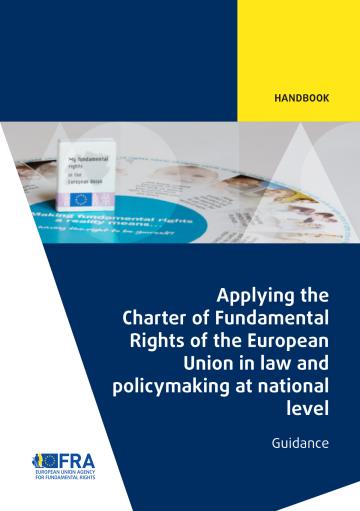
    Fiind un catalog foarte modern al drepturilor omului, carta conţine multe drepturi care
    nu se regăsesc în legile consacrate drepturilor omului, iar lectura sa face într‑adevăr
    o impresie bună. Persoanele care cunosc principiile esenţiale ale dreptului UE pot
    declama de obicei rapid că carta este întotdeauna obligatorie pentru UE, iar pentru statele
    membre numai atunci când acestea „pun în aplicare dreptul UE”. Dar ce înseamnă
    de fapt această expresie adesea citată de la articolul 51 din cartă?
  • Handbook / Guide / Manual
    7
    April
    2022
    BG, EL, HU, RO, SV, and UK version now available
    17 April 2025
    Copiii sunt îndreptățiți să se bucure de drepturi depline. Ei beneficiază de toate drepturile omului și de toate drepturile fundamentale și fac obiectul unor reglementări speciale, date fiind caracteristicile lor specifice. Manualul de față își propune să ilustreze modul în care legislația și jurisprudența europeană răspund intereselor și nevoilor specifice ale copiilor. De asemenea, ilustrează importanța rolului jucat de părinți și tutori sau alți reprezentanți legali și face referire, unde este cazul, la situațiile în care drepturile și responsabilitățile le revin în cea mai mare măsură persoanelor în grija cărora se află copiii. El constituie un punct de referință în ceea ce privește dreptul Uniunii Europene (UE) și al Consiliului Europei (CoE) cu privire la aceste domenii, deoarece explică modul în care este reglementat fiecare aspect în dreptul UE, inclusiv în Cartă, precum și în Convenția europeană a drepturilor omului (Convenția), în Carta socială europeană și în alte instrumente juridice ale CoE.
  • Report / Paper / Summary
    14
    December
    2020
    Slovenian version now available
    20 December 2024
    Artificial intelligence (AI) already plays a role in deciding what unemployment benefits someone gets, where a burglary is likely to take place, whether someone is at risk of cancer, or who sees that catchy advertisement for low mortgage rates. Its use keeps growing, presenting seemingly endless possibilities. But we need to make sure to fully uphold fundamental rights standards when using AI. This report presents concrete examples of how companies and public administrations in the EU are using, or trying to use, AI. It focuses on four core areas – social benefits, predictive policing, health services and targeted advertising.
  • Report / Paper / Summary
    28
    February
    2023
    Agresiunea militară a Rusiei împotriva Ucrainei a declanșat scene nemaivăzute în Europa de zeci de ani. De atunci a cauzat moarte, distrugeri masive și suferințe de nedescris. De asemenea, a declanșat o mișcare în masă de oameni, nemaiîntâlnită de la Al Doilea Război Mondial. Pentru a-i proteja, UE a activat pentru prima dată Directiva privind protecția temporară. Procedând astfel, toate statele membre ale UE sunt obligate să ofere protecție persoanelor strămutate din Ucraina.
  • Handbook / Guide / Manual
    19
    August
    2022
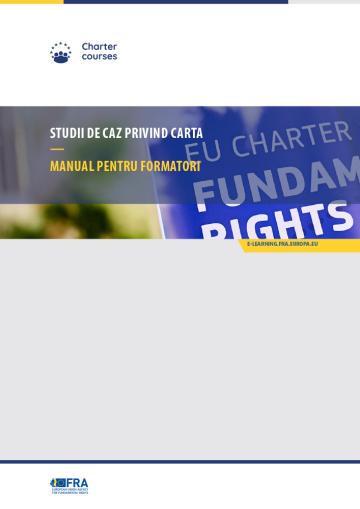
    Carta drepturilor fundamentale a Uniunii Europene (CDFUE) constituie Declarația UE a drepturilor. Aceasta are întotdeauna caracter obligatoriu pentru instituțiile UE și statele membre atunci când acționează în domeniul de aplicare al dreptului Uniunii. Nu este însă nici pe departe ușor să se aprecieze dacă o cauză concretă intră în domeniul de aplicare al dreptului Uniunii. Acesta este motivul pentru care este necesar să se asigure formarea practicienilor în domeniul dreptului și să se pună la dispoziția acestora materiale de formare ca să poată înțelege domeniul de aplicare al cartei, astfel cum este prevăzut la articolul 51. Acest manual pentru formatori își propune să ofere îndrumări privind atât organizarea, cât și implementarea unor astfel de ateliere de formare bazate pe o serie de studii de caz, care vor fi extinse în viitor.
  • Handbook / Guide / Manual
    25
    May
    2018
    New language version - Romanian
    30 July 2020
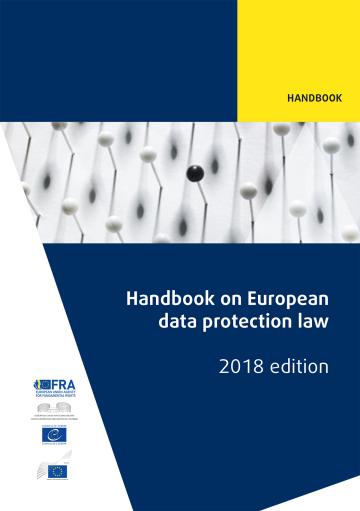
    Dezvoltarea rapidă a tehnologiei informației a exacerbat nevoia de protecție solidă a datelor cu caracter
    personal – un drept garantat atât de instrumentele Uniunii Europene (UE), cât și de instrumentele Consiliului
    Europei. Protejarea acestui drept important implică provocări noi și semnificative, pe măsură ce progresele
    tehnologice extind frontierele unor domenii precum supravegherea, interceptarea comunicațiilor și stocarea
    datelor. Prezentul manual este conceput pentru a familiariza practicienii în domeniul dreptului nespecializați
    în domeniul protecției datelor cu acest domeniu de drept emergent.
  • Report / Paper / Summary
    25
    October
    2022
    02 November 2022
    This report presents findings from FRA’s 2021 survey on Roma in Croatia, Czechia, Greece, Hungary, Italy, Portugal, Romania and Spain, as well as in North Macedonia and Serbia. The survey includes interviews with more than 8,400 Roma, collecting information on more than 20,000 individuals living in their households. By focusing on Roma, the survey provides unique data and information that are not available from European general population surveys, which do not disaggregate on grounds of ethnic origin. The findings present a bleak but familiar picture of exclusion, deprivation, discrimination and racism.
  • Fundamental Rights Report
    8
    June
    2022
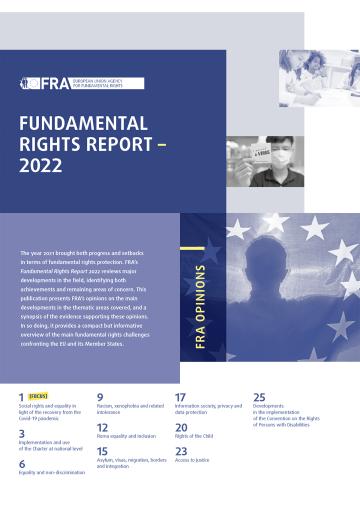
    Anul 2021 a adus atât progrese, cât și pași înapoi în ceea ce privește protecția drepturilor fundamentale. Raportul privind drepturile fundamentale 2022 al FRA analizează evoluțiile majore din domeniu, identificând atât realizările, cât și problemele îngrijorătoare rămase nesoluționate. Această publicație prezintă opiniile FRA în legătură cu principalele evoluții înregistrate în domeniile tematice vizate, precum și o sinteză a dovezilor care vin în sprijinul acestor opinii.
  • Handbook / Guide / Manual
    24
    July
    2020
    Acest ghid se adresează membrilor personalului responsabil de gestionarea frontierelor statelor membre ale UE care își desfășoară activitatea la nivel operațional. Ghidul își propune să îi ajute să pună în aplicare, în activitatea lor zilnică, garanțiile privind drepturile fundamentale prevăzute de Codul Frontierelor Schengen [Regulamentul (UE) 2016/399] și de legislația conexă a UE.
  • Report / Paper / Summary
    7
    July
    2021
    Italian version now available
    12 September 2022
    This report examines why victims do not report bias-motivated incidents and the barriers that they face when reporting incidents through national crime reporting systems. By mapping existing practices that have a bearing on the victim’s experiences when reporting bias-motivated violence and harassment, it aims to provide evidence to support national efforts to encourage and facilitate reporting – and ultimately assist Member States in delivering on their duties with regard to combating hate crime.