eu-charter

Carta drepturilor fundamentale a Uniunii Europene

Articolul 5 - Interzicerea sclaviei și a muncii forțate

Articolul 5 - Interzicerea sclaviei și a muncii forțate

(1) Nimeni nu poate fi ținut în sclavie sau în servitute.

(2) Nimeni nu poate fi constrâns să efectueze o muncă forțată sau obligatorie.

(3) Traficul de ființe umane este interzis.

Explicaţii

  • Text:

    1. Dreptul prevăzut la articolul 5 alineatele (1) şi (2) corespunde articolului 4 alineatele (1) şi (2) din CEDO, a căror formulare este similară. Articolul are, prin urmare, acelaşi înţeles şi acelaşi domeniu de aplicare ca şi articolul din CEDO, în temeiul articolului 52 alineatul (3) din cartă. În consecinţă:
    - dreptului prevăzut la alineatul (1) nu i se poate aduce în mod legal nicio restrângere;
    - în alineatul (2), noţiunile de `muncă forţată sau obligatorie` trebuie înţelese având în vedere definiţiile `negative` din articolul 4 alineatul (3) din CEDO:
    `Nu se consideră `muncă forţată sau obligatorie` în sensul prezentului articol :
    a) orice muncă impusă în mod normal unei persoane supuse detenţiei în condiţiile prevăzute de articolul 5 din prezenta convenţie sau în timpul în care se afla în libertate condiţionată;
    b) orice serviciu cu caracter militar sau, în cazul celor care refuză să satisfacă serviciul militar din motive de conştiinţă, în ţările în care acest lucru este recunoscut ca legitim, un alt serviciu în locul serviciului militar obligatoriu;
    c) orice serviciu impus în situaţii de criză sau de calamităţi care ameninţă viaţa sau bunăstarea comunităţii;
    d) orice muncă sau serviciu care face parte din obligaţiile civice normale.`
    2. Alineatul (3) decurge direct din demnitatea persoanei umane şi ia în considerare datele recente din domeniul criminalităţii organizate, cum ar fi organizarea filierelor lucrative ale imigraţiei ilegale sau a celor de exploatare sexuală. Convenţia Europol conţine în anexă definiţia următoare, care vizează traficul în scopul exploatării sexuale: ``traficul cu fiinţe umane` înseamnă supunerea unei persoane puterii reale şi ilegale a unor alte persoane, prin recurgerea la violenţă sau ameninţări sau prin abuz de autoritate sau uneltire pentru exploatarea activităţilor de prostituţie, a formelor de exploatare sexuală şi abuz de persoane minore sau comerţ cu copii abandonaţi`. Capitolul VI din Convenţia privind aplicarea acquis-ului Schengen, care a fost integrat în acquis-ul Uniunii şi la care participă Regatul Unit şi Irlanda conţine, la articolul 27 alineatul (1) următoarea formulare care vizează filierele de imigraţie ilegală: `Părţile contractante se angajează să instituie sancţiuni adecvate împotriva oricărei persoane care ajută sau încearcă să ajute, în scopuri lucrative, un străin să intre sau să rămână pe teritoriul unei părţi contractante încălcând legislaţia părţii contractante respective privind intrarea şi şederea străinilor`. La 19 iulie 2002, Consiliul a adoptat o decizie-cadru privind lupta împotriva traficului de fiinţe umane (JO L 203, 1.8.2002, p. 1) în al cărei prim articol sunt definite chiar infracţiunile legate de traficul de fiinţe umane în scopul exploatării muncii acestora sau al exploatării sexuale care trebuie să facă obiectul unor pedepse în statele membre, în conformitate cu directiva-cadru menţionată.

    Source:
    Jurnalul Oficial al Uniunii Europene C 303/17 - 14.12.2007
    Preamble - Explanations relating to the Charter of Fundamental Rights:
    Explicaţiile redate în continuare au fost redactate iniţial sub autoritatea prezidiului Convenţiei care a elaborat Carta drepturilor fundamentale a Uniunii Europene. Acestea au fost actualizate sub autoritatea prezidiului Convenţiei Europene, având în vedere adaptarea de către respectiva Convenţie a textului cartei (în special la articolele 51 şi 52), precum şi evoluţia dreptului Uniunii. Cu toate că aceste explicaţii nu au valoare juridică în sine, acestea constituie un preţios instrument de interpretare destinat clarificării dispoziţiilor cartei.

Jurisprudență

Dreptul constituțional național

27 results found

  • Basic Law for the Federal Republic of Germany
    Țara:
    Germany

    Article 12 (1) All Germans shall have the right freely to choose their occupation or profession, their place of work and their place of training. The practice of an occupation or profession may be regulated by or pursuant to a law. (2) No person may be required to perform work of a particular kind except within the framework of a traditional duty of community service that applies generally and equally to all. (3) Forced labour may be imposed only on persons deprived of their liberty by the judgment of a court. Article 12 a(1) Men who have attained the age of eighteen may be required to serve in the Armed Forces, in the Federal Border Police, or in a civil defence organisation. (2) Any person who, on grounds of conscience, refuses to render military service involving the use of arms may be required to perform alternative service. The duration of alternative service shall not exceed that of military service. Details shall be regulated by a law, which shall not interfere with the freedom to make a decision in accordance with the dictates of conscience, and which shall also provide for the possibility of alternative service not connected with units of the Armed Forces or of the Federal Border Police. (...) 

  • Constitution of Ireland
    Țara:
    Ireland

    Article 45 [Social Policy]
    ...
    (4.2) The State shall endeavor to ensure that the strength and health of workers, men and women, and the tender age of children shall not be abused and that citizens shall not be forced by economic necessity to enter avocations unsuited to their sex, age or strength.

  • Constitution of Malta
    Țara:
    Malta

    35. (1) Ħadd ma għandu jkun meħtieġ jagħmel xogħol furzat. (2) Għall-finijiet ta’ dan l-artikolu, il-frażi "xogħol furzat" ma tinkludix - (a) xi xogħol meħtieġ b’konsegwenza tas-sentenza jew ordni ta’ qorti; (b) xogħol meħtieġ mingħand xi ħadd waqt li jkun legalment detenut b’sentenza jew ordni ta’ qorti li, għalkemm ma jkunx meħtieġ b’konsegwenza ta’ dik is- sentenza jew ordni, ikun meħtieġ raġonevolment flinteressi tal-iġjene jew għat-tiżmim tal-post li fih ikun detenut jew, jekk ikun detenut għall-iskop tal-kura, trattament, edukazzjoni jew ġid tiegħu, ikun raġonevolment meħtieġ għal dak l-iskop; (ċ) xi xogħol meħtieġ mingħand membru ta’ korp dixxiplinat minħabba d-dmirijiet tiegħu bħala tali jew, fil-każ ta’ persuna li jkollha oġġezzjonijiet ta’ kuxjenza għal servizz bħala membru ta’ forza navali, militari jew tal-ajru, xi xogħol li dik il-persuna hija meħtieġa b’liġi li taqdi minflok dak is-servizz; (d) xi xogħol meħtieġ matul perijodu ta’ emerġenza pubblika jew fil-każ ta’ xi emerġenza oħra jew kalamità li thedded il-ħajja jew il-ġid tal-komunità.

  • Constitution of Malta
    Țara:
    Malta

    Article 35(1) No person shall be required to perform forced labour.(2) For the purposes of this section, the expression "forced labour" does not include(a) any labour required in consequence of the sentence or order of a court;(b) labour required of any person while he is lawfully detained by sentence or order of a court that, though not required in consequence of such sentence or order, is reasonably necessary in the interests of hygiene or for the maintenance of the place at which he is detained or, if he is detained for the purpose of his care, treatment, education or welfare, is reasonably required for that purpose;(c) any labour required of a member of a disciplined force in pursuance of his duties as such or, in the case of a person who has conscientious objections to service as a member of a naval, military or air force, any labour that that person is required by law to perform in place of such service;(d) any labour required during a period of public emergency or in the event of any other emergency or calamity that threatens the life or well-being of the community. 

  • Constitution of the Hellenic Republic
    Țara:
    Greece

    Article 22(4) Any form of compulsory work is prohibited. Special laws shall determine the requisition of personal services in case of war or mobilization or to face defence needs of the country or urgent social emergencies resulting from disasters or liable to endanger public health, as well as the contribution of personal work to local government agencies to satisfy local needs. (...)

  • Constitution of the Republic of Bulgaria
    Țara:
    Bulgaria

    Art. 48. [...] (4) No one shall be compelled to do forced labour.[...]

  • Constitution of the Republic of Estonia
    Țara:
    Estonia

    Article 29. (…) No one may be compelled to perform work or service against his or her free will, except for service in the defence forces or alternative service, or work required to prevent the spread of an infectious disease or to contain a natural disaster or catastrophe, or work which a convicted offender is required to perform according to the law and pursuant to a procedure established by law. (…)

  • Constitution of the Republic of Latvia
    Țara:
    Latvia

    106. (…) Forced labour is prohibited. Participation in the relief of disasters and their effects, and work pursuant to a court order shall not be deemed forced labour.

  • Constitution of the Republic of Lithuania
    Țara:
    Lithuania

    Article 48. (...) Forced labour shall be prohibited. Military service or alternative service performed instead of military service, as well as work performed by citizens in time of war, natural disaster, epidemics, or other extreme cases, shall not be considered forced labour. In cases where persons convicted by a court perform work regulated by law, such work shall not be considered forced labour, either.

  • Constitution of the Republic of Poland
    Țara:
    Poland

    Article 65(...) 2. An obligation to work may be imposed only by statute. (...)

  • Czechia / Charter of Fundamental Rights and Freedoms
    Țara:
    Czechia

    Article 9 (1) No one may be subjected to forced labour or service. (2) The provision of paragraph 1 shall not apply to: (a) labour imposed in accordance with law upon persons serving a prison sentence or upon persons serving other penalties that take the place of the penalty of imprisonment, (b) military service or some other service provided for by law in place of compulsory military service, (c) service required on the basis of law in the event of natural disasters, accidents, or other danger threatening human life, health, or property of significant value, (d) conduct imposed by law for the protection of life, health, or the rights of others.

  • Eesti Vabariigi Põhiseadus
    Țara:
    Estonia

    § 29. (...) Kedagi ei tohi sundida tema vaba tahte vastaselt tööle ega teenistusse, välja arvatud kaitseväeteenistus või selle asendusteenistus, tööd nakkushaiguse leviku tõkestamisel, loodusõnnetuse ja katastroofi korral ning töö, mida seaduse alusel ja korras peab tegema süüdimõistetu. (...)

  • Grundgesetz für die Bundesrepublik Deutschland
    Țara:
    Germany

    Artikel 12 (1) Alle Deutschen haben das Recht, Beruf, Arbeitsplatz und Ausbildungsstätte frei zu wählen. Die Berufsausübung kann durch Gesetz oder auf Grund eines Gesetzes geregelt werden. (2) Niemand darf zu einer bestimmten Arbeit gezwungen werden, außer im Rahmen einer herkömmlichen allgemeinen, für alle gleichen öffentlichen Dienstleistungspflicht. (3) Zwangsarbeit ist nur bei einer gerichtlich angeordneten Freiheitsentziehung zulässig. Artikel 12a (1) Männer können vom vollendeten achtzehnten Lebensjahr an zum Dienst in den Streitkräften, im Bundesgrenzschutz oder in einem Zivilschutzverband verpflichtet werden. (2) Wer aus Gewissensgründen den Kriegsdienst mit der Waffe verweigert, kann zu einem Ersatzdienst verpflichtet werden. Die Dauer des Ersatzdienstes darf die Dauer des Wehrdienstes nicht übersteigen. Das Nähere regelt ein Gesetz, das die Freiheit der Gewissensentscheidung nicht beeinträchtigen darf und auch eine Möglichkeit des Ersatzdienstes vorsehen muß, die in keinem Zusammenhang mit den Verbänden der Streitkräfte und des Bundesgrenzschutzes steht. (...) 

  • Konstytucja Rzeczypospolitej Polskiej
    Țara:
    Poland

    Art. 65.(...) 2. Obowiązek pracy może być nałożony tylko przez ustawę. (...)

  • Latvijas Republikas Satversme
    Țara:
    Latvia

    106. (…) Piespiedu darbs ir aizliegts. Par piespiedu darbu netiek uzskatīta iesaistīšana katastrofu un to seku likvidēšanā un nodarbināšana saskaņā ar tiesas nolēmumu.

  • Lietuvos Respublikos Konstitucija
    Țara:
    Lithuania

    48 straipsnis. (...) Priverčiamasis darbas draudžiamas. Priverčiamuoju darbu nelaikoma tarnyba kariuomenėje ar ją pakeičianti alternatyvioji tarnyba, taip pat piliečių darbas karo, stichinės nelaimės, epidemijos ar kitais ypatingais atvejais. Priverčiamuoju darbu nelaikomas ir įstatymo reguliuojamas teismo nuteistųjų darbas.

  • Magyarország Alaptörvénye
    Țara:
    Hungary

    III. cikk (SZABADSÁG ÉS FELELŐSSÉG) (1) Senkit nem lehet kínzásnak, embertelen, megalázó bánásmódnak vagy büntetésnek alávetni, valamint szolgaságban tartani. Tilos az emberkereskedelem. […]

  • Portugal / Constitution of the Portuguese Republic
    Țara:
    Portugal

    Article 25 (Right to personal integrity) (2) No one shall be subjected to torture or to cruel, degrading or inhuman treatment or punishment.
    ...
    Article 59 (Workers’ rights) (1) Regardless of age, sex, race, citizenship, place of origin, religion and political and ideological convictions, every worker has the right: (a) To the remuneration of his work in accordance with its volume, nature and quality, with respect for the principle of equal pay for equal work and in such a way as to guarantee a proper living; (b) That work be organised under conditions of social dignity and in such a way as to provide personal fulfilment and to make it possible to reconcile work and family life; (c) To work in conditions that are hygienic, safe and healthy; (d) To rest and leisure time, a maximum limit on the working day, a weekly rest period and periodic paid holidays.

  • România / Constituția României
    Țara:
    România

    Articolul 42(1) Munca fortata este interzisa. (2) Nu constituie munca fortata: a) activitatile pentru îndeplinirea îndatoririlor militare, precum si cele desfasurate, potrivit legii, în locul acestora, din motive religioase sau de constiinta; b) munca unei persoane condamnate, prestata în conditii normale, în perioada de detentie sau de libertate conditionata; c) prestatiile impuse în situatia creata de calamitati ori de alt pericol, precum si cele care fac parte din obligatiile civile normale stabilite de lege.

  • Slovakia / Constitution of the Slovak Republic
    Țara:
    Slovakia

    Article 18 (1) No one may be subjected to forced labor, or services. (2) The provision of paragraph 1 does not apply to a) work assigned according to law to persons serving a prison sentence or persons serving other sentence substituting a prison sentence, b) military service or other service laid down by law in lieu of compulsory military service, c) services required on the basis of the law in the event of natural disasters, accidents, or other dangers posing a threat to life, health, or property of great value, d) activities prescribed by law to protect life, health, or the rights of others, e) small community services on the basis of the law.

Legislația UE

5 results found

  • Council Directive 2004/81/EC of 29 April 2004 on the residence permit issued to third-country nationals who are victims of trafficking in human beings or who have been the subject of an action to facilitate illegal immigration, who cooperate with the comp

    Preamble


    (9) This Directive introduces a residence permit intended for victims of trafficking in human beings or, if a Member State decides to extend the scope of this Directive, to third-country nationals who have been the subject of an action to facilitate illegal immigration to whom the residence permit offers a sufficient incentive to cooperate with the competent authorities while including certain conditions to safeguard against abuse.


    Article 1: Purpose

    The purpose of this Directive is to define the conditions for granting residence permits of limited duration, linked to the length of the relevant national proceedings, to third-country nationals who cooperate in the fight against trafficking in human beings or against action to facilitate illegal immigration.

  • Directive 2011/36/EU of the European Parliament and of the Council of 5 April 2011 on preventing and combating trafficking in human beings and protecting its victims, and replacing Council Framework Decision 2002/629/JHA

    Preamble 
    (1) Trafficking in human beings is a serious crime, often committed within the framework of organised crime, a gross violation of fundamental rights and explicitly prohibited by the Charter of Fundamental Rights of the European Union. Preventing and combating trafficking in human beings is a priority for the Union and the Member States.


    (8) Children are more vulnerable than adults and therefore at greater risk of becoming victims of trafficking in human beings. In the application of this Directive, the child’s best interests must be a primary consideration, in accordance with the Charter of Fundamental Rights of the European Union and the 1989 United Nations Convention on the Rights of the Child.

    (10) This Directive is without prejudice to the principle of non-refoulement in accordance with the 1951 Convention relating to the Status of Refugees (Geneva Convention), and is in accordance with Article 4 and Article 19(2) of the Charter of Fundamental Rights of the European Union.


    (33) This Directive respects fundamental rights and observes the principles recognised in particular by the Charter of Fundamental Rights of the European Union and notably human dignity, the prohibition of slavery, forced labour and trafficking in human beings, the prohibition of torture and inhuman or degrading treatment or punishment, the rights of the child, the right to liberty and security, freedom of expression and information, the protection of personal data, the right to an effective remedy and to a fair trial and the principles of the legality and proportionality of criminal offences and penalties. In particular, this Directive seeks to ensure full respect for those rights and principles and must be implemented accordingly.

    Article 1: Subject matter

    This Directive establishes minimum rules concerning the definition of criminal offences and sanctions in the area of trafficking in human beings. It also introduces common provisions, taking into account the gender perspective, to strengthen the prevention of this crime and the protection of the victims thereof.

  • Regulation (EU) No 656/2014 of the European Parliament and of the Council of 15 May 2014 establishing rules for the surveillance of the external sea borders in the context of operational cooperation coordinated by Frontex

    Preamble 


    (19) This Regulation respects the fundamental rights and observes the principles recognised by Articles 2 and 6 of the Treaty on European Union (TEU) and by the Charter, in particular respect for human dignity, the right to life, the prohibition of torture and of inhuman or degrading treatment or punishment, the prohibition of trafficking in human beings, the right to liberty and security, the right to the protection of personal data, the right to asylum and to protection against removal and expulsion, the principles of non-refoulement and non-discrimination, the right to an effective remedy and the rights of the child. This Regulation should be applied by Member States and the Agency in accordance with those rights and principles.

  • Council Decision of 6 April 2009 establishing the European Police Office (Europol)

    ANNEX

    ‘trafficking in human beings’ means the recruitment, transportation, transfer, harbouring or receipt of persons, by means of the threat or use of force or other forms of coercion, of abduction, of fraud, of deception, of the abuse of power or of a position of vulnerability or of the giving or receiving of payments or benefits to achieve the consent of a person having control over another person, for the purpose of exploitation. Exploitation shall include, as a minimum, the exploitation of the prostitution of others or other forms of sexual exploitation, the production, sale or distribution of child-pornography material, forced labour or services, slavery or practices similar to slavery, servitude or the removal of organs;

  • Regulation (EU) 2019/1896 of the European Parliament and of the Council of 13 November 2019 on the European Border and Coast Guard and repealing Regulations (EU) No 1052/2013 and (EU) 2016/1624

    Preamble

    (103) This Regulation respects the fundamental rights and observes the principles recognised by Articles 2 and 6 TEU and by the Charter of Fundamental Rights of the European Union (‘the Charter’), in particular respect for human dignity, the right to life, the prohibition of torture and inhuman or degrading treatment or punishment, the prohibition of trafficking in human beings, the right to liberty and security, the right to the protection of personal data, the right of access to documents, the right to asylum and to protection against removal and expulsion, non-refoulement, non-discrimination and the rights of the child.

    Article 1: Subject matter

    This Regulation establishes a European Border and Coast Guard to ensure European integrated border management at the external borders with a view to managing those borders efficiently in full compliance with fundamental rights and to increasing the efficiency of the Union return policy.

    This Regulation addresses migratory challenges and potential future challenges and threats at the external borders. It ensures a high level of internal security within the Union in full respect of fundamental rights, while safeguarding the free movement of persons within the Union. It contributes to the detection, prevention and combating of cross-border crime at the external borders.

    Article 43: Instructions to the teams

    4.   Members of the teams shall, in the performance of their tasks and in the exercise of their powers, fully respect fundamental rights, including access to asylum procedures and human dignity, and shall pay particular attention to vulnerable persons. Any measures taken in the performance of their tasks and in the exercise of their powers shall be proportionate to the objectives pursued by such measures. While performing their tasks and exercising their powers, they shall not discriminate against persons on the basis of any grounds such as sex, race, colour, ethnic or social origin, genetic features, language, religion or belief, political or any other opinion, membership of a national minority, property, birth, disability, age or sexual orientation in line with Article 21 of the Charter.

Drept internațional

3 results found

  • European Convention on Human Rights - Article 4

    Article 4 – Prohibition of slavery and forced labour

    1 No one shall be held in slavery or servitude.

    2 No one shall be required to perform forced or compulsory labour.

    3 For the purpose of this article the term "forced or compulsory labour" shall not include:

    a any work required to be done in the ordinary course of detention imposed according to the provisions of Article 5 of this Convention or during conditional release from such detention;

    b any service of a military character or, in case of conscientious objectors in countries where they are recognised, service exacted instead of compulsory military service;

    c any service exacted in case of an emergency or calamity threatening the life or wellbeing of the community;

    d any work or service which forms part of normal civic obligations.

  • International Covenant on Civil and Political Rights

    Article 8

    1. No one shall be held in slavery; slavery and the slave-trade in all their forms shall be prohibited.

    2. No one shall be held in servitude.

    3.

    (a) No one shall be required to perform forced or compulsory labour;

    (b) Paragraph 3 (a) shall not be held to preclude, in countries where imprisonment with hard labour may be imposed as a punishment for a crime, the performance of hard labour in pursuance of a sentence to such punishment by a competent court;

    (c) For the purpose of this paragraph the term "forced or compulsory labour" shall not include:

    (i) Any work or service, not referred to in subparagraph (b), normally required of a person who is under detention in consequence of a lawful order of a court, or of a person during conditional release from such detention;

    (ii) Any service of a military character and, in countries where conscientious objection is recognized, any national service required by law of conscientious objectors;

    (iii) Any service exacted in cases of emergency or calamity threatening the life or well-being of the community;

    (iv) Any work or service which forms part of normal civil obligations.

  • Global Compact for Safe, Orderly and Regular Migration

    Resolution adopted by the General Assembly on 19 December 2018

Produse

  • Report / Paper / Summary
    24
    February
    2026
    The start of Russia’s war of aggression against Ukraine on 24 February 2022 shocked the global community and gave rise to a
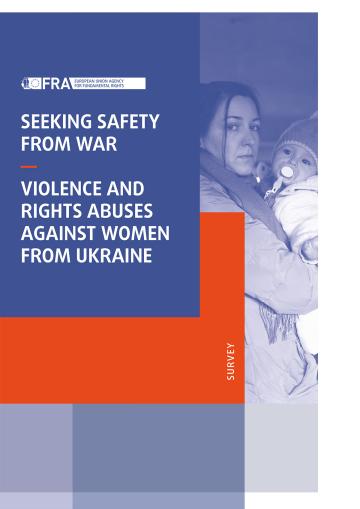
    series of urgent fundamental rights challenges across Europe. While much attention has focused on the scale of devastation and its wider impact on all Ukrainians, the war has also inflicted profound personal harm. This report sheds light on the violence, sexual harassment and exploitation experienced by women displaced from Ukraine. Drawing on a survey and in-depth interviews with women from Ukraine, the report documents the prevalence, forms and patterns of gender-based violence and sets out practical measures to improve safety, access to justice and support.
  • Handbook / Guide / Manual
    21
    November
    2024
    This manual is designed to be used by workplace inspection staff in the Member States. It is intended to empower them to enforce the protective standards in EU law that safeguard the rights of third-country workers, including seasonal workers, migrant workers with temporary permits and migrants in an irregular situation. Third-country workers are nationals who are not from a Member State or from Iceland, Liechtenstein, Norway or Switzerland.
  • Handbook / Guide / Manual
    19
    September
    2024
    This publication guides EU countries on setting up independent monitoring mechanisms to ensure fundamental rights are respected during screening and asylum border procedures. These processes at borders are for people arriving from non-EU countries. Monitoring mechanisms are meant to prevent rights violations, protect victims, and support investigations into any allegations of wrongdoing by public authorities. The guidance highlights the importance of transparency and accountability, which builds trust in public authorities. New EU regulations coming into effect in 2026 will require such monitoring systems to be in place. This updates the guidance published in 2022.
  • Fundamental Rights Report
    8
    June
    2023
    Russia’s unprovoked war of aggression against Ukraine has resulted in massive internal and external population displacement. The European Union (EU) rapidly activated its Temporary Protection Directive for the first time since it was adopted in 2001. This entitled nearly 4 million people to legal residence and access to work, housing and legal assistance, education and healthcare.
  • Fundamental Rights Report
    8
    June
    2023
    FRA’s Fundamental Rights Report 2023 reviews major developments in the field in 2022, identifying both achievements and areas of concern. It also presents FRA’s opinions on these developments, including a synopsis of the evidence supporting these opinions.
  • Periodic updates / Series
    21
    October
    2022
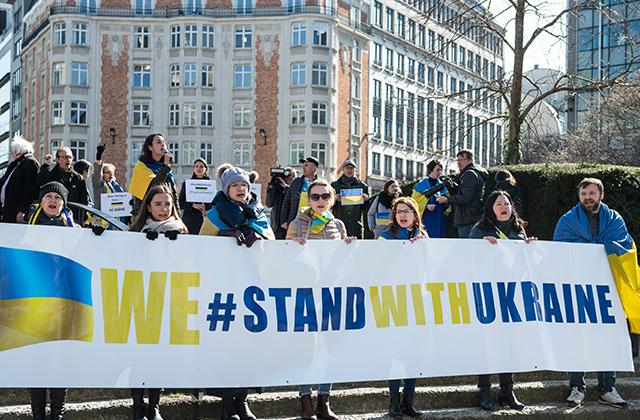
    The Russian invasion of Ukraine triggered solidarity from EU governments, local authorities and society as they welcomed more than 7 million people fleeing the aggression. The European Union’s rapid response, activating the EU Temporary Protection Directive, offered welcome relief and much-needed support to those in need. It allowed displaced persons the opportunity to quickly settle and to work, travel and access services across the EU. But other pressing human rights issues have come to the fore and remain high on the EU’s agenda, such as human trafficking, sexual and gender-based violence, hate crime and hate-fuelled disinformation.
  • Handbook / Guide / Manual
    14
    October
    2022
    ** As of 19 September 2024 a new version of this guidance has been issued. Please see the link below. **

    Fundamental rights monitoring at EU external borders should be systematically and regularly carried out for a range of border management activities. These include border surveillance, apprehensions at land, sea and air borders, and the operation of referral mechanisms, including in the event of mass arrivals. This general guidance provides assistance to EU Member States in setting up national independent mechanisms to monitor fundamental rights compliance at EU external borders, in line with the proposed screening regulation of 23 September 2020 by the European Commission. The EU Agency for Fundamental Rights prepared this guidance at the request of the Commission.
  • Report / Paper / Summary
    9
    December
    2021
    This report sheds light on the realities faced by unaccompanied migrant children who are not in the care of child protection systems in the EU. Presented as a case study, it tells the story of children and young adults from Pakistan who travelled alone to the EU without their parents or other adults.
  • Report / Paper / Summary
    4
    November
    2021
    This report outlines to what extent legal aid is available to those held in pre-removal detention in the 27 EU Member States, and in North Macedonia and Serbia, during procedures related to their return. These involve decisions on return, on detention pending removal, the removal itself and on bans on entry. The report also examines when people are entitled to free legal aid and how this aid is funded, as well as who provides representation and various factors that limit the scope of legal aid.