• Handbook / Guide / Manual
    1
    March
    2023
    This manual is designed to help institutions, organisations and individuals to train guardians of unaccompanied children or to deliver ‘train-the-trainers’ courses. It can be used in a range of training contexts, such as professional and academic training, on-the-job training and continuing training. The manual is based on human and fundamental rights principles and ethical standards and recognises that the child and the guardian have their own personal stories, resources and capacities. It enhances guardians’ confidence to promote the child’s rights and best interests. It also enhances their confidence to act independently and impartially in relation to different state
    officials, service providers and other community members.
  • Report / Paper / Summary
    27
    February
    2023
    FRA’s 2021 survey on Roma was conducted in Croatia, Czechia, Greece, Hungary, Italy, Portugal, Romania, and Spain, as well as in North Macedonia and Serbia. It includes interviews with more than 8,400 Roma, collecting information on more than 20,000 individuals living in their households. This technical report provides a detailed overview of the survey methodology used by FRA when collecting the survey data.
  • Report / Paper / Summary
    22
    February
    2023
    Directive 2012/29/EU represents a milestone in the development of victims’ rights. It establishes minimum standards for the rights, support and protection of victims of crime. It defines the scope of support services, guarantees the right to effective protection against secondary victimisation and comprehensively regulates the measures required for this purpose. This report covers three core components underpinning victims’ rights: support services, crime reporting, and protection from secondary and repeat victimisation. Examples highlight the relevant legal provisions in Member States and how specific rights under the Victims’ Rights Directive work in practice.
  • Periodic updates / Series
    13
    December
    2022
    National Human Rights Institutions (NHRIs) continue to play a key role in upholding fundamental rights. FRA keeps track of the accreditation status and the mandates of the NHRIs. In 2022, the NHRI in Cyprus was upgraded to an ‘A-status’ institution. In addition, the mandates of six NHRIs changed to include child protection or the protection of LGBTI people.
  • Report / Paper / Summary
    8
    December
    2022
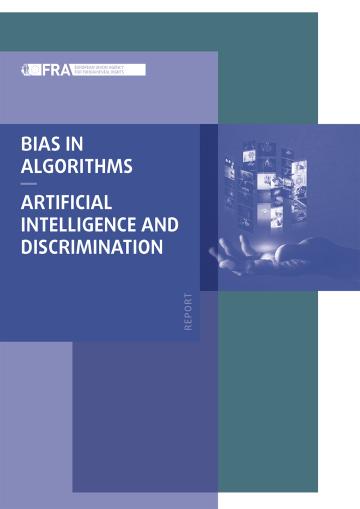
    Artificial intelligence is everywhere and affects everyone – from deciding what content people see on their social media feeds to determining who will receive state benefits. AI technologies are typically based on algorithms that make predictions to support or even fully automate decision-making.
  • Report / Paper / Summary
    3
    November
    2022
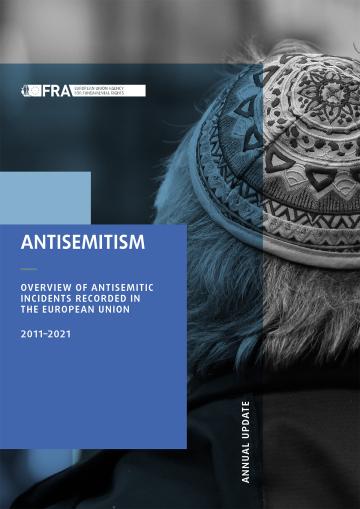
    Antisemitic incidents and hate crimes violate fundamental rights, especially the right to human dignity, the right to equality of treatment and the freedom of thought, conscience and religion. This report provides an overview of available data on antisemitism as recorded by official and unofficial sources in the EU Member States and in Albania, North Macedonia and Serbia. The data provided by the countries are supplemented with information from international organisations.
  • Periodic updates / Series
    31
    October
    2022
    The table below gives an overview of certain key aspects in national legislation implementing the EU Temporary Protection Directive.
  • Report / Paper / Summary
    25
    October
    2022
    02 November 2022
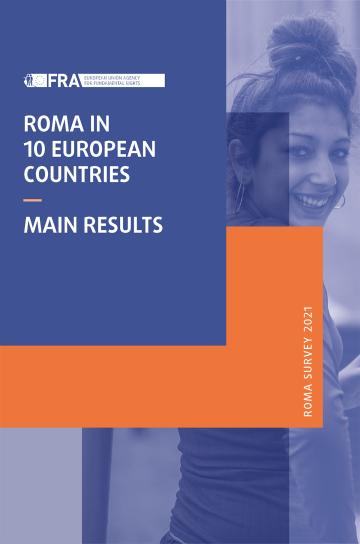
    This report presents findings from FRA’s 2021 survey on Roma in Croatia, Czechia, Greece, Hungary, Italy, Portugal, Romania and Spain, as well as in North Macedonia and Serbia. The survey includes interviews with more than 8,400 Roma, collecting information on more than 20,000 individuals living in their households. By focusing on Roma, the survey provides unique data and information that are not available from European general population surveys, which do not disaggregate on grounds of ethnic origin. The findings present a bleak but familiar picture of exclusion, deprivation, discrimination and racism.

  • Periodic updates / Series
    21
    October
    2022
    The Russian invasion of Ukraine triggered solidarity from EU governments, local authorities and society as they welcomed more than 7 million people fleeing the aggression. The European Union’s rapid response, activating the EU Temporary Protection Directive, offered welcome relief and much-needed support to those in need. It allowed displaced persons the opportunity to quickly settle and to work, travel and access services across the EU. But other pressing human rights issues have come to the fore and remain high on the EU’s agenda, such as human trafficking, sexual and gender-based violence, hate crime and hate-fuelled disinformation.
  • Handbook / Guide / Manual
    14
    October
    2022
    Η παρακολούθηση της κατάστασης των θεμελιωδών δικαιωμάτων στα εξωτερικά σύνορα της ΕΕ θα πρέπει να είναι συστηματική και τακτική για μια σειρά δραστηριοτήτων διαχείρισης των συνόρων, όπως είναι η επιτήρηση των συνόρων, οι συλλήψεις στα χερσαία, θαλάσσια και εναέρια σύνορα, καθώς και η λειτουργία των μηχανισμών παραπομπής, ακόμη και σε περίπτωση μαζικών αφίξεων. Οι παρούσες γενικές κατευθυντήριες γραμμές έχουν ως στόχο να βοηθήσουν τα κράτη μέλη της ΕΕ να συγκροτήσουν εθνικούς ανεξάρτητους μηχανισμούς για την παρακολούθηση της συμμόρφωσης προς τα θεμελιώδη δικαιώματα στα εξωτερικά σύνορα της ΕΕ, σύμφωνα με την πρόταση κανονισμού για τον έλεγχο διαλογής που ανακοινώθηκε στις 23 Σεπτεμβρίου 2020 από την Ευρωπαϊκή Επιτροπή. Εκπονήθηκαν από τον Οργανισμό Θεμελιωδών Δικαιωμάτων της Ευρωπαϊκής Ένωσης κατόπιν αιτήματος της Επιτροπής.
  • Handbook / Guide / Manual
    14
    October
    2022
    ** As of 19 September 2024 a new version of this guidance has been issued. Please see the link below. **

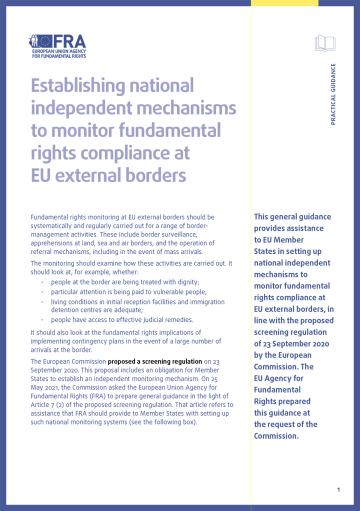
    Fundamental rights monitoring at EU external borders should be systematically and regularly carried out for a range of border management activities. These include border surveillance, apprehensions at land, sea and air borders, and the operation of referral mechanisms, including in the event of mass arrivals. This general guidance provides assistance to EU Member States in setting up national independent mechanisms to monitor fundamental rights compliance at EU external borders, in line with the proposed screening regulation of 23 September 2020 by the European Commission. The EU Agency for Fundamental Rights prepared this guidance at the request of the Commission.
  • Handbook / Guide / Manual
    14
    October
    2022
    El control del respeto de los derechos fundamentales en las fronteras exteriores de la UE debe llevarse a cabo de forma sistemática y regular para determinadas actividades de gestión fronteriza. Estas actividades incluyen la vigilancia de fronteras, las detenciones en las fronteras terrestres, marítimas y aéreas, y el funcionamiento de los mecanismos de devolución, incluso en el caso de llegadas masivas. Esta guía general proporciona asistencia a los Estados miembros de la Unión Europea (UE) para crear mecanismos nacionales independientes con el fin de supervisar el cumplimiento de los derechos fundamentales en las fronteras exteriores de la UE, de acuerdo con la propuesta de reglamento de control de 23 de septiembre de 2020 de la Comisión Europea. La Agencia de Derechos Fundamentales de la UE elaboró esta guía a solicitud de la Comisión.
  • Handbook / Guide / Manual
    14
    October
    2022
    Perusoikeuksien toteutumista EU:n ulkorajoilla pitäisi seurata järjestelmällisesti ja säännöllisesti rajaturvallisuuden ylläpitämiseen liittyvissä eri toimissa. Näitä toimia ovat muun muassa rajavartiointi, kiinniottamiset maa-, meri- ja ilmarajoilla ja asianmukaiseen menettelyyn ohjaamista koskevan mekanismin käyttö, myös silloin, kun kyse on joukoittaisesta maahantulosta. Nämä yleiset ohjeet auttavat EU:n jäsenvaltioita perustamaan kansallisia riippumattomia mekanismeja perusoikeuksien noudattamisen seurantaan EU:n ulkorajoilla Euroopan komission 23. syyskuuta 2020 ehdottaman seulonta-asetuksen mukaisesti. EU:n perusoikeusvirasto laati nämä ohjeet komission pyynnöstä.
  • Handbook / Guide / Manual
    14
    October
    2022
    Praćenje poštovanja temeljnih prava na vanjskim granicama EU‑a trebalo bi se sustavno i redovno provoditi za široki raspon aktivnosti upravljanja granicama. Te aktivnosti obuhvaćaju nadzor granica, uhićenja na kopnenim, morskim i zračnim granicama te rad mehanizama za upućivanje, uključujući u slučaju masovnih dolazaka. Ovim općim smjernicama pruža se pomoć državama članicama EU‑a u uspostavi nacionalnih neovisnih mehanizama praćenja poštovanja temeljnih prava na vanjskim granicama EU‑a, u skladu s uredbom o dubinskoj provjeri koju je Europska komisija predložila 23. rujna 2020. Agencija Europske unije za temeljna prava izradila je ove smjernice na zahtjev Komisije.
  • Handbook / Guide / Manual
    14
    October
    2022
    Az alapjogok uniós külső határokon történő nyomon követésének szisztematikusnak és rendszeresnek kell lennie számos határigazgatási tevékenység tekintetében. E tevékenységek közé tartozik a határőrizet, a szárazföldi, tengeri és légi határokon történő őrizetbe vétel, valamint az áldozatkezelési mechanizmusok működtetése, többek között tömeges érkezések esetén is. Ez az általános iránymutatás segítséget nyújt az uniós tagállamok számára az alapjogok uniós külső határokon történő tiszteletben tartásának nyomon követésére szolgáló független nemzeti mechanizmusoknak az előszűrésről szóló rendeletre vonatkozó, 2020. szeptember 23-i európai bizottsági javaslattal összhangban történő létrehozásához. Az Európai Unió Alapjogi Ügynöksége a Bizottság kérésére készítette el ezt az iránymutatást.
  • Handbook / Guide / Manual
    14
    October
    2022
    Il monitoraggio dei diritti fondamentali alle frontiere esterne dell’UE dovrebbe essere effettuato sistematicamente e regolarmente per una serie di attività di gestione delle frontiere, tra cui la sorveglianza delle frontiere, i fermi alle frontiere terrestri, marittime e aeree e la gestione dei meccanismi di indirizzamento, anche in caso di arrivi di massa. I presenti orientamenti generali forniscono assistenza agli Stati membri dell’Unione europea (UE) ai fini dell’istituzione di meccanismi nazionali indipendenti tesi a monitorare il rispetto dei diritti fondamentali alle frontiere esterne dell’UE, in linea con la proposta di regolamento sugli accertamenti presentata dalla Commissione europea il 23 settembre 2020. L’Agenzia dell’Unione europea per i diritti fondamentali ha elaborato i presenti orientamenti su richiesta della Commissione.
  • Handbook / Guide / Manual
    14
    October
    2022
    Monitorowanie praw podstawowych na granicach zewnętrznych UE powinno być prowadzone systematycznie i regularnie w odniesieniu do szeregu działań związanych z zarządzaniem granicami. Należą do nich: ochrona granicy, zatrzymania na granicach lądowych, morskich i powietrznych oraz funkcjonowanie mechanizmów ukierunkowanej pomocy, także w przypadku masowego napływu. Niniejsze ogólne wytyczne stanowią pomoc dla państw członkowskich w tworzeniu niezależnych krajowych mechanizmów monitorowania przestrzegania praw podstawowych na granicach zewnętrznych UE, zgodnie z proponowanym przez Komisję Europejską rozporządzeniem w sprawie kontroli przesiewowej z dnia 23 września 2020 r. Agencja Praw Podstawowych Unii Europejskiej przygotowała niniejsze wytyczne na wniosek Komisji.
  • Report / Paper / Summary
    28
    September
    2022
    Terreurdaden brengen het leven en de veiligheid van de bevolking in groot gevaar en het is voor staten een enorme uitdaging om hun burgers ertegen te beschermen. Daartegenover staat dat wetgeving, beleid en andere maatregelen ter bestrijding van terrorisme er direct of indirect toe kunnen leiden dat de grondrechten danig worden ingeperkt en negatieve gevolgen kunnen hebben voor individuen, groepen en de samenleving als geheel. Deze samenvatting bevat de belangrijkste bevindingen uit het verslag van het FRA over Richtlijn (EU) 2017/541 inzake terrorismebestrijding, het belangrijkste strafrechtelijke instrument op EU-niveau in de strijd tegen terrorisme.
  • Report / Paper / Summary
    28
    September
    2022
    Akty terrorystyczne stanowią poważne zagrożenie dla życia i bezpieczeństwa ludzi, a dla państw są poważnym wyzwaniem w zakresie zapewnienia bezpieczeństwa. Jednocześnie prawodawstwo, polityka i inne środki w zakresie zwalczania terroryzmu mogą wiązać się – bezpośrednio lub pośrednio – z poważnymi ograniczeniami praw podstawowych oraz mieć negatywne skutki dla osób, grup i społeczeństwa jako całości. Niniejsze streszczenie zawiera główne ustalenia FRA ze sprawozdania dotyczącego dyrektywy (UE) 2017/541 w sprawie zwalczania terroryzmu, która jest podstawowym instrumentem prawa karnego na poziomie UE w dziedzinie zwalczania terroryzmu.
  • Report / Paper / Summary
    28
    September
    2022
    Os atos de terrorismo representam uma grave ameaça para a vida e a segurança das pessoas e um profundo desafio para a segurança dos Estados. Ao mesmo tempo, a legislação, as políticas e outras medidas de combate ao terrorismo podem implicar, direta ou indiretamente, sérias limitações aos direitos fundamentais e podem afetar negativamente os indivíduos, os grupos e a sociedade no seu conjunto. A presente síntese apresenta as principais conclusões da FRA no seu relatório sobre a Diretiva (UE) 2017/541 relativa à luta contra o terrorismo, o principal instrumento do direito penal à escala da União Europeia (UE) no domínio do combate ao terrorismo.