This report outlines some of the measures EU Member States have put in place to protect public health as Europe faces the ‘second wave’ of the Coronavirus pandemic. It highlights how these may affect fundamental rights, especially social rights.
The EU Agency for Fundamental Rights has been regularly collecting data on asylum and migration since September 2015. This report focuses on the fundamental rights situation of people arriving in Member States and EU candidate countries particularly affected by migration. It addresses fundamental rights concerns between 1 July and 30 September 2020.
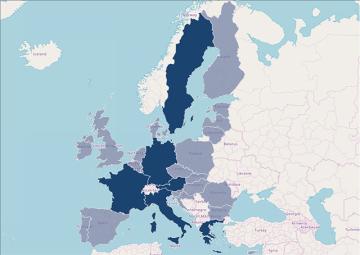
The EU Fundamental Rights Agency published in 2019 its report on the ‘Integration of young refugees in the EU’. The report explored the challenges of young people who fled armed conflict or persecution and arrived in the EU in 2015 and 2016. The report is based on 426 interviews with experts working in the area of asylum and integration, as well as 163 interviews with young people, aged 16 to 24, conducted between October 2017 and June 2018 in 15 regions and cities located in six Member States: Austria, France, Germany, Greece, Italy and Sweden. The links on this page provide a summary of the information collected during this period for each country about unaccompanied children turning 18 and the change in people’s legal status once international protection is granted. These two issues had at the time been identified as moments requiring sufficient, consistent and systematic support, particularly from lawyers, social workers and guardians, to ensure successful integration.
Business activity affects not just customers, employees, and contractors along supply chains, but often entire communities and the environment. This makes it vital that every business complies with human rights. This comparative report looks at the realities victims face when they seek redress for business-related human rights abuses. It presents the findings of fieldwork research on the views of professionals regarding the different ways people can pursue complaints. The findings highlight that obstacles to achieving justice are often multi-layered.
Often living in substandard and overcrowded housing conditions, Roma and Travellers face an increased risk of contracting COVID-19. They are also disproportionately affected by measures taken to contain the virus. This FRA Bulletin takes a closer look at this reality in 15 EU Member States, focusing on education; employment; poverty; healthcare; housing; and anti-Gypsyism. It also outlines civil society efforts to tackle the diverse challenges triggered by the Coronavirus pandemic.
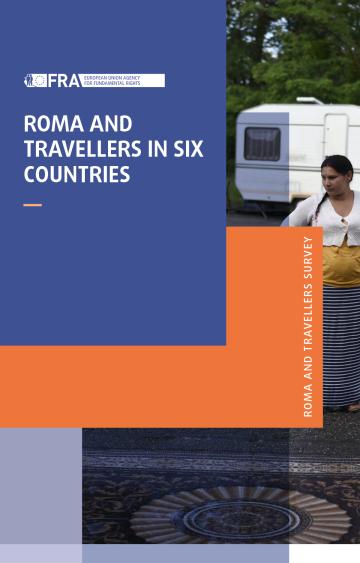
This report presents findings from FRA’s 2019 survey on Roma and Travellers in Belgium, France, Ireland, the Netherlands, Sweden and the United Kingdom. The survey included interviews with almost 4,700 Roma and Travellers, collecting information on more than 8,200 individuals living in their households.
National Human Rights Institutions (NHRIs) are a vital part of the country-level human rights protection system. This report, published 10 years after FRA’s first in-depth study on NHRIs, looks at such bodies in the EU, as well as the Republic of North Macedonia, the Republic of Serbia, and the United Kingdom of Great Britain and Northern Ireland. It explores relevant developments, challenges to their effectiveness and ways to maximise their impact.
As we enter the second half of 2020, the constraints on our daily lives brought about by the Coronavirus pandemic have become a firm reality. New local lockdowns and the reintroduction of restrictive measures prompted by fresh outbreaks of the virus are a stark reminder that COVID-19 continues to shape our lives – and our enjoyment of fundamental rights – in profound ways. There is compelling evidence of how the pandemic has exacerbated existing challenges in our societies. This FRA Bulletin outlines some of the measures EU Member States adopted to safely reopen their societies and economies while continuing to mitigate the spread of COVID-19. It highlights the impact these measures may have on civil, political and socioeconomic rights.
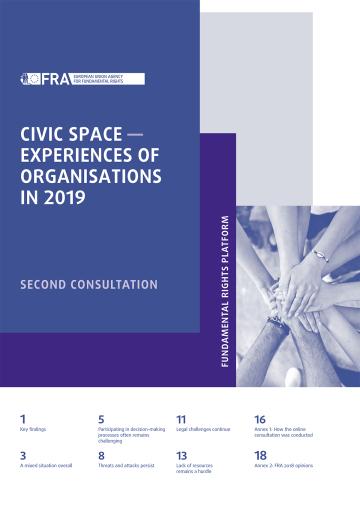
This paper presents key findings from FRA’s second consultation of its Fundamental Rights Platform, focusing on the experiences of civil society organisations (CSOs) working on human rights. FRA started an annual consultation with organisations participating in its platform in 2018.
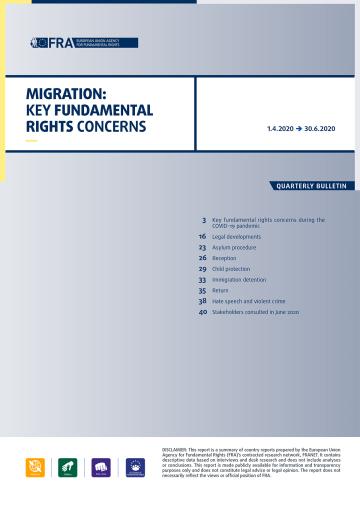
The EU Agency for Fundamental Rights has been regularly collecting data on asylum and migration since September 2015. This report focuses on the fundamental rights situation of people arriving in Member States and EU candidate countries particularly affected by migration. It addresses fundamental rights concerns between 1 April and 30 June 2020.
Denna vägledning riktar sig till gränsförvaltningspersonal i EU:s medlemsstater som arbetar på operativ nivå. Syftet är att de i sitt dagliga arbete ska få hjälp att genomföra de skyddsåtgärder för grundläggande rättigheter som fastställs i kodexen om Schengengränserna (förordning (EU) 2016/399) och i relaterad EU-lagstiftning.
Настоящото ръководство е предназначено за служителите по управление на границите в държавите — членки на Европейския съюз, които работят на оперативно ниво. То има за цел да подпомогне ежедневната им работа по прилагането на гаранциите за основните права, предвидени в Кодекса на шенгенските граници (Регламент (ЕС) № 2016/399), и свързаните с него законодателни актове.
Denne vejledning er til grænseforvaltningsmedarbejdere i EU’s medlemsstater, der arbejder på det operationelle plan. Den er beregnet som en hjælp i det daglige arbejde i forbindelse med at gennemføre beskyttelsen af grundlæggende rettigheder i Schengengrænsekodeksen (forordning (EU) 2016/399) og tilhørende EU-lovgivning.
Η παρούσα καθοδήγηση απευθύνεται στο προσωπικό διαχείρισης των συνόρων των κρατών μελών της Ευρωπαϊκής Ένωσης (ΕΕ) που εργάζεται στο επιχειρησιακό επίπεδο. Αποσκοπεί στο να τους βοηθήσει να εφαρμόζουν, στο πλαίσιο της καθημερινής άσκησης των καθηκόντων τους, τις εγγυήσεις των θεμελιωδών δικαιωμάτων του κώδικα συνόρων του Σένγκεν [κανονισμός (ΕΕ) αριθ. 2016/399] και του συναφούς δικαίου της ΕΕ.
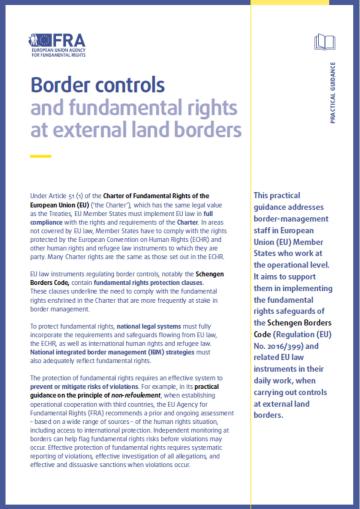
This practical guidance addresses border-management staff in European Union (EU) Member States who work at the operational level. It aims to support them in implementing the fundamental rights safeguards of the Schengen Borders Code (Regulation (EU) No. 2016/399) and related EU law instruments in their daily work, when carrying out controls at external land borders.
Ez az útmutató az EU tagállamaiban műveleti szinten határigazgatást végző személyzetnek készült. Célja, hogy segítséget nyújtson napi munkájuk során abban, hogy az alapjogoknak a Schengeni határ-ellenőrzési kódexben (2016/399/EU rendelet) és a kapcsolódó uniós jogban előírt védelmét biztosítani tudják.
Šios gairės skirtos ES valstybių narių sienų valdymo pareigūnams, dirbantiems operatyviniu lygmeniu. Jomis siekiama padėti jiems kasdieniame darbe įgyvendinti Šengeno sienų kodekse (Reglamentas (ES) 2016/399) ir susijusiuose ES teisės aktuose nustatytas pagrindinių teisių apsaugos priemones.
Deze richtsnoeren zijn bestemd voor grensbeheerpersoneel in de lidstaten van de Europese Unie (EU) dat op operationeel niveau werkt. Ze zijn bedoeld om deze medewerkers
te helpen bij hun dagelijkse werkzaamheden om de waarborgen op het gebied van de grondrechten van de Schengengrenscode (Verordening (EU) 2016/399) en de daarmee verband houdende EU-wetgeving uit te voeren.
This paper presents people’s concerns and experiences relating to security. It covers worry about crime, including terrorism and online fraud; experience of online fraud; experience of cyberharassment; and concern about illegal access to data.
What are the next steps in the digitalisation of justice and of access to justice? This impulse video statement by FRA Director Michael O’Flaherty was recorded for the online conference “Access to Justice in the Digital Age”. The conference takes place on 16 July and is organised by the German Federal Ministry for Justice and Consumer Protection during the German Council Presidency.