The methods used to determine the age of
an applicant may include “invasive” medical tests which interfere with the rights of the child, including their right to dignity,
integrity and privacy. It is often a challenge to find the right balance between protecting children from harm and promoting
their participation in these procedures. This report provides important insights and identifies the implications of collecting
children’s biometric data and conducting age assessments.
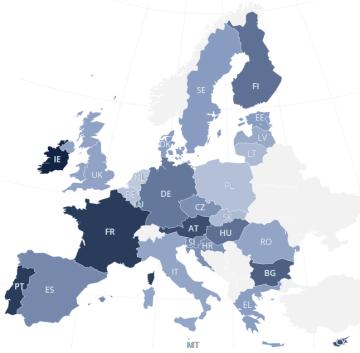
This report outlines Member States’ approaches to age requirements and limits
regarding child participation in judicial proceedings; procedural safeguards for, and rights of, children involved in criminal
proceedings; as well as issues related to depriving children of their liberty.
The right to access justice and all other relevant procedural rights are not just rights in themselves; they also protect against violations of every other right. Respect for children’s rights in the area of justice is therefore essential. International treaties, the Charter of Fundamental Rights of the European Union, European Union (EU) secondary law, and national legislation provide a number of relevant rights.
This Opinion by the European Union Agency for Fundamental Rights (FRA) aims to inform the European Parliament position concerning legislative proposals on interoperability between EU information technology systems (IT systems) presented on 12 December 2017 and currently discussed by the EU legislators.
This report outlines the fundamental rights implications of collecting, storing and using
biometric and other data in EU IT systems in the area of asylum and migration.
Η ευρωπαϊκή νομοθεσία κατά των διακρίσεων, η οποία αποτελείται ειδικότερα από τις οδηγίες
της ΕΕ κατά των διακρίσεων, καθώς και από το άρθρο 14 και το δωδέκατο πρωτόκολλο της
Ευρωπαϊκής Σύμβασης των Δικαιωμάτων του Ανθρώπου απαγορεύει τις διακρίσεις σε διάφορους
τομείς και για διάφορους λόγους. Το παρόν εγχειρίδιο εξετάζει την ευρωπαϊκή νομοθεσία κατά
των διακρίσεων, όπως αυτή απορρέει από τις δύο αυτές πηγές που λειτουργούν συμπληρωματικά
μεταξύ τους, παραπέμποντας αδιακρίτως και στις δύο όποτε αυτές αλληλοεπικαλύπτονται,
επισημαίνοντας, όμως, ταυτόχρονα, τυχόν διαφορές τους.
European non-discrimination law, as constituted in particular by the EU non-discrimination directives, and Article 14 of and Protocol 12 to the European Convention on Human Rights, prohibits discrimination across a range of contexts and grounds. This handbook examines European non-discrimination law stemming from these two sources as complementary systems, drawing on them interchangeably to the extent that they overlap, while highlighting differences where these exist.
Diskrimineerimine eri kontekstides ja alustel on keelatud Euroopa võrdse kohtlemise õigusega, mille moodustavad ELi võrdse kohtlemise direktiivid ning Euroopa inimõiguste ja põhivabaduste kaitse konventsiooni artikkel 14 ja konventsiooni protokoll nr 12. Käesolevas käsiraamatus vaadeldakse nendest kahest allikast lähtuvaid Euroopa võrdse kohtlemise õigusnorme üksteist täiendavate süsteemidena, tuginedes neile vaheldumisi ja rõhutades samas ka erinevusi (kui neid esineb).
U skladu s europskim antidiskriminacijskim pravom, kako je utemeljeno direktivama EU‑a
o suzbijanju diskriminacije te člankom 14. i Protokolom br. 12. Europske konvencije o ljudskim
pravima, zabranjuje se diskriminacija u nizu različitih okolnosti i na temelju različitih osnova. U ovom
se priručniku razmatra europsko antidiskriminacijsko pravo koje proizlazi iz tih dvaju izvora kao
komplementarnih sustava, pri čemu se naizmjenično poziva na njih ako se oni podudaraju odnosno
ističu se razlike između tih izvora ako one postoje.
Pagal Europos nediskriminavimo teisę, kurią sudaro pirmiausia ES nediskriminavimo direktyvos ir
Žmogaus teisių ir pagrindinių laisvų apsaugos konvencijos 14 straipsnis bei Protokolas Nr. 12,
draudžiama diskriminuoti įvairiomis aplinkybėmis ir įvairiais pagrindais. Šiame vadove iš šių dviejų
šaltinių kilusi Europos nediskriminavimo teisė nagrinėjama kaip viena kitą papildančios sistemos;
jomis pakaitomis remiamasi – tiek, kiek jos sutampa, ir atkreipiamas dėmesys į skirtumus, jei jų
yra.
Het Europese non-discriminatierecht, dat met name wordt gevormd door de EU-richtlijnen inzake non-discriminatie en door artikel 14 van en protocol 12 bij het Europese Verdrag tot bescherming van de rechten van de mens, verbiedt discriminatie op basis van diverse contexten en gronden. Dit handboek onderzoekt het Europees non-discriminatierecht dat voortvloeit uit deze twee complementaire bronnen, en maakt daarbij geen onderscheid tussen beide, tenzij daar waar ze van elkaar afwijken.
A legislação europeia antidiscriminação, constituída, em particular, pelas diretivas da UE em matéria
de não discriminação, pelo artigo 14.o da Convenção Europeia dos Direitos do Homem e pelo
Protocolo n.o 12 a esta convenção, proíbe a discriminação em diversos contextos e com base em
diversos motivos. O presente manual examina a legislação europeia neste domínio, tal como
decorre dessas duas fontes, remetendo indiferenciadamente para um ou outro destes sistemas
jurídicos complementares nas situações em que os mesmos se sobrepõem, ou assinalando as
diferenças onde estas existem.
Európske antidiskriminačné právo ustanovené antidiskriminačnými smernicami EÚ, ako aj článkom
14 Európskeho dohovoru Rady Európy o ochrane ľudských práv a základných slobôd a jeho protokolu
č. 12 zakazuje diskrimináciu v celom rade súvislostí a na základe rozmanitých dôvodov. V tejto
príručke sa skúma európske antidiskriminačné právo prameniace z týchto dvoch zdrojov ako
komplementárnych systémov, pričom sa z nich striedavo vychádza v rozsahu, v akom sa prekrývajú,
a zdôrazňujú sa prípadné rozdiely.
Evropsko protidiskriminacijsko pravo, kot ga določajo zlasti protidiskriminacijske direktive Evropske
unije, člen 14 Evropske konvencije o človekovih pravicah in 12. Protokol k tej konvenciji, prepoveduje
diskriminacijo na različnih področjih in zaradi različnih razlogov. Ta priročnik pojasnjuje evropsko
protidiskriminacijsko pravo, kot izhaja iz navedenih dveh komplementarnih sistemov. Izmenjuje
navaja področja, kjer se ureditvi vsebinsko prekrivata, in izpostavlja razlike med njima.
Den europeiska icke-diskrimineringslagstiftningen, som i huvudsak består av EU:s ickediskrimineringsdirektiv och artikel 14 i och protokoll nr 12 till Europakonventionen om de mänskliga rättigheterna, förbjuder diskriminering på en rad olika grunder och i olika sammanhang. Den här handboken innehåller en genomgång av den europeiska icke-diskrimineringslagstiftning som härrör från dessa två källor. De ses som två kompletterande system som delvis överlappar varandra. I de fall de skiljer sig åt påpekas detta.
Европейското право в областта на недискриминацията, както е предвидено в директивите
на ЕС относно недискриминацията, в член 14 и в Протокол 12 към Европейската конвенция
за правата на човека, забранява дискриминацията в рамките на широк набор от видове
контекст и основания. В настоящия наръчник се разглежда европейско право в областта на
недискриминацията, което произхожда от тези два източника като допълващи се системи.
Те му служат взаимозаменяемо дотолкова, че се припокриват, като същевременно се
подчертават съществуващите разлики.
Den europæiske lovgivning om ikke-forskelsbehandling, som består af EU’s direktiver om ikkeforskelsbehandling og artikel 14 i den europæiske menneskerettighedskonvention (EMRK) samt protokol nr. 12 hertil, forbyder forskelsbehandling i en række sammenhænge og af en række årsager. I denne håndbog ser vi på EU-lovgivningen om ikke-forskelsbehandling i henhold til disse to kilder som komplementære systemer, idet de vil blive brugt i flæng, hvis de overlapper hinanden, mens evt. forskelle vil blive fremhævet.
Vormünder sind zentral in einem System zum Schutz von Kindern, die vorübergehend oder dauerhaft aus ihrem familiären Umfeld herausgelöst wurden und deren Interessen nicht von ihren Eltern vertreten werden können. Zwischen den Mitgliedstaaten der Europäischen Union (EU) und auch innerhalb der Mitgliedstaaten gibt es große Unterschiede in den Arten von Vormundschaft. Dieser Bericht untersucht die wesentlichen Merkmale von Vormundschaftssystemen, die den Bedürfnissen schutzbedürftiger Kinder gerecht werden sollen. Dies schließt Kinder ein, die Opfer von Menschenhandel und anderen Formen der Ausbeutung sind, und Kinder, die Gefahr laufen, Opfer von Menschenhandel oder anderen Formen der Ausbeutung zu werden.
Guardians are a key element of a protection system for children who are temporarily or
permanently deprived of their family environment and cannot have their interests represented
by their parents. Great disparities exist between the types of guardianship provided
to children in and within European Union (EU) Member States. This report explores the key
features of guardianship systems put in place to cater for the needs of all children in need
of protection, including child victims and those at risk of becoming victims of trafficking in
human beings or of other forms of exploitation.
Les tuteurs sont une composante essentielle d’un système de protection des enfants qui sont, de façon temporaire ou permanente, privés de leur milieu familial et qui ne peuvent pas faire représenter leurs intérêts par leurs parents. De fortes disparités existent entre les types de tutelle dont les enfants bénéficient, tant entre les États membres de l’Union européenne qu’au sein même de ces pays. Ce rapport explore les principales caractéristiques des régimes de tutelle mis en place pour satisfaire aux besoins de tous les enfants qui nécessitent une protection, notamment les enfants victimes de la traite des personnes, ou d’autres formes d’exploitation, ainsi que ceux qui sont exposés au risque de le devenir.