eu-charter

Euroopa Liidu põhiõiguste harta

Artikkel 18 - Varjupaigaõigus

Artikkel 18 - Varjupaigaõigus

Varjupaigaõigus tagatakse 28. juuli 1951. aasta Genfi konventsiooni ja 31. jaanuari 1967. aasta pagulasseisundi protokolli sätete ning Euroopa Liidu lepingu ja Euroopa Liidu toimimise lepingu (edaspidi "aluslepingud") kohaselt.

Selgitused

  • Text:

    Käesoleva artikli tekst põhineb Euroopa Ühenduse asutamislepingu artiklil 63, mis on asendatud Euroopa Liidu toimimise lepingu artikliga 78, milles nõutakse liidult Genfi pagulasseisundi konventsiooni austamist. Viidata tuleks protokollidele Ühendkuningriigi ja Iirimaa ning Taani kohta, mis on lisatud aluslepingutele, et kindlaks määrata kõnealuste liikmesriikide poolt liidu õiguse kohaldamise ulatus selles valdkonnas ja see, mil määral käesolev artikkel on nende suhtes kohaldatav. Käesolev artikkel on kooskõlas aluslepingutele lisatud varjupaiga andmise protokolliga.

    Source:
    Euroopa Liidu Teataja C 303/17 - 14.12.2007
    Preamble - Explanations relating to the Charter of Fundamental Rights:
    Käesolevad selgitused valmistati algselt ette Euroopa Liidu põhiõiguste harta koostanud konvendi presiidiumi juhtimisel. Selgitusi ajakohastati Euroopa Konvendi presiidiumi vastutusel, pidades silmas nimetatud konvendi poolt harta tekstis (eelkõige artiklites 51 ja 52) tehtud kohandusi ning liidu õiguse arengut. Kuigi selgitustel endil pole õigusjõudu, on nad harta tõlgendamisel väärtuslikuks vahendiks, mille eesmärk on selgitada harta sätteid.

Pretsedendiõigus

Siseriiklik konstutsionaalne õigus

27 results found

  • Slovakia / Constitution of the Slovak Republic
    Riik:
    Slovakia

    Article 53 The Slovak Republic grants asylum to foreign nationals persecuted for upholding political rights and freedoms. Asylum may be denied to those who acted in violation of basic human rights and freedoms. Details shall be laid down by law.

  • Slovenia / Constitution of the Republic of Slovenia
    Riik:
    Slovenia

    Article 48 Within the limits of the law, the right of asylum shall be recognised for foreign nationals and stateless persons who are subject to persecution for their commitment to human rights and fundamental freedoms.

  • Spain / Constitution of the Kingdom of Spain
    Riik:
    Spain

    Section 13 (1) Aliens in Spain shall enjoy the public freedoms guaranteed by the present Part, under the terms to be laid down by treaties and the law. (2) Only Spaniards shall have the rights recognized in section 23, except in cases which may be established by treaty or by law concerning the right to vote and the right to be elected in municipal elections, and subject to the principle of reciprocity. (This text includes the first constitutional reform adopted on 27/08/1992; it just added the words "and the right to be elected" to the paragraph). (3) Extradition shall be granted only in compliance with a treaty or with the law, on reciprocal basis. No extradition can be granted for political crimes; but acts of terrorism shall not be regarded as such. (4) The law shall lay down the terms under which citizens from other countries and stateless persons may enjoy the right to asylum in Spain.

  • Suomen perustuslaki
    Riik:
    Finland

    9 § Liikkumisvapaus Suomen kansalaisella ja maassa laillisesti oleskelevalla ulkomaalaisella on vapaus liikkua maassa ja valita asuinpaikkansa. Jokaisella on oikeus lähteä maasta. Tähän oikeuteen voidaan lailla säätää välttämättömiä rajoituksia oikeudenkäynnin tai rangaistuksen täytäntöönpanon varmistamiseksi taikka maanpuolustusvelvollisuuden täyttämisen turvaamiseksi. Suomen kansalaista ei saa estää saapumasta maahan, karkottaa maasta eikä vastoin tahtoaan luovuttaa tai siirtää toiseen maahan. Lailla voidaan kuitenkin säätää, että Suomen kansalainen voidaan rikoksen johdosta tai oikeudenkäyntiä varten taikka lapsen huoltoa tai hoitoa koskevan päätöksen täytäntöönpanemiseksi luovuttaa tai siirtää maahan, jossa hänen ihmisoikeutensa ja oikeusturvansa on taattu. Ulkomaalaisen oikeudesta tulla Suomeen ja oleskella maassa säädetään lailla. Ulkomaalaista ei saa karkottaa, luovuttaa tai palauttaa, jos häntä tämän vuoksi uhkaa kuolemanrangaistus, kidutus tai muu ihmisarvoa loukkaava kohtelu. 

  • The Fundamental Law of Hungary
    Riik:
    Hungary

    Article XIV (Freedom and Responsibility) [...] (3) Hungary shall, upon request, grant the right to asylum to non-Hungarian citizens being persecuted or
    having a well-founded fear of persecution in their native country or in the country of their
    habitual residence for reasons of race, nationality, membership of a particular social group, religious, political belief, if they do not receive protection from their country of origin or from any other country.

  • Ustav Republike Hrvatske
    Riik:
    Croatia

    Članak 33.
    Strani državljanin i osobe bez državljanstva mogu dobiti utočište u Republici Hrvatskoj, osim ako su progonjeni za nepolitičke zločine i djelatnosti oprečne temeljnim načelima međunarodnog prava.
    Stranac koji se zakonito nalazi na teritoriju Republike Hrvatske ne može biti protjeran ni izručen drugoj državi, osim kad se mora izvršiti odluka donesena u skladu s međunarodnim ugovorom i zakonom.

  • КОНСТИТУЦИЯ на Република България
    Riik:
    Bulgaria

    Чл. 26. [...] (2) Чужденците, които пребивават в Република България, имат всички права и задължения по тази Конституция с изключение на правата и задълженията, за които Конституцията и законите изискват българско гражданство. Чл. 27. (1) Чужденците, които пребивават в страната на законно основание, не могат да бъдат изгонвани от нея или предавани на друга държава против тяхната воля, освен при условията и по реда, определени със закон. (2) Република България дава убежище на чужденци, преследвани заради техните убеждения или дейност в защита на международно признати права и свободи. (3) Условията и редът за даване на убежище се уреждат със закон.

ELi õigus

14 results found

  • Treaty on the Functioning of the European Union

    Article 78 (ex Articles 63, points 1 and 2, and 64(2) TEC)

    1. The Union shall develop a common policy on asylum, subsidiary protection and temporary protection with a view to offering appropriate status to any third-country national requiring international protection and ensuring compliance with the principle of non-refoulement. This policy must be in accordance with the Geneva Convention of 28 July 1951 and the Protocol of 31 January 1967 relating to the status of refugees, and other relevant treaties.

    2. For the purposes of paragraph 1, the European Parliament and the Council, acting in accordance with the ordinary legislative procedure, shall adopt measures for a common European asylum system comprising:

    (a) a uniform status of asylum for nationals of third countries, valid throughout the Union;

    (b) a uniform status of subsidiary protection for nationals of third countries who, without obtaining European asylum, are in need of international protection;

    (c) a common system of temporary protection for displaced persons in the event of a massive inflow;

    (d) common procedures for the granting and withdrawing of uniform asylum or subsidiary protection status;

    (e) criteria and mechanisms for determining which Member State is responsible for considering an application for asylum or subsidiary protection;

    (f) standards concerning the conditions for the reception of applicants for asylum or subsidiary protection;

    (g) partnership and cooperation with third countries for the purpose of managing inflows of people applying for asylum or subsidiary or temporary protection.

    3. In the event of one or more Member States being confronted by an emergency situation characterised by a sudden inflow of nationals of third countries, the Council, on a proposal from the Commission, may adopt provisional measures for the benefit of the Member State(s) concerned. It shall act after consulting the European Parliament.

  • Regulation (EU) 2019/1896 of the European Parliament and of the Council of 13 November 2019 on the European Border and Coast Guard and repealing Regulations (EU) No 1052/2013 and (EU) 2016/1624

    Article 1

    Subject matter

    This Regulation establishes a European Border and Coast Guard to ensure European integrated border management at the external borders with a view to managing those borders efficiently in full compliance with fundamental rights and to increasing the efficiency of the Union return policy. This Regulation addresses migratory challenges and potential future challenges and threats at the external borders. It ensures a high level of internal security within the Union in full respect of fundamental rights, while safeguarding the free movement of persons within the Union. It contributes to the detection, prevention and combating of cross-border crime at the external borders.

  • Regulation (EU) 2019/1896 of the European Parliament and of the Council of 13 November 2019 on the European Border and Coast Guard and repealing Regulations (EU) No 1052/2013 and (EU) 2016/1624

    Preamble

    (103) This Regulation respects the fundamental rights and observes the principles recognised by Articles 2 and 6 TEU and by the Charter of Fundamental Rights of the European Union (‘the Charter’), in particular respect for human dignity, the right to life, the prohibition of torture and inhuman or degrading treatment or punishment, the prohibition of trafficking in human beings, the right to liberty and security, the right to the protection of personal data, the right of access to documents, the right to asylum and to protection against removal and expulsion, non-refoulement, non-discrimination and the rights of the child.

    Article 1: Subject matter

    This Regulation establishes a European Border and Coast Guard to ensure European integrated border management at the external borders with a view to managing those borders efficiently in full compliance with fundamental rights and to increasing the efficiency of the Union return policy.

    This Regulation addresses migratory challenges and potential future challenges and threats at the external borders. It ensures a high level of internal security within the Union in full respect of fundamental rights, while safeguarding the free movement of persons within the Union. It contributes to the detection, prevention and combating of cross-border crime at the external borders.

    Article 43: Instructions to the teams

    4.   Members of the teams shall, in the performance of their tasks and in the exercise of their powers, fully respect fundamental rights, including access to asylum procedures and human dignity, and shall pay particular attention to vulnerable persons. Any measures taken in the performance of their tasks and in the exercise of their powers shall be proportionate to the objectives pursued by such measures. While performing their tasks and exercising their powers, they shall not discriminate against persons on the basis of any grounds such as sex, race, colour, ethnic or social origin, genetic features, language, religion or belief, political or any other opinion, membership of a national minority, property, birth, disability, age or sexual orientation in line with Article 21 of the Charter.

  • Directive 2013/33/EU of the European Parliament and of the Council of 26 June 2013 laying down standards for the reception of applicants for international protection

Rahvusvaheline õigus

5 results found

Tooted

  • Fundamental Rights Report
    8
    June
    2022
    FRA’s Fundamental Rights Report 2022 reviews major developments in the field in 2021, identifying both achievements and areas of concern. It also presents FRA’s opinions on these developments, including a synopsis of the evidence supporting these opinions.
  • Report / Paper / Summary
    23
    March
    2022
    The EU is facing a large-scale humanitarian crisis. Over 10 days at the beginning of March, the EU Agency for Fundamental Rights (FRA) visited all EU countries bordering Ukraine and Moldova – Hungary, Poland, Romania and Slovakia.
  • Periodic updates / Series
    4
    March
    2022
    The EU Agency for Fundamental Rights has been regularly collecting data on asylum and migration since September 2015. This report focuses on the fundamental rights situation of people arriving in Member States and EU candidate countries particularly affected by migration. It addresses fundamental rights concerns between 1 October and 31 December 2021.
  • Periodic updates / Series
    24
    September
    2021
    The EU Agency for Fundamental Rights has been regularly collecting data on asylum and migration since September 2015. This report focuses on the fundamental rights situation of people arriving in Member States and EU candidate countries particularly affected by migration. It addresses fundamental rights concerns between 1 January and 30 June 2021.
  • Fundamental Rights Report
    10
    June
    2021
    2020. aastal oli põhiõiguste kaitses nii edusamme kui
    ka tagasilööke. Euroopa Liidu Põhiõiguste Ameti (FRA)
    2021. aasta põhiõiguste aruandes antakse ülevaade
    valdkonna peamistest arengusuundadest, tuues
    esile saavutused ja endiselt probleemsena püsivad
    valdkonnad.
  • Fundamental Rights Report
    10
    June
    2021
    FRA’s Fundamental Rights Report 2021 reviews major developments in the field in 2020, identifying both achievements and areas of concern. It also presents FRA’s opinions on these developments, including a synopsis of the evidence supporting these opinions. This year’s focus chapter explores the impact of the COVID-19 pandemic on fundamental rights. The remaining chapters cover: the EU Charter of Fundamental Rights; equality and non-discrimination; racism, xenophobia and related intolerance; Roma equality and inclusion; asylum, borders and migration; information society, privacy and data protection; rights of the child; access to justice; and the implementation of the Convention on the Rights of Persons with Disabilities.
  • Periodic updates / Series
    25
    February
    2021
    The EU Agency for Fundamental Rights has been regularly collecting data on asylum and migration since September 2015. This report focuses on the fundamental rights situation of people arriving in Member States and EU candidate countries particularly affected by migration. It addresses fundamental rights concerns between 1 October and 31 December 2020.
  • Report / Paper / Summary
    18
    December
    2020
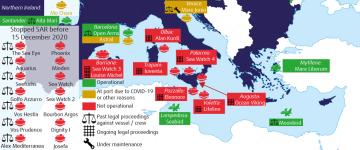
    In 2020 (until 15 December), the International Organization for Migration estimated that about 1,054 people have died or gone missing while crossing the Mediterranean Sea to reach Europe to escape war or persecution or to pursue a better life. This is an average of almost three people per day. In the past years, a significant number of migrants in distress at sea have been rescued by civil society vessels deployed with a humanitarian mandate to reduce fatalities and bring rescued migrants to safety. Since 2018, however, national authorities initiated some 50 administrative and criminal proceedings against crew members or vessels, also seizing the latter. In some cases, rescue vessels were blocked in harbours due to flag issues or the inability to meet maritime safety-related and other technical requirements.
  • Handbook / Guide / Manual
    17
    December
    2020
    Euroopa inimõiguste konventsioon ja Euroopa Liidu õigus moodustavad üha olulisema raamistiku välismaalaste õiguste kaitseks. Varjupaiga, piiride ja sisserändega seotud Euroopa Liidu õigusaktid arenevad kiiresti. Euroopa Inimõiguste Kohtu kohtupraktika
    on ulatuslik, eelkõige seoses Euroopa inimõiguste konventsiooni artiklitega 3, 5, 8 ja 13. Euroopa Liidu Kohtul palutakse üha sagedamini võtta seisukoht Euroopa Liidu õiguse sätete tõlgendamise kohta selles valdkonnas. Käsiraamatu kolmandas väljaandes, mida on ajakohastatud kuni juulini 2020, tutvustatakse arusaadavalt Euroopa Liidu õigusakte ja Euroopa mõlema kohtu kohtupraktikat. See on ette nähtud ELi ja Euroopa Nõukogu liikmesriikide õigusala töötajatele, kohtunikele, prokuröridele, sisserändeametnikele ja vabaühendustele.
  • Country sheets
    20
    October
    2020
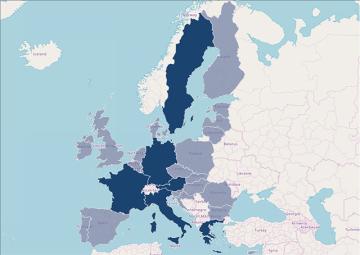
    The EU Fundamental Rights Agency published in 2019 its report on the ‘Integration of young refugees in the EU’. The report explored the challenges of young people who fled armed conflict or persecution and arrived in the EU in 2015 and 2016. The report is based on 426 interviews with experts working in the area of asylum and integration, as well as 163 interviews with young people, aged 16 to 24, conducted between October 2017 and June 2018 in 15 regions and cities located in six Member States: Austria, France, Germany, Greece, Italy and Sweden. The links on this page provide a summary of the information collected during this period for each country about unaccompanied children turning 18 and the change in people’s legal status once international protection is granted. These two issues had at the time been identified as moments requiring sufficient, consistent and systematic support, particularly from lawyers, social workers and guardians, to ensure successful integration.