This report outlines Member States’ approaches to age requirements and limits
regarding child participation in judicial proceedings; procedural safeguards for, and rights of, children involved in criminal
proceedings; as well as issues related to depriving children of their liberty.
The right to access justice and all other relevant procedural rights are not just rights in themselves; they also protect against violations of every other right. Respect for children’s rights in the area of justice is therefore essential. International treaties, the Charter of Fundamental Rights of the European Union, European Union (EU) secondary law, and national legislation provide a number of relevant rights.
Handbook / Guide / Manual
21
March
2018
New language versions: Lithuanian, Portuguese and Slovak
Diskrimineerimine eri kontekstides ja alustel on keelatud Euroopa võrdse kohtlemise õigusega, mille moodustavad ELi võrdse kohtlemise direktiivid ning Euroopa inimõiguste ja põhivabaduste kaitse konventsiooni artikkel 14 ja konventsiooni protokoll nr 12. Käesolevas käsiraamatus vaadeldakse nendest kahest allikast lähtuvaid Euroopa võrdse kohtlemise õigusnorme üksteist täiendavate süsteemidena, tuginedes neile vaheldumisi ja rõhutades samas ka erinevusi (kui neid esineb).
Guardians are a key element of a protection system for children who are temporarily or
permanently deprived of their family environment and cannot have their interests represented
by their parents. Great disparities exist between the types of guardianship provided
to children in and within European Union (EU) Member States. This report explores the key
features of guardianship systems put in place to cater for the needs of all children in need
of protection, including child victims and those at risk of becoming victims of trafficking in
human beings or of other forms of exploitation.
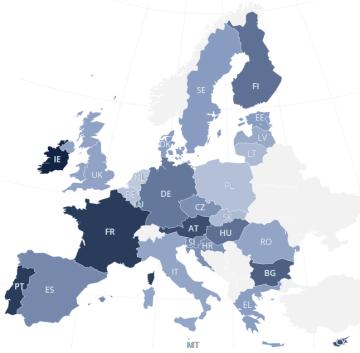
International treaties, the Charter of Fundamental Rights of the European Union, European Union (EU) secondary law and national legislation provide a number of rights to citizens. The maps and tables presented show the various patterns concerning age requirements for children to acquire rights in the EU. They also identify inconsistencies, protection gaps and restrictions deriving from different age thresholds. The reference period was until April 2016. Any legislative developments since then have been included whenever relevant or if known.
Up to one third of migrants arriving in the European Union since the summer of 2015 have been children. The current emphasis on speedier asylum processing and making returns more effective may trigger increased use of immigration detention, possibly also affecting children. The detention of children implicates various fundamental rights and will only be in line with EU law if limited to exceptional cases. This report aims to support practitioners in implementing relevant polices in line with applicable law by outlining available safeguards against unlawful and arbitrary detention and highlighting promising practices.
Diverse efforts at both EU and national levels sought to bolster fundamental rights protection in 2016, while some measures threatened to undermine such protection.
Diverse efforts at both EU and national levels sought to bolster fundamental rights protection in 2016, while some measures threatened to undermine such protection.
This year marks the 10th anniversary of the EU Agency for Fundamental Rights. Such a milestone offers an opportunity for reflection – both on the progress that provides cause for celebration and on the lingering shortcomings that must be addressed.



 Report / Paper / Summary13September2023
 Handbook / Guide / Manual7April2022