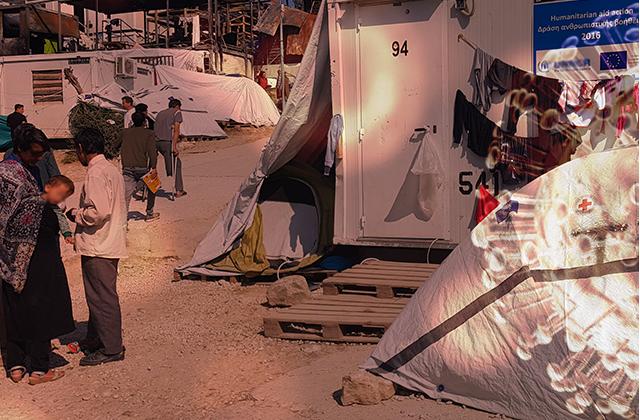
The EU Agency for Fundamental Rights has been regularly collecting data on asylum and migration since September 2015. This report focuses on the fundamental rights situation of people arriving in Member States and EU candidate countries particularly affected by migration. It addresses fundamental rights concerns between 1 April and 30 June 2020.
Deze richtsnoeren zijn bestemd voor grensbeheerpersoneel in de lidstaten van de Europese Unie (EU) dat op operationeel niveau werkt. Ze zijn bedoeld om deze medewerkers
te helpen bij hun dagelijkse werkzaamheden om de waarborgen op het gebied van de grondrechten van de Schengengrenscode (Verordening (EU) 2016/399) en de daarmee verband houdende EU-wetgeving uit te voeren.
The EU Return Directive (2008/115/EC) in Article 8 (6) introduced an important fundamental rights safeguard for third-country nationals ordered to leave the EU because they do not or no longer fulfil the conditions for entry and/or stay. According to the directive, Member States must provide for an effective forced-return monitoring system.
In 2019, the International Organization for Migration estimated that 1,866 people have died or gone missing while crossing the Mediterranean Sea to reach Europe to escape war or persecution or to pursue a better life. This is an average of five people per day. In recent years, a significant proportion of migrants in distress at sea have been rescued by civil society vessels deployed with a humanitarian mandate to reduce fatalities and bring rescued migrants to safety. Since 2018, however, authorities in some EU Member States started viewing civil society-deployed rescue vessels with hostility. As a reaction, national authorities initiated about 40 administrative and criminal proceedings against crew members or vessels, including seizing the latter. In some cases, rescue vessels were blocked in harbours due to flag issues or the inability to meet technical requirements.
Het jaar 2019 kende zowel vooruitgang als
teleurstellingen bij de bescherming van grondrechten.
In het Verslag over de grondrechten 2020 van het FRA
worden de belangrijkste ontwikkelingen op het gebied
van de grondrechten geëvalueerd en wordt niet alleen
ingegaan op de behaalde successen, maar ook
gewezen op blijvende punten van zorg. Deze publicatie
laat de FRA-adviezen over de belangrijkste
ontwikkelingen op de besproken thematische
gebieden de revue passeren en geeft een
samenvatting van de feitelijke gegevens waarop deze
adviezen berusten. Het resultaat is een beknopt, maar
informatief overzicht van de belangrijkste uitdagingen
op grondrechtengebied waarvoor de EU en haar
lidstaten zich nog gesteld zien.
FRA’s Fundamental Rights Report 2020 reviews major developments in the field in 2019, identifying both achievements and areas of concern. It also presents FRA’s opinions on these developments, including a synopsis of the evidence supporting these opinions. This year’s focus chapter explores how to unlock the full potential of the EU Charter of Fundamental Rights.
The Coronavirus pandemic continues to interrupt everyday life in the EU in unprecedented ways. But the way it affects our societies is shifting. As governments gradually lift some of the measures put in place to contain the spread of COVID-19, new fundamental rights concerns arise: how to ensure that the rights to life and health are upheld as daily life transitions to a ‘new normal’. This Bulletin looks at declarations of states of emergency, or equivalent, and how they came under scrutiny. It considers the impact on fundamental rights in important areas of daily life, and includes a thematic focus on the processing of users’ data to help contain COVID-19, particularly by contact-tracing apps. It covers the period 21 March – 30 April 2020.
The EU Agency for Fundamental Rights has been regularly collecting data on migration since September 2015. This report focuses on the fundamental rights situation of people arriving in Member States and EU candidate countries particularly affected by large migration movements. It addresses key fundamental rights concerns between 1 January and 31 March 2020.
In recent years, thousands of girls and boys have reached Europe without their parents, and sought international protection. Many of them experienced violence, abuse and neglect in their home countries, and while in transit. They have the right to be protected in line with the provisions of the UN Convention on the Rights of the Child, the European Convention on Human Rights, and European Union law. This report explores the challenges and good practices gathered in the implementation of such relocation programmes. Based on information FRA collected in 10 EU Member States, it aims to help national authorities to support the relocation of unaccompanied children by taking measures that are fully rights compliant and practically feasible.


 Handbook / Guide / Manual9June2026
 Handbook / Guide / Manual8October2025
 Opinion / Position Paper23July2025