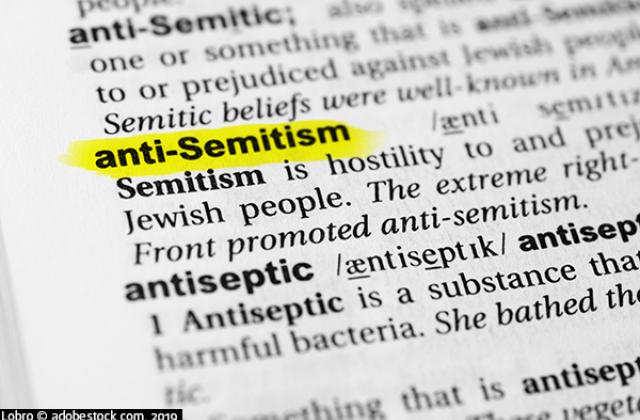
This annual overview provides an update of the most recent figures on antisemitic incidents, covering the period 1 January 2008 – 31 December 2018, across the EU Member States, where data are available. It includes a section that presents evidence from international organisations. In addition, for the first time, it provides an overview of how Member States that have adopted or endorsed the non-legally binding working definition of antisemitism adopted by the International Holocaust Remembrance Alliance (IHRA) (2016) use or intend to use it.
FRA’s second EU Minorities and Discrimination survey (EU-MIDIS II) collected information from over 25,000 respondents with different ethnic minority and immigrant backgrounds across all 28 EU Member States. The main findings from the survey, published in 2017, pointed to a number of differences in the way women and men with immigrant backgrounds across the European Union (EU) experience how their rights are respected. This report summarises some of the most relevant survey findings in this regard, which show the need for targeted, gender-sensitive measures that promote the integration of – specifically – women who are immigrants or descendants of immigrants.
Based on FRA’s second large-scale survey on experiences and perceptions of antisemitism, this report focuses on the perspectives of young Jewish Europeans (aged 16-34) living in twelve EU Member States. It first describes this particular group and takes a look at defining antisemitism and understanding the place of Israel in it.
This technical report presents in detail all the stages
of the survey and the relevant information needed to
assess the quality and reliability of the data, as well
as considerations for interpreting the survey results.
The following chapters of the report cover the procedures
used in the development and administration
of the survey.
Kinderen zonder ouderlijke zorg die in een andere dan hun eigen EU-lidstaat worden aangetroffen
is bedoeld om de respons van alle actoren op het gebied van kinderbescherming te versterken. De
bescherming van deze meisjes en jongens is van het grootste belang en is een plicht van de EUlidstaten
die voortvloeit uit het internationale en Europese rechtskader. In de gids staan minderjarige
slachtoffers van mensenhandel en kinderen die risico lopen centraal. Hiermee wordt uitvoering
gegeven aan een van de acties van de mededeling ter intensivering van de inspanningen van de EU
om mensenhandel te voorkomen (2017), rekening houdend met geconstateerde patronen, onder
meer wat betreft het genderspecifieke karakter van het misdrijf.


 Report / Paper / Summary3March2026
 Report / Paper / Summary27January2026
 Report / Paper / Summary27November2025