eu-charter

Carta drepturilor fundamentale a Uniunii Europene

Articolul 10 - Libertatea de gândire, de conștiință și de religie

Articolul 10 - Libertatea de gândire, de conștiință și de religie

(1) Orice persoană are dreptul la libertatea de gândire, de conștiință și de religie. Acest drept implică libertatea de a-și schimba religia sau convingerea, precum și libertatea de a-și manifesta religia sau convingerea individual sau colectiv, în public sau în particular, prin intermediul cultului, învățământului, practicilor și îndeplinirii riturilor.

(2) Dreptul la obiecție pe motive de conștiință este recunoscut în conformitate cu legile interne care reglementează exercitarea acestui drept.

Explicaţii

  • Text:

    Dreptul garantat la alineatul (1) corespunde dreptului garantat la articolul 9 din CEDO şi, în conformitate cu articolul 52 alineatul (3) din cartă, are acelaşi înţeles şi acelaşi domeniu de aplicare ca şi acesta. De aceea, restrângerile acestuia trebuie să respecte dispoziţiile articolului 9 alineatul (2) menţionat anterior, având următorul text: `Libertatea de a-şi manifesta religia sau convingerile nu poate face obiectul altor restrângeri decât acelea care, prevăzute de lege, constituie măsuri necesare, într-o societate democratică, pentru siguranţa publică, protecţia ordinii, a sănătăţii sau a moralei publice ori pentru protejarea drepturilor şi libertăţilor altora`.
    Dreptul garantat la alineatul (2) corespunde tradiţiilor constituţionale naţionale şi evoluţiei legislaţiilor interne în acest domeniu.

    Source:
    Jurnalul Oficial al Uniunii Europene C 303/17 - 14.12.2007
    Preamble - Explanations relating to the Charter of Fundamental Rights:
    Explicaţiile redate în continuare au fost redactate iniţial sub autoritatea prezidiului Convenţiei care a elaborat Carta drepturilor fundamentale a Uniunii Europene. Acestea au fost actualizate sub autoritatea prezidiului Convenţiei Europene, având în vedere adaptarea de către respectiva Convenţie a textului cartei (în special la articolele 51 şi 52), precum şi evoluţia dreptului Uniunii. Cu toate că aceste explicaţii nu au valoare juridică în sine, acestea constituie un preţios instrument de interpretare destinat clarificării dispoziţiilor cartei.

Jurisprudență

Dreptul constituțional național

30 results found

  • Sweden / Instrument of Government
    Țara:
    Sweden

    Chapter 2 - Fundamental rights and freedoms:

    Article 1 Every citizen shall be guaranteed the following rights and freedoms in his relations with the public institutions: 1. freedom of expression: that is, the freedom to communicate information and express thoughts, opinions and sentiments, whether orally, pictorially, in writing, or in any other way; 2. freedom of information: that is, the freedom to procure and receive information and otherwise acquaint oneself with the utterances of others; 3. freedom of assembly: that is, the freedom to organise or attend meetings for the purposes of information or the expression of opinion or for any other similar purpose, or for the purpose of presenting artistic work; 4. freedom to demonstrate: that is, the freedom to organise or take part in demonstrations in a public place; 5. freedom of association: that is, the freedom to associate with others for public or private purposes; and 6. freedom of worship: that is, the freedom to practise one’s religion alone or in the company of others.

    Article 2 No one shall in his or her relations with the public institutions be coerced to divulge an opinion in a political, religious, cultural or other such connection. Nor may anyone in his or her relations with the public institutions be coerced to participate in a meeting for the shaping of opinion or a demonstration or other manifestation of opinion, or to belong to a political association, religious community or other association for opinion referred to in sentence one;

    Article 3 No record in a public register concerning a Swedish citizen may be based without his or her consent solely on his or her political opinions.

  • Basic Law for the Federal Republic of Germany
    Țara:
    Germany

    Article 4 (1) Freedom of faith and of conscience, and freedom to profess a religious or philosophical creed, shall be inviolable. (2) The undisturbed practice of religion shall be guaranteed. (3) No person shall be compelled against his conscience to render military service involving the use of arms. Details shall be regulated by a federal law. Article 12 a (...) (2) Any person who, on grounds of conscience, refuses to render military service involving the use of arms may be required to perform alternative service. The duration of alternative service shall not exceed that of military service. Details shall be regulated by a law, which shall not interfere with the freedom to make a decision in accordance with the dictates of conscience, and which shall also provide for the possibility of alternative service not connected with units of the Armed Forces or of the Federal Border Police. (...)

  • Constitution of Finland
    Țara:
    Finland

    Section 11 Freedom of religion and consciencce Everyone has the freedom of religion and conscience. Freedom of religion and conscience entails the right to profess and practice a religion, the right to express one's convictions and the right to be a member of or decline to be a member of a religious community. No one is under the obligation, against his or her conscience, to participate in the practice of a religion.

  • Constitution of Ireland
    Țara:
    Ireland

    Article 44.2.1. Freedom of conscience and the free profession and practice of religion are, subject to public order and morality, guaranteed to every citizen. Article 44.2.2 The state guarantees not to endow any
    religion. Article 44.2.3. The State shall not impose any disabilities or make any discrimination on the ground of religious profession, belief or status. Article 44.2.4 Legislation providing state aid for schools
    shall not discriminate between schools under the anagement of different religious denominations, nor be such as to affect prejudicially the right of any child to attend a school receiving public money without attending religious instruction at that
    school. Article 44.2.5 Every religious denomination shall have the right to manage its own affairs, own, acquire and administer property, movable and immovable, and maintain institutions for religious or
    charitable purposes. Article 44.2.6 The property of any religious denomination or any educational institution shall not be diverted save for necessary works of public utility and on payment of compensation.

  • Constitution of Malta
    Țara:
    Malta

    Article 40 (1) All persons in Malta shall have full freedom of conscience and enjoy the free exercise of their respective mode of religious worship. (2) No person shall be required to receive instruction in religion or to show knowledge or proficiency in religion if, in the case of a person who has not attained the age of sixteen years, objection to such requirement is made by the person who according to law has authority over him and, in any other case, if the person so required objects thereto:Provided that no such requirement shall be held to be inconsistent with or in contravention of this article to the extent that the knowledge of, or the proficiency or instruction in, religion is required for the teaching of such religion, or for admission to the priesthood or to a religious order, or for other religious purposes, and except so far as that requirement is shown not to be reasonably justifiable in a democratic society. (3) Nothing contained in or done under the authority of any law shall be held to be inconsistent with or in contravention of subarticle (1), to the extent that the law in question makes provision that is reasonably required in the interests of public safety, public order, public morality or decency, public health, or the protection of the rights and freedoms of others, and except so far as that provision or, as the case may be, the thing done under the authority thereof, is shown not to be reasonably justifiable in a democratic society. font>

  • Constitution of the Hellenic Republic
    Țara:
    Greece

    Article 13 (1). Freedom of religious conscience is inviolable. The enjoyment of civil rights and liberties does not depend on the individual’s religious beliefs. (2). All known religions shall be free and their rites of worship shall be performed unhindered and under the protection of the law. The practice of rites of worship is not allowed to offend public order or the good usages. Proselytism is prohibited. (3). The ministers of all known religions shall be subject to the same supervision by the State and to the same obligations towards it as those of the prevailing religion. (4). No person shall be exempt from discharging his obligations to the State or may refuse to comply with the laws by reason of his religious convictions. (5). No oath shall be imposed or administered except as specified by law and in the form determined by law.

  • Constitution of the Italian Republic
    Țara:
    Italy

    Art. 19. Anyone is entitled to freely profess their religious belief in any form, individually or with others, and to promote them and celebrate rites in public or in private, provided they are not offensive to public morality. Art. 20. No special limitation or tax burden may be imposed on the establishment, legal capacity or activities of any organisation on the ground of its religious nature or its religious or confessionai aims.

  • Constitution of the Republic of Estonia
    Țara:
    Estonia

    Article 40. Everyone is entitled to freedom of conscience, freedom of religion and freedom of thought.
    Everyone is free to belong to any church or any religious society. There is no state church.
    Everyone is free to practise his or her religion, alone or in community with others, in public or in private, unless this is detrimental to public order, public health or public morality.
    Article 41. Everyone has the right to abide by his or her opinions and beliefs. No one may be compelled to change his or her opinions or beliefs.
    Beliefs are no defence for violating the law.
    No one may be held legally liable for his or her beliefs.
    Article 42. Government agencies, local authorities, and their officials may not gather or store information about the beliefs of a citizen of Estonia against the citizen’s free will.

  • Constitution of the Republic of Latvia
    Țara:
    Latvia

    99. Everyone has the right to freedom of thought, conscience and religion. The church shall be separate from the State.

  • Constitution of the Republic of Lithuania
    Țara:
    Lithuania

    Article 26. Freedom of thought, conscience, and religion shall not be restricted. Everyone shall have the right to freely choose any religion or belief and, either alone or with others, in private or in public, to profess his religion, to perform religious ceremonies, as well as to practise and teach his belief. No one may compel another person or be compelled to choose or profess any religion or belief. The freedom to profess and spread religion or belief may not be limited otherwise than by law and only when this is necessary to guarantee the security of society, public order, the health or morals of people, or other basic rights or freedoms of the person. Parents and guardians shall, without restrictions, take care of the religious and moral education of their children and wards according to their own convictions. Article 27 Convictions, practised religion, or belief may not serve as a justification for a crime or failure to observe laws. Article 43. The State shall recognise the churches and religious organisations that are traditional in Lithuania; other churches and religious organisations shall be recognised provided that they have support in society, and their teaching and practices are not in conflict with the law and public morals. Churches and religious organisations recognised by the State shall have the rights of a legal person. Churches and religious organisations shall be free to proclaim their teaching, perform their ceremonies, and have houses of prayer, charity establishments, and schools for the training of priests. Churches and religious organisations shall conduct their affairs freely according to their canons and statutes. The status of churches and other religious organisations in the State shall be established by agreement or by law. The teaching proclaimed by churches and religious organisations, other religious activities, and houses of prayer may not be used for purposes that are in conflict with the Constitution and laws. There shall be no state religion in Lithuania.

  • Constitution of the Republic of Poland
    Țara:
    Poland

    Article 25.1. Churches and other religious organizations shall have equal rights. 2. Public authorities in the Republic of Poland shall be impartial in matters of personal conviction, whether religious or philosophical, or in relation to outlooks on life, and shall ensure their freedom of expression within public life. 3. The relationship between the State and churches and other religious organizations shall be based on the principle of respect for their autonomy and the mutual independence of each in its own sphere, as well as on the principle of cooperation for the individual and the common good. 4. The relations between the Republic of Poland and the Roman Catholic Church shall be determined by international treaty concluded with the Holy See, and by statute. 5. The relations between the Republic of Poland and other churches and religious organizations shall be determined by statutes adopted pursuant to agreements concluded between their appropriate representatives and the Council of Ministers.Article 53 1. Freedom of conscience and religion shall be ensured to everyone. 2. Freedom of religion shall include the freedom to profess or to accept a religion by personal choice as well as to manifest such religion, either individually or collectively, publicly or privately, by worshipping, praying, participating in ceremonies, performing of rites or teaching. Freedom of religion shall also include possession of sanctuaries and other places of worship for the satisfaction of the needs of believers as well as the right of individuals, wherever they may be, to benefit from religious services. 3. Parents shall have the right to ensure their children a moral and religious upbringing and teaching in accordance with their convictions. The provisions of Article 48, para. 1 shall apply as appropriate. 4. The religion of a church or other legally recognized religious organization may be taught in schools, but other peoples' freedom of religion and conscience shall not be infringed thereby. 5. The freedom to publicly express religion may be limited only by means of statute and only where this is necessary for the defence of State security, public order, health, morals or the freedoms and rights of others. 6. No one shall be compelled to participate or not participate in religious practices. 7. No one may be compelled by organs of public authority to disclose his philosophy of life, religious convictions or belief.Article 85 (...) 3. Any citizen whose religious convictions or moral principles do not allow him to perform military service may be obliged to perform substitute service in accordance with principles specified by statute.

  • Costituzione della Repubblica Italiana
    Țara:
    Italy

    Art. 19. Tutti hanno diritto di professare liberamente la propria fede religiosa in qualsiasi forma, individuale o associata, di farne propaganda e di esercitarne in privato o in pubblico il culto, purché non si tratti di riti contrari al buon costume. Art. 20. Il carattere ecclesiastico e il fine di religione o di culto d'una associazione od istituzione non possono essere causa di speciali limitazioni legislative, né di speciali gravami fiscali per la sua costituzione, capacità giuridica e ogni forma di attività.

  • Czechia / Charter of Fundamental Rights and Freedoms
    Țara:
    Czechia

    Article 15 (1) The freedom of thought, conscience, and religious conviction is guaranteed. Everyone has the right to change her religion or faith or to have no religious conviction. (…) (3) No one may be compelled to perform military service if such is contrary to his conscience or religious conviction. Detailed provisions shall be laid down in a law. Article 16 (1) Everyone has the right freely to manifest her religion or faith, either alone or in community with others, in private or public, through worship, teaching, practice, or observance. (2) Churches and religious societies govern their own affairs; in particular, they establish their own bodies and appoint their clergy, as well as found religious orders and other church institutions, independently of state authorities. (3) The conditions under which religious instruction may be given at state schools shall be set by law. (4) The exercise of these rights may be limited by law in the case of measures necessary in a democratic society for the protection of public safety and order, health and morals, or the rights and freedoms of others.

  • Eesti Vabariigi Põhiseadus
    Țara:
    Estonia

    § 40. Igaühel on südametunnistuse-, usu- ja mõttevabadus. Kuulumine kirikutesse ja usuühingutesse on vaba. Riigikirikut ei ole. Igaühel on vabadus nii üksinda kui ka koos teistega, avalikult või eraviisiliselt täita usutalitusi, kui see ei kahjusta avalikku korda, tervist ega kõlblust.
    § 41. Igaühel on õigus jääda truuks oma arvamustele ja veendumustele. Kedagi ei tohi sundida neid muutma. Veendumustega ei saa vabandada õiguserikkumist. Kedagi ei saa veendumuste pärast võtta õiguslikule vastutusele.
    § 42. Riigiasutused, kohalikud omavalitsused ja nende ametiisikud ei tohi Eesti kodaniku vaba tahte vastaselt koguda ega talletada andmeid tema veendumuste kohta.

  • European Convention on Human Rights - Article 9
    Țara:
    Austria

    Article 9 – Freedom of thought, conscience and religion

    1 Everyone has the right to freedom of thought, conscience and religion; this right includes freedom to change his religion or belief and freedom, either alone or in community with others and in public or private, to manifest his religion or belief, in worship, teaching, practice and observance.

    2 Freedom to manifest one's religion or beliefs shall be subject only to such limitations as are prescribed by law and are necessary in a democratic society in the interests of public safety, for the protection of public order, health or morals, or for the protection of the rights and freedoms of others.

  • Grundgesetz für die Bundesrepublik Deutschland
    Țara:
    Germany

    Artikel 4 (1) Die Freiheit des Glaubens, des Gewissens und die Freiheit des religiösen und weltanschaulichen Bekenntnisses sind unverletzlich. (2) Die ungestörte Religionsausübung wird gewährleistet. (3) Niemand darf gegen sein Gewissen zum Kriegsdienst mit der Waffe gezwungen werden. Das Nähere regelt ein Bundesgesetz. Artikel 12a (...) (2) Wer aus Gewissensgründen den Kriegsdienst mit der Waffe verweigert, kann zu einem Ersatzdienst verpflichtet werden. Die Dauer des Ersatzdienstes darf die Dauer des Wehrdienstes nicht übersteigen. Das Nähere regelt ein Gesetz, das die Freiheit der Gewissensentscheidung nicht beeinträchtigen darf und auch eine Möglichkeit des Ersatzdienstes vorsehen muß, die in keinem Zusammenhang mit den Verbänden der Streitkräfte und des Bundesgrenzschutzes steht. (...)

  • Konstytucja Rzeczypospolitej Polskiej
    Țara:
    Poland

    Art. 25.1. Kościoły i inne związki wyznaniowe są równouprawnione. 2. Władze publiczne w Rzeczypospolitej Polskiej zachowują bezstronność w sprawach przekonań religijnych, światopoglądowych i filozoficznych, zapewniając swobodę ich wyrażania w życiu publicznym. 3. Stosunki między państwem a kościołami i innymi związkami wyznaniowymi są kształtowane na zasadach poszanowania ich autonomii oraz wzajemnej niezależności każdego w swoim zakresie, jak również współdziałania dla dobra człowieka i dobra wspólnego. 4. Stosunki między Rzecząpospolitą Polską a Kościołem katolickim określają umowa międzynarodowa zawarta ze Stolicą Apostolską i ustawy. 5. Stosunki między Rzecząpospolitą Polską a innymi kościołami oraz związkami wyznaniowymi określają ustawy uchwalone na podstawie umów zawartych przez Radę Ministrów z ich właściwymi przedstawicielami. Art. 53. 1. Każdemu zapewnia się wolność sumienia i religii. 2. Wolność religii obejmuje wolność wyznawania lub przyjmowania religii według własnego wyboru oraz uzewnętrzniania indywidualnie lub z innymi, publicznie lub prywatnie, swojej religii przez uprawianie kultu, modlitwę, uczestniczenie w obrzędach, praktykowanie i nauczanie. Wolność religii obejmuje także posiadanie świątyń i innych miejsc kultu w zależności od potrzeb ludzi wierzących oraz prawo osób do korzystania z pomocy religijnej tam, gdzie się znajdują. 3. Rodzice mają prawo do zapewnienia dzieciom wychowania i nauczania moralnego i religijnego zgodnie ze swoimi przekonaniami. Przepis art. 48 ust. 1 stosuje się odpowiednio. 4. Religia kościoła lub innego związku wyznaniowego o uregulowanej sytuacji prawnej może być przedmiotem nauczania w szkole, przy czym nie może być naruszona wolność sumienia i religii innych osób. 5. Wolność uzewnętrzniania religii może być ograniczona jedynie w drodze ustawy i tylko wtedy, gdy jest to konieczne do ochrony bezpieczeństwa państwa, porządku publicznego, zdrowia, moralności lub wolności i praw innych osób. 6. Nikt nie może być zmuszany do uczestniczenia ani do nieuczestniczenia w praktykach religijnych. 7. Nikt nie może być obowiązany przez organy władzy publicznej do ujawnienia swojego światopoglądu, przekonań religijnych lub wyznania.Art. 85. (...) 3.Obywatel, któremu przekonania religijne lub wyznawane zasady moralne nie pozwalają na odbywanie służby wojskowej, może być obowiązany do służby zastępczej na zasadach określonych w ustawie

  • Latvijas Republikas Satversme
    Țara:
    Latvia

    99. Ikvienam ir tiesības uz domas, apziņas un reliģiskās pārliecības brīvību. Baznīca ir atdalīta no valsts.

  • Lietuvos Respublikos Konstitucija
    Țara:
    Lithuania

    26 straipsnis. Minties, tikėjimo ir sąžinės laisvė yra nevaržoma. Kiekvienas žmogus turi teisę laisvai pasirinkti bet kurią religiją arba tikėjimą ir vienas ar su kitais, privačiai ar viešai ją išpažinti, atlikinėti religines apeigas, praktikuoti tikėjimą ir mokyti jo. Niekas negali kito asmens versti nei būti verčiamas pasirinkti ar išpažinti kurią nors religiją arba tikėjimą. Žmogaus laisvė išpažinti ir skleisti religiją arba tikėjimą negali būti apribota kitaip, kaip tik įstatymu ir tik tada, kai būtina garantuoti visuomenės saugumą, viešąją tvarką, žmonių sveikatą ir dorovę, taip pat kitas asmens pagrindines teises ir laisves. Tėvai ir globėjai nevaržomi rūpinasi vaikų ir globotinių religiniu ir doroviniu auklėjimu pagal savo įsitikinimus. 27 straipsnis. Žmogaus įsitikinimais, praktikuojama religija ar tikėjimu negali būti pateisinamas nusikaltimas ar įstatymų nevykdymas. 43 straipsnis. Valstybė pripažįsta tradicines Lietuvoje bažnyčias bei religines organizacijas, o kitas bažnyčias ir religines organizacijas - jeigu jos turi atramą visuomenėje ir jų mokymas bei apeigos neprieštarauja įstatymui ir dorai. Valstybės pripažintos bažnyčios bei kitos religinės organizacijos turi juridinio asmens teises.Bažnyčios bei religinės organizacijos laisvai skelbia savo mokslą, atlieka savo apeigas, turi maldos namus, labdaros įstaigas ir mokyklas dvasininkams rengti.Bažnyčios bei religinės organizacijos laisvai tvarkosi pagal savus kanonus ir statutus. Bažnyčių bei kitų religinių organizacijų būklė valstybėje nustatoma susitarimu arba įstatymu. Bažnyčių bei religinių organizacijų mokslo skelbimas, kita tikybinė veikla, taip pat maldos namai negali būti naudojami tam, kas prieštarauja Konstitucijai ir įstatymams. Lietuvoje nėra valstybinės religijos.

  • Luxembourg / Constitution of the Grand Ducal of Luxembourg
    Țara:
    Luxembourg

    Art. 14. Toute personne a droit à la liberté de pensée, de conscience et de religion.

    ...

    Art. 24. La liberté de manifester ses convictions philosophiques ou religieuses, celle d’adhérer ou de ne pas adhérer à une religion sont garanties, hormis les infractions commises à l’occasion de l’exercice de ces libertés. 

    La liberté des cultes et celle de leur exercice sont garanties, hormis les infractions commises à l’occasion de l’exercice de ces libertés. 

    Nul ne peut être contraint de concourir d’une manière quelconque aux actes et aux cérémonies d’un culte ni d’en observer les jours de repos.

Legislația UE

2 results found

  • Protocol (No 29) on the system of public broadcasting in the Member States


    .

  • Council Regulation (EC) No 1099/2009 of 24 September 2009 on the protection of animals at the time of killing

    [...]

    (18) Derogation from stunning in case of religious slaughter taking place in slaughterhouses was granted by Directive 93/119/EC. Since Community provisions applicable to religious slaughter have been transposed differently depending on national contexts and considering that national rules take into account dimensions that go beyond the purpose of this Regulation, it is important that derogation from stunning animals prior to slaughter should be maintained, leaving, however, a certain level of subsidiarity to each Member State. As a consequence, this Regulation respects the freedom of religion and the right to manifest religion or belief in worship, teaching, practice and observance, as enshrined in Article 10 of the Charter of Fundamental Rights of the European Union.

    [...]

Drept internațional

0 results found

Produse

  • Report / Paper / Summary
    9
    November
    2021
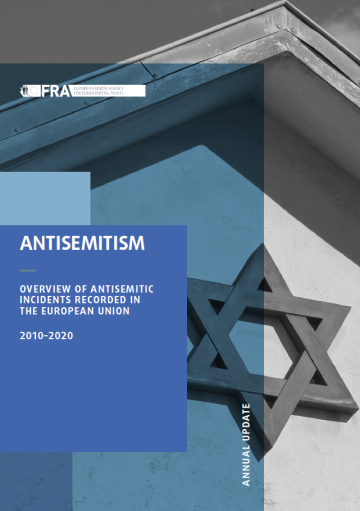
    Antisemitic incidents and hate crimes violate fundamental rights, especially the right to human dignity, the right to equality of treatment, and the freedom of thought, conscience and religion. This report provides an overview of available data on antisemitism as recorded by official and unofficial sources in the EU Member States as well as Albania, North Macedonia and Serbia. The data provided by the countries are supplemented with information from international organisations.
  • Fundamental Rights Report
    10
    June
    2021
    FRA’s Fundamental Rights Report 2021 reviews major developments in the field in 2020, identifying both achievements and areas of concern. It also presents FRA’s opinions on these developments, including a synopsis of the evidence supporting these opinions. This year’s focus chapter explores the impact of the COVID-19 pandemic on fundamental rights. The remaining chapters cover: the EU Charter of Fundamental Rights; equality and non-discrimination; racism, xenophobia and related intolerance; Roma equality and inclusion; asylum, borders and migration; information society, privacy and data protection; rights of the child; access to justice; and the implementation of the Convention on the Rights of Persons with Disabilities.
  • Report / Paper / Summary
    19
    February
    2021
    This is the second main report from FRA’s Fundamental Rights Survey, which collected data from 35,000 people on a range of issues. This report focuses on respondents’ experiences as victims of selected types of crime, including violence, harassment, and property crime. The report also examines how often these crimes are reported to the police, and presents further details relating to harassment and violence, such as the perpetrators and where the incidents took place.
  • Report / Paper / Summary
    23
    September
    2020
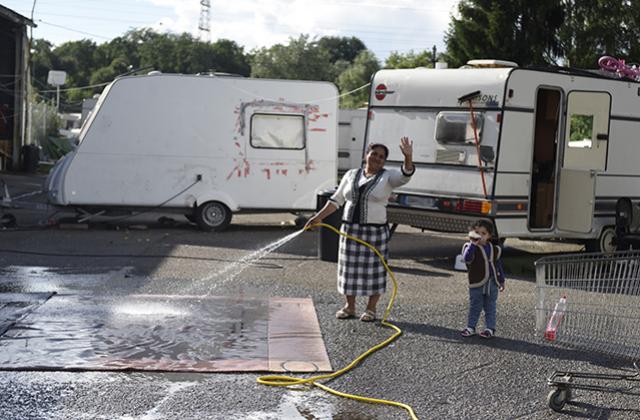
    This report presents findings from FRA’s 2019 survey on Roma and Travellers in Belgium, France, Ireland, the Netherlands, Sweden and the United Kingdom. The survey included interviews with almost 4,700 Roma and Travellers, collecting information on more than 8,200 individuals living in their households.
  • Periodic updates / Series
    29
    July
    2020
    As we enter the second half of 2020, the constraints on our daily lives brought about by the Coronavirus pandemic have become a firm reality. New local lockdowns and the reintroduction of restrictive measures prompted by fresh outbreaks of the virus are a stark reminder that COVID-19 continues to shape our lives – and our enjoyment of fundamental rights – in profound ways. There is compelling evidence of how the pandemic has exacerbated existing challenges in our societies. This FRA Bulletin outlines some of the measures EU Member States adopted to safely reopen their societies and economies while continuing to mitigate the spread of COVID-19. It highlights the impact these measures may have on civil, political and socioeconomic rights.
  • Periodic updates / Series
    30
    June
    2020
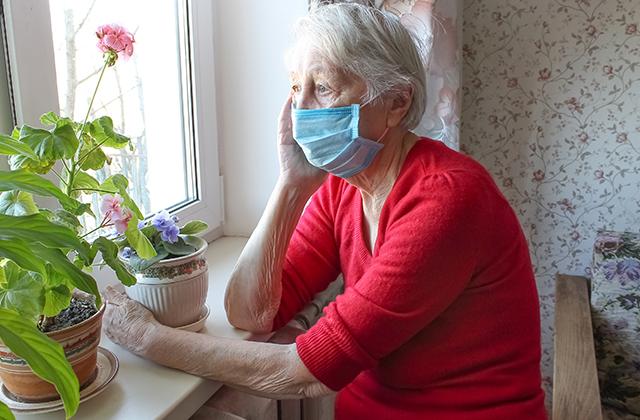
    The Coronavirus pandemic continues to interrupt everyday life in the EU in unprecedented ways. But the way it affects our societies is shifting. As governments gradually lift some of the measures put in place to contain the spread of COVID-19, new fundamental rights concerns arise: how to ensure that the rights to life and health are upheld as daily life transitions to a ‘new normal’. This Bulletin looks at declarations of states of emergency, or equivalent, and how they came under scrutiny. It considers
    the impact on fundamental rights in important areas of daily life, and includes a thematic focus on the pandemic's impact on older people.
  • Periodic updates / Series
    28
    May
    2020
    The Coronavirus pandemic continues to interrupt everyday life in the EU in unprecedented ways. But the way it affects our societies is shifting. As governments gradually lift some of the measures put in place to contain the spread of COVID-19, new fundamental rights concerns arise: how to ensure that the rights to life and health are upheld as daily life transitions to a ‘new normal’. This Bulletin looks at declarations of states of emergency, or equivalent, and how they came under scrutiny. It considers the impact on fundamental rights in important areas of daily life, and includes a thematic focus on the processing of users’ data to help contain COVID-19, particularly by contact-tracing apps. It covers the period 21 March – 30 April 2020.
  • Periodic updates / Series
    8
    April
    2020
    The outbreak of COVID-19 affects people’s daily life in the 27 EU Member States. As the number of infected people in the EU territory began to mount rapidly in February and March, governments put in place a raft of measures – often introduced in a period of only a few days – in an effort to contain the spread of the virus. Many of these measures reflect how, in exceptional emergency situations, the urgent need to save lives justifies restrictions on other rights, such as the freedom of movement and of assembly. This report outlines some of the measures EU Member States have put in place to protect public health during the COVID-19 pandemic. It covers the period 1 February – 20 March 2020.
  • Report / Paper / Summary
    12
    September
    2019
    FRA’s second EU Minorities and Discrimination survey (EU-MIDIS II) collected information from over 25,000 respondents with different ethnic minority and immigrant backgrounds across all 28 EU Member States. The main findings from the survey, published in 2017, pointed to a number of differences in the way women and men with immigrant backgrounds across the European Union (EU) experience how their rights are respected. This report summarises some of the most relevant survey findings in this regard, which show the need for targeted, gender-sensitive measures that promote the integration of – specifically – women who are immigrants or descendants of immigrants.
  • Report / Paper / Summary
    6
    December
    2017
    Seventeen years after adoption of EU laws that forbid discrimination, immigrants, descendants of immigrants, and minority ethnic groups continue to face widespread discrimination across the EU and in all areas of life – most often when seeking employment. For many, discrimination is a recurring experience. This is just one of the findings of FRA’s second European Union Minorities and Discrimination Survey (EU-MIDIS II), which collected information from over 25,500 respondents with different ethnic minority and immigrant backgrounds across all 28 EU Member States.