eu-charter

Carta drepturilor fundamentale a Uniunii Europene

Articolul 24 - Drepturile copilului

Articolul 24 - Drepturile copilului

(1) Copiii au dreptul la protecția și îngrijirile necesare pentru asigurarea bunăstării lor. Ei își pot exprima în mod liber opinia. Aceasta se ia în considerare în problemele care îi privesc, în funcție de vârsta și gradul lor de maturitate.
(2) În toate acțiunile referitoare la copii, indiferent dacă sunt realizate de autorități publice sau de instituții private, interesul superior al copilului trebuie să fie considerat primordial.
(3) Orice copil are dreptul de a întreține cu regularitate relații personale și contacte directe cu ambii părinți, cu excepția cazului în care acestea sunt contrare interesului său.

Explicaţii

  • Text:

    Acest articol se întemeiază pe Convenţia de la New York privind drepturile copilului, semnată la 20 noiembrie 1989 şi ratificată de toate statele membre şi, în special, pe articolele 3, 9, 12 şi 13 din aceasta.

    Alineatul (3) ia în considerare faptul că, în cadrul instituirii unui spaţiu de libertate, securitate şi justiţie, legislaţia Uniunii în materie civilă cu incidenţă transfrontalieră, pentru care competenţele sunt conferite de articolul 81 din Tratatul privind funcţionarea Uniunii Europene, poate cuprinde, în special, drepturile de vizitare care îi permit copilului să întreţină periodic relaţii personale şi contacte directe cu ambii părinţi.

    Source:
    Jurnalul Oficial al Uniunii Europene C 303/17 - 14.12.2007
    Preamble - Explanations relating to the Charter of Fundamental Rights:
    Explicaţiile redate în continuare au fost redactate iniţial sub autoritatea prezidiului Convenţiei care a elaborat Carta drepturilor fundamentale a Uniunii Europene. Acestea au fost actualizate sub autoritatea prezidiului Convenţiei Europene, având în vedere adaptarea de către respectiva Convenţie a textului cartei (în special la articolele 51 şi 52), precum şi evoluţia dreptului Uniunii. Cu toate că aceste explicaţii nu au valoare juridică în sine, acestea constituie un preţios instrument de interpretare destinat clarificării dispoziţiilor cartei.

Jurisprudență

Dreptul constituțional național

45 results found

  • Costituzione della Repubblica Italiana
    Țara:
    Italy

    Art. 30. E' dovere e diritto dei genitori, mantenere, istruire ed educare i figli, anche se nati fuori del matrimonio.Nei casi di incapacità dei genitori, la legge provvede a che siano assolti i loro compiti.La legge assicura ai figli nati fuori dal matrimonio ogni tutela giuridica e sociale, compatibile con i diritti dei membri della famiglia legittima.La legge detta le norme e i limiti per la ricerca della paternità. Art. 31 La Repubblica (...) Protegge la maternità e l'infanzia e la gioventù, favorendo gli istituti necessari a tale scopo. Art. 34. La scuola è aperta a tutti. L'istruzione inferiore, impartita per almeno otto anni, è obbligatoria e gratuita.I capaci e meritevoli, anche se privi di mezzi, hanno diritto di raggiungere i gradi più alti degli studi. La Repubblica rende effettivo questo diritto con borse di studio, assegni alle famiglie ed altre provvidenze, che devono essere attribuite per concorso.

  • De Belgische Grondwet
    Țara:
    Belgium

    Article 22Ieder heeft recht op eerbiediging van zijn privé-leven en zijn gezinsleven, behoudens in de gevallen en onder de voorwaarden door de wet bepaald.De wet, het decreet of de in artikel 134 bedoelde regel waarborgen de bescherming van dat recht. Article 22bisElk kind heeft recht op eerbiediging van zijn morele, lichamelijke, geestelijke en seksuele integriteit.Elk kind heeft het recht zijn mening te uiten in alle aangelegenheden die het aangaan; met die mening wordt rekening gehouden in overeenstemming met zijn leeftijd en zijn onderscheidingsvermogen. Elk kind heeft recht op maatregelen en diensten die zijn ontwikkeling bevorderen. Het belang van het kind is de eerste overweging bij elke beslissing die het kind aangaat. De wet, het decreet of de in artikel 134 bedoelde regel waarborgen deze rechten van het kind.

  • Eesti Vabariigi Põhiseadus
    Țara:
    Estonia

    § 26.Igaühel on õigus perekonna- ja eraelu puutumatusele. Riigiasutused, kohalikud omavalitsused ja nende ametiisikud ei tohi kellegi perekonna- ega eraellu sekkuda muidu, kui seaduses sätestatud juhtudel ja korras tervise, kõlbluse, avaliku korra või teiste inimeste õiguste ja vabaduste kaitseks, kuriteo tõkestamiseks või kurjategija tabamiseks.
    § 27.Perekond rahva püsimise ja kasvamise ning ühiskonna alusena on riigi kaitse all.Abikaasad on võrdõiguslikud.Vanematel on õigus ja kohustus kasvatada oma lapsi ja hoolitseda nende eest. Seadus sätestab vanemate ja laste kaitse. Perekond on kohustatud hoolitsema oma abivajavate liikmete eest. 

  • Federal Constitutional Act on the Rights of Children
    Țara:
    Austria

    Article 1 Each child shall be entitled to the protection and care that is necessary for his/her well-being, to optimal development and self-realisation as well as to the protection of his/her interests with regards to intergenerational equity. The wellbeing of the child shall be the primary consideration in respect of all measures affecting children that are taken by public and private institutions. Article 2 (1) Each child shall be entitled to have personal relations and direct contacts with both parents on a regular basis unless this is detrimental to the well-being of the child. Article 4 Each child has the right to adequate involvement and consideration of his/her opinion regarding all matters affecting the child in a manner that is commensurate with his/her age and development.

  • Grundgesetz für die Bundesrepublik Deutschland
    Țara:
    Germany

    Artikel 6 (...) (3) Gegen den Willen der Erziehungsberechtigten dürfen Kinder nur auf Grund eines Gesetzes von der Familie getrennt werden, wenn die Erziehungsberechtigten versagen oder wenn die Kinder aus anderen Gründen zu verwahrlosen drohen. (...) (5) Den unehelichen Kindern sind durch die Gesetzgebung die gleichen Bedingungen für ihre leibliche und seelische Entwicklung und ihre Stellung in der Gesellschaft zu schaffen wie den ehelichen Kindern.

  • Jugendwohlfahrtsgesetz 1989
    Țara:
    Austria
  • Konstytucja Rzeczypospolitej Polskiej
    Țara:
    Poland

    Art. 48.1. Rodzice mają prawo do wychowania dzieci zgodnie z własnymi przekonaniami. Wychowanie to powinno uwzględniać stopień dojrzałości dziecka, a także wolność jego sumienia i wyznania oraz jego przekonania. 2. Ograniczenie lub pozbawienie praw rodzicielskich może nastąpić tylko w przypadkach określonych w ustawie i tylko na podstawie prawomocnego orzeczenia sądu. Art. 68(...) 3. Władze publiczne są obowiązane do zapewnienia szczególnej opieki zdrowotnej dzieciom, kobietom ciężarnym, osobom niepełnosprawnym i osobom w podeszłym wieku.(...) 5. Władze publiczne popierają rozwój kultury fizycznej, zwłaszcza wśród dzieci i młodzieży.Art. 72.1. Rzeczpospolita Polska zapewnia ochronę praw dziecka. Każdy ma prawo żądać od organów władzy publicznej ochrony dziecka przed przemocą, okrucieństwem, wyzyskiem i demoralizacją.2. Dziecko pozbawione opieki rodzicielskiej ma prawo do opieki i pomocy władz publicznych.3. W toku ustalania praw dziecka organy władzy publicznej oraz osoby odpowiedzialne za dziecko są obowiązane do wysłuchania i w miarę możliwości uwzględnienia zdania dziecka.4. Ustawa określa kompetencje i sposób powoływania Rzecznika Praw Dziecka.

  • La Constitution Belge
    Țara:
    Belgium

    Artikel 22Chacun a droit au respect de sa vie privée et familiale, sauf dans les cas et conditions fixés par la loi.La loi, le décret ou la règle visée à l'article 134 garantissent la protection de ce droit. Article 22bisChaque enfant a droit au respect de son intégrité morale, physique, psychique et sexuelle.Chaque enfant a le droit de s'exprimer sur toute question qui le concerne; son opinion est prise en considération, eu égard à son âge et à son discernement. Chaque enfant a le droit de bénéficier des mesures et services qui concourent à son développement.Dans toute décision qui le concerne, l'intérêt de l'enfant est pris en considération de manière primordiale. La loi, le décret ou la règle visée à l'article 134 garantissent ces droits de l'enfant.

  • Lastekaitseseadus
    Țara:
    Estonia

    § 2. Seaduse eesmärk
    Käesolev seadus kehtestatakse last väärtustava ning lapse arengut soodustava käitumise ja elulaadi kujundamiseks ühiskonnas, last toetava keskkonna loomiseks, lapse huvide esikohale seadmiseks, lapse elukvaliteedi parendamiseks, lapse igakülgse arengu toetamiseks ning tervist ja heaolu ohustavates tingimustes olevale lapsele õigeaegse ja asjakohase abi ja hoolduse tagamiseks kooskõlas Ühinenud Rahvaste Organisatsiooni lapse õiguste konventsiooni ja selle lisaprotokollidega (edaspidi konventsioon) ning Euroopa Liidu põhiõiguste harta ja teiste asjakohaste õigusaktidega.
    § 3. Seaduse kohaldamisala
    (1) Käesolevas seaduses sätestatut kohaldatakse riigi ja kohaliku omavalitsuse üksuste ametiasutustele ning nende ametiisikutele, avalik-õiguslikele ja eraõiguslikele juriidilistele isikutele ning füüsilistele isikutele, kes oma tegevuses puutuvad kokku laste ja lastekaitsega.
    (2) Käesolev seadus peab lapseks iga alla 18-aastast isikut. Kui isiku vanus ei ole teada ja on põhjust arvata, et ta on alla 18-aastane, käsitatakse isikut lapsena, kuni ei ole tõendatud vastupidist.

  • Latvijas Republikas Satversme
    Țara:
    Latvia

    110. Valsts aizsargā un atbalsta laulību — savienību starp vīrieti un sievieti, ģimeni, vecāku un bērna tiesības. Valsts īpaši palīdz bērniem invalīdiem, bērniem, kas palikuši bez vecāku gādības vai cietuši no varmācības.

  • Lietuvos Respublikos Konstitucija
    Țara:
    Lithuania

    26 straipsnis. Tėvai ir globėjai nevaržomi rūpinasi vaikų ir globotinių religiniu ir doroviniu auklėjimu pagal savo įsitikinimus. 38 straipsnis. Šeima yra visuomenės ir valstybės pagrindas. Valstybė saugo ir globoja šeimą, motinystę, tėvystę ir vaikystę. Tėvų teisė ir pareiga - auklėti savo vaikus dorais žmonėmis ir ištikimais piliečiais, iki pilnametystės juos išlaikyti. Vaikų pareiga - gerbti tėvus, globoti juos senatvėje ir tausoti jų palikimą. 39 straipsnis. Nepilnamečius vaikus gina įstatymas.

  • Luxembourg / Constitution of the Grand Ducal of Luxembourg
    Țara:
    Luxembourg

    Art. 15.  ... (5) Dans toute décision qui le concerne, l’intérêt de l’enfant est pris en considération de manière primordiale. 

    Chaque enfant peut exprimer son opinion librement sur toute question qui le concerne. Son opinion est prise en considération, eu égard à son âge et à son discernement. 

    Chaque enfant a droit à la protection, aux mesures et aux soins nécessaires à son bien-être et son développement. 

    ...

  • Magyarország Alaptörvénye
    Țara:
    Hungary

    L) cikk (Alapvetés)
    (1) Magyarország védi a házasság intézményét mint férfi és nő között, önkéntes elhatározás alapján létrejött életközösséget, valamint a családot mint a nemzet fennmaradásának alapját. A családi kapcsolat alapja a házasság, illetve a szülő-gyermek viszony. […]

    XV. cikk (SZABADSÁG ÉS FELELŐSSÉG) […] (5) Magyarország külön intézkedésekkel védi a családokat, a gyermekeket, a nőket, az időseket és a fogyatékkal élőket.

    XVI. cikk (SZABADSÁG ÉS FELELŐSSÉG) (1) Minden gyermeknek joga van a megfelelő testi, szellemi és erkölcsi fejlődéséhez szükséges védelemhez és gondoskodáshoz.
    (2) A szülőknek joguk van megválasztani a gyermeküknek adandó nevelést.
    (3) A szülők kötelesek kiskorú gyermekükről gondoskodni. E kötelezettség magában foglalja gyermekük taníttatását.
    (4) A nagykorú gyermekek kötelesek rászoruló szüleikről gondoskodni.

    XXX. cikk (SZABADSÁG ÉS FELELŐSSÉG) […] (2) A közös szükségletek fedezéséhez való hozzájárulás mértékét a gyermeket nevelők esetében a gyermeknevelés kiadásainak figyelembevételével kell megállapítani.

  • Portugal / Constitution of the Portuguese Republic
    Țara:
    Portugal

    Article 36 (Family, marriage and filiation) (4) Children born outside marriage shall not be discriminated against on that ground; terms describing filiation that are discriminatory shall not be used by the law or by government departments. (6) Children shall not be separated from their parents unless the parents fail to perform their fundamental duties towards the children, and in that case only by judicial decision.
    ...
    Article 69 (Childhood) (1) With a view to their integral development, children shall possess the right to protection by society and the state, especially from all forms of abandonment, discrimination and oppression and from the abusive exercise of authority in the family or any other institution. (2) The state shall ensure special protection for children who are orphaned, abandoned or deprived of a normal family environment in any way. (3) Labour by minors of school age shall be prohibited as laid down by law.

    Article 70 (Youth) (1) In order to ensure the effective enjoyment of their economic, social and cultural rights, young people shall receive special protection, particularly: (a) In education, vocational training and culture; (b) In access to their first job, at work and in relation to social security; (c) In access to housing; (d) In physical education and sport; (e) In the use of their free time. (2) The priority objectives of the youth policy shall be the development of young people’s personality, the creation of the conditions needed for their effective integration into the active life, a love of free creativity and a sense of community service. (3) Acting in cooperation with families, schools, businesses, residents’ organisations, cultural associations and foundations and cultural and recreational groups, the state shall foster and support youth organisations in the pursuit of the said objectives, as well as international youth exchanges.

  • România / Constituția României
    Țara:
    România

    Articolul 49(1) Copiii si tinerii se bucura de un regim special de protectie si de asistenta în realizarea drepturilor lor. (2) Statul acorda alocatii pentru copii si ajutoare pentru îngrijirea copilului bolnav ori cu handicap. Alte forme de protectie sociala a copiilor si a tinerilor se stabilesc prin lege. (3) Exploatarea minorilor, folosirea lor în activitati care le-ar dauna sanatatii, moralitatii sau care le-ar pune în primejdie viata ori dezvoltarea normala sunt interzise. (4) Minorii sub vârsta de 15 ani nu pot fi angajati ca salariati. (5) Autoritatile publice au obligatia sa contribuie la asigurarea conditiilor pentru participarea libera a tinerilor la viata politica, sociala, economica, culturala si sportiva a tarii.

  • Slovakia / Constitution of the Slovak Republic
    Țara:
    Slovakia

    Article 41 (...) (3) Children born in and out of wedlock enjoy equal rights. (4) Child care and upbringing are the rights of parents; children have the right to parental care and upbringing. Parents' rights can be restricted and minors can be separated from their parents against their will only by a court ruling on the basis of law. (5) Parents caring for children are entitled to assistance from the state. (6) Details concerning rights under paragraphs 1 to 5 shall be laid down by law.

  • Slovenia / Constitution of the Republic of Slovenia
    Țara:
    Slovenia

    Article 53 (...) The state shall protect the family, motherhood, fatherhood, children and young people and shall create the necessary conditions for such protection.

    Article 54 Parents have the right and duty to maintain, educate and raise their children. This right and duty may be revoked or restricted only for such reasons as are provided by law in order to protect the child's interests. Children born out of wedlock have the same rights as children born within it.

    Article 56 Children shall enjoy special protection and care. Children shall enjoy human rights and fundamental freedoms consistent with their age and maturity. Children shall be guaranteed special protection from economic, social, physical, mental or other exploitation and abuse. Such protection shall be regulated by law. Children and minors who are not cared for by their parents, who have no parents or who are without proper family care shall enjoy the special protection of the state. Their position shall be regulated by law.

  • Spain / Constitution of the Kingdom of Spain
    Țara:
    Spain

    Section 39 (1) The public authorities ensure social, economic and legal protection of the family. (2) The public authorities likewise ensure full protection of children, who are equal before the law, regardless of their parentage, and of mothers, whatever their marital status. The law shall provide for the possibility of the investigation of paternity. (3) Parents must provide their children, whether born within or outside wedlock, with assistance of every kind while they are still under age and in other circumstances in which the law so establishes. (4) Children shall enjoy the protection provided for in the international agreements safeguarding their rights

  • Suomen perustuslaki
    Țara:
    Finland

    6 § Yhdenvertaisuus (...) Lapsia on kohdeltava tasa-arvoisesti yksilöinä, ja heidän tulee saada vaikuttaa itseään koskeviin asioihin kehitystään vastaavasti. 12 § Sananvapaus ja julkisuus Jokaisella on sananvapaus. Sananvapauteen sisältyy oikeus ilmaista, julkistaa ja vastaanottaa tietoja, mielipiteitä ja muita viestejä kenenkään ennakolta estämättä. Tarkempia säännöksiä sananvapauden käyttämisestä annetaan lailla. Lailla voidaan säätää kuvaohjelmia koskevia lasten suojelemiseksi välttämättömiä rajoituksia. 19 § Oikeus sosiaaliturvaan (...) Lailla taataan jokaiselle oikeus perustoimeentulon turvaan työttömyyden, sairauden, työkyvyttömyyden ja vanhuuden aikana sekä lapsen syntymän ja huoltajan menetyksen perusteella. Julkisen vallan on turvattava, sen mukaan kuin lailla tarkemmin säädetään, jokaiselle riittävät sosiaali- ja terveyspalvelut ja edistettävä väestön terveyttä. Julkisen vallan on myös tuettava perheen ja muiden lapsen huolenpidosta vastaavien mahdollisuuksia turvata lapsen hyvinvointi ja yksilöllinen kasvu. (...)

  • The Belgian Constitution
    Țara:
    Belgium

    Article 22Everyone has the right to the respect of his private and family life, except in the cases and conditions determined by law. The laws, federate laws and rules referred to in Article 134 guarantee the protection of this right. Article 22bisEach child is entitled to have his or her moral, physical, mental and sexual integrity respected.Each child has the right to express his or her views in all matters affecting him or her, the views of the child being given due weight in accordance with his or her age and maturity.Each child has the right to benefit from measures and facilities which promote his or her development.In all decisions concerning children, the interest of the child is a primary consideration. The law, federate law or rule referred to in Article 134 ensures these rights of the child.

Legislația UE

28 results found

  • Regulation (EU) 2024/1356 of the European Parliament and of the Council of 14 May 2024 introducing the screening of third-country nationals at the external borders and amending Regulations (EC) No 767/2008, (EU) 2017/2226, (EU) 2018/1240 and (EU) 2019/817

    Preamble 
    (25) During the screening, the best interests of the child should always be a primary consideration in accordance with Article 24(2) of the Charter of Fundamental Rights of the European Union (the ‘Charter’). Child protection authorities should, wherever necessary, be closely involved in the screening to ensure that the best interests of the child are duly taken into account throughout the screening. A representative should be appointed to represent and assist the unaccompanied minor during the screening or, where a representative has not been appointed, a person trained to safeguard the best interests and general wellbeing of the minor should be designated. Where applicable, that representative should be the same as the representative appointed in accordance with the rules on unaccompanied minors in Directive (EU) 2024/1346. The trained person should be the person designated to provisionally act as a representative under that Directive, where that person has been designated.


    (37) A preliminary vulnerability check should be carried out with a view to identifying persons with indications of being vulnerable, of being victims of torture or other inhuman or degrading treatment, or of being stateless, or who may have special reception or procedural needs within the meaning of Directive (EU) 2024/1346 and Regulation (EU) 2024/1348, respectively. This should be without prejudice to further assessment in ensuing procedures following the completion of the screening. The vulnerability check should be carried out by specialised personnel of the screening authorities trained for that purpose.


    (38) During the screening, all persons concerned should be guaranteed a standard of living complying with the Charter and have access to emergency health care and essential treatment of illnesses. Particular attention should be paid to individuals with vulnerabilities, such as pregnant women, elderly persons, single-parent families, persons with an immediately identifiable physical or mental disability, persons visibly having suffered psychological or physical trauma and unaccompanied minors. In particular, in the case of a minor, information should be provided in a child-friendly and age-appropriate manner. All the authorities involved in the performance of the tasks related to the screening should report any situation of vulnerabilities observed or reported to them, should respect human dignity and privacy, and should refrain from any discrimination.

    Article 8 : Requirements concerning the screening

    8.   Member States shall ensure that all persons subject to the screening are accorded a standard of living which guarantees their subsistence, protects their physical and mental health and respects their rights under the Charter.

    Article 10 : Monitoring of fundamental rights

    2.   Each Member State shall provide for an independent monitoring mechanism in accordance with the requirements set out in this Article, which shall:

    (a) monitor compliance with Union and international law, including the Charter, in particular as regards access to the asylum procedure, the principle of non-refoulement, the best interest of the child and the relevant rules on detention, including relevant provisions on detention in national law, during the screening; and

    (b) ensure that substantiated allegations of failure to respect fundamental rights in all relevant activities in relation to the screening are dealt with effectively and without undue delay, trigger, where necessary, investigations into such allegations and monitor the progress of such investigations.

    Article 12: Preliminary health checks and vulnerabilities

    3.   Third-country nationals subjected to the screening referred to in Articles 5 and 7 shall be subject to a preliminary vulnerability check by specialised personnel of the screening authorities trained for that purpose, with a view to identifying whether a third-country national might be a stateless person, vulnerable or a victim of torture or other inhuman or degrading treatment, or have special needs within the meaning of Directive 2008/115/EC, Article 25 of Directive (EU) 2024/1346 and Article 20 of Regulation (EU) 2024/1348. For the purpose of that vulnerability check, the screening authorities may be assisted by non-governmental organisations and, where relevant, by qualified medical personnel.

    Article 13: Guarantees for minors

    1.   During the screening, the best interests of the child shall always be a primary consideration in accordance with Article 24(2) of the Charter.

  • Regulation (EU) No 656/2014 of the European Parliament and of the Council of 15 May 2014 establishing rules for the surveillance of the external sea borders in the context of operational cooperation coordinated by Frontex

    Preamble 


    (19) This Regulation respects the fundamental rights and observes the principles recognised by Articles 2 and 6 of the Treaty on European Union (TEU) and by the Charter, in particular respect for human dignity, the right to life, the prohibition of torture and of inhuman or degrading treatment or punishment, the prohibition of trafficking in human beings, the right to liberty and security, the right to the protection of personal data, the right to asylum and to protection against removal and expulsion, the principles of non-refoulement and non-discrimination, the right to an effective remedy and the rights of the child. This Regulation should be applied by Member States and the Agency in accordance with those rights and principles.

  • European Parliament resolution of 26 November 2019 on children’s rights on the occasion of the 30th anniversary of the UN Convention on the Rights of the Child (2019/2876(RSP))

    .

  • Treaty on the Functioning of the European Union

    Article 81

    (ex Article 65 TEC)

    1. The Union shall develop judicial cooperation in civil matters having cross-border implications, based on the principle of mutual recognition of judgments and of decisions in extrajudicial cases. Such cooperation may include the adoption of measures for the approximation of the laws and regulations of the Member States.

    2. For the purposes of paragraph 1, the European Parliament and the Council, acting in accordance with the ordinary legislative procedure, shall adopt measures, particularly when necessary for the proper functioning of the internal market, aimed at ensuring:

    (a) the mutual recognition and enforcement between Member States of judgments and of decisions in extrajudicial cases;

    (b) the cross-border service of judicial and extrajudicial documents;

    (c) the compatibility of the rules applicable in the Member States concerning conflict of laws and of jurisdiction;

    (d) cooperation in the taking of evidence;

    (e) effective access to justice;

    (f) the elimination of obstacles to the proper functioning of civil proceedings, if necessary by promoting the compatibility of the rules on civil procedure applicable in the Member States;

    (g) the development of alternative methods of dispute settlement;

    (h) support for the training of the judiciary and judicial staff.

    3. Notwithstanding paragraph 2, measures concerning family law with cross-border implications shall be established by the Council, acting in accordance with a special legislative procedure. The Council shall act unanimously after consulting the European Parliament.

    The Council, on a proposal from the Commission, may adopt a decision determining those aspects of family law with cross-border implications which may be the subject of acts adopted by the ordinary legislative procedure. The Council shall act unanimously after consulting the European Parliament.

    The proposal referred to in the second subparagraph shall be notified to the national Parliaments. If a national Parliament makes known its opposition within six months of the date of such notification, the decision shall not be adopted. In the absence of opposition, the Council may adopt the decision.

  • Regulation (EU) 2019/1155 of the European Parliament and of the Council of 20 June 2019 amending Regulation (EC) No 810/2009 establishing a Community Code on Visas (Visa Code)

    .

  • Council Regulation (EU) 2019/1111 of 25 June 2019 on jurisdiction, the recognition and enforcement of decisions in matrimonial matters and the matters of parental responsibility, and on international child abduction

    .

  • Council Recommendation of 22 May 2019 on High-Quality Early Childhood Education and Care Systems

    .

  • Directive 2010/13/EU of the European Parliament and of the Council of 10 March 2010 on the coordination of certain provisions laid down by law, regulation or administrative action in Member States concerning the provision of audiovisual media services

    Preamble 
    (16) This Directive enhances compliance with fundamental rights and is fully in line with the principles recognised by the Charter of Fundamental Rights of the European Union (12), in particular Article 11 thereof. In this regard, this Directive should not in any way prevent Member States from applying their constitutional rules relating to freedom of the press and freedom of expression in the media.


    (48) Television broadcasting rights for events of high interest to the public may be acquired by broadcasters on an exclusive basis. However, it is essential to promote pluralism through the diversity of news production and programming across the Union and to respect the principles recognised by Article 11 of the Charter of Fundamental Rights of the European Union.


    (60) Measures taken to protect the physical, mental and moral development of minors and human dignity should be carefully balanced with the fundamental right to freedom of expression as laid down in the Charter on Fundamental Rights of the European Union. The aim of those measures, such as the use of personal identification numbers (PIN codes), filtering systems or labelling, should thus be to ensure an adequate level of protection of the physical, mental and moral development of minors and human dignity, especially with regard to on-demand audiovisual media services. The Recommendation on the protection of minors and human dignity and on the right of reply already recognised the importance of filtering systems and labelling and included a number of possible measures for the benefit of minors, such as systematically supplying users with an effective, updatable and easy-to-use filtering system when they subscribe to an access provider or equipping the access to services specifically intended for children with automatic filtering systems.

  • Council Regulation (EU) 2019/1111 of 25 June 2019 on jurisdiction, the recognition and enforcement of decisions in matrimonial matters and the matters of parental responsibility, and on international child abduction (recast)

    (39) Proceedings in matters of parental responsibility under this Regulation as well as return proceedings under the 1980 Hague Convention should, as a basic principle, provide the child who is subject to those proceedings and who is capable of forming his or her own views, in accordance with the case-law of the Court of Justice, with a genuine and effective opportunity to express his or her views and when assessing the best interests of the child, due weight should be given to those views. The opportunity of the child to express his or her views freely in accordance with Article 24(1) of the Charter and in the light of Article 12 of the UN Convention on the Rights of the Child plays an important role in the application of this Regulation. The Regulation should, however, leave the question of who will hear the child and how the child is heard to be determined by national law and procedure of the Member States. Consequently, it should not be the purpose of this Regulation to set out whether the child should be heard by the judge in person or by a specially trained expert reporting to the court afterwards, or whether the child should be heard in the courtroom or in another place or through other means. In addition, while remaining a right of the child, hearing the child cannot constitute an absolute obligation, but must be assessed taking into account the best interests of the child, for example, in cases involving agreements between the parties. Whilst, according to the case-law of the Court of Justice, it is not a requirement of Article 24 of the Charter and of Regulation (EC) No 2201/2003 that the court of the Member State of origin obtain the views of the child in every case by means of a hearing, and that that court thus retains a degree of discretion, the case-law also provides that, where that court decides to provide the opportunity for the child to be heard, the court is required to take all measures which are appropriate to the arrangement of such a hearing, having regard to the best interests of the child and the circumstances of each individual case, in order to ensure the effectiveness of those provisions, and to offer to the child a genuine and effective opportunity to express his or her views. The court of the Member State of origin should, in so far as possible and always taking into consideration the best interests of the child, use all means available to it under national law as well as the specific instruments of international judicial cooperation, including, when appropriate, those provided for by Council Regulation (EC) No 1206/2001.

    [...]

    (71) Although the obligation to provide the child with the opportunity to express his or her views under this Regulation should not apply to authentic instruments and agreements, the right of the child to express his or her views should continue to apply pursuant to Article 24 of the Charter and in light of Article 12 of the UN Convention on the Rights of the Child as implemented by national law and procedure. The fact that the child was not given the opportunity to express his or her views should not automatically be a ground of refusal of recognition and enforcement of authentic instruments and agreements in matters of parental responsibility.

  • Regulation (EU) No 604/2013 of the European Parliament and of the Council of 26 June 2013 establishing the criteria and mechanisms for determining the Member State responsible for examining an application for international protection

    Preamble

    (13) In accordance with the 1989 United Nations Convention on the Rights of the Child and with the Charter of Fundamental Rights of the European Union, the best interests of the child should be a primary consideration of Member States when applying this Regulation. In assessing the best interests of the child, Member States should, in particular, take due account of the minor’s well-being and social development, safety and security considerations and the views of the minor in accordance with his or her age and maturity, including his or her background. In addition, specific procedural guarantees for unaccompanied minors should be laid down on account of their particular vulnerability.

    (19) In order to guarantee effective protection of the rights of the persons concerned, legal safeguards and the right to an effective remedy in respect of decisions regarding transfers to the Member State responsible should be established, in accordance, in particular, with Article 47 of the Charter of Fundamental Rights of the European Union. In order to ensure that international law is respected, an effective remedy against such decisions should cover both the examination of the application of this Regulation and of the legal and factual situation in the Member State to which the applicant is transferred.


    (39) This Regulation respects the fundamental rights and observes the principles which are acknowledged, in particular, in the Charter of Fundamental Rights of the European Union. In particular, this Regulation seeks to ensure full observance of the right to asylum guaranteed by Article 18 of the Charter as well as the rights recognised under Articles 1, 4, 7, 24 and 47 thereof. This Regulation should therefore be applied accordingly.

    Article 3: Access to the procedure for examining an application for international protection

    2.   Where no Member State responsible can be designated on the basis of the criteria listed in this Regulation, the first Member State in which the application for international protection was lodged shall be responsible for examining it.

    Where it is impossible to transfer an applicant to the Member State primarily designated as responsible because there are substantial grounds for believing that there are systemic flaws in the asylum procedure and in the reception conditions for applicants in that Member State, resulting in a risk of inhuman or degrading treatment within the meaning of Article 4 of the Charter of Fundamental Rights of the European Union, the determining Member State shall continue to examine the criteria set out in Chapter III in order to establish whether another Member State can be designated as responsible.

    Where the transfer cannot be made pursuant to this paragraph to any Member State designated on the basis of the criteria set out in Chapter III or to the first Member State with which the application was lodged, the determining Member State shall become the Member State responsible.

Drept internațional

6 results found

  • Committee on the Protection of the Rights of All Migrant Workers and Members of Their Families, Committee on the Rights of the Child, Joint general comment No. 4 (2017) of the Committee on the Protection of the Rights of All Migrant Workers and Members...
  • Committee on the Rights of the Child General comment No. 15 (2013) on the right of the child to the enjoyment of the highest attainable standard of health (art. 24)
  • Committee on the Rights of the Child General comment No. 17 (2013) on the right of the child to rest, leisure, play, recreational activities, cultural life and the arts (art. 31)
  • Committee on the Rights of the Child, General comment No. 14 (2013) on the right of the child to have his or her best interests taken as a primary consideration (art. 3, para. 1 )
  • Committee on the Rights of the Child, General comment No. 20 (2016) on the implementation of the rights of the child during adolescence
  • Committee on the Protection of the Rights of All Migrant Workers and Members of Their Families, Committee on the Rights of the Child, Joint general comment No. 3 (2017) of the Committee on the Protection of the Rights of All Migrant Workers and Members...

Produse

  • Report / Paper / Summary
    31
    January
    2024
    Children’s rights exist to ensure the safety and wellbeing of every child. Improved child protection systems ensure that these rights are met. In recent years, the EU has taken significant steps to improve child protection systems. This mapping of child protection systems gives an overview of the state of such systems at national level and developments since 2015. It promotes the improvement of integrated child protection systems. It is an update of FRA’s mapping of child protection systems in 2015, based on data collected in 2023 in the 27 EU Member States. By publishing this, FRA aims to support securing the sustainable well-being, safety and rights of all children living in the EU.
  • Periodic updates / Series
    29
    September
    2023
    Russia’s invasion of Ukraine posed new challenges for the EU. Millions were forced to flee the war. As a result of the scale of people’s displacement, the EU activated for the first time the Temporary Protection Directive (TPD). More than 1.3 million children sought international protection in the EU. This bulletin explores the respect, protection and fulfilment of the fundamental rights of displaced children and ways to safeguard their rights. The third in a series, this bulletin builds on the evidence in FRA’s Bulletin #1 and #2 on the experiences of displaced people seeking safety in the EU.
  • Report / Paper / Summary
    6
    September
    2023
    Integration and social inclusion are important aspects of EU migration and asylum policy. The fundamental rights of long-term residents in the EU are explored through this report, focussing on the Long-Term Residence Directive. EU long-term resident status includes rights to move and reside in other EU Member States. This report examines the reasons behind the low uptake of EU long-term resident permits, despite them typically giving more rights than national long-term resident permits.
  • Fundamental Rights Report
    8
    June
    2023
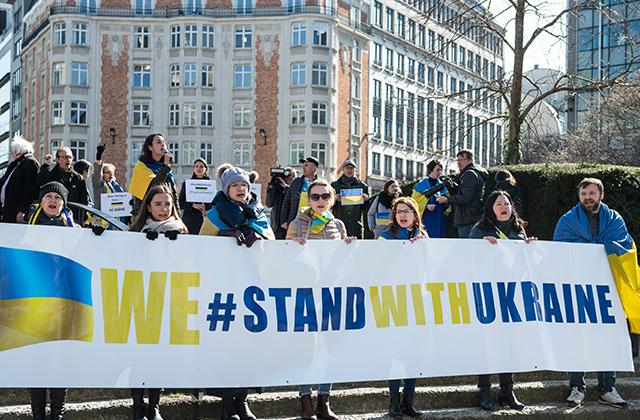
    Russia’s unprovoked war of aggression against Ukraine has resulted in massive internal and external population displacement. The European Union (EU) rapidly activated its Temporary Protection Directive for the first time since it was adopted in 2001. This entitled nearly 4 million people to legal residence and access to work, housing and legal assistance, education and healthcare.
  • Fundamental Rights Report
    8
    June
    2023
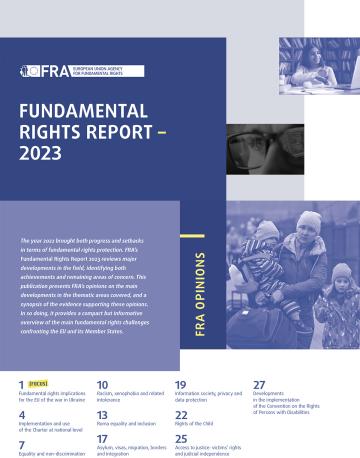
    Anul 2022 a adus atât progrese, cât și regrese în ceea ce privește protecția drepturilor fundamentale. Raportul privind drepturile fundamentale 2023 al FRA analizează evoluțiile majore din domeniu, identificând atât realizările, cât și problemele îngrijorătoare rămase nesoluționate. Această publicație prezintă opiniile FRA în legătură cu principalele evoluții înregistrate în domeniile tematice vizate, precum și o sinteză a dovezilor care vin în sprijinul acestor opinii.
  • Fundamental Rights Report
    8
    June
    2023
    FRA’s Fundamental Rights Report 2023 reviews major developments in the field in 2022, identifying both achievements and areas of concern. It also presents FRA’s opinions on these developments, including a synopsis of the evidence supporting these opinions.
  • Handbook / Guide / Manual
    1
    March
    2023
    This manual is designed to help institutions, organisations and individuals to train guardians of unaccompanied children or to deliver ‘train-the-trainers’ courses. It can be used in a range of training contexts, such as professional and academic training, on-the-job training and continuing training. The manual is based on human and fundamental rights principles and ethical standards and recognises that the child and the guardian have their own personal stories, resources and capacities. It enhances guardians’ confidence to promote the child’s rights and best interests. It also enhances their confidence to act independently and impartially in relation to different state
    officials, service providers and other community members.
  • Report / Paper / Summary
    2
    February
    2023
    Many cities throughout the European Union hosted people fleeing Russia’s war of aggression against Ukraine. The EU currently faces the largest displacement of people in Europe since World War II. Since February 2022, over seven million people came to the EU. The arrival of such large numbers of people thrust cities and local governments to the forefront of the EU and its Member States’ relief work. This short publication provides a snapshot of cities’ initiatives to address this humanitarian crisis.
  • Report / Paper / Summary
    8
    December
    2022
    Artificial intelligence is everywhere and affects everyone – from deciding what content people see on their social media feeds to determining who will receive state benefits. AI technologies are typically based on algorithms that make predictions to support or even fully automate decision-making.
  • Periodic updates / Series
    21
    October
    2022
    The Russian invasion of Ukraine triggered solidarity from EU governments, local authorities and society as they welcomed more than 7 million people fleeing the aggression. The European Union’s rapid response, activating the EU Temporary Protection Directive, offered welcome relief and much-needed support to those in need. It allowed displaced persons the opportunity to quickly settle and to work, travel and access services across the EU. But other pressing human rights issues have come to the fore and remain high on the EU’s agenda, such as human trafficking, sexual and gender-based violence, hate crime and hate-fuelled disinformation.