eu-charter

Carta drepturilor fundamentale a Uniunii Europene

Articolul 34 - Securitatea socială și asistența socială

Articolul 34 - Securitatea socială și asistența socială

(1) Uniunea recunoaște și respectă dreptul de acces la prestațiile de securitate socialăși la serviciile sociale care acordă protecție în caz de maternitate, boală, accident de muncă, dependență de alte persoane sau bătrânețe, precum și în caz de pierdere a locului de muncă, în conformitate cu normele stabilite de dreptul Uniunii și de legislațiile și practicile naționale.
(2) Orice persoană care are reședința și se deplasează în mod legal în cadrul Uniunii are dreptul la prestații de securitate socială și la avantaje sociale, în conformitate cu dreptul Uniunii și cu legislațiile și practicile naționale.
(3) Pentru a combate marginalizarea socială și sărăcia, Uniunea recunoaște și respectă dreptul la asistență socială și la asistență în ceea ce privește locuința, destinate să asigure o viață demnă tuturor celor care nu dispun de resurse suficiente, în conformitate cu normele stabilite de dreptul Uniunii și de legislațiile și practicile naționale.

Explicaţii

  • Text:

    Principiul enunţat la articolul 34 alineatul (1) se întemeiază pe articolele 153 şi 156 din Tratatul privind funcţionarea Uniunii Europene, precum şi pe articolul 12 din Carta socială europeană şi pe punctul 10 din Carta comunitară a drepturilor sociale fundamentale ale lucrătorilor. Acesta trebuie respectat de Uniune în punerea în aplicare a competenţelor care îi sunt conferite de articolele 153 şi 156 din Tratatul privind funcţionarea Uniunii Europene. Trimiterea la servicii sociale se referă la cazurile în care au fost înfiinţate astfel de servicii pentru asigurarea anumitor prestaţii, dar nu implică în niciun fel obligativitatea creării de astfel de servicii în cazul în care nu există. Expresia `maternitate` se interpretează cu acelaşi înţeles ca şi în articolul precedent.
    Alineatul (2) se întemeiază pe articolul 12 alineatul (4) şi articolul 13 alineatul (4) din Carta socială europeană, precum şi pe punctul 2 din Carta comunitară a drepturilor sociale fundamentale ale lucrătorilor şi reflectă normele care decurg din Regulamentul (CEE) nr. 1408/71 şi din Regulamentul (CEE) nr. 1612/68.

    Alineatul (3) este inspirat din articolul 13 din Carta socială europeană şi din articolele 30 şi 31 din Carta socială revizuită, precum şi din punctul 10 din Carta comunitară. Acesta trebuie respectat de Uniune în cadrul politicilor care se întemeiază pe articolul 153 din Tratatul privind funcţionarea Uniunii Europene.

    Source:
    Jurnalul Oficial al Uniunii Europene C 303/17 - 14.12.2007
    Preamble - Explanations relating to the Charter of Fundamental Rights:
    Explicaţiile redate în continuare au fost redactate iniţial sub autoritatea prezidiului Convenţiei care a elaborat Carta drepturilor fundamentale a Uniunii Europene. Acestea au fost actualizate sub autoritatea prezidiului Convenţiei Europene, având în vedere adaptarea de către respectiva Convenţie a textului cartei (în special la articolele 51 şi 52), precum şi evoluţia dreptului Uniunii. Cu toate că aceste explicaţii nu au valoare juridică în sine, acestea constituie un preţios instrument de interpretare destinat clarificării dispoziţiilor cartei.

Jurisprudență

  • Y.A.C. vs the Director of the Social Assistance Directorate – L. (Дирекция „Социално подпомагане” – Л.)
    Decision date:
  • Aliny Wojciechowski v Office national des pensions (ONP)
    Decision date:
  • Servet Kamberaj v Istituto per l’Edilizia Sociale della Provincia autonoma di Bolzano (IPES), Giunta della Provincia autonoma di Bolzano, Provincia Autonoma di Bolzano
    Decision date:
  • Servet Kamberaj v Istituto per l’Edilizia Sociale della Provincia autonoma di Bolzano (IPES), Giunta della Provincia autonoma di Bolzano, Provincia Autonoma di Bolzano
    Decision date:
  • Land Hessen v Florence Feyerbacher
    Decision date:
  • Office national de l’emploi v Marie-Rose Melchior
    Decision date:
  • Adzo Domenyo Alokpa, Jarel Moudoulou, Eja Moudoulou v Ministre du Travail, de l’Emploi et de l’Immigration
    Decision date:
  • European Court of Auditors v Karel Pinxten
    Decision date:
  • Istituto nazionale della previdenza sociale (INPS) v V. M
    Decision date:
  • Istituto nazionale della previdenza sociale (INPS) v V. M
    Decision date:

Dreptul constituțional național

45 results found

  • Sweden / Instrument of Government
    Țara:
    Sweden

    Chapter 1 - Basic principles of the form of government: Article 2(...) The personal, economic and cultural welfare of the individual shall be fundamental aims of public activity. In particular, the public institutions shall secure the right to employment, housing and education, and shall promote social care and social security, as well as favourable conditions for good health. (...)

  • A Magyar Köztársaság Alkotmánya
    Țara:
    Hungary

    17 § A Magyar Köztársaság a rászorulókról kiterjedt szociális intézkedésekkel gondoskodik.66 § (…) (2) A Magyar Köztársaságban az anyáknak a gyermek születése előtt és után külön rendelkezések szerint támogatást és védelmet kell nyújtani.70/E § (1) A Magyar Köztársaság állampolgárainak joguk van a szociális biztonsághoz; öregség, betegség, rokkantság, özvegység, árvaság és önhibájukon kívül bekövetkezett munkanélküliség esetén a megélhetésükhöz szükséges ellátásra jogosultak.(2) A Magyar Köztársaság az ellátáshoz való jogot a társadalombiztosítás útján és a szociális intézmények rendszerével valósítja meg.

  • Constitution of Finland
    Țara:
    Finland

    Article19Those who cannot obtain the means necessary for a life of dignity have the right to receive indispensable subsistence and care.Everyone shall be guaranteed by an Act the right to basic subsistence in the event of unemployment, illness, and disability and during old age as well as at the birth of a child or the loss of a provider.The public authorities shall guarantee for everyone, as provided in more detail by an Act, adequate social, health and medical services and promote the health of the population. Moreover, the public authorities shall support families and others responsible for providing for children so that they have the ability to ensure the wellbeing and personal development of the children.The public authorities shall promote the right of everyone to housing and the opportunity to arrange their own housing.

  • Constitution of Finland
    Țara:
    Finland

    Section 19 The right to social security Those who cannot obtain the means necessary for a life of dignity have the right to receive indispensable subsistence and care. Everyone shall be guaranteed by an Act the right to basic subsistence in the event of unemployment, illness, and disability and during old age as well as at the birth of a child or the loss of a provider. The public authorities shall guarantee for everyone, as provided in more detail by an Act, adequate social, health and medical services and promote the health of the population. Moreover, the public authorities shall support families and others responsible for providing for children so that they have the ability to ensure the wellbeing and personal development of the children. The public authorities shall promote the right of everyone to housing and the opportunity to arrange their own housing.

  • Constitution of Malta
    Țara:
    Malta

    Article 17(1) Every citizen incapable of work and unprovided with the resources necessary for subsistence is entitled to maintenance and social assistance.(2) Workers are entitled to reasonable insurance on a contributory basis for their requirements in case of accident, illness, disability, old-age and involuntary unemployment. (3) Disabled persons and persons incapable of work are entitled to education and vocational training.

  • Constitution of the Hellenic Republic
    Țara:
    Greece

    Article 22 (5). The State shall care for the social security of the working people, as specified by law.

  • Constitution of the Italian Republic
    Țara:
    Italy

    Art. 31. The Republic assists the formation of the family and the fulfilment of its duties, with particular consideration for large families, through economic measures and other benefits. Art. 38. Every citizen unable to work and without the necessary means of subsistence is entitled to welfare support. Workers have the right to be assured adequate means for their needs and necessities in the case of accidents, illness, disability, old age and involuntary unemployment. (...) Art. 47. (...) The Republic promotes house and farm ownership and direct and indirect shareholding in the main national enterprises through the use of private savings. The Republic protects mothers, children and the young by adopting necessary provisions.

  • Constitution of the Republic of Bulgaria
    Țara:
    Bulgaria

    Article 51(1) Citizens shall have the right to social security and social assistance.(2) The State shall provide social security for the temporarily unemployed in accordance with conditions and procedures established by law.(3) The aged without relatives and unable to support themselves, as well as persons with physical and mental disabilities shall receive special protection from the State and society.

  • Constitution of the Republic of Croatia
    Țara:
    Croatia

    Article 57
    The right of employees and their family members to social security and social insurance shall
    be regulated by law and collective agreements.
    Rights related to child-birth, maternity and child care shall be regulated by law.

    Article 58
    (1) The state shall ensure the right to assistance for weak, infirm or other persons unable to meet their basic subsistence needs as a result of their unemployment or incapacity for work.
    (4)Receiving humanitarian aid from abroad may not be forbidden.

  • Constitution of the Republic of Estonia
    Țara:
    Estonia

    Article 28. (…) Every citizen of Estonia is entitled to government assistance in the case of old age, incapacity for work, loss of provider, or need. The categories and extent of the assistance, and the conditions and procedure for its allocation are provided by law. Unless otherwise provided by law, citizens of foreign states and stateless persons in Estonia enjoy this right equally with citizens of Estonia.
    The national government facilitates voluntary provision of welfare services and provision of welfare services by local authorities.
    Families with a large number of children as well as people with disabilities enjoy special care of the national government and of local authorities.

  • Constitution of the Republic of Hungary
    Țara:
    Hungary

    Article 17The Republic of Hungary shall provide support for those in need through a wide range of social measures.Article 66(…) (2) In the Republic of Hungary mothers shall receive support and protection before and after the birth of the child, in accordance with separate regulations.(…)Article 70/E(1) Citizens of the Republic of Hungary have the right to social security; they are entitled to the support required to live in old age, and in the case of sickness, disability, being widowed or orphaned and in the case of unemployment through no fault of their own.(2) The Republic of Hungary shall implement the right to social support through the social security system and the system of social institutions.

  • Constitution of the Republic of Latvia
    Țara:
    Latvia

    109. Everyone has the right to social security in old age, for work disability, for unemployment and in other cases as provided by law. 111. The State shall protect human health and guarantee a basic level of medical assistance for everyone.

  • Constitution of the Republic of Lithuania
    Țara:
    Lithuania

    Article 48. Everyone may freely choose a job or business, and shall have the right to have proper, safe, and healthy conditions at work, as well as to receive fair pay for work and social security in the event of unemployment. Article 52. The State shall guarantee its citizens the right to receive old-age and disability pensions, as well as social assistance in the event of unemployment, sickness, widowhood, the loss of the breadwinner, and in other cases provided for by law.

  • Constitution of the Republic of Poland
    Țara:
    Poland

    Article 671. A citizen shall have the right to social security whenever incapacitated for work by reason of sickness or invalidism as well as having attained retirement age. The scope and forms of social security shall be specified by statute.2. A citizen who is involuntarily without work and has no other means of support, shall have the right to social security, the scope of which shall be specified by statute.Article 681. Everyone shall have the right to have his health protected.2. Equal access to health care services, financed from public funds, shall be ensured by public authorities to citizens, irrespective of their material situation. The conditions for, and scope of, the provision of services shall be established by statute. (...)Article 711. The State, in its social and economic policy, shall take into account the good of the family. Families, finding themselves in difficult material and social circumstances - particularly those with many children or a single parent - shall have the right to special assistance from public authorities. (...)Article 751. Public authorities shall pursue policies conducive to satisfying the housing needs of citizens, in particular combatting homelessness, promoting the development of low-income housing and supporting activities aimed at acquisition of a home by each citizen.2. Protection of the rights of tenants shall be established by statute.

  • Constitution of the Republic of Poland
    Țara:
    Poland

    Article 67.1. A citizen shall have the right to social security whenever incapacitated for work by reason of sickness or invalidism as well as having attained retirement age. The scope and forms of social security shall be specified by statute.2. A citizen who is involuntarily without work and has no other means of support, shall have the right to social security, the scope of which shall be specified by statute.Article 68.1. Everyone shall have the right to have his health protected.2. Equal access to health care services, financed from public funds, shall be ensured by public authorities to citizens, irrespective of their material situation. The conditions for, and scope of, the provision of services shall be established by statute. (...)Article 71.1. The State, in its social and economic policy, shall take into account the good of the family. Families, finding themselves in difficult material and social circumstances - particularly those with many children or a single parent - shall have the right to special assistance from public authorities. (...)Article 75.1. Public authorities shall pursue policies conducive to satisfying the housing needs of citizens, in particular combatting homelessness, promoting the development of low-income housing and supporting activities aimed at acquisition of a home by each citizen.2. Protection of the rights of tenants shall be established by statute.

  • Constutution of Ireland
    Țara:
    Ireland

    Article 45 the principles of social policy set forth in this article
    are intended for the general guidance of the
    oireachtas. the application of those principles in the
    making of laws shall be the care of the oireachtas
    exclusively, and shall not be cognisable by any court
    under any of the provisions of this constitution. 1. The State shall strive to promote the welfare of the whole people by securing and protecting as effectively as it may a social order in which justice and charity shall inform all the institutions of the national life. 2. The State shall, in particular, direct its policy towards securing:(i) That the citizens (all of whom, men and women equally, have the right to an adequate means of livelihood) may through their occupations find the means of making reasonable provision for their domestic needs.(ii) That the ownership and control of the material resources of the community may be so distributed amongst private individuals and the various classes as best to serve the common good.(iii) That, especially, the operation of free competition shall not be allowed so to develop as to result in the concentration of the ownership or control of essential commodities in a few individuals to the common detriment.(iv) That in what pertains to the control of credit the constant and predominant aim shall be the welfare of the people as a whole.(v) That there may be established on the land in economic security as many families as in the circumstances shall be practicable.(...) Article 45.4.1. The State pledges itself to safeguard with especial care the economic interests of the weaker sections of the community, and, where necessary, to contribute to the support of the infirm, the widow, the orphan, and the aged.  Article 41.2.2. The state shall ... endeavour to ensure that mothers shall not be obliged by economic necessity to engage in labour to the neglect of their duties in the home.

  • Costituzione della Repubblica Italiana
    Țara:
    Italy

     Art. 31. La Repubblica agevola con misure economiche e altre provvidenze la formazione della famiglia e l'adempimento dei compiti relativi, con particolare riguardo alle famiglie numerose.Protegge la maternità e l'infanzia e la gioventù, favorendo gli istituti necessari a tale scopo. Art. 38. Ogni cittadino inabile al lavoro e sprovvisto dei mezzi necessari per vivere ha diritto al mantenimento e all'assistenza sociale.I lavoratori hanno diritto che siano preveduti ed assicurati mezzi adeguati alle loro esigenze di vita in caso di infortunio, malattia, invalidità e vecchiaia, disoccupazione involontaria. (...) Art. 47. La Repubblica (...) Favorisce l’accesso del risparmio popolare alla proprietà dell’abitazione, alla proprietà diretta coltivatrice e al diretto e indiretto investimento azionario nei grandi complessi produttivi del Paese.

  • Czechia / Charter of Fundamental Rights and Freedoms
    Țara:
    Czechia

    Article 30 (1) Citizens have the right to adequate material security in old age and during periods of work incapacity, as well as in the case of the loss of their provider. (2) Everyone who suffers from material need has the right to such assistance as is necessary to ensure her a basic living standard. (3) Detailed provisions shall be set by law. Article 32 (…) (5) Parents who are raising children have the right to assistance from the state.

  • Danmarks Riges Grundlov
    Țara:
    Denmark

    § 75. Stk. 2. Den, der ikke selv kan ernære sig eller sine, og hvis forsørgelse ikke påhviler nogen anden, er berettiget til hjælp af det offentlige, dog mod at underkaste sig de forpligtelser, som loven herom påbyder.

  • De Belgische Grondwet
    Țara:
    Belgium

     Artikel 23Ieder heeft het recht een menswaardig leven te leiden.Daartoe waarborgen de wet, het decreet of de in artikel 134 bedoelde regel, rekening houdend met de overeenkomstige plichten, de economische, sociale en culturele rechten, waarvan ze de voorwaarden voor de uitoefening bepalen.Die rechten omvatten inzonderheid: (...) 2° het recht op sociale zekerheid, bescherming van de gezondheid en sociale, geneeskundige en juridische bijstand; 3° het recht op een behoorlijke huisvesting (...)

Legislația UE

14 results found

  • Council Directive 79/7/EEC of 19 December 1978 on the progressive implementation of the principle of equal treatment for men and women in matters of social security

    Article 1

    The purpose of this Directive is the progressive implementation, in the field of social security and other elements of social protection provided for in Article 3, of the principle of equal treatment for men and women in matters of social security, hereinafter referred to as ‘the principle of equal treatment’.

    Article 4

    1.   The principle of equal treatment means that there shall be no discrimination whatsoever on ground of sex either directly, or indirectly by reference in particular to marital or family status, in particular as concerns:

    — the scope of the schemes and the conditions of access thereto,

    — the obligation to contribute and the calculation of contributions,

    — the calculation of benefits including increases due in respect of a spouse and for dependants and the conditions governing the duration and retention of entitlement to benefits.

    2.   The principle of equal treatment shall be without prejudice to the provisions relating to the protection of women on the grounds of maternity.

    Article 6

    Member States shall introduce into their national legal systems such measures as are necessary to enable all persons who consider themselves wronged by failure to apply the principle of equal treatment to pursue their claims by judicial process, possibly after recourse to other competent authorities.

  • Directive 2011/95 - Standards for the qualification of third-country nationals or stateless persons as beneficiaries of international protection, for a uniform status for refugees or for persons eligible for subsidiary protection, and for the content of t

    Preamble 

    (10) This Directive respects the fundamental rights and observes the principles recognised in particular by the Charter of Fundamental Rights of the European Union. In particular this Directive seeks to ensure full respect for human dignity and the right to asylum of applicants for asylum and their accompanying family members.

    (16) This Directive respects the fundamental rights and observes the principles recognised in particular by the Charter of Fundamental Rights of the European Union.  In particular this Directive seeks to ensure full respect for  human dignity and the right to asylum of applicants for  asylum and their accompanying family members and to  promote the application of Articles 1, 7, 11, 14, 15, 16, 
    18, 21, 24, 34 and 35 of that Charter, and should  therefore be implemented accordingly.


    (34) With regard to social assistance and health care, the modalities and detail of the provision of core benefits to beneficiaries of subsidiary protection status should be determined by national law. The possibility of limiting the benefits for beneficiaries of subsidiary protection status to core benefits is to be understood in the sense that this notion covers at least minimum income support, assistance in case of illness, pregnancy and parental assistance, in so far as they are granted to nationals according to the legislation of the Member State concerned.

    (35) Access to health care, including both physical and mental health care, should be ensured to beneficiaries of refugee or subsidiary protection status.

    Article 2: Definitions
    For the purposes of this Directive the following definitions shall apply:
    (a) ‘international protection’ means refugee status and subsidiary protection status as defined in points (e) and (g);
    (d) ‘refugee’ means a third-country national who, owing to a well-founded fear of being persecuted for reasons of race, religion, nationality, political opinion or membership of a particular social group, is outside the country of nationality and is unable or, owing to such fear, is unwilling to avail himself or herself of the protection of that country, or a stateless person, who, being outside of the country of former habitual residence for the same reasons as mentioned above, is unable or, owing to such fear, unwilling to return to it, and to whom Article 12 does not apply; [...]
    (e) ‘refugee status’ means the recognition by a Member State of a third-country national or a stateless person as a refugee;
    (f) ‘person eligible for subsidiary protection’ means a third-country national or a stateless person who does not qualify as a refugee but in respect of whom substantial grounds have been shown for believing that the person concerned, if returned to his or her country of origin, or in the case of a stateless person, to his or her country of former habitual residence, would face a real risk of suffering serious harm as defined in Article 15, and to whom Article 17(1) and (2) does not apply, and is unable, or, owing to such risk, unwilling to avail himself or herself of the protection of that country;
    (g) ‘subsidiary protection status’ means the recognition by a Member State of a third-country national or a stateless person as a person eligible for subsidiary protection; [...]

    Article 13: Granting of refugee status
    Member States shall grant refugee status to a third-country national or a stateless person who qualifies as a refugee in accordance with Chapters II and III.‘

    Article 18: Granting of subsidiary protection status
    Member States shall grant subsidiary protection status to a third-country national or a stateless person eligible for subsidiary protection in accordance with Chapters II and V.‘

    Article 21: Protection from refoulement

    1.   Member States shall respect the principle of non-refoulement in accordance with their international obligations.

    2.   Where not prohibited by the international obligations mentioned in paragraph 1, Member States may refoule a refugee, whether formally recognised or not, when:

    (a) there are reasonable grounds for considering him or her as a danger to the security of the Member State in which he or she is present; or

    (b) he or she, having been convicted by a final judgement of a particularly serious crime, constitutes a danger to the community of that Member State.

    3.   Member States may revoke, end or refuse to renew or to grant the residence permit of (or to) a refugee to whom paragraph 2 applies.

    Article 22: Information

    Member States shall provide persons recognised as being in need of international protection, as soon as possible after the respective protection status has been granted, with access to information, in a language likely to be understood by them, on the rights and obligations relating to that status.

    Article 23: Maintaining family unity

    1.   Member States shall ensure that family unity can be maintained.

    2.   Member States shall ensure that family members of the beneficiary of refugee or subsidiary protection status, who do not individually qualify for such status, are entitled to claim the benefits referred to in Articles 24 to 34, in accordance with national procedures and as far as it is compatible with the personal legal status of the family member.

    In so far as the family members of beneficiaries of subsidiary protection status are concerned, Member States may define the conditions applicable to such benefits.

    In these cases, Member States shall ensure that any benefits provided guarantee an adequate standard of living.

    3.   Paragraphs 1 and 2 are not applicable where the family member is or would be excluded from refugee or subsidiary protection status pursuant to Chapters III and V.

    4.   Notwithstanding paragraphs 1 and 2, Member States may refuse, reduce or withdraw the benefits referred therein for reasons of national security or public order.

    5.   Member States may decide that this Article also applies to other close relatives who lived together as part of the family at the time of leaving the country of origin, and who were wholly or mainly dependent on the beneficiary of refugee or subsidiary protection status at that time.

    Article 26: Access to employment

    1.   Member States shall authorise beneficiaries of refugee status to engage in employed or self-employed activities subject to rules generally applicable to the profession and to the public service, immediately after the refugee status has been granted.

    2.   Member States shall ensure that activities such as employment-related education opportunities for adults, vocational training and practical workplace experience are offered to beneficiaries of refugee status, under equivalent conditions as nationals.

    3.   Member States shall authorise beneficiaries of subsidiary protection status to engage in employed or self-employed activities subject to rules generally applicable to the profession and to the public service immediately after the subsidiary protection status has been granted. The situation of the labour market in the Member States may be taken into account, including for possible prioritisation of access to employment for a limited period of time to be determined in accordance with national law. Member States shall ensure that the beneficiary of subsidiary protection status has access to a post for which the beneficiary has received an offer in accordance with national rules on prioritisation in the labour market.

    4.   Member States shall ensure that beneficiaries of subsidiary protection status have access to activities such as employment-related education opportunities for adults, vocational training and practical workplace experience, under conditions to be decided by the Member States.

    5.   The law in force in the Member States applicable to remuneration, access to social security systems relating to employed or self-employed activities and other conditions of employment shall apply.

    Article 27: Access to education

    1.   Member States shall grant full access to the education system to all minors granted refugee or subsidiary protection status, under the same conditions as nationals.

    2.   Member States shall allow adults granted refugee or subsidiary protection status access to the general education system, further training or retraining, under the same conditions as third country nationals legally resident.

    3.   Member States shall ensure equal treatment between beneficiaries of refugee or subsidiary protection status and nationals in the context of the existing recognition procedures for foreign diplomas, certificates and other evidence of formal qualifications.

    Article 28: Social welfare

    1.   Member States shall ensure that beneficiaries of refugee or subsidiary protection status receive, in the Member State that has granted such statuses, the necessary social assistance, as provided to nationals of that Member State.

    2.   By exception to the general rule laid down in paragraph 1, Member States may limit social assistance granted to beneficiaries of subsidiary protection status to core benefits which will then be provided at the same levels and under the same eligibility conditions as nationals.

    Article 29: Health care

    1.   Member States shall ensure that beneficiaries of refugee or subsidiary protection status have access to health care under the same eligibility conditions as nationals of the Member State that has granted such statuses.

    2.   By exception to the general rule laid down in paragraph 1, Member States may limit health care granted to beneficiaries of subsidiary protection to core benefits which will then be provided at the same levels and under the same eligibility conditions as nationals.

    3.   Member States shall provide, under the same eligibility conditions as nationals of the Member State that has granted the status, adequate health care to beneficiaries of refugee or subsidiary protection status who have special needs, such as pregnant women, disabled people, persons who have undergone torture, rape or other serious forms of psychological, physical or sexual violence or minors who have been victims of any form of abuse, neglect, exploitation, torture, cruel, inhuman and degrading treatment or who have suffered from armed conflict.

  • Community Charter of the Fundamental Social Rights of Workers (not in force)

    Social protection
    According to the arrangements applying in each country:
    10. Every worker of the European Community shall
    have a right to adequate social protection and shall, whatever his status and whatever the size of the undertaking in
    which he is employed, enjoy an adequate level of social
    security benefits.
    Persons who have been unable either to enter or
    re-enter the labour market and have no means of subsistence must be able to receive sufficient resources and
    social assistance in keeping with their particular situation.
     

  • Treaty on the Functioning of the European Union

    Article 153

    (ex Article 137 TEC)

    1. With a view to achieving the objectives of Article 151, the Union shall support and complement the activities of the Member States in the following fields:

    (a) improvement in particular of the working environment to protect workers' health and safety;

    (b) working conditions;

    (c) social security and social protection of workers;

    (d) protection of workers where their employment contract is terminated;

    (e) the information and consultation of workers;

    (f) representation and collective defence of the interests of workers and employers, including co-determination, subject to paragraph 5;

    (g) conditions of employment for third-country nationals legally residing in Union territory;

    (h) the integration of persons excluded from the labour market, without prejudice to Article 166;

    (i) equality between men and women with regard to labour market opportunities and treatment at work;

    (j) the combating of social exclusion;

  • Community Charter of the Fundamental Social Rights of Workers (not in force)

    2. The right to freedom of movement shall enable any worker to engage in any occupation or profession in the Community in accordance with the principles of equal treatment as regards access to employment, working conditions and social protection in the host country.

  • Council Regulation (EC) No 1408/71 of 14 June 1971 on the application of social security schemes to employed persons, to self-employed persons and to members of their families moving within the Community (8) (9) (10) (11)

    .

  • Regulation (EU) No 492/2011 of the European Parliament and of the Council of 5 April 2011 on freedom of movement for workers within the Union (codification)

    .

  • Community Charter of the Fundamental Social Rights of Workers (not in force)

    Social protection
    According to the arrangements applying in each country:
    10. Every worker of the European Community shall have a right to adequate social protection and shall, whatever his status and whatever the size of the undertaking in which he is employed, enjoy an adequate level of social security benefits.
    Persons who have been unable either to enter or re-enter the labour market and have no means of subsistence must be able to receive sufficient resources and social assistance in keeping with their particular situation.

  • Treaty on the Functioning of the European Union

    Article 156

    (ex Article 140 TEC)

    With a view to achieving the objectives of Article 151 and without prejudice to the other provisions of the Treaties, the Commission shall encourage cooperation between the Member States and facilitate the coordination of their action in all social policy fields under this Chapter, particularly in matters relating to:

    - employment,

    - labour law and working conditions,

    - basic and advanced vocational training,

    - social security,

    - prevention of occupational accidents and diseases,

    - occupational hygiene,

    - the right of association and collective bargaining between employers and workers.

    To this end, the Commission shall act in close contact with Member States by making studies, delivering opinions and arranging consultations both on problems arising at national level and on those of concern to international organisations, in particular initiatives aiming at the establishment of guidelines and indicators, the organisation of exchange of best practice, and the preparation of the necessary elements for periodic monitoring and evaluation. The European Parliament shall be kept fully informed.

    Before delivering the opinions provided for in this Article, the Commission shall consult the Economic and Social Committee.

  • Treaty on the Functioning of the European Union

    Article 153

    (ex Article 137 TEC)

    1. With a view to achieving the objectives of Article 151, the Union shall support and complement the activities of the Member States in the following fields:

    (a) improvement in particular of the working environment to protect workers' health and safety;

    (b) working conditions;

    (c) social security and social protection of workers;

    (d) protection of workers where their employment contract is terminated;

    (e) the information and consultation of workers;

    (f) representation and collective defence of the interests of workers and employers, including co-determination, subject to paragraph 5;

    (g) conditions of employment for third-country nationals legally residing in Union territory;

    (h) the integration of persons excluded from the labour market, without prejudice to Article 166;

    (i) equality between men and women with regard to labour market opportunities and treatment at work;

    (j) the combating of social exclusion;

    (k) the modernisation of social protection systems without prejudice to point (c).

    2. To this end, the European Parliament and the Council:

    (a) may adopt measures designed to encourage cooperation between Member States through initiatives aimed at improving knowledge, developing exchanges of information and best practices, promoting innovative approaches and evaluating experiences, excluding any harmonisation of the laws and regulations of the Member States;

    (b) may adopt, in the fields referred to in paragraph 1(a) to (i), by means of directives, minimum requirements for gradual implementation, having regard to the conditions and technical rules obtaining in each of the Member States. Such directives shall avoid imposing administrative, financial and legal constraints in a way which would hold back the creation and development of small and medium-sized undertakings.

    The European Parliament and the Council shall act in accordance with the ordinary legislative procedure after consulting the Economic and Social Committee and the Committee of the Regions.

    In the fields referred to in paragraph 1(c), (d), (f) and (g), the Council shall act unanimously, in accordance with a special legislative procedure, after consulting the European Parliament and the said Committees.

    The Council, acting unanimously on a proposal from the Commission, after consulting the European Parliament, may decide to render the ordinary legislative procedure applicable to paragraph 1(d), (f) and (g).

    3. A Member State may entrust management and labour, at their joint request, with the implementation of directives adopted pursuant to paragraph 2, or, where appropriate, with the implementation of a Council decision adopted in accordance with Article 155.

    In this case, it shall ensure that, no later than the date on which a directive or a decision must be transposed or implemented, management and labour have introduced the necessary measures by agreement, the Member State concerned being required to take any necessary measure enabling it at any time to be in a position to guarantee the results imposed by that directive or that decision.

    4. The provisions adopted pursuant to this Article:

    - shall not affect the right of Member States to define the fundamental principles of their social security systems and must not significantly affect the financial equilibrium thereof,

    - shall not prevent any Member State from maintaining or introducing more stringent protective measures compatible with the Treaties.

    5. The provisions of this Article shall not apply to pay, the right of association, the right to strike or the right to impose lock-outs.

Drept internațional

5 results found

  • Committee on Economic, Social and Cultural Rights General comment No. 20 (2009) Non-discrimination in economic, social and cultural rights (art. 2, para. 2, of the International Covenant on Economic, Social and Cultural Rights)

    Marital and family status
    ‘31. Marital and family status may differ between individuals because, inter alia, they are married or unmarried, married under a particular legal regime, in a de facto relationship or one not recognized by law, divorced or widowed, live in an extended family or kinship group or have differing kinds of responsibility for children and dependants or a particular number of children. Differential treatment in access to social security benefits on the basis of whether an individual is married must be justified on reasonable and objective criteria. In certain cases, discrimination can also occur when an individual is unable to exercise a right protected by the Covenant because of his or her family status or can only do so with spousal consent or a relative’s concurrence or guarantee.‘

  • Committee on Economic, Social and Cultural Rights, General comment No. 19 (2007) - The right to social security (art. 9)
  • Committee on the Elimination of Discrimination against Women, General recommendation No. 34 (2016) on the rights of rural women

    ‘17. States parties should promote inclusive and sustainable economic development which enables rural women to enjoy their rights, and: [...] (c) Ensure that they are able to effectively and directly benefit from economic and social programmes by involving them in the design and development of all relevant plans and strategies, such as those related to health, education, employment, social security, etc.‘
    ‘40. Article 14, paragraph 2(c) requires States parties to ensure that rural women benefit directly from social security. However, a majority of rural women have limited opportunities in the formal labour market, and are more likely to be engaged in activities not regulated by labour codes and social security legislation linked with formal employment. They are therefore exposed to increased risks and need measures of social protection taking their situation into account.
    41. In order to eliminate discrimination against rural women in economic and social life, States parties should:
    (a) Ensure that rural women engaged in unpaid work and/or in the informal sector have access to non-contributory social protection in line with GR 16 (1991) on unpaid women workers in rural and urban family enterprises, and that those employed in the formal sector have access to contributory social security benefits in their own right, irrespective of their marital status;
    (b) Adopt gender-responsive social protection floors to ensure that all rural women have access to essential health care, childcare facilities and income security, in line with article 14, paragraph 2 (b) and (h) and ILO Recommendation No. 202 (2012) on social protection floors.‘

  • Committee on the Protection of the Rights of All Migrant Workers and Members of Their Families, General comment No. 2 on the rights of migrant workers in an irregular situation and members of their families

    2. Right to social security
    ‘67. With respect to social security, article 27, paragraph 1, of the Convention provides that all migrant workers and members of their families shall have the right to the same treatment granted to nationals of the State of employment, insofar as they fulfil the requirements provided for by the applicable legislation of that State and the applicable bilateral and multilateral treaties. When a State party enacts legislation providing for the payment of a social benefit, whether conditional or not on the prior payment of contributions, and if the migrant worker concerned fulfils the requirements provided for in such legislation, it cannot arbitrarily exclude him or her from that benefit or limit his or her access to such benefit, as the prohibition of discrimination applies to the right to social security. Accordingly, any distinction based on nationality or migration status must be prescribed by law, pursue a legitimate aim under the Convention, be necessary in the specific circumstances, and be proportionate to the legitimate aim pursued. While States parties enjoy a certain margin of discretion in assessing whether and to what extent differences in otherwise similar situations justify different treatment, they must explain how such different treatment, based exclusively on nationality or migration status, is compatible with articles 7 and 27. [...]‘

  • ILO R202 - Social Protection Floors Recommendation, 2012 (No. 202)

    ‘4. Members should, in accordance with national circumstances, establish as quickly as possible and maintain their social protection floors comprising basic social security guarantees. The guarantees should ensure at a minimum that, over the life cycle, all in need have access to essential health care and to basic income security which together secure effective access to goods and services defined as necessary at the national level.
    5. The social protection floors referred to in Paragraph 4 should comprise at least the following basic social security guarantees:
    (a) access to a nationally defined set of goods and services, constituting essential health care, including maternity care, that meets the criteria of availability, accessibility, acceptability and quality;
    (b) basic income security for children, at least at a nationally defined minimum level, providing access to nutrition, education, care and any other necessary goods and services;
    (c) basic income security, at least at a nationally defined minimum level, for persons in active age who are unable to earn sufficient income, in particular in cases of sickness, unemployment, maternity and disability; and
    (d) basic income security, at least at a nationally defined minimum level, for older persons.
    6. Subject to their existing international obligations, Members should provide the basic social security guarantees referred to in this Recommendation to at least all residents and children, as defined in national laws and regulations.
    7. Basic social security guarantees should be established by law. National laws and regulations should specify the range, qualifying conditions and levels of the benefits giving effect to these guarantees. Impartial, transparent, effective, simple, rapid, accessible and inexpensive complaint and appeal procedures should also be specified. Access to complaint and appeal procedures should be free of charge to the applicant. Systems should be in place that enhance compliance with national legal frameworks.
    8. When defining the basic social security guarantees, Members should give due consideration to the following:
    (a) persons in need of health care should not face hardship and an increased risk of poverty due to the financial consequences of accessing essential health care. Free prenatal and postnatal medical care for the most vulnerable should also be considered;
    (b) basic income security should allow life in dignity. Nationally defined minimum levels of income may correspond to the monetary value of a set of necessary goods and services, national poverty lines, income thresholds for social assistance or other comparable thresholds established by national law or practice, and may take into account regional differences;
    (c) the levels of basic social security guarantees should be regularly reviewed through a transparent procedure that is established by national laws, regulations or practice, as appropriate; and
    (d) in regard to the establishment and review of the levels of these guarantees, tripartite participation with representative organizations of employers and workers, as well as consultation with other relevant and representative organizations of persons concerned, should be ensured. [...]‘

Produse

  • Fundamental Rights Report
    10
    June
    2021
    FRA’s Fundamental Rights Report 2021 reviews major developments in the field in 2020, identifying both achievements and areas of concern. It also presents FRA’s opinions on these developments, including a synopsis of the evidence supporting these opinions. This year’s focus chapter explores the impact of the COVID-19 pandemic on fundamental rights. The remaining chapters cover: the EU Charter of Fundamental Rights; equality and non-discrimination; racism, xenophobia and related intolerance; Roma equality and inclusion; asylum, borders and migration; information society, privacy and data protection; rights of the child; access to justice; and the implementation of the Convention on the Rights of Persons with Disabilities.
  • Fundamental Rights Report
    10
    June
    2021
    This focus looks at COVID-19’s impact on fundamental rights. It underscores that a human rights-based approach to tackling the pandemic requires balanced measures that are based on law, necessary, temporary and proportional. It also requires addressing the pandemic’s socio-economic impact, protecting the vulnerable and fighting racism.
  • Periodic updates / Series
    30
    November
    2020
    This report outlines some of the measures EU Member States have put in place to protect public health as Europe faces the ‘second wave’ of the Coronavirus pandemic. It highlights how these may affect fundamental rights, especially social rights.
  • Country sheets
    20
    October
    2020
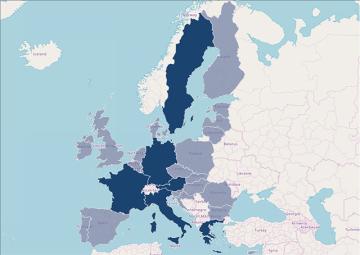
    The EU Fundamental Rights Agency published in 2019 its report on the ‘Integration of young refugees in the EU’. The report explored the challenges of young people who fled armed conflict or persecution and arrived in the EU in 2015 and 2016. The report is based on 426 interviews with experts working in the area of asylum and integration, as well as 163 interviews with young people, aged 16 to 24, conducted between October 2017 and June 2018 in 15 regions and cities located in six Member States: Austria, France, Germany, Greece, Italy and Sweden. The links on this page provide a summary of the information collected during this period for each country about unaccompanied children turning 18 and the change in people’s legal status once international protection is granted. These two issues had at the time been identified as moments requiring sufficient, consistent and systematic support, particularly from lawyers, social workers and guardians, to ensure successful integration.
  • Periodic updates / Series
    29
    September
    2020
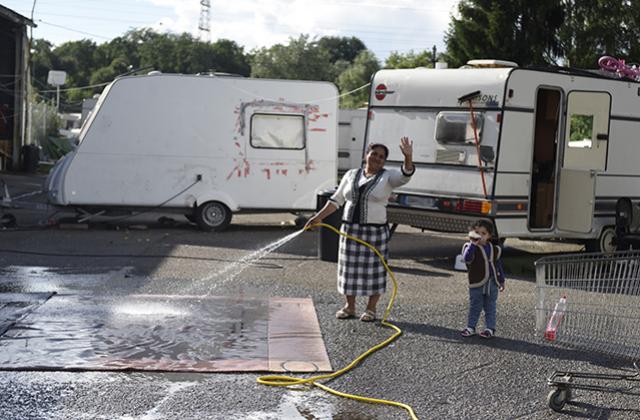
    Often living in substandard and overcrowded housing conditions, Roma and Travellers face an increased risk of contracting COVID-19. They are also disproportionately affected by measures taken to contain the virus. This FRA Bulletin takes a closer look at this reality in 15 EU Member States, focusing on education; employment; poverty; healthcare; housing; and anti-Gypsyism. It also outlines civil society efforts to tackle the diverse challenges triggered by the Coronavirus pandemic.
  • Report / Paper / Summary
    23
    September
    2020
    This report presents findings from FRA’s 2019 survey on Roma and Travellers in Belgium, France, Ireland, the Netherlands, Sweden and the United Kingdom. The survey included interviews with almost 4,700 Roma and Travellers, collecting information on more than 8,200 individuals living in their households.
  • Periodic updates / Series
    29
    July
    2020
    As we enter the second half of 2020, the constraints on our daily lives brought about by the Coronavirus pandemic have become a firm reality. New local lockdowns and the reintroduction of restrictive measures prompted by fresh outbreaks of the virus are a stark reminder that COVID-19 continues to shape our lives – and our enjoyment of fundamental rights – in profound ways. There is compelling evidence of how the pandemic has exacerbated existing challenges in our societies. This FRA Bulletin outlines some of the measures EU Member States adopted to safely reopen their societies and economies while continuing to mitigate the spread of COVID-19. It highlights the impact these measures may have on civil, political and socioeconomic rights.
  • Periodic updates / Series
    30
    June
    2020
    The Coronavirus pandemic continues to interrupt everyday life in the EU in unprecedented ways. But the way it affects our societies is shifting. As governments gradually lift some of the measures put in place to contain the spread of COVID-19, new fundamental rights concerns arise: how to ensure that the rights to life and health are upheld as daily life transitions to a ‘new normal’. This Bulletin looks at declarations of states of emergency, or equivalent, and how they came under scrutiny. It considers
    the impact on fundamental rights in important areas of daily life, and includes a thematic focus on the pandemic's impact on older people.
  • Fundamental Rights Report
    11
    June
    2020
    FRA’s Fundamental Rights Report 2020 reviews major developments in the field in 2019, identifying both achievements and areas of concern. It also presents FRA’s opinions on these developments, including a synopsis of the evidence supporting these opinions. This year’s focus chapter explores how to unlock the full potential of the EU Charter of Fundamental Rights.
  • Periodic updates / Series
    28
    May
    2020
    The Coronavirus pandemic continues to interrupt everyday life in the EU in unprecedented ways. But the way it affects our societies is shifting. As governments gradually lift some of the measures put in place to contain the spread of COVID-19, new fundamental rights concerns arise: how to ensure that the rights to life and health are upheld as daily life transitions to a ‘new normal’. This Bulletin looks at declarations of states of emergency, or equivalent, and how they came under scrutiny. It considers the impact on fundamental rights in important areas of daily life, and includes a thematic focus on the processing of users’ data to help contain COVID-19, particularly by contact-tracing apps. It covers the period 21 March – 30 April 2020.