eu-charter

Charta základných práv Európskej únie

Článok 25 - Práva starších osôb

Článok 25 - Práva starších osôb

Únia uznáva a rešpektuje právo starších osôb na dôstojný a nezávislý život a na účasť na spoločenskom a kultúrnom živote.

Vysvetlivky

  • Text:

    Tento článok vychádza z článku 23 revidovanej Európskej sociálnej charty a článkov 24 a 25 Charty základných sociálnych práv pracovníkov Spoločenstva. Samozrejme, účasť na sociálnom a kultúrnom živote sa tiež vzťahuje aj na účasť na politickom živote.

    Source:
    Úradný vestník Európskej únie C 303/17 - 14.12.2007
    Preamble - Explanations relating to the Charter of Fundamental Rights:
    Ďalej uvedené vysvetlivky boli pôvodne pripravené pod vedením predsedníctva konventu, ktorý vypracoval návrh Charty základných práv Európskej únie. Boli aktualizované pod vedením predsedníctva Európskeho konventu so zreteľom na úpravy, ktoré urobil tento konvent k textu charty (najmä k článkom 51 a 52), a vývoj práva Únie. Hoci tieto vysvetlivky nie sú ako také právne záväzné, predstavujú cenný nástroj výkladu, ktorý je určený na objasnenie ustanovení charty.

Prípadové právo

Vnútroštátne ústavné právo

30 results found

  • Portugal / Constitution of the Portuguese Republic
    Štát:
    Portugal

    Article 72 (The elderly) (1) The elderly shall possess the right to economic security and to conditions in terms of housing and family and community life that respect their personal autonomy and avoid and overcome isolation or social marginalisation. (2) The policy for the elderly shall include measures of an economic, social and cultural nature that tend to provide elderly people with opportunities for personal fulfilment by means of an active participation in community life.

  • Preamble to the Constitution of 27 October 1946
    Štát:
    France

    § 11.It shall guarantee to all, notably to children, mothers and elderly workers, protection of their health, material security, rest and leisure. All people who, by virtue of their age, physical or mental condition, or economic situation, are incapable of working, shall have to the right to receive suitable means of existence from society.

  • Préambule de la Constitution du 27 Octobre 1946
    Štát:
    France

    § 11.Elle garantit à tous, notamment à l'enfant, à la mère et aux vieux travailleurs, la protection de la santé, la sécurité matérielle, le repos et les loisirs. Tout être humain qui, en raison de son âge, de son état physique ou mental, de la situation économique, se trouve dans l'incapacité de travailler a le droit d'obtenir de la collectivité des moyens convenables d'existence.

  • Slovensko / Ústava Slovenskej republiky
    Štát:
    Slovensko

     Čl. 39 (1) Občania majú právo na primerané hmotné zabezpečenie v starobe a pri nespôsobilosti na prácu, ako aj pri strate živiteľa.(...) (3) Podrobnosti o právach podľa odsekov 1 a 2 ustanoví zákon.

  • Spain / Constitution of the Kingdom of Spain
    Štát:
    Spain

    Section 50 The public authorities shall guarantee, through adequate and periodically updated pensions, a sufficient income for citizens in old age. Likewise, and without prejudice to the obligations of the families, they shall promote their welfare through a system of social services that provides for their specific problems of health, housing, culture and leisure.

  • Suomen perustuslaki
    Štát:
    Finland

    19 § Oikeus sosiaaliturvaan (...) Lailla taataan jokaiselle oikeus perustoimeentulon turvaan työttömyyden, sairauden, työkyvyttömyyden ja vanhuuden aikana sekä lapsen syntymän ja huoltajan menetyksen perusteella.

  • The Belgian Constitution
    Štát:
    Belgium

    Article 22. Everyone has the right to the respect of his private and family life, except in the cases and conditions determined by the law. The laws, federate laws and rules referred to in Article 134 guarantee the protection
    of this right. Article 23 Everyone has the right to lead a life in keeping with human dignity. (...)

  • The Fundamental Law of Hungary
    Štát:
    Hungary

    Article XV (Freedom and Responsibility) […] (5) By means of separate measures, Hungary shall protect families, children, women, the elderly and those living with disabilities.

    Article XIX (Freedom and Responsibility) […] (4) Hungary shall contribute to ensuring a life of dignity for the elderly by maintaining a
    general state pension system based on social solidarity and by allowing for the operation of voluntarily established social institutions. An Act may lay down the conditions for entitlement to state pension also with regard to the requirement for stronger protection for women.

    Article 40 (The State) In the interests of satisfying common needs in a predictable manner and of the secure livelihood of the elderly, basic rules for sharing public burdens and for the pension system
    shall be laid down in a cardinal Act.

  • Ustav Republike Hrvatske
    Štát:
    Croatia

    Članak 64.
    (4)Djeca su dužna brinuti se za stare i nemoćne roditelje.

    Članak 65.
    (1)Dužnost je svih da štite djecu i nemoćne osobe.

  • КОНСТИТУЦИЯ на Република България
    Štát:
    Bulgaria

    Чл. 51. [...] (3) Старите хора, които нямат близки и не могат да се издържат от своето имущество [...] се намират под особена закрила на държавата и обществото

Právo EÚ

2 results found

  • Community Charter of the Fundamental Social Rights of Workers (not in force)

    25. Any person who has reached retirement age but who is not entitled to a pension or who does not have other means of subsistence, must be entitled to sufficient resources and to medical and social assistance specifically suited to his needs.

  • Community Charter of the Fundamental Social Rights of Workers (not in force)

    24. Every worker of the European Community must, at the time of retirement, be able to enjoy resources affording him or her a decent standard of living.

Medzinárodné právo

5 results found

Informačné materiály

  • Report / Paper / Summary
    21
    January
    2021
    German language version now available
    26 January 2021
    Národné inštitúcie pre ľudské práva (NHRI) sú nevyhnutnou súčasťou systému ochrany ľudských práv na vnútroštátnej úrovni. Zvyšovaním informovanosti, poskytovaním poradenstva, monitorovaním a vyvodzovaním zodpovednosti voči príslušným orgánom zohrávajú kľúčovú úlohu zvládaní súčasných veľkých výziev v oblasti ľudských práv. Zaoberajú sa pretrvávajúcimi problémami, ako je diskriminácia či nerovnosť, ako aj novými otázkami, napríklad vplyvom umelej inteligencie a pandémie COVID-19 na práva.
  • Report / Paper / Summary
    3
    September
    2020
    Summary version now available
    21 January 2021
    National Human Rights Institutions (NHRIs) are a vital part of the country-level human rights protection system. This report, published 10 years after FRA’s first in-depth study on NHRIs, looks at such bodies in the EU, as well as the Republic of North Macedonia, the Republic of Serbia, and the United Kingdom of Great Britain and Northern Ireland. It explores relevant developments, challenges to their effectiveness and ways to maximise their impact.
  • Fundamental Rights Report
    6
    June
    2018
    Finnish version now available
    27 January 2020
    European societies are not getting any younger! It is a simple truth we must face both about ourselves and Europe as a whole. In two generations, by 2080, those aged 65 or above will account for almost 30% of the European Union’s population.
  • Fundamental Rights Report
    11
    June
    2026
    The Fundamental Rights Report: Challenges and Achievements in 2025 is FRA’s flagship annual publication. It provides an overview of the state of fundamental rights in the EU and highlights selected critical developments from 2025. This year, it focuses on four areas: rights protection in a rapidly changing digital environment; the housing crisis and rising homelessness rates; employment challenges for people from non-EU countries; and the implementation of the EU Charter of Fundamental Rights. The publication is a valuable resource for those seeking to stay informed about the EU’s shifting landscape of fundamental rights.
  • Report / Paper / Summary
    14
    April
    2026
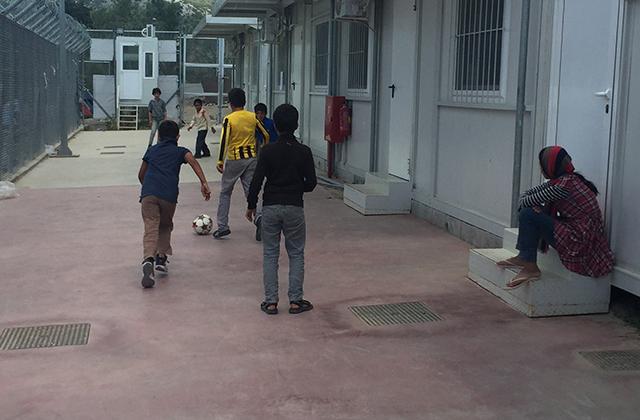
    In response to increased arrivals of asylum seekers, in 2015 the European Commission introduced the hotspot approach. Under this approach, the European Commission and EU agencies supported Greece and Italy in identifying, registering and fingerprinting newly arrived people. FRA regularly visited the initial reception facilities hosting them. This report looks back at the lessons learnt from 10 years of FRA visits. It identifies recurring risks to rights and highlights practical measures and promising practices to prevent or address them. These ‘lessons learnt’ can inform the implementation of the 2024 Pact on Migration and Asylum in line with the EU Charter of Fundamental Rights.
  • Report / Paper / Summary
    4
    December
    2025
    Artificial Intelligence comes with both benefits and risks. Safe AI use that accounts for fundamental rights is thus crucial. While the 2024 EU AI Act was a milestone in this regard, its broad definitions regarding AI systems and high-risk AI could introduce loopholes for fundamental rights compliance. This report offers an empirical basis for much-needed practical guidance on the Act’s implementation. Based on interviews with AI developers, sellers, and users, FRA addresses challenges of its use in critical domains, like asylum, education, and employment. Our findings help guide next steps in realising the AI Act’s potential to ensure responsible innovation.
  • Report / Paper / Summary
    13
    November
    2025
    FRA analysed 31 digital tools and systems across seven EU Member States, exploring potential positive and negative effects on victims, claimants and defendants. By identifying risks early, investing in skills and training, and embedding protections from the outset, policymakers and practitioners can build effective and inclusive justice systems. This report provides practical suggestions to help ensure that digitalised justice systems are accessible and deliver fair outcomes for all.
  • Handbook / Guide / Manual
    8
    October
    2025
    The Entry/Exit System (EES), launching in 2025, will register non-EU nationals crossing the EU’s external borders. This FRA guidance supports managers overseeing the operation of the new system. It helps them to ensure compliance with EU fundamental rights. It outlines operational considerations: clear communication, dignified biometric data collection and data protection. It also addresses staff training needs. Based on fieldwork at 10 border crossing points in 6 Member States, the guidance will ensure rights are respected under the new system. A separate guidance publication for border guards accompanies this publication.
  • Handbook / Guide / Manual
    8
    October
    2025
    The Entry/Exit System (EES), launching in 2025, will register non-EU nationals crossing the EU’s external borders. This FRA guidance helps border guards apply the new rules in line with EU fundamental rights. It offers practical tips on informing people, collecting biometric data and supporting people with specific needs. Based on fieldwork at 10 border crossing points in 6 Member States, the guidance will ensure rights are respected under the new system. A separate guidance publication for managers accompanies this publication.