eu-charter

Charta základných práv Európskej únie

Článok 6 - Právo na slobodu a bezpečnosť

Článok 6 - Právo na slobodu a bezpečnosť

Každý má právo na slobodu a osobnú bezpečnosť.

Vysvetlivky

  • Text:

    Práva ustanovené v článku 6 zodpovedajú právam zaručeným v článku 5 EDĽP a v súlade s článkom 52 ods. 3 charty majú preto rovnaký význam a rozsah. Z toho vyplýva, že obmedzenia, ktoré sa na ne môžu oprávnene vzťahovať, nesmú prekročiť tie, ktoré povoľuje EDĽP vo svojom článku 5, ktorý znie:
    `1. Každý má právo na slobodu a osobnú bezpečnosť. Nikoho nemožno pozbaviť slobody okrem nasledujúcich prípadov, pokiaľ sa tak stane v súlade s konaním ustanoveným zákonom:
    a) zákonné uväznenie po odsúdení príslušným súdom;
    b) zákonné zatknutie alebo iné pozbavenie slobody osoby preto, že sa nepodrobila rozhodnutiu vydanému súdom podľa zákona alebo, aby sa zaručilo splnenie povinnosti ustanovenej zákonom;
    c) zákonné zatknutie alebo iné pozbavenie slobody osoby na účely predvedenia pred príslušný súdny orgán pre dôvodné podozrenie zo spáchania trestného činu, alebo ak sú oprávnené dôvody domnievať sa, že je potrebné zabrániť jej v spáchaní trestného činu alebo v úteku po jeho spáchaní;
    d) iné pozbavenie slobody maloletého na základe zákonného rozhodnutia na účely výchovného dohľadu alebo jeho zákonné pozbavenie slobody na účely jeho predvedenia pred príslušný orgán;
    e) zákonné držanie osôb, aby sa zabránilo šíreniu nákazlivej choroby, alebo duševne chorých osôb, alkoholikov, narkomanov alebo tulákov;
    f) zákonné zatknutie alebo iné pozbavenie slobody osoby, aby sa zabránilo jej nepovolenému vstupu na územie, alebo osoby, proti ktorej prebieha konanie o vyhostenie alebo vydanie.
    2. Každý, kto je zatknutý, musí byť oboznámený bez meškania a v jazyku, ktorému rozumie, s dôvodmi svojho zatknutia a s každým obvinením proti nemu.
    3. Každý, kto je zatknutý alebo inak pozbavený slobody v súlade s ustanoveniami odseku 1 písm. c) tohto článku, musí byť ihneď predvedený pred sudcu alebo inú úradnú osobu splnomocnenú zákonom na výkon súdnej právomoci a má právo byť súdený v primeranej lehote alebo prepustený počas konania. Prepustenie sa môže podmieniť zárukou, že sa dotknutá osoba ustanoví na pojednávanie.
    4. Každý, kto bol pozbavený slobody zatknutím alebo iným spôsobom, má právo podať návrh na konanie, v ktorom by súd urýchlene rozhodol o zákonnosti jeho pozbavenia slobody a nariadil prepustenie, ak je pozbavenie slobody nezákonné.
    5. Každý, kto bol obeťou zatknutia alebo zadržania v rozpore s ustanoveniami tohto článku, má nárok na odškodnenie.`
    Práva priznané v článku 6 sa musia rešpektovať, najmä ak Európsky parlament a Rada prijímajú legislatívne akty v oblasti justičnej spolupráce v trestných veciach na základe článkov 82, 83 a 85 Zmluvy o fungovaní Európskej únie, predovšetkým pri vymedzení minimálnych spoločných ustanovení, pokiaľ sa to týka kvalifikácie trestných činov a trestov a určitých aspektov procesného práva.

    Source:
    Úradný vestník Európskej únie C 303/17 - 14.12.2007
    Preamble - Explanations relating to the Charter of Fundamental Rights:
    Ďalej uvedené vysvetlivky boli pôvodne pripravené pod vedením predsedníctva konventu, ktorý vypracoval návrh Charty základných práv Európskej únie. Boli aktualizované pod vedením predsedníctva Európskeho konventu so zreteľom na úpravy, ktoré urobil tento konvent k textu charty (najmä k článkom 51 a 52), a vývoj práva Únie. Hoci tieto vysvetlivky nie sú ako také právne záväzné, predstavujú cenný nástroj výkladu, ktorý je určený na objasnenie ustanovení charty.

Prípadové právo

Vnútroštátne ústavné právo

42 results found

  • Grundgesetz für die Bundesrepublik Deutschland
    Štát:
    Germany

    Artikel 104 (1) Die Freiheit der Person kann nur auf Grund eines förmlichen Gesetzes und nur unter Beachtung der darin vorgeschriebenen Formen beschränkt werden. Festgehaltene Personen dürfen weder seelisch noch körperlich mißhandelt werden. (2) Über die Zulässigkeit und Fortdauer einer Freiheitsentziehung hat nur der Richter zu entscheiden. Bei jeder nicht auf richterlicher Anordnung beruhenden Freiheitsentziehung ist unverzüglich eine richterliche Entscheidung herbeizuführen. Die Polizei darf aus eigener Machtvollkommenheit niemanden länger als bis zum Ende des Tages nach dem Ergreifen in eigenem Gewahrsam halten. Das Nähere ist gesetzlich zu regeln. (3) Jeder wegen des Verdachtes einer strafbaren Handlung vorläufig Festgenommene ist spätestens am Tage nach der Festnahme dem Richter vorzuführen, der ihm die Gründe der Festnahme mitzuteilen, ihn zu vernehmen und ihm Gelegenheit zu Einwendungen zu geben hat. Der Richter hat unverzüglich entweder einen mit Gründen versehenen schriftlichen Haftbefehl zu erlassen oder die Freilassung anzuordnen. (4) Von jeder richterlichen Entscheidung über die Anordnung oder Fortdauer einer Freiheitsentziehung ist unverzüglich ein Angehöriger des Festgehaltenen oder eine Person seines Vertrauens zu benachrichtigen.

  • Konstytucja Rzeczypospolitej Polskiej
    Štát:
    Poland

    Art. 41.1. Każdemu zapewnia się nietykalność osobistą i wolność osobistą. Pozbawienie lub ograniczenie wolności może nastąpić tylko na zasadach i w trybie określonych w ustawie.2. Każdy pozbawiony wolności nie na podstawie wyroku sądowego ma prawo odwołania się do sądu w celu niezwłocznego ustalenia legalności tego pozbawienia. O pozbawieniu wolności powiadamia się niezwłocznie rodzinę lub osobę wskazaną przez pozbawionego wolności. 3. Każdy zatrzymany powinien być niezwłocznie i w sposób zrozumiały dla niego poinformowany o przyczynach zatrzymania. Powinien on być w ciągu 48 godzin od chwili zatrzymania przekazany do dyspozycji sądu. Zatrzymanego należy zwolnić, jeżeli w ciągu 24 godzin od przekazania do dyspozycji sądu nie zostanie mu doręczone postanowienie sądu o tymczasowym aresztowaniu wraz z przedstawionymi zarzutami. 4. Każdy pozbawiony wolności powinien być traktowany w sposób humanitarny. 5. Każdy bezprawnie pozbawiony wolności ma prawo do odszkodowania.

  • Konvention zum Schutze der Menschenrechte und Grundfreiheiten
    Štát:
    Austria

    Artikel 5 (1) Jedermann hat ein Recht auf Freiheit und Sicherheit.

  • La Constitution Belge
    Štát:
    Belgium

    Article 12.La liberté individuelle est garantie.
    Nul ne peut être poursuivi que dans les cas prévus par la loi, et dans la forme qu'elle prescrit.
    Hors le cas de flagrant délit, nul ne peut être arrêté qu'en vertu d'une ordonnance motivée du juge qui doit être signifiée au plus tard dans les quarante-huit heures de la privation de liberté et ne peut emporter qu'une mise en détention préventive.

  • Latvijas Republikas Satversme
    Štát:
    Latvia

    94. Ikvienam ir tiesības uz brīvību un personas neaizskaramību. Nevienam nedrīkst atņemt vai ierobežot brīvību citādi kā tikai saskaņā ar likumu.

  • Lietuvos Respublikos Konstitucija
    Štát:
    Lithuania

    20 straipsnis. Žmogaus laisvė neliečiama.Niekas negali būti savavališkai sulaikytas arba laikomas suimtas. Niekam neturi būti atimta laisvė kitaip, kaip tokiais pagrindais ir pagal tokias procedūras, kokias yra nustatęs įstatymas.Nusikaltimo vietoje sulaikytas asmuo per 48 valandas turi būti pristatytas į teismą, kur sulaikytajam dalyvaujant sprendžiamas sulaikymo pagrįstumas. Jeigu teismas nepriima nutarimo asmenį suimti, sulaikytasis tuojau pat paleidžiamas.

  • Luxembourg / Constitution of the Grand Ducal of Luxembourg
    Štát:
    Luxembourg

    Art. 17. (1) La liberté individuelle est garantie. 

    (2) Nul ne peut être poursuivi, arrêté ou privé de sa liberté que dans les cas prévus et dans la forme déterminée par la loi. 

    (3) Sauf le cas de flagrant délit, nul ne peut être arrêté qu’en vertu d’une décision de justice motivée, qui doit être notifiée au moment de l’arrestation ou au plus tard dans les vingt-quatre heures. 

    (4) Toute personne accusée d’une infraction est présumée innocente jusqu’à ce que sa culpabilité ait été légalement établie. 

    Toute personne doit être informée sans délai des raisons de son arrestation ou de la privation de sa liberté, des accusations portées contre elle et des moyens de recours légaux dont elle dispose pour recouvrer sa liberté.

  • Magyarország Alaptörvénye
    Štát:
    Hungary

    IV. cikk (SZABADSÁG ÉS FELELŐSSÉG) (1) Mindenkinek joga van a szabadsághoz és a személyi biztonsághoz. (2) Senkit nem lehet szabadságától másként, mint törvényben meghatározott okokból és törvényben meghatározott eljárás alapján megfosztani. Tényleges életfogytig tartó szabadságvesztés csak szándékos, erőszakos bűncselekmény elkövetése miatt szabható ki. (3) A bűncselekmény elkövetésével gyanúsított és őrizetbe vett személyt a lehető legrövidebb időn belül szabadon kell bocsátani, vagy bíróság elé kell állítani. A bíróság köteles az elé állított személyt meghallgatni és írásbeli indokolással ellátott határozatban szabadlábra helyezéséről vagy letartóztatásáról haladéktalanul dönteni. (4) Akinek szabadságát alaptalanul vagy törvénysért ően korlátozták, kárának megtérítésére jogosult.

  • Netherlands / Constitution of the Kingdom of the Netherlands
    Štát:
    Netherlands

    Article 15 1. Other than in the cases laid down by or pursuant to Act of Parliament, no one may be deprived of his liberty. 2. Anyone who has been deprived of his liberty other than by order of a court may request a court to order his release. In such a case he shall be heard by the court within a period to be laid down by Act of Parliament. The court shall order his immediate release if it considers the deprivation of liberty to be unlawful. 3. The trial of a person who has been deprived of his liberty pending trial shall take place within a reasonable period. 4. A person who has been lawfully deprived of his liberty may be restricted in the exercise of fundamental rights in so far as the exercise of such rights is not compatible with the deprivation of liberty.

  • Portugal / Constitution of the Portuguese Republic
    Štát:
    Portugal

    Article 27 (Right to freedom and security) (1) Everyone has the right to freedom and security. (2) No one may be wholy or partially deprived of their freedom, except as a consequence of a judicial sentence imposed for the practise of an act that is punishable by law with a prison term or the imposition by a court of a security measure. (3) The following cases of deprivation of freedom for such time and under such conditions as the law may determine shall be exceptions to this principle: (a) Detention in flagrante delicto; (b) Detention or remand in custody where there is strong evidence of the commission of a serious crime punishable by imprisonment for a maximum term of more than three years; (c) The imposition of imprisonment, detention or any other coercive measure subject to judicial control, on a person who improperly entered or is improperly present in Portuguese territory, or who is currently the object of extradition or deportation proceedings; (d) The imposition of disciplinary imprisonment on military personnel. Such imprisonment shall be subject to appeal to the competent court; (e) The subjection of a minor to measures intended to protect, assist or educate him in a suitable establishment, when ordered by the competent court of law; (f) Detention under a court order for disobeying a court ruling or to ensure appearance before a competent judicial authority; (g) Detentions of suspects for identification purposes, in such cases and for such time as may be strictly necessary; (h) Committal of a person suffering from a psychic anomaly to an appropriate therapeutic establishment, when ordered or confirmed by a competent judicial authority. (4) Every person who is deprived of his freedom shall immediately be informed in an understandable manner of the reasons for his arrest, imprisonment or detention and of his rights. (5) Deprivation of freedom contrary to the provisions of this Constitution and the law shall place the state under a duty to compensate the aggrieved person in accordance with the law.

  • Romania / Constitution of Romania
    Štát:
    Romania

    Article 23(1) Individual freedom and security of a person are inviolable. (2) Search, detainment, or arrest of a person shall be permitted only in the cases and under the procedure provided by law. (3) Detention shall not exceed twenty-four hours. (4) Preventive custody shall be ordered by a judge and only in the course of criminal proceedings. (5) During the criminal proceedings, the preventive custody may only be ordered for 30 days at the most and extended for 30 days at the most each, without the overall length exceeding a reasonable term, and no longer than i80 days. (6) After the lawsuit has begun, the court is bound, according to the law, to check, on a regular basis and no later than 60 days, the lawfulness and grounds of the preventive custody, and to order at once the release of the defendant if the grounds for the preventive custody have ceased to exist or if the court finds there are no new grounds justifying the continuance of the custody. (7) The decisions by a court of law on preventive custody may be subject to the legal proceedings stipulated by the law. (8) Any person detained or arrested shall be promptly informed, in a language he understands, of the grounds for his detention or arrest, and notified of the charges against him, as soon as practicable; the notification of the charges shall be made only in the presence of a lawyer of his own choosing or appointed ex officio. (9) The release of a detained or arrested person shall be mandatory if the reasons for such steps have ceased to exist, as well as under other circumstances stipulated by the law. (10) A person under preventive custody shall have the right to apply for provisional release, under judicial control or on bail. (13) The freedom deprivation sanction can only be based on criminal grounds.

  • Slovensko / Ústava Slovenskej republiky
    Štát:
    Slovensko

    Čl. 17(1) Osobná sloboda sa zaručuje.(2) Nikoho nemožno stíhať alebo pozbaviť slobody inak, ako z dôvodov a spôsobom, ktorý ustanoví zákon. Nikoho nemožno pozbaviť slobody len pre neschopnosť dodržať zmluvný záväzok. (3) Obvineného alebo podozrivého z trestného činu možno zadržať len v prípadoch ustanovených zákonom. Zadržaná osoba musí byť ihneď oboznámená s dôvodmi zadržania, vypočutá a najneskôr do 48 hodín a pri trestných činoch terorizmu do 96 hodín prepustená na slobodu alebo odovzdaná súdu. Sudca musí zadržanú osobu do 48 hodín a pri obzvlášť závažných trestných činoch do 72 hodín od prevzatia vypočuť a rozhodnúť o väzbe alebo o jej prepustení na slobodu. (4) Obvineného možno zatknúť iba na odôvodnený písomný príkaz sudcu. Zatknutá osoba musí byť do 24 hodín odovzdaná súdu. Sudca musí zatknutú osobu do 48 hodín a pri obzvlášť závažných trestných činoch do 72 hodín od prevzatia vypočuť a rozhodnúť o väzbe alebo o jej prepustení na slobodu. (5) Do väzby možno vziať iba z dôvodov a na čas ustanovený zákonom a na základe rozhodnutia súdu. (6) Zákon ustanoví, v ktorých prípadoch možno prevziať osobu do ústavnej zdravotníckej starostlivosti alebo ju v nej držať bez jej súhlasu. Takéto opatrenie sa musí do 24 hodín oznámiť súdu, ktorý o tomto umiestnení rozhodne do piatich dní. (7) Skúmanie duševného stavu osoby obvinenej z trestného činu je možné iba na písomný príkaz súdu.

  • Slovenia / Constitution of the Republic of Slovenia
    Štát:
    Slovenia

    Article 19 Everyone has the right to personal liberty. No one may be deprived of his liberty except in such cases and pursuant to such procedures as are provided by law.Anyone deprived of his liberty must be immediately informed in his mother tongue, or in a language which he understands, of the reasons for being deprived of his liberty. Within the shortest possible time thereafter, he must also be informed in writing of why he has been deprived of his liberty. He must be instructed immediately that he is not obliged to make any statement, that he has the right to immediate legal representation of his own free choice and that the competent authority must, on his request, notify his relatives or those close to him of the deprivation of his liberty.

    Article 20A person reasonably suspected of having committed a criminal offence may be detained only on the basis of a court order when this is absolutely necessary for the course of criminal proceedings or for reasons of public safety.Upon detention, but not later than twenty-four hours thereafter, the person detained must be handed the written court order with a statement of reasons. The person detained has the right to appeal against the court order, and such appeal must be decided by a court within forty-eight hours. Detention may last only as long as there are legal reasons for such, but no longer than three months from the day of the deprivation of liberty. The Supreme Court may extend the detention a further three months.If no charges are brought by the end of these terms, the suspected person shall be released.

  • Spain / Constitution of the Kingdom of Spain
    Štát:
    Spain

    Article 17 (1). Every person has the right to freedom and security. No one may be deprived of his or her freedom except in accordance with the provisions of this section and in the cases and in the manner provided for by the law.2. Preventive arrest may last no longer than the time strictly necessary in order to carry out the investigations aimed at establishing the events; in any case the person arrested must be set free or handed over to the judicial authorities within a maximum period of seventy-two hours. 3. Every person arrested must be informed immediately, and in a way understandable to him or her, of his or her rights and of the grounds for his or her arrest, and may not be compelled to make a statement. The arrested person shall be guaranteed the assistance of a lawyer during police and judicial proceedings, under the terms to be laid down by the law. 4. An habeas corpus procedure shall be provided for by law in order to ensure the immediate handing over to the judicial authorities of any person illegally arrested. Likewise, the maximum period of provisional imprisonment shall be determined by law.

  • Suomen perustuslaki
    Štát:
    Finland

    7 § Oikeus elämään sekä henkilökohtaiseen vapauteen ja koskemattomuuteen Jokaisella on oikeus elämään sekä henkilökohtaiseen vapauteen, koskemattomuuteen ja turvallisuuteen. Ketään ei saa tuomita kuolemaan, kiduttaa eikä muutoinkaan kohdella ihmisarvoa loukkaavasti. Henkilökohtaiseen koskemattomuuteen ei saa puuttua eikä vapautta riistää mielivaltaisesti eikä ilman laissa säädettyä perustetta. Rangaistuksen, joka sisältää vapaudenmenetyksen, määrää tuomioistuin. Muun vapaudenmenetyksen laillisuus voidaan saattaa tuomioistuimen tutkittavaksi. Vapautensa menettäneen oikeudet turvataan lailla.

  • The Belgian Constitution
    Štát:
    Belgium

    Article 12. The freedom of the individual is guaranteed.
    No one can be prosecuted except in the cases provided for by the law, and in the
    form prescribed by the law.
    Except in the case of a flagrant offence, no one can be arrested except on the
    strength of a reasoned judge’s order, which must be served at the latest within forty-eight
    hours from the deprivation of liberty and which may only result in provisional detention.

  • The Constitution of the Republic of Cyprus
    Štát:
    Cyprus

    Article 11
    1. Every person has the right to liberty and security of person.
    2. No person shall be deprived of his liberty save in the following cases when and as provided by law: -
    (a) the detention of a person after conviction by a competent court;
    (b) the arrest or detention of a person for non-compliance with the lawful order of a court;
    (c) the arrest or detention of a person effected for the purpose of bringing him before the competent legal authority on reasonable suspicion of having committed an offence or when it is reasonably considered necessary to prevent his committing anoffence or fleeing after having done so;
    (d) the detention of a minor by a lawful order for the purpose of educational supervision or his lawful detention for the purpose of bringing him before the competent legal authority;
    (e) the detention of persons for the prevention of spreading of infectious diseases, of persons of unsound mind, alcoholics or drug addicts or vagrants;
    (f) the arrest or detention of a person to prevent him effecting an unauthorised entry into the territory of the Republic or of an alien against whom action is being taken with a view to deportation or extradition.
    3. Save when and as provided by law in case of a flagrant offence punishable with death or imprisonment, no person shall be arrested save under the authority of a reasoned judicial warrant issued according to the formalities prescribed by the law.
    4. Every person arrested shall be informed at the time of his arrest in a language which he understands of the reasons for his arrest and shall be allowed to have the services of a lawyer of his own choosing.
    5. The person arrested shall, as soon as is practicable after his arrest, and in any event not later than twenty-four hours after the arrest, be brought before a judge, if not earlier released.
    6. The judge before whom the person arrested is brought shall promptly proceed to inquire into the grounds of the arrest in a language understandable by the person arrested and shall, as soon as possible and in any event not later than three days from such appearance, either release the person arrested on such terms as he may deem fit or where the investigation into the commission of the offence for which he has been arrested has not been completed remand him in custody and may remand him in custody from time to time for a period not exceeding eight days at any one time:
    Provided that the total period of such remand in custody shall not exceed three months of the date of the arrest on the expiration of which every person or authority having the custody of the person arrested shall forthwith set him free.
    Any decision of the judge under this paragraph shall be subject to appeal.
    7. Every person who is deprived of his liberty by arrest or detention shall be entitled to take proceedings by which the lawfulness of his detention shall be decided speedily by a court and his release ordered if the detention is not lawful.
    8. Every person who has been the victim of arrest or detention in contravention of the provisions of this Article shall have an enforceable right to compensation.

  • The Constitutional Act of Denmark
    Štát:
    Denmark

    Section 71. Subsection 1. Personal liberty shall be inviolable. No Danish subject shall, in any manner whatsoever, be deprived of his liberty because of his political or religious convictions or because of his descent. Subsection 2. A person shall be deprived of his liberty only when this is warranted by law. Subsection 3. Any person who is taken into custody shall be brought before a judge within twenty-four hours. When the person taken into custody cannot be released immediately, the judge shall decide, in an order to be given as soon as possible and at the latest within three days, stating the grounds, whether the person taken into custody shall be committed to prison; and in cases in which he can be released on bail, the judge shall also determine the nature and amount of such bail. This provision may be disregarded by statute as far as Greenland is concerned, if for local considerations such departure may be deemed necessary. Subsection 4. The pronouncement of the judge may be separately appealed against at once to a higher court of justice by the person concerned. Subsection 5. No person shall be remanded in custody for an offence which can involve only punishment by fine or simple detention. Subsection 6. Outside criminal procedure, the legality of deprivation of liberty not executed by order of a judicial authority, and not warranted by legislation relating to aliens, shall at the request of the person so deprived of his liberty, or the request of any person acting on his behalf, be brought before the ordinary courts of justice or other judicial authority for decision. Rules governing this procedure shall be provided by statute. Subsection 7. The persons referred to in Sub-section (6) shall be under supervision by a board set up by the Folketing, to which board the persons concerned shall be permitted to apply.
    Section 85. The provisions of Sections 71, 78, and 79 shall be applicable only to the armed forces, subject to such limitations as are consequential to the provisions of military laws.

  • The Fundamental Law of Hungary
    Štát:
    Hungary

     Article IV (Freedom and Responsibility)(1) Everyone shall have the right to liberty and security of the person.
    (2) No one shall be deprived of liberty except for reasons specified in an Act and in accordance with the procedure laid down in an Act. Life imprisonment without parole may only be imposed for the commission of intentional and violent criminal offences.
    (3) Any person suspected of having committed a criminal offence and taken into detention
    must, as soon as possible, be released or brought before a court. The court shall be obliged to hear the person brought before it and shall without delay make a decision with a written statement of reasons to release or to arrest that person.
    (4) Everyone whose liberty has been restricted without a well-founded reason or unlawfully
    shall have the right to compensation.

  • Tο Σύνταγμα της Κυπριακής Δημοκρατίας
    Štát:
    Cyprus

    ΑΡΘΡΟΝ 11
    1. Έκαστος έχει το δικαίωμα ελευθερίας και προσωπικής ασφαλείας.
    2. Ουδείς στερείται της ελευθερίας αυτού, ειμή ότε και όπως ο νόμος ορίζει εις τας περιπτώσεις:
    (α) κρατήσεως ατόμου μετά την καταδίκην αυτού υπό αρμοδίου δικαστηρίου,
    (β) συλλήψεως ή κρατήσεως ατόμου λόγω μη συμμορφώσεως προς νόμιμον διαταγήν δικαστηρίου,
    (γ) συλλήψεως ή κρατήσεως ατόμου ενεργουμένης προς τον σκοπόν προσαγωγής αυτού ενώπιον της αρμοδίας κατά νόμον αρχής επί τη ευλόγω υπονοία ότι διέπραξεν αδίκημα ή οσάκις η σύλληψις ή κράτησις θεωρηθή ευλόγως αναγκαία προς παρεμπόδισιν διαπράξεως αδικήματος ή αποδράσεως μετά την διάπραξιν αυτού,
    (δ) περιορισμού ανηλίκου δυνάμει νομίμου διαταγής προς τον σκοπόν αναμορφωτικής επιβλέψεως ή νομίμου κρατήσεως προς τον σκοπόν προσαγωγής αυτού ενώπιον της αρμοδίας κατά νόμον αρχής,
    (ε) περιορισμού ατόμων προς παρεμπόδισιν επεκτάσεως μεταδοτικών νόσων, ατόμων ασθενών διανοητικώς, αλκοολικών, τοξικομανών ή αλητών, και
    (στ) σύλληψης ή κράτησης ατόμου προς παρεμπόδιση της χωρίς άδεια εισόδου στο έδαφος της Δημοκρατίας ή σύλληψης ή κράτησης αλλοδαπού εναντίον του οποίου έγιναν ενέργειες προς το σκοπό απέλασης ή έκδοσης ή σύλληψης ή κράτησης πολίτη της Δημοκρατίας προς το σκοπό της έκδοσης ή παράδοσής του με βάση ευρωπαϊκό ένταλμα σύλληψης ή σύμφωνα με διεθνή σύμβαση που δεσμεύει τη Δημοκρατία, υπό τον όρο ότι τέτοια σύμβαση εφαρμόζεται αντίστοιχα και από τον αντισυμβαλλόμενο. Η σύλληψη ή η κράτηση όμως οποιουδήποτε προσώπου προς το σκοπό έκδοσης ή παράδοσής του δεν είναι δυνατή εάν το αρμόδιο κατά νόμο όργανο ή αρχή έχει ουσιώδη λόγο να πιστεύει ότι το αίτημα της έκδοσης ή παράδοσης έγινε με σκοπό την ποινική δίωξη ή την τιμωρία προσώπου συνεπεία της φυλής, της θρησκείας, της εθνικότητας, της εθνοτικής καταγωγής, των πολιτικών πεποιθήσεων ή των νόμιμων κατά το διεθνές δίκαιο διεκδικήσεων συλλογικών ή ατομικών δικαιωμάτων.
    3. Εξαιρουμένου του δια φυλακίσεως, ότε και όπως ο νόμος ορίζη, τιμωρουμένου αυτοφώρου αδικήματος, ουδείς συλλαμβάνεται, ειμή κατόπιν ητιολογημένου δικαστικού εντάλματος εκδοθέντος συμφώνως προς τους υπό του νόμου προδιαγεγραμμένους τύπους, ή με βάση ευρωπαϊκό ένταλμα σύλληψης.
    4. Πας συλλαμβανόμενος πληροφορείται κατά την στιγμήν της συλλήψεως αυτού εις καταληπτήν υπ’ αυτού γλώσσαν τους λόγους της συλλήψεως αυτού και δικαιούται να τύχη των υπηρεσιών συνηγόρου της εκλογής αυτού.
    5. Ο συλληφθείς προσάγεται ενώπιον του δικαστού ως οιόν τε συντομώτερον ευθύς μετά την σύλληψιν αυτού, πάντως δε το βραδύτερον εντός είκοσι τεσσάρων ωρών από της συλλήψεως, εφ’ όσον δεν αφεθή πρότερον ελεύθερος.
    6. Ο δικαστής, ενώπιον του οποίου προσήχθη ο συλληφθείς, χωρεί ταχέως εις διερεύνησιν των λόγων της συλλήψεως εις καταληπτήν υπό του συλληφθέντος γλώσσαν και, ως οιόν τε συντομώτερον, πάντως δε το βραδύτερον εντός τριών ημερών από της τοιαύτης προσαγωγής, ή απολύει τον συλληφθέντα υπό τους κατά την κρίσιν αυτού καταλλήλους όρους ή διατάσσει την κράτησιν αυτού, οσάκις η περί της διαπράξεως του αδικήματος ανάκρισις, δι’ ο συνελήφθη, δεν συνεπληρώθη και δύναται να διατάσση εκάστοτε την κράτησιν αυτού επί περίοδον χρόνου μη υπερβαίνουσαν τας οκτώ ημέρας. Ο συνολικός χρόνος όμως της τοιαύτης κρατήσεως δέον να μη υπερβαίνη τους τρεις μήνας από της ημερομηνίας της συλλήψεως, μετά την παρέλευσιν των οποίων παν άτομον ή αρχή έχουσα υπό κράτησιν τον συλληφθέντα απολύει αυτόν παρευθύς. Πάσα κατά τα ανωτέρω απόφασις του δικαστού υπόκειται εις έφεσιν.
    7. Πας στερηθείς της ελευθερίας αυτού δια συλλήψεως ή κρατήσεως δικαιούται να προσφύγη εις το αρμόδιον δικαστήριον, ίνα τούτο κρίνη ταχέως την νομιμότητα της κρατήσεως και διατάξη την απόλυσιν αυτού, εάν η κράτησις δεν είναι νόμιμος.
    8. Ο κατά παράβασιν των διατάξεων του παρόντος άρθρου συλληφθείς ή κρατηθείς έχει αγώγιμον δικαίωμα προς αποζημίωσιν.

Právo EÚ

13 results found

  • Regulation (EU) 2019/1896 of the European Parliament and of the Council of 13 November 2019 on the European Border and Coast Guard and repealing Regulations (EU) No 1052/2013 and (EU) 2016/1624

    Preamble

    (103) This Regulation respects the fundamental rights and observes the principles recognised by Articles 2 and 6 TEU and by the Charter of Fundamental Rights of the European Union (‘the Charter’), in particular respect for human dignity, the right to life, the prohibition of torture and inhuman or degrading treatment or punishment, the prohibition of trafficking in human beings, the right to liberty and security, the right to the protection of personal data, the right of access to documents, the right to asylum and to protection against removal and expulsion, non-refoulement, non-discrimination and the rights of the child.

    Article 1: Subject matter

    This Regulation establishes a European Border and Coast Guard to ensure European integrated border management at the external borders with a view to managing those borders efficiently in full compliance with fundamental rights and to increasing the efficiency of the Union return policy.

    This Regulation addresses migratory challenges and potential future challenges and threats at the external borders. It ensures a high level of internal security within the Union in full respect of fundamental rights, while safeguarding the free movement of persons within the Union. It contributes to the detection, prevention and combating of cross-border crime at the external borders.

    Article 43: Instructions to the teams

    4.   Members of the teams shall, in the performance of their tasks and in the exercise of their powers, fully respect fundamental rights, including access to asylum procedures and human dignity, and shall pay particular attention to vulnerable persons. Any measures taken in the performance of their tasks and in the exercise of their powers shall be proportionate to the objectives pursued by such measures. While performing their tasks and exercising their powers, they shall not discriminate against persons on the basis of any grounds such as sex, race, colour, ethnic or social origin, genetic features, language, religion or belief, political or any other opinion, membership of a national minority, property, birth, disability, age or sexual orientation in line with Article 21 of the Charter.

  • Commission Recommendation of 27 November 2013 on procedural safeguards for vulnerable persons suspected or accused in criminal proceedings

    Preamble
    ‘(10) Vulnerable persons need appropriate assistance and support during criminal proceedings. For that purpose, the legal representative of a vulnerable suspect or accused person or an appropriate adult should be informed as soon as possible of the criminal proceedings against him, of the nature of the accusation, the procedural rights and the available remedies. The legal representative or an appropriate adult should be notified as soon as possible of the deprivation of liberty and be informed about the reasons for it, unless it is contrary to the person's best interests.‘
    Right to medical assistance
    ‘12. Vulnerable persons should have access to systematic and regular medical assistance throughout criminal proceedings if they are deprived of liberty.‘
    Deprivation of liberty
    ‘14. Member States should take all steps to ensure that deprivation of liberty of vulnerable persons before their conviction is a measure of last resort, proportionate and taking place under conditions suited to the needs of the vulnerable person. Appropriate measures should be taken to ensure that vulnerable persons have access to reasonable accommodations taking into account their particular needs when they are deprived of liberty.‘

  • Directive 2012/29/EU of the European Parliament and of the Council of 25 October 2012 establishing minimum standards on the rights, support and protection of victims of crime, and replacing Council Framework Decision 2001/220/JHA

    Preamble:

    (14) In applying this Directive, children's best interests must be a primary consideration, in accordance with the Charter of Fundamental Rights of the European Union and the United Nations Convention on the Rights of the Child adopted on 20 November 1989. Child victims should be considered and treated as the full bearers of rights set out in this Directive and should be entitled to exercise those rights in a manner that takes into account their capacity to form their own views.
    (16) Victims of terrorism have suffered attacks that are intended ultimately to harm society. They may therefore need special attention, support and protection due to the particular nature of the crime that has been committed against them. Victims of terrorism can be under significant public scrutiny and often need social recognition and respectful treatment by society. Member States should therefore take particular account of the needs of victims of terrorism, and should seek to protect their dignity and security.’
    ‘(38) [...] A main task of these services and their staff, which play an important role in supporting the victim to recover from and overcome potential harm or trauma as a result of a criminal offence, should be to inform victims about the rights set out in this Directive so that they can take decisions in a supportive environment that treats them with dignity, respect and sensitivity. The types of support that such specialist support services should offer could include providing shelter and safe accommodation, immediate medical support, referral to medical and forensic examination for evidence in cases of rape or sexual assault, short and long-term psychological counselling, trauma care, legal advice, advocacy and specific services for children as direct or indirect victims.’
    ‘(52) Measures should be available to protect the safety and dignity of victims and their family members from secondary and repeat victimisation, from intimidation and from retaliation, such as interim injunctions or protection or restraining orders.’

    (66) This Directive respects fundamental rights and observes the principles recognised by the Charter of Fundamental Rights of the European Union. In particular, it seeks to promote the right to dignity, life, physical and mental integrity, liberty and security, respect for private and family life, the right to property, the principle of non-discrimination, the principle of equality between women and men, the rights of the child, the elderly and persons with disabilities, and the right to a fair trial.

    Article 18 - Right to protection
    ‘Without prejudice to the rights of the defence, Member States shall ensure that measures are available to protect victims and their family members from secondary and repeat victimisation, from intimidation and from retaliation, including against the risk of emotional or psychological harm, and to protect the dignity of victims during questioning and when testifying. When necessary, such measures shall also include procedures established under national law for the physical protection of victims and their family members.’

Medzinárodné právo

5 results found

  • European Convention on Human Rights - Article 5

    Article 5 – Right to liberty and security

    1 Everyone has the right to liberty and security of person. No one shall be deprived of his liberty save in the following cases and in accordance with a procedure prescribed by law:

    a the lawful detention of a person after conviction by a competent court;

    b the lawful arrest or detention of a person for non-compliance with the lawful order of a court or in order to secure the fulfilment of any obligation prescribed by law;

    c the lawful arrest or detention of a person effected for the purpose of bringing him before the competent legal authority on reasonable suspicion of having committed an offence or when it is reasonably considered necessary to prevent his committing an offence or fleeing after having done so;

    d the detention of a minor by lawful order for the purpose of educational supervision or his lawful detention for the purpose of bringing him before the competent legal authority;

    e the lawful detention of persons for the prevention of the spreading of infectious diseases, of persons of unsound mind, alcoholics or drug addicts or vagrants;

    f the lawful arrest or detention of a person to prevent his effecting an unauthorised entry into the country or of a person against whom action is being taken with a view to deportation or extradition.

    2 Everyone who is arrested shall be informed promptly, in a language which he understands, of the reasons for his arrest and of any charge against him.

    3 Everyone arrested or detained in accordance with the provisions of paragraph 1.c of this article shall be brought promptly before a judge or other officer authorised by law to exercise judicial power and shall be entitled to trial within a reasonable time or to release pending trial. Release may be conditioned by guarantees to appear for trial. 4 Everyone who is deprived of his liberty by arrest or detention shall be entitled to take proceedings by which the lawfulness of his detention shall be decided speedily by a court and his release ordered if the detention is not lawful. 5 Everyone who has been the victim of arrest or detention in contravention of the provisions of this article shall have an enforceable right to compensation.

  • Convention on the Rights of Persons with Disabilities - Article 14

    Article 14 – Liberty and security of person

    1. States Parties shall ensure that persons with disabilities, on an equal basis with others: a) Enjoy the right to liberty and security of person; b) Are not deprived of their liberty unlawfully or arbitrarily, and that any deprivation of liberty is in conformity with the law, and that the existence of a disability shall in no justify a deprivation of liberty.

    2. States Parties shall ensure that if persons with disabilities are deprived of their liberty through any process, they are, on an equal basis with others, entitled to guarantees in accordance with international human rights law and shall be treated in compliance with the objectives and principles of the present Convention, including by provision of reasonable accommodation.

  • International Covenant on Civil and Political Rights

    Article 9

    1. Everyone has the right to liberty and security of person. No one shall be subjected to arbitrary arrest or detention. No one shall be deprived of his liberty except on such grounds and in accordance with such procedure as are established by law.

    2. Anyone who is arrested shall be informed, at the time of arrest, of the reasons for his arrest and shall be promptly informed of any charges against him.

    3. Anyone arrested or detained on a criminal charge shall be brought promptly before a judge or other officer authorized by law to exercise judicial power and shall be entitled to trial within a reasonable time or to release. It shall not be the general rule that persons awaiting trial shall be detained in custody, but release may be subject to guarantees to appear for trial, at any other stage of the judicial proceedings, and, should occasion arise, for execution of the judgement.

    4. Anyone who is deprived of his liberty by arrest or detention shall be entitled to take proceedings before a court, in order that that court may decide without delay on the lawfulness of his detention and order his release if the detention is not lawful.

    5. Anyone who has been the victim of unlawful arrest or detention shall have an enforceable right to compensation.


    Article 10

    1. All persons deprived of their liberty shall be treated with humanity and with respect for the inherent dignity of the human person.

    2. (a) Accused persons shall, save in exceptional circumstances, be segregated from convicted persons and shall be subject to separate treatment appropriate to their status as unconvicted persons; (b) Accused juvenile persons shall be separated from adults and brought as speedily as possible for adjudication.

    3. The penitentiary system shall comprise treatment of prisoners the essential aim of which shall be their reformation and social rehabilitation. Juvenile offenders shall be segregated from adults and be accorded treatment appropriate to their age and legal status.

  • Human Rights Committee, General Comment No. 35 - Article 9: Liberty and Security of person
  • UN General Assembly Resolution 70/175 (2015) - United Nations Standard Minimum Rules for the Treatment of Prisoners (the Nelson Mandela Rules)

Informačné materiály

  • Fundamental Rights Report
    8
    June
    2022
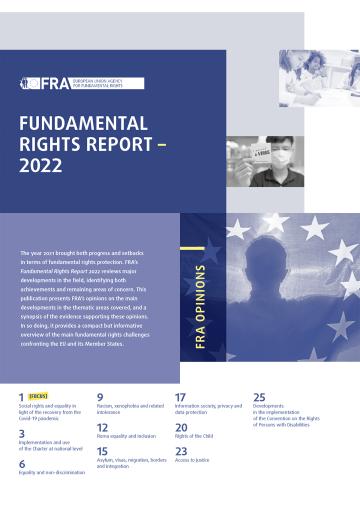
    Z hľadiska ochrany základných práv rok 2021 priniesol pokrok i určité nezdary. Publikácia agentúry FRA Správa o základných právach 2022 prináša prehľad najdôležitejších vývojových trendov, poukazuje na úspechy, ale aj na oblasti, ktoré ešte stále vyvolávajú obavy. V tejto publikácii sa nachádzajú stanoviská agentúry FRA k základným výsledkom vývoja v jednotlivých tematických oblastiach, ako aj súhrn dôkazov k týmto stanoviskám.
  • Report / Paper / Summary
    8
    March
    2021
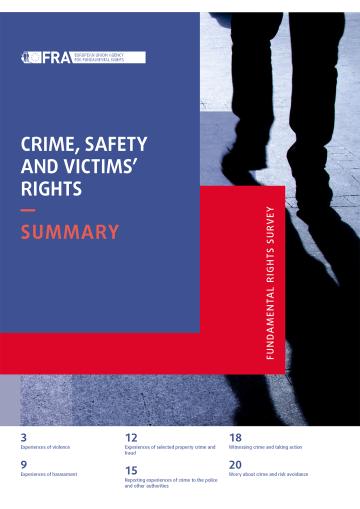
    V tomto zhrnutí sú uvedené hlavné poznatky
    z druhej správy agentúry FRA vychádzajúcej
    z prieskumu o základných právach, ktorý
    uskutočnila agentúra. V prieskume boli
    zhromaždené údaje približne od 35 000 osôb
    o skúsenostiach, vnímaní a názoroch týkajúcich sa
    celého radu záležitostí, ktoré sa rôznym spôsobom
    týkajú ľudských práv.
  • Periodic updates / Series
    21
    July
    2026
    This is the second bulletin in FRA’s new quarterly series monitoring the situation of migrants, asylum seekers and refugees. It covers key developments and ongoing concerns from 1 April to 30 June 2026.

    Following regular reporting on fundamental rights issues related to migration and asylum from 2015 to 2023, FRA resumed the series in 2026 under the EU's 2024 Asylum and Migration Management Regulation, ahead of the June 2026 implementation of the EU Migration and Asylum Pact. The first bulletin, published in April 2026, covered developments from 1 January 2025 to 31 March 2026.
  • Periodic updates / Series
    21
    April
    2026
    From 2015 to 2023, FRA regularly published bulletins on fundamental rights issues related to migration and asylum. As part of the EU's 2024 Asylum and Migration Management Regulation, FRA is now restarting this reporting ahead of the June 2026 implementation of the EU Migration and Asylum Pact. This first bulletin in the new series takes stock of the situation of migrants, asylum seekers and refugees as of March 2026. It looks at key developments between January 2025 and the end of March 2026, as well as ongoing problems and new areas of concern.
  • Report / Paper / Summary
    14
    April
    2026
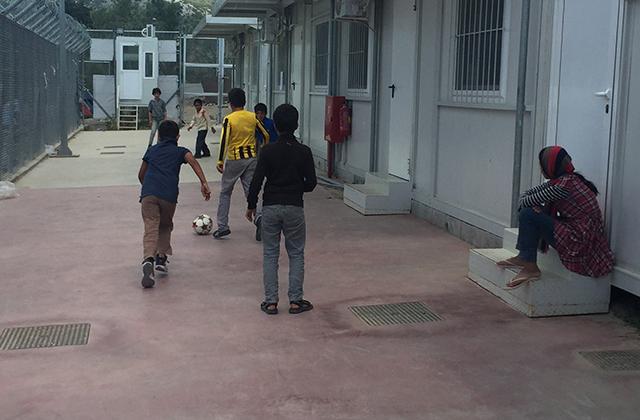
    In response to increased arrivals of asylum seekers, in 2015 the European Commission introduced the hotspot approach. Under this approach, the European Commission and EU agencies supported Greece and Italy in identifying, registering and fingerprinting newly arrived people. FRA regularly visited the initial reception facilities hosting them. This report looks back at the lessons learnt from 10 years of FRA visits. It identifies recurring risks to rights and highlights practical measures and promising practices to prevent or address them. These ‘lessons learnt’ can inform the implementation of the 2024 Pact on Migration and Asylum in line with the EU Charter of Fundamental Rights.
  • Report / Paper / Summary
    4
    December
    2025
    Artificial Intelligence comes with both benefits and risks. Safe AI use that accounts for fundamental rights is thus crucial. While the 2024 EU AI Act was a milestone in this regard, its broad definitions regarding AI systems and high-risk AI could introduce loopholes for fundamental rights compliance. This report offers an empirical basis for much-needed practical guidance on the Act’s implementation. Based on interviews with AI developers, sellers, and users, FRA addresses challenges of its use in critical domains, like asylum, education, and employment. Our findings help guide next steps in realising the AI Act’s potential to ensure responsible innovation.
  • Report / Paper / Summary
    27
    November
    2025
    This report looks at the breadth and depth of violence and neglect faced by people with disabilities living in institutions. It highlights the shortcomings by EU Member States in preventing violence and protecting those who are at a higher risk of experiencing it, in line with the UN Convention on the Rights of Persons with Disabilities. Based on research across all EU Member States and FRA observer candidate countries, the report calls for better protection, stronger prevention of violence, and clear accountability. It urges the EU and its Member States to implement their obligations around equality and fundamental rights.
  • In brief / Factsheet
    1
    September
    2025
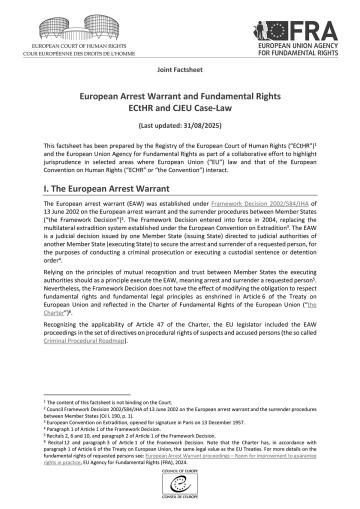
    This factsheet focuses on the European arrest warrant and EU Member States obligations to respect fundamental rights. EU law and the European Convention on Human Rights sometimes overlap. The publication clarifies where there are similar principles in different legislation and provides examples of case law. In collaboration, the EU Agency for Fundamental Rights and the European Court of Human Rights produced this short publication. It is designed to aid lawyers and policymakers in understanding and applying the jurisprudence in this area. The August 2025 version now contains recent case-law developments.
  • Opinion / Position Paper
    23
    July
    2025
    This position paper examines how the EU can counter the instrumentalisation of migrants while also upholding fundamental rights. Instrumentalisation refers to countries outside the EU using migration to exert political pressure. This position paper defines the phenomenon, provides examples, and outlines legal obligations under EU law. It provides legal analysis and warns that some responses risk undermining fundamental rights at the EU’s external borders, including the right to asylum. To counter instrumentalisation and uphold fundamental rights, the position paper proposes practical measures for Member States to take, such as sanctions, border controls, and cooperation with private operators.
  • In brief / Factsheet
    27
    May
    2025
    This factsheet focuses on the European arrest warrant and EU Member States obligations to respect fundamental rights. EU law and the European Convention on Human Rights sometimes overlap. The publication clarifies where there are similar principles in different legislation and provides examples of case law. In collaboration, the EU Agency for Fundamental Rights and the European Court of Human Rights produced this short publication. It is designed to aid lawyers and policymakers in understanding and applying the jurisprudence in this area. The 2025 version now contains recent case-law developments.