eu-charter

Listina Evropske unije o temeljnih pravicah

Člen 41 - Pravica do dobrega upravljanja

Člen 41 - Pravica do dobrega upravljanja

1. Vsakdo ima pravico, da institucije, organi, uradi in agencije Unije njegove zadeve obravnavajo nepristransko, pravično in v razumnem roku. 2. Ta pravica vključuje predvsem: (a) pravico vsake osebe, da se izjasni pred sprejetjem kakršnega koli posamičnega ukrepa, ki jo prizadene; (b) pravico vsake osebe do vpogleda v svoj spis ob spoštovanju legitimnih interesov zaupnosti ter poklicne in poslovne tajnosti; (c) obveznost uprave, da svoje odločitve obrazloži. 3. Vsakdo ima pravico, da mu Unija v skladu s splošnimi načeli, ki so skupna pravnim ureditvam držav članic, nadomesti kakršno koli škodo, ki so jo povzročile njene institucije ali njeni uslužbenci pri opravljanju svojih dolžnosti. 4. Vsakdo se lahko na institucije Unije obrne v enem od jezikov Pogodb in mora prejeti odgovor v istem jeziku.

Pojasnila

  • Text:

    Člen 41 temelji na obstoju Unije kot skupnosti prava, katere značilnosti so se razvile v okviru sodne prakse, ki je med drugim utemeljila dobro upravljanje kot splošno pravno načelo (glej med drugim sodbo Sodišča z dne 31. marca 1992 v zadevi Burban proti Evropskemu parlamentu, C-255/90 P, rec. 1992, str. I-2253 ter sodbi Sodišča prve stopnje z dne 18. septembra 1995 v zadevi Nölle proti Svetu in Komisiji, T-167/94, rec. 1995, str. II-2589 in z dne 9. julija 1999 v zadevi New Europe Consulting in drugi proti Komisiji, T-231/97, rec. 1999, str. II-2403). Besedilo navedene pravice v odstavkih 1 in 2 izhaja iz sodne prakse (sodbe Sodišča z dne 15. oktobra 1987 v zadevi Heylens, 222/86, rec. 1987, str. 4097, točka 15, z dne 18. oktobra 1989 v zadevi Orkem proti Komisiji, 374/87, rec. 1989, str. 3283 in z dne 21. novembra 1991 v zadevi TU München, C-269/90, rec. 1991, str. I-5469 ter sodbi Sodišča prve stopnje z dne 6. decembra 1994 v zadevi Lisrestal in drugi proti Komisiji, T-450/93, rec. 1994, str. II-1177 in z dne 18. septembra 1995 v prej omenjeni zadevi Nölle) in besedilo glede obveznosti navedbe razlogov izhaja iz člena 296 Pogodbe o delovanju Evropske unije (primerjaj tudi pravno podlago v členu 298 Pogodbe o delovanju Evropske unije za sprejetje zakonodajnih aktov za odprto, učinkovito in neodvisno evropsko upravo).

    Odstavek 3 povzema pravico, ki je sedaj zagotovljena s členom 340 Pogodbe o delovanju Evropske unije. Odstavek 4 povzema pravico, ki je sedaj zagotovljena s členom 20(2)(d) in členom 25 Pogodbe o delovanju Evropske unije. V skladu s členom 52(2) je treba navedene pravice uporabljati pod pogoji in v mejah, določenih v pogodbah.

    Pravica do učinkovitega pravnega sredstva, ki je pomemben vidik tega vprašanja, je zagotovljena s členom 47 te listine.

    Source:
    Uradni list Evropske unije C 303/17 - 14.12.2007
    Preamble - Explanations relating to the Charter of Fundamental Rights:
    V nadaljevanju navedena pojasnila so bila prvotno pripravljena pod vodstvom predsedstva Konvencije, ki je sestavilo Listino Evropske unije o temeljnih pravicah. Ta pojasnila so bila posodobljena pod vodstvom predsedstva Evropske konvencije zaradi prilagoditve besedila Listine s strani omenjene konvencije (zlasti členov 51 in 52) in nadaljnjega razvoja prava Unije. Čeprav sama nimajo pravne veljave, so dragocena pomoč pri razlagi in pojasnjevanju določb Listine.

Sodna praksa

Nacionalnem ustavnem pravu

28 results found

  • Slovakia / Constitution of the Slovak Republic
    Država:
    Slovakia

    Article 26 (...) (5) Public authority bodies are obliged to provide information on their activities in an appropriate manner and in the State language. The conditions and manner of execution shall be laid down by law.

    Article 46 (...) (2) Anyone who claims to have been deprived of his rights by a decision of a public administration body may turn to the court to have the lawfulness of such decision reexamined, unless laid down by law otherwise. The reexamination of decisions concerning basic rights and freedoms may not, however, be excluded from the court's authority. (3) Everyone is entitled to compensation for damage incurred as a result of an unlawful decision by a court, or another state or public administration body, or as a result of an incorrect official procedure.(4) Conditions and details concerning judicial and other legal protection shall be laid down by law.

  • Slovenija / Ustava Republike Slovenije
    Država:
    Slovenija

    22. člen (enako varstvo pravic) Vsakomur je zagotovljeno enako varstvo njegovih pravic v postopku pred sodiščem in pred drugimi državnimi organi, organi lokalnih skupnosti in nosilci javnih pooblastil, ki odločajo o njegovih pravicah, dolžnostih ali pravnih interesih.

    26. člen (pravica do povračila škode) Vsakdo ima pravico do povračila škode, ki mu jo v zvezi z opravljanjem službe ali kakšne druge dejavnosti državnega organa, organa lokalne skupnosti ali nosilca javnih pooblastil s svojim protipravnim ravnanjem stori oseba ali organ, ki tako službo ali dejavnost opravlja. Oškodovanec ima pravico, da v skladu z zakonom zahteva povračilo tudi neposredno od tistega, ki mu je škodo povzročil.

    39. člen (svoboda izražanja) Zagotovljena je svoboda izražanja misli, govora in javnega nastopanja, tiska in drugih oblik javnega obveščanja in izražanja. Vsakdo lahko svobodno zbira, sprejema in širi vesti in mnenja. Vsakdo ima pravico dobiti informacijo javnega značaja, za katero ima v zakonu utemeljen pravni interes, razen v primerih, ki jih določa zakon.

    40. člen (pravica do popravka in odgovora) Zagotovljena je pravica do popravka objavljenega obvestila, s katerim sta prizadeta pravica ali interes posameznika, organizacije ali organa, in prav tako je zagotov­ljena pravica do odgovora na objavljeno informacijo.

  • Suomen perustuslaki
    Država:
    Finland

    17 § Oikeus omaan kieleen ja kulttuuriin (...) Jokaisen oikeus käyttää tuomioistuimessa ja muussa viranomaisessa asiassaan omaa kieltään, joko suomea tai ruotsia, sekä saada toimituskirjansa tällä kielellä turvataan lailla. (...) Saamelaisten oikeudesta käyttää saamen kieltä viranomaisessa säädetään lailla. Viittomakieltä käyttävien sekä vammaisuuden vuoksi tulkitsemis- ja käännösapua tarvitsevien oikeudet turvataan lailla. 21 § Oikeusturva Jokaisella on oikeus saada asiansa käsitellyksi asianmukaisesti ja ilman aiheetonta viivytystä lain mukaan toimivaltaisessa tuomioistuimessa tai muussa viranomaisessa sekä oikeus saada oikeuksiaan ja velvollisuuksiaan koskeva päätös tuomioistuimen tai muun riippumattoman lainkäyttöelimen käsiteltäväksi. Käsittelyn julkisuus sekä oikeus tulla kuulluksi, saada perusteltu päätös ja hakea muutosta samoin kuin muut oikeudenmukaisen oikeudenkäynnin ja hyvän hallinnon takeet turvataan lailla.

  • The Constitution of the Republic of Cyprus
    Država:
    Cyprus

    Article 29
    1. Every person has the right individually or jointly with others to address written requests or complaints to any competent public authority and to have them attended to and decided expeditiously; an immediate notice of any such decision taken duly reasoned shall be given to the person making the request or complaint and in any event within a period not exceeding thirty days.
    2. Where any interested person is aggrieved by any such decision or where no such decision is notified to such person within the period specified in paragraph 1 of this Article, such person may have recourse to a competent court in the matter of such request or complaint.

  • The Fundamental Law of Hungary
    Država:
    Hungary

    Article XXIV (Freedom and Responsibility)
    (1) Everyone shall have the right to have his or her affairs handled impartially, fairly and within a reasonable time by the authorities. Authorities shall be obliged to give the reasons for their decisions, as provided for by an Act.
    (2) Everyone shall have the right to compensation for any damage unlawfully caused to him or her by the authorities in the performance of their duties, as provided for by an Act.

    Article XXV (Freedom and Responsibility)
    Everyone shall have the right to submit, either individually or jointly with others, written applications, complaints or proposals to any organ exercising public power.

  • Tο Σύνταγμα της Κυπριακής Δημοκρατίας
    Država:
    Cyprus

    ΑΡΘΡΟΝ 29
    1. Έκαστος έχει το δικαίωμα ατομικώς ή ομού μετ’ άλλων να υποβάλλη εγγράφους αιτήσεις ή παράπονα προς οιανδήποτε αρμοδίαν δημοσίαν αρχήν δικαιούμενος ν’ απαιτήση, όπως αύτη επιληφθή αυτών και αποφασίση ταχέως. Η απόφασις της αρχής ταύτης, δεόντως ητιολογημένη, γνωστοποιείται εγγράφως αμέσως εις τον υποβαλόντα την αίτησιν ή τα παράπονα εν πάση περιπτώσει ενός προθεσμίας μη υπερβαινούσης τας τριάκοντα ημέρας.
    2. Εφ’ όσον ο ενδιαφερόμενος δεν ικανοποιείται εκ της αποφάσεως ή οσάκις ουδεμία απόφασις γνωστοποιήται προς αυτόν εντός της καθοριζομένης εν τη πρώτη παραγράφω του παρόντος άρθρου προθεσμίας δύναται ο ενδιαφερόμενος ν’ αγάγη ενώπιον αρμοδίου δικαστηρίου διά προσφυγής την υπόθεσιν, εις ην αφορά η αίτησις ή το παράπονον αυτού.

  • Ustav Republike Hrvatske
    Država:
    Croatia

    Članak 46.
    Svatko ima pravo slati predstavke i pritužbe, davati prijedloge državnim i drugim javnim tijelima i dobiti na njih odgovor.

    Članak 93.
    (2)Svatko može podnijeti pritužbu pučkom pravobranitelju ako smatra da su, uslijed nezakonitog ili nepravilnog rada državnih tijela, tijela lokalne i područne (regionalne) samouprave i tijela s javnim ovlastima, ugrožena ili povrijeđena njegova ustavna ili zakonska prava.

    Članak 146.
    Državljani Republike Hrvatske su građani Europske unije i uživaju prava koja im jamči pravna stečevina Europske unije, a osobito:
    (...)
    – pravo podnošenja peticija Europskom parlamentu, predstavki Europskom ombudsmanu te pravo obraćanja institucijama i savjetodavnim tijelima Europske unije na hrvatskom jeziku, kao i na svim službenim jezicima Europske unije, te pravo dobiti odgovor na istom jeziku.
    Sva prava ostvaruju se u skladu s uvjetima i ograničenjima propisanima ugovorima na kojima se temelji Europska unija te mjerama prihvaćenima na temelju tih ugovora.
    U Republici Hrvatskoj sva prava zajamčena pravnom stečevinom Europske unije uživaju svi građani Europske unije.

  • КОНСТИТУЦИЯ на Република България
    Država:
    Bulgaria

    Чл. 7. Държавата отговаря за вреди, причинени от незаконни актове или действия на нейни органи и длъжностни лица.

Pravo EU

11 results found

  • Directive 2013/32/EU of the European Parliament and of the Council of 26 June 2013 on common procedures for granting and withdrawing international protection (recast)

    Preamble 
    (33) The best interests of the child should be a primary consideration of Member States when applying this Directive, in accordance with the Charter of Fundamental Rights of the European Union (the Charter) and the 1989 United Nations Convention on the Rights of the Child. In assessing the best interest of the child, Member States should in particular take due account of the minor’s well-being and social development, including his or her background.

    (39) In determining whether a situation of uncertainty prevails in the country of origin of an applicant, Member States should ensure that they obtain precise and up-to-date information from relevant sources such as EASO, UNHCR, the Council of Europe and other relevant international organisations. Member States should ensure that any postponement of conclusion of the procedure fully complies with their obligations under Directive 2011/95/EU and Article 41 of the Charter, without prejudice to the efficiency and fairness of the procedures under this Directive.


    (60) This Directive respects the fundamental rights and observes the principles recognised by the Charter. In particular, this Directive seeks to ensure full respect for human dignity and to promote the application of Articles 1, 4, 18, 19, 21, 23, 24, and 47 of the Charter and has to be implemented accordingly.

    Article 13: Obligations of the applicants

    1. Member States shall impose upon applicants the obligation to cooperate with the competent authorities with a view to establishing their identity and other elements referred to in Article 4(2) of Directive 2011/95/EU. Member States may impose upon applicants other obligations to cooperate with the competent authorities insofar as such obligations are necessary for the processing of the application.

    2. In particular, Member States may provide that:

    (a) applicants are required to report to the competent authorities or to appear before them in person, either without delay or at a specified time;

    (b) applicants have to hand over documents in their possession relevant to the examination of the application, such as their passports;

    (c) applicants are required to inform the competent authorities of their current place of residence or address and of any changes thereof as soon as possible. Member States may provide that the applicant shall have to accept any communication at the most recent place of residence or address which he or she indicated accordingly;

    (d) the competent authorities may search the applicant and the items which he or she is carrying. Without prejudice to any search carried out for security reasons, a search of the applicant’s person under this Directive shall be carried out by a person of the same sex with full respect for the principles of human dignity and of physical and psychological integrity;

    (e) the competent authorities may take a photograph of the applicant; and

    (f) the competent authorities may record the applicant’s oral statements, provided he or she has previously been informed thereof.

    ...

    Article 30: Collection of information on individual cases

    For the purposes of examining individual cases, Member States shall not:

    (a) disclose information regarding individual applications for international protection, or the fact that an application has been made, to the alleged actor(s) of persecution or serious harm;

    (b) obtain any information from the alleged actor(s) of persecution or serious harm in a manner that would result in such actor(s) being directly informed of the fact that an application has been made by the applicant in question, and would jeopardise the physical integrity of the applicant or his or her dependants, or the liberty and security of his or her family members still living in the country of origin.

    ...

    Article 45: Procedural rules

    1. Member States shall ensure that, where the competent authority is considering withdrawing international protection from a third-country national or stateless person in accordance with Article 14 or 19 of Directive 2011/95/EU, the person concerned enjoys the following guarantees:

    (a) to be informed in writing that the competent authority is reconsidering his or her qualification as a beneficiary of international protection and the reasons for such a reconsideration; and

    (b) to be given the opportunity to submit, in a personal interview in accordance with Article 12(1)(b) and Articles 14 to 17 or in a written statement, reasons as to why his or her international protection should not be withdrawn.

    2. In addition, Member States shall ensure that within the framework of the procedure set out in paragraph 1:

    (a) the competent authority is able to obtain precise and up-to-date information from various sources, such as, where appropriate, from EASO and UNHCR, as to the general situation prevailing in the countries of origin of the persons concerned; and

    (b) where information on an individual case is collected for the purposes of reconsidering international protection, it is not obtained from the actor(s) of persecution or serious harm in a manner that would result in such actor(s) being directly informed of the fact that the person concerned is a beneficiary of international protection whose status is under reconsideration, or jeopardise the physical integrity of the person or his or her dependants, or the liberty and security of his or her family members still living in the country of origin.

    3. Member States shall ensure that the decision of the competent authority to withdraw international protection is given in writing. The reasons in fact and in law shall be stated in the decision and information on how to challenge the decision shall be given in writing.

    4. Once the competent authority has taken the decision to withdraw international protection, Article 20, Article 22, Article 23(1) and Article 29 are equally applicable.

    5. By way of derogation from paragraphs 1 to 4 of this Article, Member States may decide that international protection shall lapse by law where the beneficiary of international protection has unequivocally renounced his or her recognition as such. A Member State may also provide that international protection shall lapse by law where the beneficiary of international protection has become a national of that Member State. 

  • Cross-reference to Article 47 of the Charter of Fundamental Rights

    Article 47

    Right to an effective remedy and to a fair trial

    Everyone whose rights and freedoms guaranteed by the law of the Union are violated has the right to an effective remedy before a tribunal in compliance with the conditions laid down in this Article.

    Everyone is entitled to a fair and public hearing within a reasonable time by an independent and impartial tribunal previously established by law. Everyone shall have the possibility of being advised, defended and represented.

    Legal aid shall be made available to those who lack sufficient resources in so far as such aid is necessary to ensure effective access to justice.

  • Treaty on the Functioning of the European Union

    Article 340

    (ex Article 288 TEC)

    The contractual liability of the Union shall be governed by the law applicable to the contract in question.

    In the of non-contractual liability, the Union shall, in accordance with the general principles common to the laws of the Member States, make good any damage caused by its institutions or by its servants in the performance of their duties.

    Notwithstanding the second paragraph, the European Central Bank shall, in accordance with the general principles common to the laws of the Member States, make good any damage caused by it or by its servants in the performance of their duties.

    The personal liability of its servants towards the Union shall be governed by the provisions laid down in their Staff Regulations or in the Conditions of Employment applicable to them.

  • Treaty on the Functioning of the European Union

    Article 298

    1. In carrying out their missions, the institutions, bodies, offices and agencies of the Union shall have the support of an open, efficient and independent European administration.

    2. In compliance with the Staff Regulations and the Conditions of Employment adopted on the basis of Article 336, the European Parliament and the Council, acting by means of regulations in accordance with the ordinary legislative procedure, shall establish provisions to that end.

  • Treaty on the Functioning of the European Union

    Article 296

    (ex Article 253 TEC)

    Where the Treaties do not specify the type of act to be adopted, the institutions shall select it on a case-by-basis, in compliance with the applicable procedures and with the principle of proportionality.

    Legal acts shall state the reasons on which they are based and shall refer to any proposals, initiatives, recommendations, requests or opinions required by the Treaties.

    When considering draft legislative acts, the European Parliament and the Council shall refrain from adopting acts not provided for by the relevant legislative procedure in the area in question.

  • Treaty on the Functioning of the European Union

    Article 25

    (ex Article 22 TEC)

    The Commission shall report to the European Parliament, to the Council and to the Economic and Social Committee every three years on the application of the provisions of this Part. This report shall take account of the development of the Union.

    On this basis, and without prejudice to the other provisions of the Treaties, the Council, acting unanimously in accordance with a special legislative procedure and after obtaining the consent of the European Parliament, may adopt provisions to strengthen or to add to the rights listed in Article 20(2). These provisions shall enter into force after their approval by the Member States in accordance with their respective constitutional requirements.

  • Treaty on the Functioning of the European Union

    Article 20

    (ex Article 17 TEC)

    2. Citizens of the Union shall enjoy the rights and be subject to the duties provided for in the Treaties. They shall have, inter alia:

    (d) the right to petition the European Parliament, to apply to the European Ombudsman, and to address the institutions and advisory bodies of the Union in any of the Treaty languages and to obtain a reply in the same language.

    These rights shall be exercised in accordance with the conditions and limits defined by the Treaties and by the measures adopted thereunder.

  • Council of Europe Convention on Access to Official Documents

    .

  • Directive (EU) 2019/1024 of the European Parliament and of the Council of 20 June 2019 on open data and the re-use of public sector information

    .

  • Directive (EU) 2017/1371 of the European Parliament and of the Council of 5 July 2017 on the fight against fraud to the Union's financial interests by means of criminal law

    Article 1 - Subject matter
    ‘This Directive establishes minimum rules concerning the definition of criminal offences and sanctions with regard to combatting fraud and other illegal activities affecting the Union's financial interests, with a view to strengthening protection against criminal offences which affect those financial interests, in line with the acquis of the Union in this field.‘
    Article 3 - Fraud affecting the Union's financial interests
    ‘1. Member States shall take the necessary measures to ensure that fraud affecting the Union's financial interests constitutes a criminal offence when committed intentionally.
    2. For the purposes of this Directive, the following shall be regarded as fraud affecting the Union's financial interests:
    (a) in respect of non-procurement-related expenditure, any act or omission relating to:
    (i) the use or presentation of false, incorrect or incomplete statements or documents, which has as its effect the misappropriation or wrongful retention of funds or assets from the Union budget or budgets managed by the Union, or on its behalf;
    (ii) non-disclosure of information in violation of a specific obligation, with the same effect; or
    (iii) the misapplication of such funds or assets for purposes other than those for which they were originally granted;
    (b) in respect of procurement-related expenditure, at least when committed in order to make an unlawful gain for the perpetrator or another by causing a loss to the Union's financial interests, any act or omission relating to:
    (i) the use or presentation of false, incorrect or incomplete statements or documents, which has as its effect the misappropriation or wrongful retention of funds or assets from the Union budget or budgets managed by the Union, or on its behalf;
    (ii) non-disclosure of information in violation of a specific obligation, with the same effect; or
    (iii) the misapplication of such funds or assets for purposes other than those for which they were originally granted, which damages the Union's financial interests;
    (c) in respect of revenue other than revenue arising from VAT own resources referred to in point (d), any act or omission relating to:
    (i) the use or presentation of false, incorrect or incomplete statements or documents, which has as its effect the illegal diminution of the resources of the Union budget or budgets managed by the Union, or on its behalf;
    (ii) non-disclosure of information in violation of a specific obligation, with the same effect; or
    (iii) misapplication of a legally obtained benefit, with the same effect;
    (d) in respect of revenue arising from VAT own resources, any act or omission committed in cross-border fraudulent schemes in relation to:
    (i) the use or presentation of false, incorrect or incomplete VAT-related statements or documents, which has as an effect the diminution of the resources of the Union budget;
    (ii) non-disclosure of VAT-related information in violation of a specific obligation, with the same effect; or
    (iii) the presentation of correct VAT-related statements for the purposes of fraudulently disguising the non-payment or wrongful creation of rights to VAT refunds.‘

Mednarodno pravo

6 results found

Gradivo

  • Report / Paper / Summary
    4
    December
    2025
    Artificial Intelligence comes with both benefits and risks. Safe AI use that accounts for fundamental rights is thus crucial. While the 2024 EU AI Act was a milestone in this regard, its broad definitions regarding AI systems and high-risk AI could introduce loopholes for fundamental rights compliance. This report offers an empirical basis for much-needed practical guidance on the Act’s implementation. Based on interviews with AI developers, sellers, and users, FRA addresses challenges of its use in critical domains, like asylum, education, and employment. Our findings help guide next steps in realising the AI Act’s potential to ensure responsible innovation.
  • Report / Paper / Summary
    27
    November
    2025
    This report looks at the breadth and depth of violence and neglect faced by people with disabilities living in institutions. It highlights the shortcomings by EU Member States in preventing violence and protecting those who are at a higher risk of experiencing it, in line with the UN Convention on the Rights of Persons with Disabilities. Based on research across all EU Member States and FRA observer candidate countries, the report calls for better protection, stronger prevention of violence, and clear accountability. It urges the EU and its Member States to implement their obligations around equality and fundamental rights.
  • Fundamental Rights Report
    10
    June
    2025
    The Fundamental Rights Report 2025 is the annual report of the European Union Agency for Fundamental Rights (FRA). It provides an overview of the state of fundamental rights in the EU and highlights selected critical developments and trends in 2024. The report covers issues such as inclusive elections, gender-based violence, and the implementation of the EU Charter of Fundamental Rights. It presents FRA’s opinions on these developments, setting out the actions that the EU and Member States should take. This annual publication is a valuable resource for those seeking to stay informed about the EU’s shifting landscape of fundamental rights.
  • Handbook / Guide / Manual
    19
    September
    2024
    This publication guides EU countries on setting up independent monitoring mechanisms to ensure fundamental rights are respected during screening and asylum border procedures. These processes at borders are for people arriving from non-EU countries. Monitoring mechanisms are meant to prevent rights violations, protect victims, and support investigations into any allegations of wrongdoing by public authorities. The guidance highlights the importance of transparency and accountability, which builds trust in public authorities. New EU regulations coming into effect in 2026 will require such monitoring systems to be in place. This updates the guidance published in 2022.
  • Fundamental Rights Report
    5
    June
    2024
    FRA’s Fundamental Rights Report 2024 analyses the year’s developments in fundamental rights. It focuses on the most pressing fundamental rights concerns facing Europe in 2023: the cost-of-living crisis, rights concerns at the EU’s external borders and migration, and threats to democracy. Re-structured, this year’s new approach is a shorter and sharper analysis. It also presents FRA’s opinions on these developments, including a summary of the evidence supporting these opinions.
  • Report / Paper / Summary
    29
    May
    2024
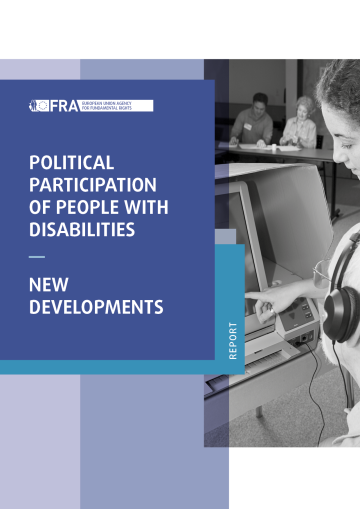
    Ahead of the EU elections, this report explores the political participation of people with disabilities. Although some Member States removed restrictions on the right to vote and to stand for elections, barriers still exist. This report is an update of new developments following FRA’s last report published in 2014. It sets out ways forward to ensure people with disabilities have equal opportunities, in line with the EU Charter of Fundamental Rights and the Convention on the Rights of Persons with Disabilities.
    Lisa F. Young/Adobe Stock
  • Report / Paper / Summary
    13
    September
    2023
    Europe’s ageing population is ever-increasing, and our societies are becoming more digitalised. Many public services are now available online, with many more services in the process of being digitalised. But the digitalisation of public services poses a risk of exclusion for older persons. In this new report, FRA explores the impact of digitalisation on the fundamental rights of older persons. The report maps the current legislation, policies and practices fostering digital inclusion. It provides an overview of the laws at the national level that provide for equal access to public services, both online and offline. The findings show how Member States safeguard older person’s rights to access services undergoing digitalisation. It outlines how Member States can support digital skills and ensure older people can fully participate in public life.

  • Report / Paper / Summary
    6
    September
    2023
    Integration and social inclusion are important aspects of EU migration and asylum policy. The fundamental rights of long-term residents in the EU are explored through this report, focussing on the Long-Term Residence Directive. EU long-term resident status includes rights to move and reside in other EU Member States. This report examines the reasons behind the low uptake of EU long-term resident permits, despite them typically giving more rights than national long-term resident permits.
  • Fundamental Rights Report
    8
    June
    2023
    FRA’s Fundamental Rights Report 2023 reviews major developments in the field in 2022, identifying both achievements and areas of concern. It also presents FRA’s opinions on these developments, including a synopsis of the evidence supporting these opinions.
  • Handbook / Guide / Manual
    14
    October
    2022
    ** As of 19 September 2024 a new version of this guidance has been issued. Please see the link below. **

    Fundamental rights monitoring at EU external borders should be systematically and regularly carried out for a range of border management activities. These include border surveillance, apprehensions at land, sea and air borders, and the operation of referral mechanisms, including in the event of mass arrivals. This general guidance provides assistance to EU Member States in setting up national independent mechanisms to monitor fundamental rights compliance at EU external borders, in line with the proposed screening regulation of 23 September 2020 by the European Commission. The EU Agency for Fundamental Rights prepared this guidance at the request of the Commission.