O Parecer 1/2021 da FRA ilustra o grau e a natureza de experiências vividas de desigualdade e discriminação na UE. Fá-lo com referência aos motivos de discriminação e domínios da vida abrangidos pelas Diretivas Igualdade Racial e Igualdade no Emprego, bem como pela proposta de Diretiva Igualdade de Tratamento. Foi publicado em 30 de abril de 2021. A presente síntese apresenta as principais recomendações («Principais conclusões e posições») enunciadas no Parecer 1/2021 da FRA.
Avizul nr. 1/2021 al Agenției pentru Drepturi Fundamentale a Uniunii Europene (FRA) ilustrează amploarea și natura experiențelor de inegalitate și discriminare trăite pe teritoriul UE. Acesta se raportează la motivele de discriminare și la aspectele de viață vizate de directivele privind egalitatea rasială și egalitatea de tratament, precum și de propunerea de directivă privind egalitatea de tratament. Avizul a fost emis la 30 aprilie 2021. Sinteza prezintă principalele recomandări („Principalele constatări și opinii”) evidențiate în Avizul nr. 1/2021 al FRA.
V stanovisku FRA 1/21 je vyjadrený rozsah a povaha skúseností s nerovnosťou a diskrimináciou zažitých v celej EÚ. Uvádzajú sa v ňom dôvody diskriminácie a oblasti života, na ktoré sa vzťahuje smernica o rasovej rovnosti a smernica o rovnakom zaobchádzaní v zamestnaní, ako aj navrhovaná smernica o rovnakom zaobchádzaní. Bolo vydané 30. apríla 2021. V tomto súhrne sa uvádzajú hlavné odporúčania („kľúčové zistenia a stanoviská“) uvedené v stanovisku agentúry FRA 1/21.
V Mnenju agencije FRA 1/2021 sta predstavljena obseg in narava doživetih izkušenj neenakosti ter diskriminacije po vsej EU. Pri tem se sklicuje na razloge za diskriminacijo in področja življenja, ki so obravnavani v direktivah o rasni enakosti in enakosti pri zaposlovanju, pa tudi v predlagani direktivi o enakem obravnavanju. Mnenje je bilo izdano 30. aprila 2021. V tem povzetku so predstavljena glavna priporočila („Ključne ugotovitve in mnenja“) iz Mnenja agencije FRA 1/2021.
This report examines the EU’s main criminal law instrument in the field of counter-terrorism, Directive (EU) 2017/541. Specifically, it considers how the directive engages issues of fundamental rights, affecting individuals, groups and society as a whole.
Antisemitic incidents and hate crimes violate fundamental rights, especially the right to human dignity, the right to equality of treatment, and the freedom of thought, conscience and religion. This report provides an overview of available data on antisemitism as recorded by official and unofficial sources in the EU Member States as well as Albania, North Macedonia and Serbia. The data provided by the countries are supplemented with information from international organisations.
This report proposes a framework for becoming, and functioning as, a ‘human rights city’ in the EU. It includes ‘foundations’, ‘structures’ and ‘tools’ for mayors, local administrations and grassroots organisations to reinforce fundamental rights locally. It is based on existing good practice and expert input by representatives of human rights cities in the EU, academic experts, international organisations and city networks.
The EU Agency for Fundamental Rights has been regularly collecting data on asylum and migration since September 2015. This report focuses on the fundamental rights situation of people arriving in Member States and EU candidate countries particularly affected by migration. It addresses fundamental rights concerns between 1 January and 30 June 2021.
Civil society organisations play a vital role in promoting fundamental rights, but they face diverse challenges across the European Union. This report presents FRA’s findings on a range of such challenges. The findings are based on research, and on two online consultations with civil society organisations, carried out in 2020.
Τα εγκλήματα μίσους που υποκινούνται από τον ρατσισμό, την ξενοφοβία, τη θρησκευτική μισαλλοδοξία ή την αναπηρία ενός ατόμου, τον γενετήσιο προσανατολισμό, την ταυτότητα φύλου, την έκφραση φύλου και τα χαρακτηριστικά του φύλου αποτελούν σοβαρές εκφράσεις διακρίσεων. Εκτός από την παραβίαση των δικαιωμάτων των μεμονωμένων θυμάτων, ένα τέτοιο έγκλημα αποδυναμώνει την κοινωνική συνοχή και βλάπτει το κοινωνικό σύνολο.
This report examines why victims do not report bias-motivated incidents and the barriers that they face when reporting incidents through national crime reporting systems. By mapping existing practices that have a bearing on the victim’s experiences when reporting bias-motivated violence and harassment, it aims to provide evidence to support national efforts to encourage and facilitate reporting – and ultimately assist Member States in delivering on their duties with regard to combating hate crime.
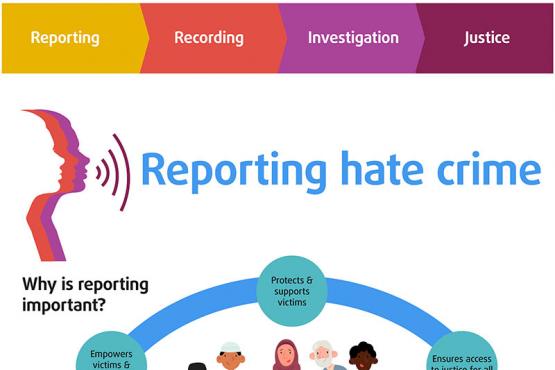
Drawing on the ‘Encouraging hate crime reporting: the role of law enforcement and other authorities' report, in this infographic FRA outlines why reporting is so important and what must change to encourage hate crime reporting.
The Consolidated annual activity report 2020 provides an overview of the activities and achievements of the European Union Agency for Fundamental Rights (FRA) in that year. It follows the guidelines established by the European Commission.
The Employers Sanctions Directive was primarily enacted to dissuade employers from recruiting migrants in an irregular situation, but it also contains provisions to protect workers. It facilitates access to justice for exploited workers and sets out workers’ rights to claim back payment of outstanding wages. The directive also contains provisions to enhance the effectiveness of labour inspections. This report describes how the 25 Member States bound by the directive have been implementing its protective provisions, focusing on the impact these provisions have on migrant workers in an irregular situation who are victims of exploitation and other labour
law violations.
През 2020 г. отбелязахме както напредък,
така и неуспехи по отношение на защитата на
основните права. В Доклада относно основните
права (2021 г.) на FRA е извършен преглед на
важните развития в областта, като са посочени
както постиженията, така и областите, които
все още пораждат.
Rok 2020 přinesl v oblasti ochrany základních práv
pokrok i nezdary. Zpráva o základních právech
2021 agentury FRA přináší přehled hlavního vývoje
v této oblasti a upozorňuje jak na úspěchy, tak na
oblasti, které i nadále vzbuzují obavy.
I 2020 skete der både fremskridt og tilbageskridt
i beskyttelsen af de grundlæggende rettigheder.
FRA’s rapport om grundlæggende rettigheder 2021
gennemgår de vigtigste udviklinger på området,
og fastslår både, hvad der er opnået, og hvilke
områder der fortsat volder bekymring.
Το 2020 σημειώθηκε πρόοδος αλλά και
οπισθοδρόμηση στην προστασία των θεμελιωδών
δικαιωμάτων. Στην Έκθεση για τα Θεμελιώδη
Δικαιώματα 2021 του FRA εξετάζονται οι
σημαντικότερες εξελίξεις στον τομέα και
προσδιορίζονται τόσο τα επιτεύγματα, όσο και
τα ζητήματα που εξακολουθούν να προκαλούν
ανησυχία.
The year 2020 brought both progress and setbacks in terms of fundamental rights protection. FRA’s Fundamental Rights Report 2021 reviews major developments in the field, identifying both achievements and remaining areas of concern. This publication presents FRA’s opinions on the main developments in the thematic areas covered, and a synopsis of the evidence supporting these opinions.
En el año 2020 se produjeron tanto avances como
retrocesos en materia de protección de los derechos
fundamentales. El Informe sobre los derechos
fundamentales 2021 de la Agencia de los Derechos
Fundamentales de la Unión Europea (FRA) analiza
los principales acontecimientos en este ámbito,
destacando tanto los progresos realizados como las
dificultades que todavía persisten.