V stanovisku FRA 1/21 je vyjadrený rozsah a povaha skúseností s nerovnosťou a diskrimináciou zažitých v celej EÚ. Uvádzajú sa v ňom dôvody diskriminácie a oblasti života, na ktoré sa vzťahuje smernica o rasovej rovnosti a smernica o rovnakom zaobchádzaní v zamestnaní, ako aj navrhovaná smernica o rovnakom zaobchádzaní. Bolo vydané 30. apríla 2021. V tomto súhrne sa uvádzajú hlavné odporúčania („kľúčové zistenia a stanoviská“) uvedené v stanovisku agentúry FRA 1/21.
This report examines the EU’s main criminal law instrument in the field of counter-terrorism, Directive (EU) 2017/541. Specifically, it considers how the directive engages issues of fundamental rights, affecting individuals, groups and society as a whole.
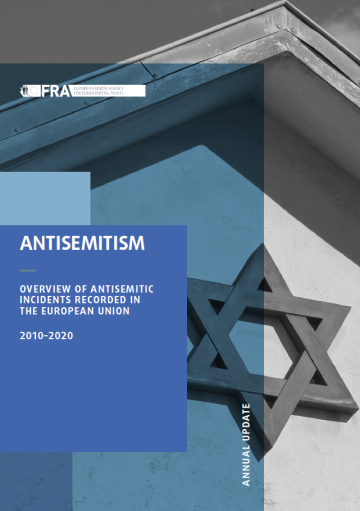
Antisemitic incidents and hate crimes violate fundamental rights, especially the right to human dignity, the right to equality of treatment, and the freedom of thought, conscience and religion. This report provides an overview of available data on antisemitism as recorded by official and unofficial sources in the EU Member States as well as Albania, North Macedonia and Serbia. The data provided by the countries are supplemented with information from international organisations.
This report outlines to what extent legal aid is available to those held in pre-removal detention in the 27 EU Member States, and in North Macedonia and Serbia, during procedures related to their return. These involve decisions on return, on detention pending removal, the removal itself and on bans on entry. The report also examines when people are entitled to free legal aid and how this aid is funded, as well as who provides representation and various factors that limit the scope of legal aid.
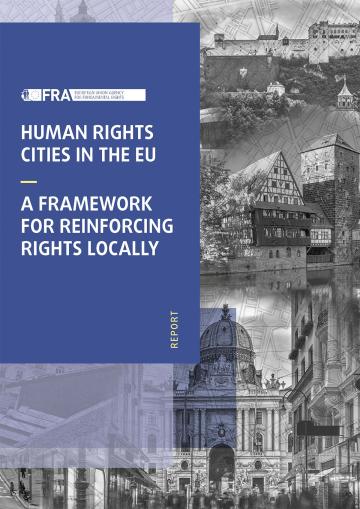
This report proposes a framework for becoming, and functioning as, a ‘human rights city’ in the EU. It includes ‘foundations’, ‘structures’ and ‘tools’ for mayors, local administrations and grassroots organisations to reinforce fundamental rights locally. It is based on existing good practice and expert input by representatives of human rights cities in the EU, academic experts, international organisations and city networks.
Since September 2020, three National Human Rights Institutions (NHRIs) had a change in their accreditation status, two new institutions were created and nine have had a change in tasks covered by their mandates. Following up on the September 2020 report “Strong and effective national human rights institutions – challenges, promising practices and opportunities”, this update provides an overview of developments in the accreditation status and mandates of NHRIS in the past 12 months. The update covers the 27 EU Member States as well as three additional states within FRA’s mandate (Albania, North Macedonia and Serbia).
The EU Agency for Fundamental Rights has been regularly collecting data on asylum and migration since September 2015. This report focuses on the fundamental rights situation of people arriving in Member States and EU candidate countries particularly affected by migration. It addresses fundamental rights concerns between 1 January and 30 June 2021.
In this vlog, FRA Director Michael O’Flaherty points to the urgent need to tackle disinformation. He provides examples of what can be done to combat disinformation, including what the EU Agency for Fundamental Rights could contribute to this challenge.
Τα εγκλήματα μίσους που υποκινούνται από τον ρατσισμό, την ξενοφοβία, τη θρησκευτική μισαλλοδοξία ή την αναπηρία ενός ατόμου, τον γενετήσιο προσανατολισμό, την ταυτότητα φύλου, την έκφραση φύλου και τα χαρακτηριστικά του φύλου αποτελούν σοβαρές εκφράσεις διακρίσεων. Εκτός από την παραβίαση των δικαιωμάτων των μεμονωμένων θυμάτων, ένα τέτοιο έγκλημα αποδυναμώνει την κοινωνική συνοχή και βλάπτει το κοινωνικό σύνολο.
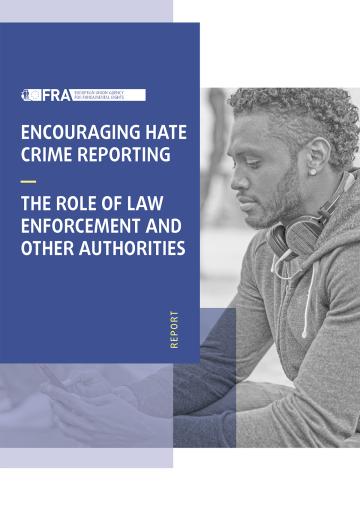
This report examines why victims do not report bias-motivated incidents and the barriers that they face when reporting incidents through national crime reporting systems. By mapping existing practices that have a bearing on the victim’s experiences when reporting bias-motivated violence and harassment, it aims to provide evidence to support national efforts to encourage and facilitate reporting – and ultimately assist Member States in delivering on their duties with regard to combating hate crime.
The Employers Sanctions Directive was primarily enacted to dissuade employers from recruiting migrants in an irregular situation, but it also contains provisions to protect workers. It facilitates access to justice for exploited workers and sets out workers’ rights to claim back payment of outstanding wages. The directive also contains provisions to enhance the effectiveness of labour inspections. This report describes how the 25 Member States bound by the directive have been implementing its protective provisions, focusing on the impact these provisions have on migrant workers in an irregular situation who are victims of exploitation and other labour
law violations.
This Coronavirus Bulletin focuses on equitable access to vaccines. It outlines the situation in the 27 EU Member States from 1 March to 30 April 2021. The bulletin looks at two main areas: planning and prioritisation in deploying Covid-19 vaccinations and their rollout in the countries. It covers information and communication campaigns, as well as (pre)registration channels for and the administration of vaccinations.
През 2020 г. отбелязахме както напредък,
така и неуспехи по отношение на защитата на
основните права. В Доклада относно основните
права (2021 г.) на FRA е извършен преглед на
важните развития в областта, като са посочени
както постиженията, така и областите, които
все още пораждат.
I 2020 skete der både fremskridt og tilbageskridt
i beskyttelsen af de grundlæggende rettigheder.
FRA’s rapport om grundlæggende rettigheder 2021
gennemgår de vigtigste udviklinger på området,
og fastslår både, hvad der er opnået, og hvilke
områder der fortsat volder bekymring.
Το 2020 σημειώθηκε πρόοδος αλλά και
οπισθοδρόμηση στην προστασία των θεμελιωδών
δικαιωμάτων. Στην Έκθεση για τα Θεμελιώδη
Δικαιώματα 2021 του FRA εξετάζονται οι
σημαντικότερες εξελίξεις στον τομέα και
προσδιορίζονται τόσο τα επιτεύγματα, όσο και
τα ζητήματα που εξακολουθούν να προκαλούν
ανησυχία.
The year 2020 brought both progress and setbacks in terms of fundamental rights protection. FRA’s Fundamental Rights Report 2021 reviews major developments in the field, identifying both achievements and remaining areas of concern. This publication presents FRA’s opinions on the main developments in the thematic areas covered, and a synopsis of the evidence supporting these opinions.
Vuonna 2020 perusoikeuksien suojelussa
tapahtui sekä edistystä että takaiskuja. Euroopan
unionin perusoikeusviraston (FRA) vuoden 2021
perusoikeusraportissa tarkastellaan perusoikeuksien
tilanteen kehitystä pääpiirteissään ja tuodaan esiin
sekä saavutuksia että jäljellä olevia huolenaiheita.
Bhí idir dhul chun cinn agus dul ar gcúl le tabhairt faoi
deara i ndáil le cosaint na gceart bunúsach in 2020. Sa
Tuarascáil um Chearta Bunúsacha 2021 ó FRA, féachtar
siar ar na mórfhorbairtí sa réimse agus sainaithnítear
na héachtaí a bhí ann agus réimsí ar ábhair imní
iad go fóill.
A 2020-as év előrelépést és egyúttal visszaeséseket
is hozott az alapjogok védelme terén. Az FRA 2021. évi
alapjogi jelentése áttekinti a terület legfontosabb
fejleményeit, és felhívja a figyelmet az eredményekre,
illetve az aggályos kérdésekre.
Het jaar 2020 kende zowel vooruitgang als
teleurstellingen bij de bescherming van grondrechten.
In het Verslag over de grondrechten 2021 van het
FRA worden de belangrijkste ontwikkelingen op het
gebied van de grondrechten geëvalueerd en wordt
niet alleen ingegaan op de behaalde successen,
maar ook gewezen op blijvende punten van zorg.