FRA nuomonėje 1/2021 atskleidžiama, kokia yra visoje ES patiriamos nelygybės ir diskriminacijos apimtis ir pobūdis. Tai daroma atsižvelgiant į diskriminacijos pagrindus ir gyvenimo sritis, kurioms taikomos Rasinės lygybės ir Užimtumo lygybės direktyvos, taip pat pasiūlyta Vienodo požiūrio direktyva. Nuomonė paskelbta 2021 m. balandžio 30 d. Šioje santraukoje pateikiamos svarbiausios rekomendacijos („Pagrindinės išvados ir nuomonės“), išdėstytos FRA nuomonėje 1/2021.
FRA Atzinums Nr. 1/21 parāda visā ES pieredzētās nevienlīdzības un diskriminācijas mērogu un
izpausmes. Tas paveikts ar atsaucēm uz diskriminācijas iemesliem un dzīves jomām, uz kurām attiecas rasu un nodarbinātības vienlīdzības direktīvas, kā arī ierosinātā Vienlīdzīgas attieksmes direktīva. Atzinums izdots 2021. gada 30. aprīlī. Šajā kopsavilkumā izklāstīti galvenie ieteikumi (“Galvenie secinājumi un atzinumi”), kas izklāstīti FRA Atzinumā Nr. 1/21.
L-Opinjoni 1/21 tal-FRA turi l-firxa u n-natura ta’ esperjenzi ta’ inugwaljanza u diskriminazzjoni mgarrba madwar l-UE. Hija tagħmel dan b’referenza għarragunijiet għad-diskriminazzjoni u l-oqsma tal-ħajja koperti mid-direttivi dwar l-ugwaljanza razzjali u fl-impjieg, kif ukoll mid-Direttiva proposta dwar it-Trattament Ugwali. Inħarget fit-30 ta’ April 2021. Dan is-sommarju jipprezenta r-rakkomandazzjonijiet ewlenin (“Sejbiet ewlenin u opinjonijiet”) deskritti fl-Opinjoni 1/21 tal-FRA.
In FRA-advies 1/2021 worden de omvang en de aard van doorleefde ervaringen met ongelijkheid en discriminatie in de EU geschetst. Hierbij wordt verwezen naar de discriminatiegronden en terreinen van het leven die onder de richtlijn rassengelijkheid en de richtlijn gelijke behandeling in arbeid en beroep vallen, alsook onder de voorgestelde richtlijn inzake gelijke behandeling van personen. Het advies werd op 30 april 2021 gepubliceerd. In deze samenvatting komen de voornaamste aanbevelingen (“belangrijkste bevindingen en adviezen”) aan bod die in FRAadvies
1/2021 zijn uiteengezet.
W opinii FRA 1/21 przedstawiono zakres i charakter rzeczywistych przypadków nierówności i dyskryminacji w różnych częściach UE. Wskazano przy tym powody dyskryminacji i dziedziny życia objęte dyrektywą w sprawie równości rasowej i dyrektywą w sprawie równego traktowania w zakresie zatrudnienia i pracy, a także proponowaną dyrektywą w sprawie równego traktowania. Opinię wydano w dniu 30 kwietnia 2021 r. Niniejsze streszczenie zawiera główne zalecenia („Najważniejsze ustalenia i opinie”) przedstawione w opinii FRA 1/21.
O Parecer 1/2021 da FRA ilustra o grau e a natureza de experiências vividas de desigualdade e discriminação na UE. Fá-lo com referência aos motivos de discriminação e domínios da vida abrangidos pelas Diretivas Igualdade Racial e Igualdade no Emprego, bem como pela proposta de Diretiva Igualdade de Tratamento. Foi publicado em 30 de abril de 2021. A presente síntese apresenta as principais recomendações («Principais conclusões e posições») enunciadas no Parecer 1/2021 da FRA.
Avizul nr. 1/2021 al Agenției pentru Drepturi Fundamentale a Uniunii Europene (FRA) ilustrează amploarea și natura experiențelor de inegalitate și discriminare trăite pe teritoriul UE. Acesta se raportează la motivele de discriminare și la aspectele de viață vizate de directivele privind egalitatea rasială și egalitatea de tratament, precum și de propunerea de directivă privind egalitatea de tratament. Avizul a fost emis la 30 aprilie 2021. Sinteza prezintă principalele recomandări („Principalele constatări și opinii”) evidențiate în Avizul nr. 1/2021 al FRA.
V stanovisku FRA 1/21 je vyjadrený rozsah a povaha skúseností s nerovnosťou a diskrimináciou zažitých v celej EÚ. Uvádzajú sa v ňom dôvody diskriminácie a oblasti života, na ktoré sa vzťahuje smernica o rasovej rovnosti a smernica o rovnakom zaobchádzaní v zamestnaní, ako aj navrhovaná smernica o rovnakom zaobchádzaní. Bolo vydané 30. apríla 2021. V tomto súhrne sa uvádzajú hlavné odporúčania („kľúčové zistenia a stanoviská“) uvedené v stanovisku agentúry FRA 1/21.
This report examines the EU’s main criminal law instrument in the field of counter-terrorism, Directive (EU) 2017/541. Specifically, it considers how the directive engages issues of fundamental rights, affecting individuals, groups and society as a whole.
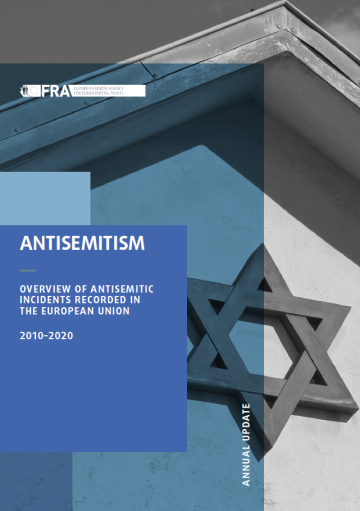
Antisemitic incidents and hate crimes violate fundamental rights, especially the right to human dignity, the right to equality of treatment, and the freedom of thought, conscience and religion. This report provides an overview of available data on antisemitism as recorded by official and unofficial sources in the EU Member States as well as Albania, North Macedonia and Serbia. The data provided by the countries are supplemented with information from international organisations.
This report proposes a framework for becoming, and functioning as, a ‘human rights city’ in the EU. It includes ‘foundations’, ‘structures’ and ‘tools’ for mayors, local administrations and grassroots organisations to reinforce fundamental rights locally. It is based on existing good practice and expert input by representatives of human rights cities in the EU, academic experts, international organisations and city networks.
Civil society organisations play a vital role in promoting fundamental rights, but they face diverse challenges across the European Union. This report presents FRA’s findings on a range of such challenges. The findings are based on research, and on two online consultations with civil society organisations, carried out in 2020.
Les organisations de la société civile jouent un rôle essentiel dans la promotion des droits fondamentaux, mais sont confrontées à diverses problématiques dans l’Union européenne. Ce rapport présente les conclusions de la FRA concernant quelques-unes de ces problématiques, conclusions qui se fondent sur des recherches ainsi que sur deux consultations en ligne auprès d’organisations de la société civile, menées en 2020.
This report examines why victims do not report bias-motivated incidents and the barriers that they face when reporting incidents through national crime reporting systems. By mapping existing practices that have a bearing on the victim’s experiences when reporting bias-motivated violence and harassment, it aims to provide evidence to support national efforts to encourage and facilitate reporting – and ultimately assist Member States in delivering on their duties with regard to combating hate crime.
The Consolidated annual activity report 2020 provides an overview of the activities and achievements of the European Union Agency for Fundamental Rights (FRA) in that year. It follows the guidelines established by the European Commission.
The Employers Sanctions Directive was primarily enacted to dissuade employers from recruiting migrants in an irregular situation, but it also contains provisions to protect workers. It facilitates access to justice for exploited workers and sets out workers’ rights to claim back payment of outstanding wages. The directive also contains provisions to enhance the effectiveness of labour inspections. This report describes how the 25 Member States bound by the directive have been implementing its protective provisions, focusing on the impact these provisions have on migrant workers in an irregular situation who are victims of exploitation and other labour
law violations.
FRA’s Fundamental Rights Report 2021 reviews major developments in the field in 2020, identifying both achievements and areas of concern. It also presents FRA’s opinions on these developments, including a synopsis of the evidence supporting these opinions. This year’s focus chapter explores the impact of the COVID-19 pandemic on fundamental rights. The remaining chapters cover: the EU Charter of Fundamental Rights; equality and non-discrimination; racism, xenophobia and related intolerance; Roma equality and inclusion; asylum, borders and migration; information society, privacy and data protection; rights of the child; access to justice; and the implementation of the Convention on the Rights of Persons with Disabilities.
This paper presents statistical survey data for the EU on how often people are stopped by the police, in what kind of situations they are stopped, the action taken by the police during stops, and views on whether or not the police acted respectfully.
This opinion illustrates the extent and nature of lived experiences of inequality and discrimination across the EU. It does so with reference to the grounds of discrimination and areas of life covered by the racial and employment equality directives, as well as in relation to the grounds and areas covered by the proposed Equal Treatment Directive.
FRA’s 2019 survey on Roma and Travellers in Belgium, France, Ireland, the Netherlands, Sweden and the United Kingdom interviewed almost 4 700 Roma and Travellers, collecting information on more than 8 200 individuals living in their households.