This report presents findings from FRA’s 2019 survey on Roma and Travellers in Belgium, France, Ireland, the Netherlands, Sweden and the United Kingdom. The survey included interviews with almost 4,700 Roma and Travellers, collecting information on more than 8,200 individuals living in their households.
Le rapport présente les conclusions issues de l’enquête de l’Agence des droits
fondamentaux de l’Union européenne (FRA) de 2019 sur la situation des Roms et
des Gens du voyage en Belgique, en France, en Irlande, aux Pays-Bas, en Suède et
au Royaume-Uni. L’enquête comportait des entretiens avec près de 4 700 Roms et
Gens du voyage, et a recueilli des informations concernant plus de 8 200 personnes
vivant dans leurs ménages.
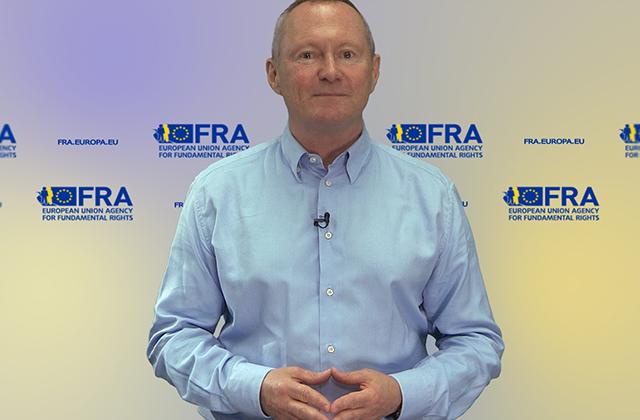
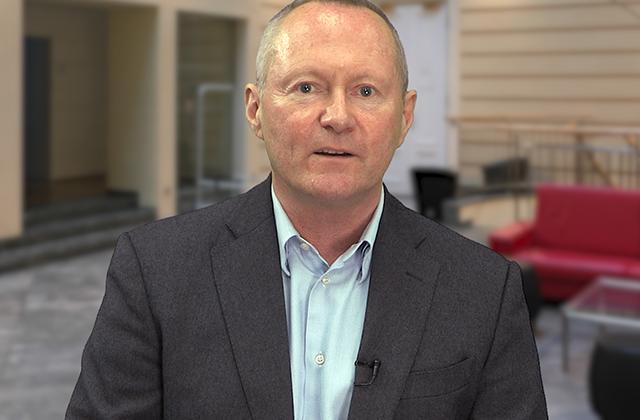
Although many steps have been taken in recent years to change LGBTI people’s lives for the better in the EU, there is still a long way to go, notes FRA Director Michael O'Flaherty in this video message to Athens Pride 2020.
Antisemitism can be expressed in the form of verbal and physical attacks, threats, harassment, discrimination and unequal treatment, property damage and graffiti or other forms of speech or text, including on the internet. Antisemitic incidents and hate crimes violate fundamental rights, especially the right to human dignity, the right to equality of treatment and the freedom of thought, conscience and religion.
FRA’s second survey on LGBTI people in the EU, North Macedonia and Serbia surveyed almost 140,000 participants. This technical report presents a detailed overview of the survey methodology used by FRA when collecting the survey data.
As we enter the second half of 2020, the constraints on our daily lives brought about by the Coronavirus pandemic have become a firm reality. New local lockdowns and the reintroduction of restrictive measures prompted by fresh outbreaks of the virus are a stark reminder that COVID-19 continues to shape our lives – and our enjoyment of fundamental rights – in profound ways. There is compelling evidence of how the pandemic has exacerbated existing challenges in our societies. This FRA Bulletin outlines some of the measures EU Member States adopted to safely reopen their societies and economies while continuing to mitigate the spread of COVID-19. It highlights the impact these measures may have on civil, political and socioeconomic rights.
This paper presents key findings from FRA’s second consultation of its Fundamental Rights Platform, focusing on the experiences of civil society organisations (CSOs) working on human rights. FRA started an annual consultation with organisations participating in its platform in 2018.
This paper presents people’s concerns and experiences relating to security. It covers worry about crime, including terrorism and online fraud; experience of online fraud; experience of cyberharassment; and concern about illegal access to data.
In this video message FRA Director Michael O'Flaherty speaks about LGBTI equality on the occasion of the Global Pride 2020:
https://www.globalpride2020.org/
FRA’s Fundamental Rights Survey collected data from 35,000 people about their experiences, perceptions and opinions on a range of issues that are variously encompassed by human rights. This report presents a small selection of the survey results. It focuses on findings with respect to respondents’ opinions about human – or fundamental rights; their views and perceptions on the functioning of democratic societies – as a pillar on which human rights can flourish; and on their thoughts on and engagement with public services that have a duty to enforce human rights law and to protect people’s rights.
This document presents data from the FRA Fundamental Rights Survey. It includes data on opinions and experiences of people in the European Union (EU) linked to data protection and technology.
FRA’s Fundamental Rights Report 2020 reviews major developments in the field in 2019, identifying both achievements and areas of concern. It also presents FRA’s opinions on these developments, including a synopsis of the evidence supporting these opinions. This year’s focus chapter explores how to unlock the full potential of the EU Charter of Fundamental Rights.
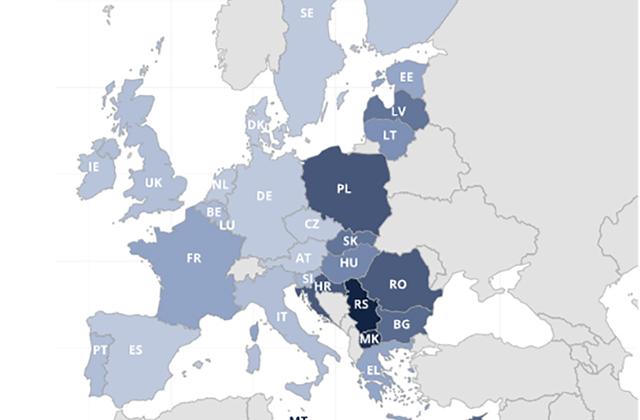
A total of 139,799 persons aged 15 years or older who describe themselves as lesbian, gay, bisexual, trans or intersex (LGBTI) completed the online EU-LGBTI II Survey in all EU Member States and the candidate countries of North Macedonia and Serbia.
This report presents select findings from FRA’s 2019 survey on LGBTI people in the EU and North Macedonia and Serbia. With almost 140,000 participants, it is the largest survey of its kind. It follows the agency’s first survey on LGBT people in the EU, conducted in 2012. The new survey results show little progress over the past seven years.
In 2019 the EU Agency for Fundamental Rights (FRA) carried out the world’s biggest ever survey of lesbian, gay, bisexual, trans and intersex people’s life experiences. Almost 140,000 LGBTI people told us about their lives – in their own words.
In the latest edition of his video blog, FRA Director Michael O'Flaherty speaks about the publication of FRA's second LGBTI-survey on the 17th of March and how we can use the results to further battle discrimination.
In the latest edition of his video blog, FRA Director Michael O'Flaherty speaks about the importance and power of hope accompanying the work of FRA in 2020. Particularly after a troubled start of the year.