Η παρούσα έκθεση εξετάζει πέντε βασικές πτυχές των συνθηκών κράτησης στα κράτη μέλη της ΕΕ: το μέγεθος των
κελιών, τον χρόνο που οι κρατούμενοι μπορούν να περνούν έξω από τα κελιά τους, συμπεριλαμβανομένων των εξω-
τερικών χώρων, τις συνθήκες υγιεινής, την πρόσβαση στην υγειονομική περίθαλψη και το αν οι κρατούμενοι προστα-
τεύονται από τη βία. Για καθεμία από αυτές τις πτυχές των συνθηκών κράτησης, η έκθεση συνοψίζει καταρχάς τα ελά-
χιστα πρότυπα σε διεθνές και ευρωπαϊκό επίπεδο. Στη συνέχεια εξετάζει πώς τα εν λόγω πρότυπα μετουσιώνονται σε
εθνικούς νόμους και άλλους κανόνες των κρατών μελών της ΕΕ.
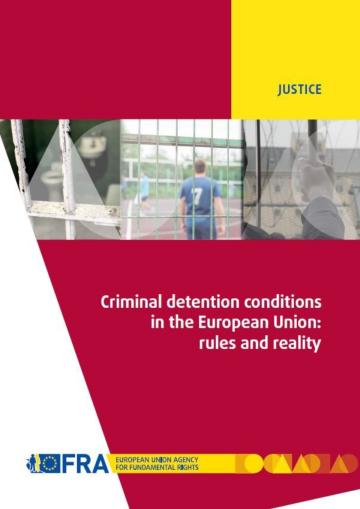
This report looks at five core aspects of detention conditions in EU Member States: the size of cells; the amount of time detainees can spend outside of these cells, including outdoors; sanitary conditions; access to healthcare; and whether detainees are protected from violence. For each of these aspects of detention conditions, the report first summarises the minimum standards at international and European levels. It then looks at how these standards are translated into national laws and other rules of the EU Member States.
Growing global efforts to encourage responsible business conduct that respects human rights include steps to ensure access to effective remedies when breaches occur. In 2017, the European Commission asked the EU Agency for Fundamental Rights (FRA) to collect evidence on such access in the EU Member States, with the ultimate goal of identifying the EU actions most needed in this field. FRA’s resulting research involved two phases: desk research on different incidents of abuse; and interview-based fieldwork on professionals’ views on the availability and effectiveness of different complaint avenues.
Mithilfe von Gesichtserkennungstechnologie können digitale Gesichtsbilder verglichen werden, um festzustellen, ob sie dieselbe Person zeigen. Der Vergleich von Aufnahmen von Videokameras mit Bildern in Datenbanken wird als Live-Gesichtserkennungstechnologie bezeichnet. Nur wenige nationale Strafverfolgungsbehörden in der EU nutzen derzeit eine solche Technologie – doch mehrere erproben ihr Potenzial. Im vorliegenden Fokuspapier werden daher die Auswirkungen der Live-Gesichtserkennungstechnologie im Hinblick auf die Grundrechte untersucht, wobei der Schwerpunkt auf der Nutzung für die Zwecke der Strafverfolgung und des Grenzmanagements liegt.
Facial recognition technology (FRT) makes it possible to compare digital facial images to determine whether they are of the same person. Comparing footage obtained from video cameras (CCTV) with images in databases is referred to as ‘live facial recognition technology’. Examples of national law enforcement authorities in the EU using such technology are sparse – but several are testing its potential. This paper therefore looks at the fundamental rights implications of relying on live FRT, focusing on its use for law enforcement and border-management purposes.
La technologie de reconnaissance faciale permet de comparer des images faciales numériques afin de déterminer s’il s’agit d’une seule et même personne. La comparaison d’images obtenues à partir
de caméras vidéo avec des images stockées dans des bases de données est appelée «technologie de reconnaissance faciale en temps réel». Les exemples d’autorités répressives nationales de l’Union européenne (UE) utilisant cette technologie sont rares, mais plusieurs d’entre elles testent actuellement son potentiel. Le présent document examine donc les implications en matière de droits fondamentaux de l’utilisation de la technologie de reconnaissance faciale en temps réel, en mettant l’accent sur son utilisation à des fins répressives et de gestion des frontières.
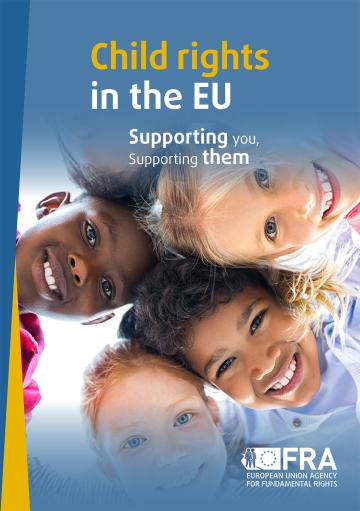
Child rights come first. Measures to ensure child protection and participation apply to all children in the EU. This brochure guides you to relevant FRA reports and tools that can support you when promoting and protecting the rights of all children in the EU.
Les droits de l’enfant sont notre priorité. Les mesures visant à garantir la protection et
la participation des enfants s’appliquent à TOUS les enfants au sein de l’UE.
The Charter is most effective, and has a real impact on people’s lives, when parliaments, governments and courts at local, regional and national levels all actively apply it. The national sphere is particularly relevant. A strong fundamental rights architecture and committed national governments and parliaments are key to letting the Charter unfold its potential at this level. Civil society organisations (CSOs) and national human rights institutions (NHRIs) are also crucial given their contributions to the protection and promotion of Charter rights.
This annual overview provides an update of the most recent figures on antisemitic incidents, covering the period 1 January 2008 – 31 December 2018, across the EU Member States, where data are available. It includes a section that presents evidence from international organisations. In addition, for the first time, it provides an overview of how Member States that have adopted or endorsed the non-legally binding working definition of antisemitism adopted by the International Holocaust Remembrance Alliance (IHRA) (2016) use or intend to use it.
The EU Agency for Fundamental Rights has been regularly collecting data on asylum and
migration since September 2015. This report focuses on the fundamental rights situation
of people arriving in Member States and EU candidate countries particularly affected by
migration. It addresses fundamental rights concerns between 1 July and 30 September 2019.
Protecting the rights of anyone suspected or accused of a crime is an essential element of the rule of law. Courts, prosecutors and police officers need certain powers to enforce the law – but trust in the outcomes of their efforts will quickly erode without effective safeguards. Such safeguards take on various forms, and include the right to certain information and to a lawyer.
Individuals who are not entitled to stay in the European Union are typically subject to being returned to their home countries. This includes children who are not accompanied by their parents or by another primary caregiver. But returning such children, or finding another durable solution, is a delicate matter, and doing so in full compliance with fundamental rights protections can be difficult. This focus paper therefore aims to help national authorities involved in return-related tasks, including child-protection services, to ensure full rights compliance.
The EU Agency for Fundamental Rights has been regularly collecting data on migration since September 2015. This report focuses on the fundamental rights situation of people arriving in Member States and EU candidate countries particularly affected by migration movements. It addresses fundamental rights concerns between 1 April and 30 June 2019.
The EU Return Directive (2008/115/EC) in Article 8 (6) introduced an important fundamental rights safeguard for third-country nationals ordered to leave the EU because they do not or no longer fulfil the conditions for entry and/or stay. According to the directive, Member States must provide for an effective forced-return monitoring system.
This report is the EU Fundamental Rights Agency’s fourth on the topic of severe labour exploitation. Based on interviews with 237 exploited workers, it paints a bleak picture of severe exploitation and abuse. The workers include both people who came to the EU, and EU nationals who moved to another EU country. They were active in diverse sectors, and their legal status also varied.
In 2018, some 2,299 people are estimated to have died or gone missing at sea while crossing the sea to reach Europe to escape war or persecution or to pursue a better life. This is on average more than six people per day. Before mid-2017, a significant share of migrants in distress at sea have been rescued by civil society vessels deployed with a humanitarian mandate to reduce fatalities and bring rescued migrants to safety. In 2018, however, authorities in some Member States viewed civil society-deployed rescue vessels with hostility. As a reaction, they seized rescue vessels, arrested crew members, and initiated legal procedures against them (more than a dozen altogether). In some cases, rescue vessels were blocked in harbours due to flag issues.
This technical report presents in detail all the stages
of the survey and the relevant information needed to
assess the quality and reliability of the data, as well
as considerations for interpreting the survey results.
The following chapters of the report cover the procedures
used in the development and administration
of the survey.
Στόχος του οδηγού με τίτλο Παιδιά που στερούνται τη γονική φροντίδα σε κράτος μέλος της
ΕΕ διαφορετικό από το δικό τους είναι η ενίσχυση της απόκρισης όλων των φορέων που είναι
αρμόδιοι για την προστασία των παιδιών. Η προστασία αυτών των κοριτσιών και αγοριών είναι
ύψιστης σημασίας και συνιστά υποχρέωση των κρατών μελών της ΕΕ, η οποία απορρέει τόσο
από το διεθνές όσο και από το ευρωπαϊκό νομικό πλαίσιο. Ο οδηγός επικεντρώνεται στα παιδιά
θύματα εμπορίας ανθρώπων και στα παιδιά που διατρέχουν κίνδυνο, υλοποιώντας μια δράση
που προβλέπεται στην Ανακοίνωση του 2017 για την εντατικοποίηση της δράσης της ΕΕ για την
καταπολέμηση της εμπορίας ανθρώπων, και λαμβάνει υπόψη τα προσδιορισθέντα πρότυπα,
όσον αφορά για παράδειγμα την έμφυλη διάσταση του συγκεκριμένου εγκλήματος.