The year 2018 brought both progress and setbacks in terms of fundamental rights protection. FRA’s Fundamental Rights Report 2019 reviews major developments in the field, identifying both achievements and remaining areas of concern. This publication presents FRA’s opinions on the main developments in the thematic areas covered, and a synopsis of the evidence supporting these
opinions.
Victims of violent crime have various rights, including to protection and to access justice. But how are these rights playing out in practice? Are victims of violent crime properly seen, informed, empowered and heard? Do they tend to feel that justice has been done? Our four-part report series takes a closer look at these questions, based on interviews with victims, people working for victim support organisations, police officers, attorneys, prosecutors and judges.
Victims of violent crime have various rights, including to protection and to access justice. But how are these rights playing out in practice? Are victims of violent crime properly seen, informed, empowered and heard? Do they tend to feel that justice has been done? Our four-part report series takes a closer look at these questions, based on interviews with victims, people working for victim support organisations, police officers, attorneys, prosecutors and judges.
Victims of violent crime have various rights, including to protection and to access justice. But how are these rights playing out in practice? Are victims of violent crime properly seen, informed, empowered and heard? Do they tend to feel that justice has been done? Our four-part report series takes a closer look at these questions, based on interviews with victims, people working for victim support organisations, police officers, attorneys, prosecutors and judges.
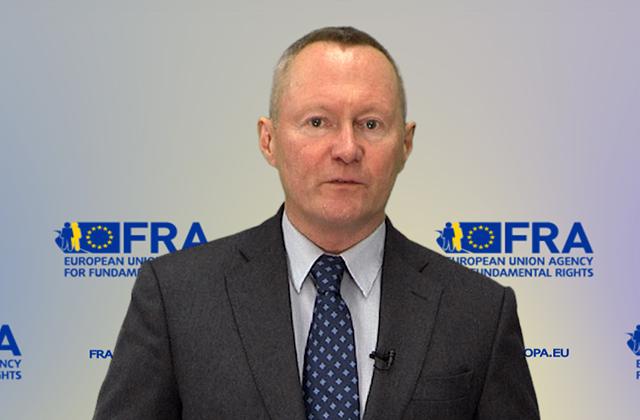
In the latest edition of his video blog, FRA Director Michael O'Flaherty talks about discrimination on the basis of age in the EU and calls for more respect for Human- and Fundamental Rights of older people.
Despite efforts by the European Union (EU) and its Member States to reduce gender inequalities among citizens of Roma origin, important gender differences persist. Drawing on FRA’s own EU-MIDIS II survey research in nine EU Member States this report highlights the position of Roma women in education, employment and health, as well as the extent to which they experience hate-motivated discrimination, harassment and physical violence.
Member States have an explicit duty to promote the Charter’s application. These country-sheets support that effort by giving examples of the Charter’s use and highlighting how it adds value.
In the light of the events in New Zealand, Michael O'Flaherty talks about discrimination and hate crime against Muslims in the EU and makes 4 proposals on how to make Muslims feel more safe.
This summary outlines the main findings of FRA’s second survey on Jewish people’s experiences with hate crime, discrimination and antisemitism in the European Union – the biggest survey of Jewish people ever conducted worldwide.
The right to vote is at the heart of what it means to live in a democratic society. However, legislation sets out a number of restrictions on this right. With a view to the European Parliament elections in 2019, this paper presents developments in the situation of the right to vote for people deprived of legal capacity in the EU.
This Opinion aims to inform the European Parliament’s position on the legislative proposal for a Regulation on preventing the dissemination of terrorist content online, presented by the European Commission on 12 September 2018.
This summary report presents the key findings of the fieldwork to identify and understand the operation of barriers to and drivers of successful investment in Roma inclusion and the FRA opinions stemming from them.
This paper discusses the evolution of European Court of Human Rights case law relating
to hate crime, providing an update on the most recent rulings. Approaching hate crime
from a fundamental rights perspective, it shows how Member State authorities’ duty to
effectively investigate the bias motivation of crimes flows from key human rights
instruments, such as the European Convention on Human Rights.
Această lucrare prezintă evoluția jurisprudenței Curții Europene a Drepturilor
Omului cu privire la infracțiunile motivate de ură, oferind o actualizare în ceea
ce privește cele mai recente hotărâri. Abordarea infracțiunilor motivate de ură
dintr-o perspectivă a drepturilor fundamentale arată cum datoria autorităților
statelor membre de a investiga în mod eficient motivarea bazată pe prejudecată
a infracțiunilor decurge din instrumentele cheie ale drepturilor omului, cum ar fi
Convenția europeană a drepturilor omului.
This report outlines the main findings of FRA’s second survey on Jewish people’s experiences with hate crime, discrimination and antisemitism in the European Union – the biggest survey of Jewish people ever conducted worldwide. Covering 12 EU Member States, the survey reached almost 16,500 individuals who identify as being Jewish. It follows up on the agency’s first survey, conducted in seven countries in 2012.
This Opinion by the European Union Agency for Fundamental Rights (FRA) aims to inform
the European Parliament’s position on the legislative proposal on the European Border and
Coast Guard (EBCG) presented by the European Commission on 12 September 2018.
В настоящото ръководство се обяснява какво представлява профилирането, правните рамки, които го регулират и защо правомерното извършване на профилиране е необходимо за спазването на основните права и е от решаващо значение за ефективната дейност на полицейските и граничните органи. В ръководството също така са предоставени практически насоки за това как да се избегне неправомерно профилиране при операции на полицейските и граничните органи.