Highlights

  • Handbook / Guide / Manual
    8
    Oktober
    2025
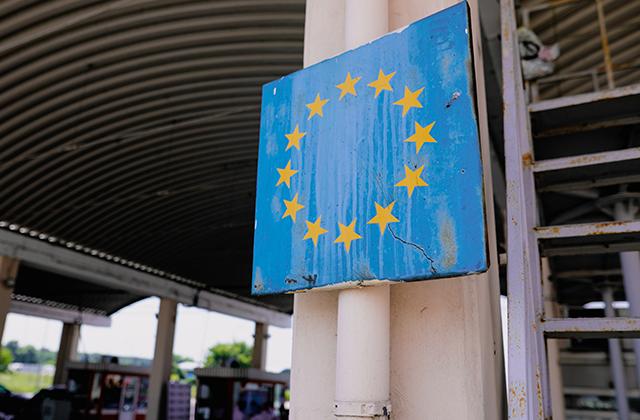
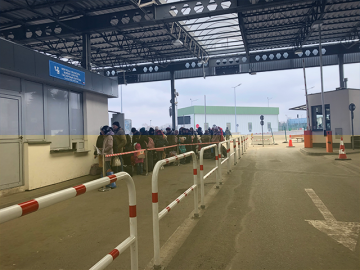
    The Entry/Exit System (EES), launching in 2025, will register non-EU nationals crossing the EU’s external borders. This FRA guidance helps border guards apply the new rules in line with EU fundamental rights. It offers practical tips on informing people, collecting biometric data and supporting people with specific needs. Based on fieldwork at 10 border crossing points in 6 Member States, the guidance will ensure rights are respected under the new system. A separate guidance publication for managers accompanies this publication.
  • Opinion / Position Paper
    23
    Juli
    2025
    This position paper examines how the EU can counter the instrumentalisation of migrants while also upholding fundamental rights. Instrumentalisation refers to countries outside the EU using migration to exert political pressure. This position paper defines the phenomenon, provides examples, and outlines legal obligations under EU law. It provides legal analysis and warns that some responses risk undermining fundamental rights at the EU’s external borders, including the right to asylum. To counter instrumentalisation and uphold fundamental rights, the position paper proposes practical measures for Member States to take, such as sanctions, border controls, and cooperation with private operators.
  • Periodic updates / Series
    20
    Juni
    2025
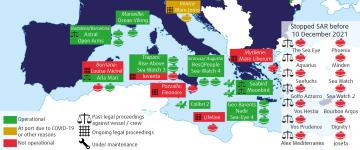
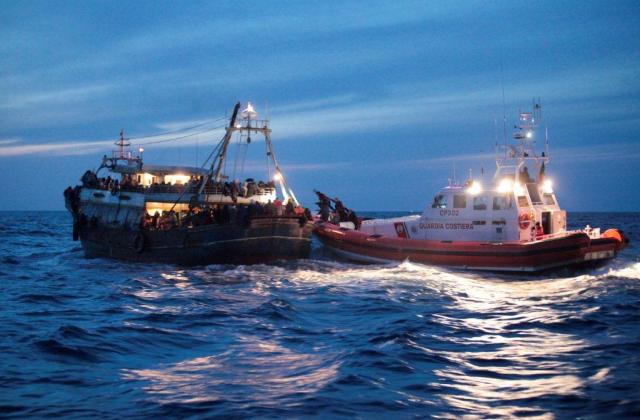
    The EU Agency for Fundamental Rights regularly collects data on the operations of NGO vessels involved in search and rescue in the Mediterranean. This includes any legal proceedings against them, as well as any difficulties in disembarking migrants in safe ports. This paper provides an overview of criminal investigations and other legal proceedings initiated by European Union (EU) Member States against civil society organisations deploying search and rescue vessels and aircraft in the Mediterranean and/or against individual crew members. The latest update covers the period from 2018 up until 1 June 2025.
  • Seite
    This page describes the activities of the EU Agency for Fundamental Rights (FRA) on migration and asylum. It also explains how these activities can help the European Union (EU) and its Member States to implement the Pact on Migration and Asylum in a fundamental rights-compliant manner.
    Produkte
    19
    Juni
    2019
    In 2018, some 2,299 people are estimated to have died or gone missing at sea while crossing the sea to reach Europe to escape war or persecution or to pursue a better life. This is on average more than six people per day. Before mid-2017, a significant share of migrants in distress at sea have been rescued by civil society vessels deployed with a humanitarian mandate to reduce fatalities and bring rescued migrants to safety. In 2018, however, authorities in some Member States viewed civil society-deployed rescue vessels with hostility. As a reaction, they seized rescue vessels, arrested crew members, and initiated legal procedures against them (more than a dozen altogether). In some cases, rescue vessels were blocked in harbours due to flag issues.
    13
    Juni
    2019
    Der Leitfaden Kinder ohne elterliche Fürsorge, die in einem anderen EU-Mitgliedstaat als ihrem
    eigenen angetroffen werden hat das Ziel, die Handlungsfähigkeit aller im Bereich Kinderschutz
    tätigen Akteure zu stärken. Der Schutz dieser Mädchen und Jungen ist von höchster Bedeutung und
    stellt für die EU-Mitgliedstaaten eine Verpflichtung dar, die sich aus dem internationalen und dem
    europäischen Rechtsrahmen ableitet. Der vorliegende Leitfaden legt den Schwerpunkt auf Kinder,
    die Opfer von Menschenhandel geworden sind oder Gefahr laufen, dies zu werden, indem auf die
    Umsetzung der Ziele eingegangen wird, die in der Mitteilung der Kommission zur Berichterstattung
    über die Folgemaßnahmen zur Strategie der EU zur Beseitigung des Menschenhandels von
    2017 beschrieben wurden. Dabei werden ermittelte Muster beleuchtet, auch im Hinblick auf die
    geschlechtsspezifischen Besonderheiten von Straftaten.
    6
    Juni
    2019
    How much progress can we expect in a decade? Various rights-related instruments had been in place for 10 years in 2018, prompting both sobering and encouraging reflection on this question.
    6
    Juni
    2019
    Das Jahr 2018 brachte in Bezug auf den Schutz der Grundrechte sowohl
    Fortschritte als auch Rückschritte. In ihrem Grundrechte-Bericht 2019
    untersucht die FRA wichtige Entwicklungen auf diesem Gebiet und zeigt sowohl
    Erfolge als auch Bereiche auf, in denen es immer noch Probleme gibt. Darüber
    hinaus äußert sich die FRA in dieser Veröffentlichung zu den wichtigsten
    Entwicklungen in den genannten Themenbereichen und gibt einen Überblick
    über die Informationen, die diesen Stellungnahmen zugrunde liegen.
    Periodic updates / Series
    16
    Mai
    2019
    The EU Agency for Fundamental Rights has been regularly collecting data on migration since
    September 2015. This report focuses on the fundamental rights situation of people arriving in
    Member States and EU candidate countries particularly affected by migration movements.
    It addresses fundamental rights concerns between 1 January and 31 March 2019.
    27
    März
    2019
    This report looks into the fundamental rights situation of asylum applicants and beneficiaries of international protection in the EU throughout 2018. It pulls together the main issues identified in FRA’s regular updates on fundamental rights related to asylum, migration and borders in selected EU Member States, which the agency has been publishing since September 2015.
    11
    März
    2019
    In November 2016, FRA formulated 21 individual opinions to address the fundamental rights shortcomings identified in the implementation of the hotspot approach in Greece and Italy. Despite genuine efforts to improve the situation since November 2016, many of the suggestions contained in the 21 opinions FRA formulated at the time remain valid.
    Periodic updates / Series
    18
    Februar
    2019
    The EU Agency for Fundamental Rights has been regularly collecting data on migration since
    September 2015. This report focuses on the fundamental rights situation of people arriving in
    Member States and EU candidate countries particularly affected by large migration movements.
    Opinion / Position Paper
    17
    Januar
    2019
    This Opinion by FRA aims to inform the European Parliament’s position on the legislative proposal for a recast Directive on common standards and procedures in Member States for returning illegally staying third country nationals (Return Directive), presented by the European Commission on 12 September 2018.
    Opinion / Position Paper
    6
    Dezember
    2018
    This Opinion by the European Union Agency for Fundamental Rights (FRA) aims to inform
    the European Parliament’s position on the legislative proposal on the European Border and
    Coast Guard (EBCG) presented by the European Commission on 12 September 2018.
    5
    Dezember
    2018
    In diesem Handbuch wird erläutert, was Profiling ist, welcher Rechtsrahmen ihm zugrunde liegt und weshalb Profiling von rechtlicher Seite nicht nur die Grundrechte wahren muss, sondern auch von entscheidender Bedeutung für eine wirksame Polizeiarbeit und ein wirksames Grenzmanagement ist. Das Handbuch enthält außerdem praktische Anweisungen zur Vermeidung von unrechtmäßigem Profiling bei Einsätzen von Polizei und Grenzmanagement.
    Black people in the EU face unacceptable difficulties in getting a decent job because of their skin colour. Racist harassment also remains all too common.
    Periodic updates / Series
    26
    November
    2018
    The EU Agency for Fundamental Rights has been collecting relevant data since September 2015, in light of the increasing numbers of refugees, asylum seekers and migrants entering the EU. This report focuses on the fundamental rights situation of people arriving in Member States particularly affected by large migration movements. The countries covered are: Austria, Bulgaria, Croatia, Denmark, Finland, France, Germany, Greece, Hungary, Italy, the Netherlands, Poland, Spain and Sweden.
    26
    Oktober
    2018
    The EU Agency for Fundamental Rights’ 2018 Fundamental Rights Forum
    brought together more than 700 human rights champions at a time of
    widening social divisions and increasingly polarised politics across
    Europe.
    1
    Oktober
    2018
    This note draws attention to the recent trend of criminalising search and rescue operations (SAR) in the Mediterranean Sea carried out by non-governmental organisations (NGOs) or other private entities. This includes seizing rescue vessels, as well as arrests for crew members, in some EU Member States. Most of such incidents concerned NGOs operating in the Central Mediterranean Sea.
    Periodic updates / Series
    21
    September
    2018
    The EU Agency for Fundamental Rights has been collecting relevant data since September 2015, in light of the increasing numbers of refugees, asylum seekers and migrants entering the EU. This report focuses on the fundamental rights situation of people arriving in Member States particularly affected by large migration movements. The countries covered are: Austria, Bulgaria, Croatia, Denmark, Finland, France, Germany, Greece, Hungary, Italy, the Netherlands, Poland, Spain and Sweden.
    14
    September
    2018
    This Opinion by the European Union Agency for Fundamental Rights (FRA) aims to inform the European Parliament’s position concerning the legislative proposal for a Regulation on strengthening the security of identity cards of European Union (EU) citizens and of residence documents issued to EU citizens and their family members exercising their right of free movement. It focuses on the processing of biometric data and complements the opinion published by the European Data Protection Supervisor (EDPS).
    10
    September
    2018
    This Opinion aims to
    inform the European Parliament’s position on the legislative proposal amending the
    Visa Information System, the Visa Code and other related provisions of EU law. The
    European Commission presented the proposal on 16 May 2018 and EU legislators are
    currently discussing it.
    5
    September
    2018
    Severe labour exploitation is widespread across the European Union. While workplace inspections can help counter this phenomenon, they need to be strengthened to do so effectively. Based on interviews and focus group discussions with almost 240 exploited workers active in diverse economic sectors, this report provides important evidence on how unscrupulous employers manipulate and undermine inspections, and on what can be done to counteract such efforts.