eu-charter

EU Charter of Fundamental Rights

Article 15 - Freedom to choose an occupation and right to engage in work

Article 15 - Freedom to choose an occupation and right to engage in work

1. Everyone has the right to engage in work and to pursue a freely chosen or accepted occupation.
2. Every citizen of the Union has the freedom to seek employment, to work, to exercise the right of establishment and to provide services inany Member State
3. Nationals of third countries who are authorised to work in the territories of the Member States are entitled to working conditions equivalent to those of citizens of the Union.

Explanations

  • Text:

    Freedom to choose an occupation, as enshrined in Article 15(1), is recognised in Court of Justice case law (see inter alia judgment of 14 May 1974, Case 4/73 Nold [1974] ECR 491, paragraphs 12 to 14 of the grounds; judgment of 13 December 1979, Case 44/79 Hauer [1979] ECR 3727; judgment of 8 October 1986, Case 234/85 Keller [1986] ECR 2897, paragraph 8 of the grounds).

    This paragraph also draws upon Article 1(2) of the European Social Charter, which was signed on 18 October 1961 and has been ratified by all the Member States, and on point 4 of the Community Charter of the Fundamental Social Rights of Workers of 9 December 1989. The expression "working conditions" is to be understood in the sense of Article 156 of the Treaty on Functioning of the European Union.

    Paragraph 2 deals with the three freedoms guaranteed by Articles 26, 45, 499 and 56 of the Treaty on Functioning of the European Union, namely freedom of movement for workers, freedom of establishment and freedom to provide services.

    Paragraph 3 is based on Article 153(1) (g) of the Treaty on Functioning of the European Union and on Article 19(4) of the European Social Charter signed on 18 October 1961 and ratified by all the Member States. Article 52(2) of the Charter is therefore applicable. The question of recruitment of seamen having the nationality of third States for the crews of vessels flying the flag of a Member State of the Union is governed by Community law and national legislation and practice.

    Source:
    Official Journal of the European Union C 303/17 - 14.12.2007
    Preamble - Explanations relating to the Charter of Fundamental Rights:
    These explanations were originally prepared under the authority of the Praesidium of the Convention which drafted the Charter of Fundamental Rights of the European Union. Although they do not as such have the status of law, they are a valuable tool of interpretation intended to clarify the provisions of the Charter.

Case Law References

National Constitutional Law

41 results found

  • Basic Law for the Federal Republic of Germany
    Country:
    Germany

    Article 12 (1) All Germans shall have the right freely to choose their occupation or profession, their place of work and their place of training. The practice of an occupation or profession may be regulated by or pursuant to a law. (2) No person may be required to perform work of a particular kind except within the framework of a traditional duty of community service that applies generally and equally to all. (3) Forced labour may be imposed only on persons deprived of their liberty by the judgment of a court. Article 12a (...) (6) If, during a state of defence, the need for workers in the areas specified in the second sentence of paragraph (3) of this Article cannot be met on a voluntary basis, the right of German citizens to abandon their occupation or place of employment may be restricted by or pursuant to a law in order to meet this need. Prior to the existence of a state of defence, the first sentence of paragraph (5) of this Article shall apply mutatis mutandis.

  • Constitution of Finland
    Country:
    Finland

    Section 18 The right to work and the freedom of engage in commercial activity Everyone has the right, as provided by an Act, to earn his or her livelihood by the employment, occupation or commercial activity of his or her choice. The public authorities shall take responsibility for the protection of the labour force. The public authorities shall promote employment and work towards guaranteeing for everyone the right to work. Provisions on the right to receive training that promotes employability are laid down by an Act. No one shall be dismissed from employment without a lawful reason.

  • Constitution of Ireland
    Country:
    Ireland

    Article 45.2. The State shall, in particular, direct its policy towards securing: i. That the citizens (all of whom, men and women equally, have the right to an adequate means of livelihood) may through their occupations find the means of making reasonable provision for their domestic needs. (...)

  • Constitution of Malta
    Country:
    Malta

    Article 7 The State recognises the right of all citizens to work and shall promote such conditions as will make this right effective.Article 12(1) The State shall protect work. (2) It shall provide for the professional or vocational training and advancement of workers.

  • Constitution of the Hellenic Republic
    Country:
    Greece

    Article 22 (1). Work constitutes a right and shall enjoy the protection of the State, which shall care for the creation of conditions of employment for all citizens and shall pursue the moral and material advancement of the rural and urban working population. All workers, irrespective of sex or other distinctions, shall be entitled to equal pay for work of equal value.[...]

  • Constitution of the Italian Republic
    Country:
    Italy

    Art. 4. The Republic recognises the right of all citizens to work and promotes those conditions which render this right effective. Every citizen has the duty, according to personal potential and individual choice, to perform an activity or a function that contributes to the material or spiritual progress of society. Art. 35. The Republic protects work in all its forms and practices. (...)

  • Constitution of the Republic of Bulgaria
    Country:
    Bulgaria

    Art. 16. Labour shall be guaranteed and protected by law. Art. 48. (1) Citizens shall have the right to work. The State shall take care to provide conditions for the exercising of this right. [...] (3) Everyone shall be free to choose an occupation and place of work.

  • Constitution of the Republic of Croatia
    Country:
    Croatia

    Article 55
    Everyone shall have the right to work and to freedom of work.
    Everyone shall be free to choose his/her vocation and occupation, and shall have access to each workplace and post under equal conditions.

  • Constitution of the Republic of Estonia
    Country:
    Estonia

    Article 29. Every citizen of Estonia is entitled to freely choose his or her area of activity, profession and position of employment. The law may provide conditions and procedures for the exercise of this right. Unless otherwise provided by law, citizens of foreign states and stateless persons in Estonia enjoy this right equally with citizens of Estonia.
    No one may be compelled to perform work or service against his or her free will, except for service in the defence forces or alternative service, or work required to prevent the spread of an infectious disease or to contain a natural disaster or catastrophe, or work which a convicted offender is required to perform according to the law and pursuant to a procedure established by law.
    The national government organises vocational training and assists persons who seek employment in finding work.
    Working conditions are overseen by the national government.
    Everyone is free to belong to unions and federations of employees and employers. Unions and federations of employees and employers may assert their rights and lawful interests by means which are not prohibited by law. The conditions and procedure for the exercise of the right to strike are provided by law.
    The procedure for resolution of labour disputes is provided by law.

  • Constitution of the Republic of Latvia
    Country:
    Latvia

    106. Everyone has the right to freely choose their employment and workplace according to their abilities and qualifications. Forced labour is prohibited. Participation in the relief of disasters and their effects, and work pursuant to a court order shall not be deemed forced labour. 116. The rights of persons set out in Articles ninety-six, ninety-seven, ninety-eight, one hundred, one hundred and two, one hundred and three, one hundred and six, and one hundred and eight of the Constitution may be subject to restrictions in circumstances provided for by law in order to protect the rights of other people, the democratic structure of the State, and public safety, welfare and morals. On the basis of the conditions set forth in this Article, restrictions may also be imposed on the expression of religious beliefs.

  • Constitution of the Republic of Lithuania
    Country:
    Lithuania

    Article 48. Everyone may freely choose a job or business, and shall have the right to have proper, safe, and healthy conditions at work, as well as to receive fair pay for work and social security in the event of unemployment. The work of foreigners in the Republic of Lithuania shall be regulated by law. Forced labour shall be prohibited. Military service or alternative service performed instead of military service, as well as work performed by citizens in time of war, natural disaster, epidemics, or other extreme cases, shall not be considered forced labour. In cases where persons convicted by a court perform work regulated by law, such work shall not be considered forced labour, either.

  • Constitution of the Republic of Poland
    Country:
    Poland

    Article 24 Work shall be protected by the Republic of Poland. The State shall exercise supervision over the conditions of work.Article 65.1. Everyone shall have the freedom to choose and to pursue his occupation and to choose his place of work. Exceptions shall be specified by statute.(...)

  • Costituzione della Repubblica Italiana
    Country:
    Italy

    Art. 4. La Repubblica riconosce a tutti i cittadini il diritto al lavoro e promuove le condizioni che rendano effettivo questo diritto. Ogni cittadino ha il dovere di svolgere, secondo le proprie possibilità e la propria scelta, una attività o una funzione che concorra al progresso materiale o spirituale della società. Art. 35. La Repubblica tutela il lavoro in tutte le sue forme ed applicazioni. (...)

  • Czechia / Charter of Fundamental Rights and Freedoms
    Country:
    Czechia

    Article 26 (1) Everybody has the right to the free choice of her profession and the training for that profession, as well as the right to engage in enterprise and pursue other economic activity. (2) Conditions and limitations may be set by law upon the right to engage in certain professions or activities. (3) Everybody has the right to acquire the means of her livelihood by work. The State shall provide an adequate level of material security to those citizens who are unable, through no fault of their own, to exercise this right; conditions shall be provided for by law. (4) Different rules for aliens may be provided for by law.

  • Danmarks Riges Grundlov
    Country:
    Denmark

    § 75. Stk. 1. Til fremme af almenvellet bør det tilstræbes, at enhver arbejdsduelig borger har mulighed for arbejde på vilkår, der betrygger hans tilværelse.

  • De Belgische Grondwet
    Country:
    Belgium

    Art. 23.Ieder heeft het recht een menswaardig leven te leiden.
    Daartoe waarborgen de wet, het decreet of de in artikel 134 bedoelde regel, rekening houdend met de overeenkomstige plichten, de economische, sociale en culturele rechten, waarvan ze de voorwaarden voor de uitoefening bepalen.
    Die rechten omvatten inzonderheid :
    1° het recht op arbeid en op de vrije keuze van beroepsarbeid in het raam van een algemeen werkgelegenheidsbeleid dat onder meer gericht is op het waarborgen van een zo hoog en stabiel mogelijk werkgelegenheidspeil, het recht op billijke arbeidsvoorwaarden en een billijke beloning, alsmede het recht op informatie, overleg en collectief onderhandelen; (...)

  • Eesti Vabariigi Põhiseadus
    Country:
    Estonia

    § 29. Eesti kodanikul on õigus vabalt valida tegevusala, elukutset ja töökohta. Seadus võib sätestada selle õiguse kasutamise tingimused ja korra. Kui seadus ei sätesta teisiti, siis on see õigus võrdselt Eesti kodanikuga ka Eestis viibival välisriigi kodanikul ja kodakondsuseta isikul. Kedagi ei tohi sundida tema vaba tahte vastaselt tööle ega teenistusse, välja arvatud kaitseväeteenistus või selle asendusteenistus, tööd nakkushaiguse leviku tõkestamisel, loodusõnnetuse ja katastroofi korral ning töö, mida seaduse alusel ja korras peab tegema süüdimõistetu. Riik korraldab kutseõpet ja abistab tööotsijaid töö leidmisel. Töötingimused on riigi kontrolli all. Töötajate ja tööandjate ühingutesse ja liitudesse kuulumine on vaba. Töötajate ja tööandjate ühingud ja liidud võivad oma õiguste ja seaduslike huvide eest seista vahenditega, mida seadus ei keela. Streigiõiguse kasutamise tingimused ja korra sätestab seadus. Töövaidluste lahendamise korra sätestab seadus.

  • Grundgesetz für die Bundesrepublik Deutschland
    Country:
    Germany

    Article 12 (1) Alle Deutschen haben das Recht, Beruf, Arbeitsplatz und Ausbildungsstätte frei zu wählen. Die Berufsausübung kann durch Gesetz oder auf Grund eines Gesetzes geregelt werden. (2) Niemand darf zu einer bestimmten Arbeit gezwungen werden, außer im Rahmen einer herkömmlichen allgemeinen, für alle gleichen öffentlichen Dienstleistungspflicht. (3) Zwangsarbeit ist nur bei einer gerichtlich angeordneten Freiheitsentziehung zulässig. Article 12 a (...) (6) Kann im Verteidigungsfalle der Bedarf an Arbeitskräften für die in Absatz 3 Satz 2 genannten Bereiche auf freiwilliger Grundlage nicht gedeckt werden, so kann zur Sicherung dieses Bedarfs die Freiheit der Deutschen, die Ausübung eines Berufs oder den Arbeitsplatz aufzugeben, durch Gesetz oder auf Grund eines Gesetzes eingeschränkt werden. Vor Eintritt des Verteidigungsfalles gilt Absatz 5 Satz 1 entsprechend.

  • Konstytucja Rzeczypospolitej Polskiej
    Country:
    Poland

     Art. 24.Praca znajduje się pod ochroną Rzeczypospolitej Polskiej. Państwo sprawuje nadzór nad warunkami wykonywania pracy. Art. 65. 1. Każdemu zapewnia się wolność wyboru i wykonywania zawodu oraz wyboru miejsca pracy. Wyjątki określa ustawa. (...)

  • La Constitution Belge
    Country:
    Belgium

    Art. 23.Chacun a le droit de mener une vie conforme à la dignité humaine.
    A cette fin, la loi, le décret ou la règle visée à l'article 134 garantissent, en tenant compte des obligations correspondantes, les droits économiques, sociaux et culturels, et déterminent les conditions de leur exercice.
    Ces droits comprennent notamment :
    1° le droit au travail et au libre choix d'une activité professionnelle dans le cadre d'une politique générale de l'emploi, visant entre autres à assurer un niveau d'emploi aussi stable et élevé que possible, le droit à des conditions de travail et à une rémunération équitables, ainsi que le droit d'information, de consultation et de négociation collective; (...)

EU Law

14 results found

  • Directive 2011/95 - Standards for the qualification of third-country nationals or stateless persons as beneficiaries of international protection, for a uniform status for refugees or for persons eligible for subsidiary protection, and for the content of t

    Preamble 

    (10) This Directive respects the fundamental rights and observes the principles recognised in particular by the Charter of Fundamental Rights of the European Union. In particular this Directive seeks to ensure full respect for human dignity and the right to asylum of applicants for asylum and their accompanying family members.

    (16) This Directive respects the fundamental rights and observes the principles recognised in particular by the Charter of Fundamental Rights of the European Union.  In particular this Directive seeks to ensure full respect for  human dignity and the right to asylum of applicants for  asylum and their accompanying family members and to  promote the application of Articles 1, 7, 11, 14, 15, 16, 
    18, 21, 24, 34 and 35 of that Charter, and should  therefore be implemented accordingly.


    (34) With regard to social assistance and health care, the modalities and detail of the provision of core benefits to beneficiaries of subsidiary protection status should be determined by national law. The possibility of limiting the benefits for beneficiaries of subsidiary protection status to core benefits is to be understood in the sense that this notion covers at least minimum income support, assistance in case of illness, pregnancy and parental assistance, in so far as they are granted to nationals according to the legislation of the Member State concerned.

    (35) Access to health care, including both physical and mental health care, should be ensured to beneficiaries of refugee or subsidiary protection status.

    Article 2: Definitions
    For the purposes of this Directive the following definitions shall apply:
    (a) ‘international protection’ means refugee status and subsidiary protection status as defined in points (e) and (g);
    (d) ‘refugee’ means a third-country national who, owing to a well-founded fear of being persecuted for reasons of race, religion, nationality, political opinion or membership of a particular social group, is outside the country of nationality and is unable or, owing to such fear, is unwilling to avail himself or herself of the protection of that country, or a stateless person, who, being outside of the country of former habitual residence for the same reasons as mentioned above, is unable or, owing to such fear, unwilling to return to it, and to whom Article 12 does not apply; [...]
    (e) ‘refugee status’ means the recognition by a Member State of a third-country national or a stateless person as a refugee;
    (f) ‘person eligible for subsidiary protection’ means a third-country national or a stateless person who does not qualify as a refugee but in respect of whom substantial grounds have been shown for believing that the person concerned, if returned to his or her country of origin, or in the case of a stateless person, to his or her country of former habitual residence, would face a real risk of suffering serious harm as defined in Article 15, and to whom Article 17(1) and (2) does not apply, and is unable, or, owing to such risk, unwilling to avail himself or herself of the protection of that country;
    (g) ‘subsidiary protection status’ means the recognition by a Member State of a third-country national or a stateless person as a person eligible for subsidiary protection; [...]

    Article 13: Granting of refugee status
    Member States shall grant refugee status to a third-country national or a stateless person who qualifies as a refugee in accordance with Chapters II and III.‘

    Article 18: Granting of subsidiary protection status
    Member States shall grant subsidiary protection status to a third-country national or a stateless person eligible for subsidiary protection in accordance with Chapters II and V.‘

    Article 21: Protection from refoulement

    1.   Member States shall respect the principle of non-refoulement in accordance with their international obligations.

    2.   Where not prohibited by the international obligations mentioned in paragraph 1, Member States may refoule a refugee, whether formally recognised or not, when:

    (a) there are reasonable grounds for considering him or her as a danger to the security of the Member State in which he or she is present; or

    (b) he or she, having been convicted by a final judgement of a particularly serious crime, constitutes a danger to the community of that Member State.

    3.   Member States may revoke, end or refuse to renew or to grant the residence permit of (or to) a refugee to whom paragraph 2 applies.

    Article 22: Information

    Member States shall provide persons recognised as being in need of international protection, as soon as possible after the respective protection status has been granted, with access to information, in a language likely to be understood by them, on the rights and obligations relating to that status.

    Article 23: Maintaining family unity

    1.   Member States shall ensure that family unity can be maintained.

    2.   Member States shall ensure that family members of the beneficiary of refugee or subsidiary protection status, who do not individually qualify for such status, are entitled to claim the benefits referred to in Articles 24 to 34, in accordance with national procedures and as far as it is compatible with the personal legal status of the family member.

    In so far as the family members of beneficiaries of subsidiary protection status are concerned, Member States may define the conditions applicable to such benefits.

    In these cases, Member States shall ensure that any benefits provided guarantee an adequate standard of living.

    3.   Paragraphs 1 and 2 are not applicable where the family member is or would be excluded from refugee or subsidiary protection status pursuant to Chapters III and V.

    4.   Notwithstanding paragraphs 1 and 2, Member States may refuse, reduce or withdraw the benefits referred therein for reasons of national security or public order.

    5.   Member States may decide that this Article also applies to other close relatives who lived together as part of the family at the time of leaving the country of origin, and who were wholly or mainly dependent on the beneficiary of refugee or subsidiary protection status at that time.

    Article 26: Access to employment

    1.   Member States shall authorise beneficiaries of refugee status to engage in employed or self-employed activities subject to rules generally applicable to the profession and to the public service, immediately after the refugee status has been granted.

    2.   Member States shall ensure that activities such as employment-related education opportunities for adults, vocational training and practical workplace experience are offered to beneficiaries of refugee status, under equivalent conditions as nationals.

    3.   Member States shall authorise beneficiaries of subsidiary protection status to engage in employed or self-employed activities subject to rules generally applicable to the profession and to the public service immediately after the subsidiary protection status has been granted. The situation of the labour market in the Member States may be taken into account, including for possible prioritisation of access to employment for a limited period of time to be determined in accordance with national law. Member States shall ensure that the beneficiary of subsidiary protection status has access to a post for which the beneficiary has received an offer in accordance with national rules on prioritisation in the labour market.

    4.   Member States shall ensure that beneficiaries of subsidiary protection status have access to activities such as employment-related education opportunities for adults, vocational training and practical workplace experience, under conditions to be decided by the Member States.

    5.   The law in force in the Member States applicable to remuneration, access to social security systems relating to employed or self-employed activities and other conditions of employment shall apply.

    Article 27: Access to education

    1.   Member States shall grant full access to the education system to all minors granted refugee or subsidiary protection status, under the same conditions as nationals.

    2.   Member States shall allow adults granted refugee or subsidiary protection status access to the general education system, further training or retraining, under the same conditions as third country nationals legally resident.

    3.   Member States shall ensure equal treatment between beneficiaries of refugee or subsidiary protection status and nationals in the context of the existing recognition procedures for foreign diplomas, certificates and other evidence of formal qualifications.

    Article 28: Social welfare

    1.   Member States shall ensure that beneficiaries of refugee or subsidiary protection status receive, in the Member State that has granted such statuses, the necessary social assistance, as provided to nationals of that Member State.

    2.   By exception to the general rule laid down in paragraph 1, Member States may limit social assistance granted to beneficiaries of subsidiary protection status to core benefits which will then be provided at the same levels and under the same eligibility conditions as nationals.

    Article 29: Health care

    1.   Member States shall ensure that beneficiaries of refugee or subsidiary protection status have access to health care under the same eligibility conditions as nationals of the Member State that has granted such statuses.

    2.   By exception to the general rule laid down in paragraph 1, Member States may limit health care granted to beneficiaries of subsidiary protection to core benefits which will then be provided at the same levels and under the same eligibility conditions as nationals.

    3.   Member States shall provide, under the same eligibility conditions as nationals of the Member State that has granted the status, adequate health care to beneficiaries of refugee or subsidiary protection status who have special needs, such as pregnant women, disabled people, persons who have undergone torture, rape or other serious forms of psychological, physical or sexual violence or minors who have been victims of any form of abuse, neglect, exploitation, torture, cruel, inhuman and degrading treatment or who have suffered from armed conflict.

  • Directive 2006/54/EC of the European Parliament and of the Council of 5 July 2006 on the implementation of the principle of equal opportunities and equal treatment of men and women in matters of employment and occupation (recast)

    Preamble 


    (5) Articles 21 and 23 of the Charter of Fundamental Rights of the European Union also prohibit any discrimination on grounds of sex and enshrine the right to equal treatment between men and women in all areas, including employment, work and pay.


    (6) Harassment and sexual harassment are contrary to the principle of equal treatment between men and women and constitute discrimination on grounds of sex for the purposes of this Directive. These forms of discrimination occur not only in the workplace, but also in the context of access to employment, vocational training and promotion. They should therefore be prohibited and should be subject to effective, proportionate and dissuasive penalties.

    (7) In this context, employers and those responsible for vocational training should be encouraged to take measures to combat all forms of discrimination on grounds of sex and, in particular, to take preventive measures against harassment and sexual harassment in the workplace and in access to employment, vocational training and promotion, in accordance with national law and practice.

    (8) The principle of equal pay for equal work or work of equal value as laid down by Article 141 of the Treaty and consistently upheld in the case-law of the Court of Justice constitutes an important aspect of the principle of equal treatment between men and women and an essential and indispensable part of the acquis communautaire, including the case-law of the Court concerning sex discrimination. It is therefore appropriate to make further provision for its implementation.


    (11) The Member States, in collaboration with the social partners, should continue to address the problem of the continuing gender-based wage differentials and marked gender segregation on the labour market by means such as flexible working time arrangements which enable both men and women to combine family and work commitments more successfully. This could also include appropriate parental leave arrangements which could be taken up by either parent as well as the provision of accessible and affordable child-care facilities and care for dependent persons.


    (26) In the Resolution of the Council and of the Ministers for Employment and Social Policy, meeting within the Council, of 29 June 2000 on the balanced participation of women and men in family and working life , Member States were encouraged to consider examining the scope for their respective legal systems to grant working men an individual and non‐transferable right to paternity leave, while maintaining their rights relating to employment.

    Article 2: Definitions

    1.   For the purposes of this Directive, the following definitions shall apply:

    (a) ‘direct discrimination’: where one person is treated less favourably on grounds of sex than another is, has been or would be treated in a comparable situation;

    (b) ‘indirect discrimination’: where an apparently neutral provision, criterion or practice would put persons of one sex at a particular disadvantage compared with persons of the other sex, unless that provision, criterion or practice is objectively justified by a legitimate aim, and the means of achieving that aim are appropriate and necessary;

    (c) ‘harassment’: where unwanted conduct related to the sex of a person occurs with the purpose or effect of violating the dignity of a person, and of creating an intimidating, hostile, degrading, humiliating or offensive environment;

    (d) ‘sexual harassment’: where any form of unwanted verbal, non-verbal or physical conduct of a sexual nature occurs, with the purpose or effect of violating the dignity of a person, in particular when creating an intimidating, hostile, degrading, humiliating or offensive environment;

    (e)‘pay’: the ordinary basic or minimum wage or salary and any other consideration, whether in cash or in kind, which the worker receives directly or indirectly, in respect of his/her employment from his/her employer;

    (f) ‘occupational social security schemes’: schemes not governed by Council Directive 79/7/EEC of 19 December 1978 on the progressive implementation of the principle of equal treatment for men and women in matters of social security (16) whose purpose is to provide workers, whether employees or self-employed, in an undertaking or group of undertakings, area of economic activity, occupational sector or group of sectors with benefits intended to supplement the benefits provided by statutory social security schemes or to replace them, whether membership of such schemes is compulsory or optional.

    2.   For the purposes of this Directive, discrimination includes:

    (a) harassment and sexual harassment, as well as any less favourable treatment based on a person's rejection of or submission to such conduct;

    (b) instruction to discriminate against persons on grounds of sex;

    (c) any less favourable treatment of a woman related to pregnancy or maternity leave within the meaning of Directive 92/85/EEC.

    CHAPTER 1: Equal pay

    Article 4: Prohibition of discrimination

    For the same work or for work to which equal value is attributed, direct and indirect discrimination on grounds of sex with regard to all aspects and conditions of remuneration shall be eliminated.

    In particular, where a job classification system is used for determining pay, it shall be based on the same criteria for both men and women and so drawn up as to exclude any discrimination on grounds of sex.

    CHAPTER 2 : Equal treatment in occupational social security schemes

    Article 5: Prohibition of discrimination

    Without prejudice to Article 4, there shall be no direct or indirect discrimination on grounds of sex in occupational social security schemes, in particular as regards:

    (a) the scope of such schemes and the conditions of access to them;

    (b) the obligation to contribute and the calculation of contributions;

    (c) the calculation of benefits, including supplementary benefits due in respect of a spouse or dependants, and the conditions governing the duration and retention of entitlement to benefits.

    Article 7: Material scope

    1.   This Chapter applies to:

    (a) occupational social security schemes which provide protection against the following risks:

    (i) sickness,

    (ii)invalidity,

    (iii) old age, including early retirement,

    (iv) industrial accidents and occupational diseases,

    (v) unemployment;

    (b) occupational social security schemes which provide for other social benefits, in cash or in kind, and in particular survivors' benefits and family allowances, if such benefits constitute a consideration paid by the employer to the worker by reason of the latter's employment.

    2.   This Chapter also applies to pension schemes for a particular category of worker such as that of public servants if the benefits payable under the scheme are paid by reason of the employment relationship with the public employer. The fact that such a scheme forms part of a general statutory scheme shall be without prejudice in that respect.

    CHAPTER 3 : Equal treatment as regards access to employment, vocational training and promotion and working conditions

    Article 14: Prohibition of discrimination

    1.   There shall be no direct or indirect discrimination on grounds of sex in the public or private sectors, including public bodies, in relation to:

    (a) conditions for access to employment, to self-employment or to occupation, including selection criteria and recruitment conditions, whatever the branch of activity and at all levels of the professional hierarchy, including promotion;

    (b) access to all types and to all levels of vocational guidance, vocational training, advanced vocational training and retraining, including practical work experience;

    (c) employment and working conditions, including dismissals, as well as pay as provided for in Article 141 of the Treaty;

    (d) membership of, and involvement in, an organisation of workers or employers, or any organisation whose members carry on a particular profession, including the benefits provided for by such organisations.

    2.   Member States may provide, as regards access to employment including the training leading thereto, that a difference of treatment which is based on a characteristic related to sex shall not constitute discrimination where, by reason of the nature of the particular occupational activities concerned or of the context in which they are carried out, such a characteristic constitutes a genuine and determining occupational requirement, provided that its objective is legitimate and the requirement is proportionate.

  • Treaty on the Functioning of the European Union

    Article 56

    (ex Article 49 TEC)

    Within the framework of the provisions set out below, restrictions on freedom to provide services within the Union shall be prohibited in respect of nationals of Member States who are established in a Member State other than that of the person for whom the services are intended.

    The European Parliament and the Council, acting in accordance with the ordinary legislative procedure, may extend the provisions of the Chapter to nationals of a third country who provide services and who are established within the Union.

  • Treaty on the Functioning of the European Union

    Article 49

    (ex Article 43 TEC)

    Within the framework of the provisions set out below, restrictions on the freedom of establishment of nationals of a Member State in the territory of another Member State shall be prohibited. Such prohibition shall also apply to restrictions on the setting-up of agencies, branches or subsidiaries by nationals of any Member State established in the territory of any Member State.

    Freedom of establishment shall include the right to take up and pursue activities as self-employed persons and to set up and manage undertakings, in particular companies or firms within the meaning of the second paragraph of Article 54, under the conditions laid down for its own nationals by the law of the country where such establishment is effected, subject to the provisions of the Chapter relating to capital.

  • Treaty on the Functioning of the European Union

    Article 45

    (ex Article 39 TEC)

    1. Freedom of movement for workers shall be secured within the Union.

    2. Such freedom of movement shall entail the abolition of any discrimination based on nationality between workers of the Member States as regards employment, remuneration and other conditions of work and employment.

    3. It shall entail the right, subject to limitations justified on grounds of public policy, public security or public health:

    (a) to accept offers of employment actually made;

    (b) to move freely within the territory of Member States for this purpose;

    (c) to stay in a Member State for the purpose of employment in accordance with the provisions governing the employment of nationals of that State laid down by law, regulation or administrative action;

    (d) to remain in the territory of a Member State after having been employed in that State, subject to conditions which shall be embodied in regulations to be drawn up by the Commission.

    4. The provisions of this Article shall not apply to employment in the public service.

  • Treaty on the Functioning of the European Union

    Article 26

    (ex Article 14 TEC)

    1. The Union shall adopt measures with the aim of establishing or ensuring the functioning of the internal market, in accordance with the relevant provisions of the Treaties.

    2. The internal market shall comprise an area without internal frontiers in which the free movement of goods, persons, services and capital is ensured in accordance with the provisions of the Treaties.

    3. The Council, on a proposal from the Commission, shall determine the guidelines and conditions necessary to ensure balanced progress in all the sectors concerned.

  • Directive 2004/38/EC of the European Parliament and of the Council of 29 April 2004 on the right of citizens of the Union and their family members to move and reside freely within the territory of the Member States

    Preamble 


    (31) This Directive respects the fundamental rights and freedoms and observes the principles recognised in particular by the Charter of Fundamental Rights of the European Union. In accordance with the prohibition of discrimination contained in the Charter, Member States should implement this Directive without discrimination between the beneficiaries of this Directive on grounds such as sex, race, colour, ethnic or social origin, genetic characteristics, language, religion or beliefs, political or other opinion, membership of an ethnic minority, property, birth, disability, age or sexual orientation,


    Article 1: Subject

    This Directive lays down:

    (a) the conditions governing the exercise of the right of free movement and residence within the territory of the Member States by Union citizens and their family members;

    (b) the right of permanent residence in the territory of the Member States for Union citizens and their family members;

    (c) the limits placed on the rights set out in (a) and (b) on grounds of public policy, public security or public health.

  • Consolidated version of the Treaty on the Functioning of the European Union

    Article 45 (ex Article 39 TEC)

    1. Freedom of movement for workers shall be secured within the Union.

    2. Such freedom of movement shall entail the abolition of any discrimination based on nationality between workers of the Member States as regards employment, remuneration and other conditions of work and employment.

    3. It shall entail the right, subject to limitations justified on grounds of public policy, public security or public health:

    (a) to accept offers of employment actually made;

    (b) to move freely within the territory of Member States for this purpose;

    (c) to stay in a Member State for the purpose of employment in accordance with the provisions governing the employment of nationals of that State laid down by law, regulation or administrative action;

    (d) to remain in the territory of a Member State after having been employed in that State, subject to conditions which shall be embodied in regulations to be drawn up by the Commission.

    4. The provisions of this Article shall not apply to employment in the public service.

    Article 46 (ex Article 40 TEC)

    The European Parliament and the Council shall, acting in accordance with the ordinary legislative procedure and after consulting the Economic and Social Committee, issue directives or make regulations setting out the measures required to bring about freedom of movement for workers, as defined in Article 45, in particular:

    (a) by ensuring close cooperation between national employment services;

    (b) by abolishing those administrative procedures and practices and those qualifying periods in respect of eligibility for available employment, whether resulting from national legislation or from agreements previously concluded between Member States, the maintenance of which would form an obstacle to liberalisation of the movement of workers;

    (c) by abolishing all such qualifying periods and other restrictions provided for either under national legislation or under agreements previously concluded between Member States as imposed on workers of other Member States conditions regarding the free choice of employment other than those imposed on workers of the State concerned;

    (d) by setting up appropriate machinery to bring offers of employment into touch with applications for employment and to facilitate the achievement of a balance between supply and demand in the employment market in such a way as to avoid serious threats to the standard of living and level of employment in the various regions and industries.

  • Directive (EU) 2022/2381 of the European Parliament and of the Council of 23 November 2022 on improving the gender balance among directors of listed companies and related measures

    Article 1

    Purpose

    This Directive aims to achieve a more balanced representation of women and men among the directors of listed companies by establishing effective measures that aim to accelerate progress towards gender balance, while allowing listed companies sufficient time to make the necessary arrangements for that purpose.

  • Council Directive 2000/78/EC of 27 November 2000 establishing a general framework for equal treatment in employment and occupation

    Preamble  

    (2) The principle of equal treatment between women and men is well established by an important body of Community law, in particular in Council Directive 76/207/EEC of 9 February 1976 on the implementation of the principle of equal treatment for men and women as regards access to employment, vocational training and promotion, and working conditions(5).

    (3) In implementing the principle of equal treatment, the Community should, in accordance with Article 3(2) of the EC Treaty, aim to eliminate inequalities, and to promote equality between men and women, especially since women are often the victims of multiple discrimination.

    (4) The right of all persons to equality before the law and protection against discrimination constitutes a universal right recognised by the Universal Declaration of Human Rights, the United Nations Convention on the Elimination of All Forms of Discrimination against Women, United Nations Covenants on Civil and Political Rights and on Economic, Social and Cultural Rights and by the European Convention for the Protection of Human Rights and Fundamental Freedoms, to which all Member States are signatories. Convention No 111 of the International Labour Organisation (ILO) prohibits discrimination in the field of employment and occupation.

    (6) The Community Charter of the Fundamental Social Rights of Workers recognises the importance of combating every form of discrimination, including the need to take appropriate action for the social and economic integration of elderly and disabled people.

    (8) The Employment Guidelines for 2000 agreed by the European Council at Helsinki on 10 and 11 December 1999 stress the need to foster a labour market favourable to social integration by formulating a coherent set of policies aimed at combating discrimination against groups such as persons with disability. They also emphasise the need to pay particular attention to supporting older workers, in order to increase their participation in the labour force.

    (10) On 29 June 2000 the Council adopted Directive 2000/43/EC(6) implementing the principle of equal treatment between persons irrespective of racial or ethnic origin. That Directive already provides protection against such discrimination in the field of employment and occupation.

    (11) Discrimination based on religion or belief, disability, age or sexual orientation may undermine the achievement of the objectives of the EC Treaty, in particular the attainment of a high level of employment and social protection, raising the standard of living and the quality of life, economic and social cohesion and solidarity, and the free movement of persons.

    (12) To this end, any direct or indirect discrimination based on religion or belief, disability, age or sexual orientation as regards the areas covered by this Directive should be prohibited throughout the Community. This prohibition of discrimination should also apply to nationals of third countries but does not cover differences of treatment based on nationality and is without prejudice to provisions governing the entry and residence of third-country nationals and their access to employment and occupation.

    Article 1: Purpose

    The purpose of this Directive is to lay down a general framework for combating discrimination on the grounds of religion or belief, disability, age or sexual orientation as regards employment and occupation, with a view to putting into effect in the Member States the principle of equal treatment.

    Article 2: Concept of discrimination

    1. For the purposes of this Directive, the "principle of equal treatment" shall mean that there shall be no direct or indirect discrimination whatsoever on any of the grounds referred to in Article 1.

    2. For the purposes of paragraph 1:

    (a) direct discrimination shall be taken to occur where one person is treated less favourably than another is, has been or would be treated in a comparable situation, on any of the grounds referred to in Article 1;

    (b) indirect discrimination shall be taken to occur where an apparently neutral provision, criterion or practice would put persons having a particular religion or belief, a particular disability, a particular age, or a particular sexual orientation at a particular disadvantage compared with other persons unless:

    (i) that provision, criterion or practice is objectively justified by a legitimate aim and the means of achieving that aim are appropriate and necessary, or

    (ii) as regards persons with a particular disability, the employer or any person or organisation to whom this Directive applies, is obliged, under national legislation, to take appropriate measures in line with the principles contained in Article 5 in order to eliminate disadvantages entailed by such provision, criterion or practice.

    3. Harassment shall be deemed to be a form of discrimination within the meaning of paragraph 1, when unwanted conduct related to any of the grounds referred to in Article 1 takes place with the purpose or effect of violating the dignity of a person and of creating an intimidating, hostile, degrading, humiliating or offensive environment. In this context, the concept of harassment may be defined in accordance with the national laws and practice of the Member States.

    Article 5: Reasonable accommodation for disabled persons

    In order to guarantee compliance with the principle of equal treatment in relation to persons with disabilities, reasonable accommodation shall be provided. This means that employers shall take appropriate measures, where needed in a particular case, to enable a person with a disability to have access to, participate in, or advance in employment, or to undergo training, unless such measures would impose a disproportionate burden on the employer. This burden shall not be disproportionate when it is sufficiently remedied by measures existing within the framework of the disability policy of the Member State concerned.

    Article 9: Defence of rights

    1. Member States shall ensure that judicial and/or administrative procedures, including where they deem it appropriate conciliation procedures, for the enforcement of obligations under this Directive are available to all persons who consider themselves wronged by failure to apply the principle of equal treatment to them, even after the relationship in which the discrimination is alleged to have occurred has ended.

    2. Member States shall ensure that associations, organisations or other legal entities which have, in accordance with the criteria laid down by their national law, a legitimate interest in ensuring that the provisions of this Directive are complied with, may engage, either on behalf or in support of the complainant, with his or her approval, in any judicial and/or administrative procedure provided for the enforcement of obligations under this Directive.

    3. Paragraphs 1 and 2 are without prejudice to national rules relating to time limits for bringing actions as regards the principle of equality of treatment.

International Law

5 results found

  • Committee on Economic, Social and Cultural Rights, General comment No. 23 (2016) on the right to just and favourable conditions of work (article 7 of the International Covenant on Economic, Social and Cultural Rights)
  • Human Rights Council resolution 22/3 (2013) - The work and employment of persons with disabilities
  • Human Rights Council resolution 28/15 (2015) - The right to work
  • Human Rights Council Resolution 31/15 (2016) - The right to work
  • R205 - Employment and Decent Work for Peace and Resilience Recommendation, 2017 (No. 205)

    ‘7. In taking measures on employment and decent work in response to crisis situations arising from conflicts and disasters, and with a view to prevention, Members should take into account the following:
    (a) the promotion of full, productive, freely chosen employment and decent work which are vital to promoting peace, preventing crises, enabling recovery and building resilience;
    (b) the need to respect, promote and realize the fundamental principles and rights at work, other human rights and other relevant international labour standards, and to take into account other international instruments and documents, as appropriate and applicable; [...].‘

Publications and data

  • Report / Paper / Summary
    28
    February
    2023
    12 new language versions available
    17 December 2024
    Russia’s military aggression against Ukraine triggered scenes not seen in Europe for decades. It has since caused death, immense destruction, and unspeakable suffering. It also set in motion a mass movement of people not seen since World War II. To protect them, the EU activated the Temporary Protection Directive for the first time. In doing so, all EU Member States must offer protection to those displaced from Ukraine.
  • Report / Paper / Summary
    25
    October
    2022
    02 November 2022
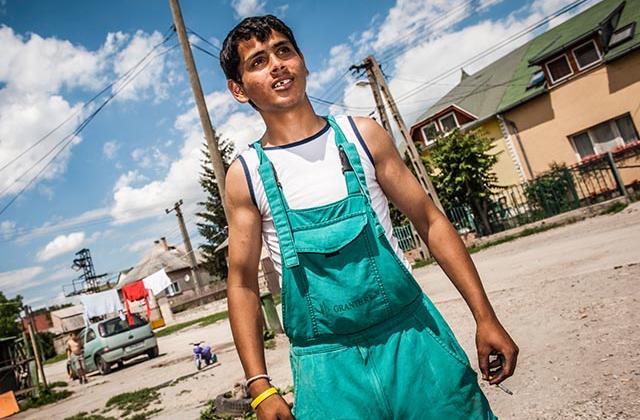
    This report presents findings from FRA’s 2021 survey on Roma in Croatia, Czechia, Greece, Hungary, Italy, Portugal, Romania and Spain, as well as in North Macedonia and Serbia. The survey includes interviews with more than 8,400 Roma, collecting information on more than 20,000 individuals living in their households. By focusing on Roma, the survey provides unique data and information that are not available from European general population surveys, which do not disaggregate on grounds of ethnic origin. The findings present a bleak but familiar picture of exclusion, deprivation, discrimination and racism.
  • Report / Paper / Summary
    16
    December
    2020
    All language versions now available
    20 July 2021
    The EU is founded on the values of democracy, rule of law and respect for human rights. Yet these values, and discussions on fundamental rights at the EU and Member State level, can seem remote in people’s daily lives. With this in mind, FRA explored what people understand, know and experience with respect to their fundamental rights in practice. The resulting data provide comprehensive and comparable evidence on these aspects.
  • Report / Paper / Summary
    24
    June
    2020
    Summary version now available
    07 December 2020
    FRA’s Fundamental Rights Survey collected data from 35,000 people about their experiences, perceptions and opinions on a range of issues that are variously encompassed by human rights. This report presents a small selection of the survey results. It focuses on findings with respect to respondents’ opinions about human – or fundamental rights; their views and perceptions on the functioning of democratic societies – as a pillar on which human rights can flourish; and on their thoughts on and engagement with public services that have a duty to enforce human rights law and to protect people’s rights.
  • Report / Paper / Summary
    4
    December
    2025
    Artificial Intelligence comes with both benefits and risks. Safe AI use that accounts for fundamental rights is thus crucial. While the 2024 EU AI Act was a milestone in this regard, its broad definitions regarding AI systems and high-risk AI could introduce loopholes for fundamental rights compliance. This report offers an empirical basis for much-needed practical guidance on the Act’s implementation. Based on interviews with AI developers, sellers, and users, FRA addresses challenges of its use in critical domains, like asylum, education, and employment. Our findings help guide next steps in realising the AI Act’s potential to ensure responsible innovation.
  • Handbook / Guide / Manual
    10
    October
    2025
    Labour inspectors are essential for enforcing workers’ rights and for detecting and addressing labour exploitation. Together, the European Labour Authority (ELA) and the European Union Agency for Fundamental Rights (FRA) have developed a guide for workplace inspectors on how to detect labour exploitation. This guide is a practical tool for labour inspectors. It focuses on non-national workers in the EU who work in a country other than their own. Such workers are particularly vulnerable to labour exploitation. The guide is also accompanied by a leaflet that summarises the detailed information provided in this guide.
  • Report / Paper / Summary
    2
    October
    2025
    This report examines the fundamental rights and living conditions of Roma and Travellers across 10 EU Member States and
    3 accession countries. The survey evaluates progress towards the EU Roma strategic framework’s 2030 objectives, covering areas such as discrimination, poverty, education, employment, health, and housing.
  • Fundamental Rights Report
    10
    June
    2025
    The Fundamental Rights Report 2025 is the annual report of the European Union Agency for Fundamental Rights (FRA). It provides an overview of the state of fundamental rights in the EU and highlights selected critical developments and trends in 2024. The report covers issues such as inclusive elections, gender-based violence, and the implementation of the EU Charter of Fundamental Rights. It presents FRA’s opinions on these developments, setting out the actions that the EU and Member States should take. This annual publication is a valuable resource for those seeking to stay informed about the EU’s shifting landscape of fundamental rights.
  • Handbook / Guide / Manual
    21
    November
    2024
    This manual is designed to be used by workplace inspection staff in the Member States. It is intended to empower them to enforce the protective standards in EU law that safeguard the rights of third-country workers, including seasonal workers, migrant workers with temporary permits and migrants in an irregular situation. Third-country workers are nationals who are not from a Member State or from Iceland, Liechtenstein, Norway or Switzerland.
  • Report / Paper / Summary
    25
    October
    2024
    Racism towards Muslims is increasing in countries across the EU. Muslims face racial discrimination and racist harassment because of their religion, skin colour or ethnic background. This report shows a sharp rise since the last survey in 2016.