eu-charter

Az Európai Unió Alapjogi Chartája

2. cikk- Az élethez való jog

2. cikk- Az élethez való jog

(1) Minden embernek joga van az élethez.

(2) Senkit sem lehet halálra ítélni vagy kivégezni.

Magyarázatok

  • Text:

    1. E cikk (1) bekezdése az emberi jogok és alapvető szabadságok védelméről szóló európai egyezmény (Emberi Jogok Európai Egyezménye – EJEE) 2. cikke (1) bekezdésének első mondatán alapul, amelynek szövege a következő:
    `1. Törvény védi mindenkinek az élethez való jogát. ...`
    2. A rendelkezés halálbüntetésre vonatkozó második mondata hatályát vesztette az EJEE hatodik kiegészítő jegyzőkönyvének 1. cikke hatálybalépésével, amelynek szövege a következő:
    `A halálbüntetést el kell törölni. Senkit sem lehet halálbüntetésre ítélni, sem kivégezni.`
    A Charta 2. cikkének (2) bekezdése ezen a rendelkezésen alapul.
    3. A Charta 2. cikkének rendelkezései megfelelnek az EJEE és kiegészítő jegyzőkönyvei fenti cikkeinek. Tartalmuk és terjedelmük – a Charta 52. cikkének (3) bekezdése értelmében – megegyezik. Erre figyelemmel az EJEE-ben megjelenő `negatív` meghatározást úgyszintén a Charta alkotórészének kell tekinteni:
    a) Az EJEE 2. cikke (2) bekezdésének szövege a következő:
    `Az élettől való megfosztást nem lehet e cikk megsértéseként elkövetettnek tekinteni akkor, ha az a feltétlenül szükségesnél nem nagyobb erőszak alkalmazásából ered:
    a) személyek jogtalan erőszakkal szembeni védelme érdekében;
    b) törvényes letartóztatás foganatosítása vagy a törvényesen fogva tartott személy szökésének megakadályozása érdekében;
    c) zavargás vagy felkelés elfojtása céljából törvényesen tett intézkedés esetén.`
    b) Az EJEE hatodik kiegészítő jegyzőkönyvének 2. cikke a következő:
    `Egy állam törvényhozása rendelkezhet halálbüntetésről háború idején vagy háború közvetlen veszélye idején; a halálbüntetést ez esetben is csak e törvényhozás által megszabott esetekben és előírt rendelkezéseknek megfelelően lehet alkalmazni. ...`

    Source:
    Az Európai Unió Hivatalos Lapja C 303/17 - 14.12.2007
    Preamble - Explanations relating to the Charter of Fundamental Rights:
    Az alábbi magyarázatok eredetileg az Európai Unió Alapjogi Chartáját kidolgozó Konvent elnökségének irányításával kerültek megfogalmazásra. A magyarázatok naprakésszé tétele az Európai Konvent elnökségének felelőssége mellett, az elnökségnek a Charta szövegéhez (nevezetesen az 51. és 52. cikkéhez) tett kiigazításainak megfogalmazása, valamint az uniós jog további fejlődése fényében történt. Bár a magyarázatok nem bírnak jogi erővel, az értelmezés értékes eszközei, amelyek célja a Charta rendelkezéseinek megvilágítása.

Esetjog

Nemzeti alkotmányjog

41 results found

  • De Belgische Grondwet
    Ország:
    Belgium

     Artikel 14bisDe doodstraf is afgeschaft.Artikel 18De burgerlijke dood is afgeschaft; hij kan niet opnieuw worden ingevoerd.

  • Eesti Vabariigi Põhiseadus
    Ország:
    Estonia

    § 16. Igaühel on õigus elule. Seda õigust kaitseb seadus. Meelevaldselt ei tohi kelleltki elu võtta.

  • Grundgesetz für die Bundesrepublik Deutschland
    Ország:
    Germany

    Artikel 2 (...) (2) Jeder hat das Recht auf Leben und körperliche Unversehrtheit. Die Freiheit der Person ist unverletzlich. In diese Rechte darf nur auf Grund eines Gesetzes eingegriffen werden. Artikel 102 Die Todesstrafe ist abgeschafft.

  • Konstytucja Rzeczypospolitej Polskiej
    Ország:
    Poland

    Art. 38 Rzeczpospolita Polska zapewnia każdemu człowiekowi prawną ochronę życia.

  • La Constitution Belge
    Ország:
    Belgium

     Article 14bisLa peine de mort est abolie.Article 18La mort civile est abolie; elle ne peut être rétablie.

  • Latvijas Republikas Satversme
    Ország:
    Latvia

    93. Ikviena tiesības uz dzīvību aizsargā likums.

  • Lietuvos Respublikos Konstitucija
    Ország:
    Lithuania

    19 straipsnis. Žmogaus teisę į gyvybę saugo įstatymas.

  • Luxembourg / Constitution of the Grand Ducal of Luxembourg
    Ország:
    Luxembourg

    Art 13.  ... (2) Nul ne peut être soumis à la torture ni à des peines ou traitements inhumains et dégradants.

    La peine de mort ne peut pas être établie.

    ...

    Art. 40. L’Etat veille à ce que toute personne puisse vivre dignement et disposer d’un logement approprié.

  • Magyarország Alaptörvénye
    Ország:
    Hungary

    II. cikk (SZABADSÁG ÉS FELELŐSSÉG) Az emberi méltóság sérthetetlen. Minden embernek joga van az élethez és az emberi méltósághoz, a magzat életét a fogantatástól kezdve védelem illeti meg.

  • Netherlands / Constitution of the Kingdom of the Netherlands
    Ország:
    Netherlands

    Article 114 Capital punishment may not be imposed.

  • Romania / Constitution of Romania
    Ország:
    Romania

     Article 22(1) The right to life, as well as the right to physical and mental integrity of person are guaranteed. (3) The death penalty is prohibited.

  • Slovakia / Constitution of the Slovak Republic
    Ország:
    Slovakia

    Article 15 (1) Everyone has the right to life. Human life is worthy of protection even before birth. (2) No person may be deprived of life. (3) The death penalty shall be inadmissible. (4) No infringement of rights shall occur if a person has been deprived of life as a result of an act not defined as unlawful.

  • Slovenia / Constitution of the Republic of Slovenia
    Ország:
    Slovenia

    Article 17 Human life is inviolable. There is no capital punishment in Slovenia.

  • Spain / Constitution of the Kingdom of Spain
    Ország:
    Spain

    Article 15 Everyone has the right to life and to physical and moral integrity, and under no circumstances may be subjected to torture or to inhuman or degrading punishment or treatment. Death penalty is hereby abolished, except as provided for by military criminal law in times of war.

  • Suomen perustuslaki
    Ország:
    Finland

    7 § Oikeus elämään sekä henkikökohtaiseen vapauteen ja koskemattomuuteen Jokaisella on oikeus elämään sekä henkilökohtaiseen vapauteen, koskemattomuuteen ja turvallisuuteen. Ketään ei saa tuomita kuolemaan, kiduttaa eikä muutoinkaan kohdella ihmisarvoa loukkaavasti. (...) 9 § Liikkumisvapaus (...) Ulkomaalaisen oikeudesta tulla Suomeen ja oleskella maassa säädetään lailla. Ulkomaalaista ei saa karkottaa, luovuttaa tai palauttaa, jos häntä tämän vuoksi uhkaa kuolemanrangaistus, kidutus tai muu ihmisarvoa loukkaava kohtelu.

  • The Belgian Constitution
    Ország:
    Belgium

     Article 14bisCapital punishment is abolished.Article 18Civil death is abolished; it cannot be re-introduced.

  • The Constitution of the Republic of Cyprus
    Ország:
    Cyprus

    Article 7
    1. Every person has the right to life and corporal integrity.
    2. [Deleted]
    3. Deprivation of life shall not be regarded as inflicted in contravention of this Article when it results from the use of force which is no more than absolutely necessary -
    (a) in defence of person or property against the infliction of aproportionate and otherwise unavoidable and irreparable evil;
    (b) in order to effect an arrest or to prevent the escape of a person lawfully detained;
    (c) in action taken for the purpose of quelling a riot or insurrection.

  • The Fundamental Law of Hungary
    Ország:
    Hungary

    Article II (Freedom and Responsibility) Human dignity shall be inviolable. Every human being shall have the right to life and human dignity; the life of the foetus shall be protected from the moment of conception.

  • Tο Σύνταγμα της Κυπριακής Δημοκρατίας
    Ország:
    Cyprus

    ΑΡΘΡΟΝ 7
    1. Έκαστος έχει το δικαίωμα ζωής και σωματικής ακεραιότητος.
    2. [Διαγράφηκε].
    3. Η αποστέρησης της ζωής δεν θεωρείται παράβασις του παρόντος άρθρου, οσάκις προέρχεται εκ της χρήσεως της απολύτως αναγκαίας βίας, ότε και όπως ο νόμος ορίζη:
    (α) επί αμύνης προσώπου ή περιουσίας προς αποτροπήν αναλόγου και άλλως αναποτρέπτου και ανεπανορθώτου κακού,
    (β) προς διενέργειαν συλλήψεως ή προς παρεμπόδισιν αποδράσεως προσώπου νομίμως κρατουμένου,
    (γ) επί πράξεως γενομένης προς σκοπόν καταστολής ταραχών ή στάσεως.

  • Το Σύνταγμα της Ελλάδας
    Ország:
    Greece

    Άρθρο 5 (2). Όλοι όσοι βρίσκονται στην Ελληνική Επικράτεια απολαμβάνουν την απόλυτη προστασία της ζωής, της τιμής και της ελευθερίας τους, χωρίς διάκριση εθνικότητας, φυλής, γλώσσας και θρησκευτικών ή πολιτικών πεποιθήσεων. Εξαιρέσεις επιτρέπονται στις περιπτώσεις που προβλέπει το διεθνές δίκαιο. Aπαγoρεύεται η έκδoση αλλoδαπoύ πoυ διώκεται για τη δράση τoυ υπέρ της ελευθερίας[...] Άρθρο 7 (3). [...]Θανατική ποινή δεν επιβάλλεται, εκτός από τις περιπτώσεις που προβλέπονται στο νόμο για κακουργήματα τα οποία τελούνται σε καιρό πολέμου και σχετίζονται με αυτόν [...]

Uniós jog

5 results found

  • Regulation (EU) No 656/2014 of the European Parliament and of the Council of 15 May 2014 establishing rules for the surveillance of the external sea borders in the context of operational cooperation coordinated by Frontex

    Preamble 


    (19) This Regulation respects the fundamental rights and observes the principles recognised by Articles 2 and 6 of the Treaty on European Union (TEU) and by the Charter, in particular respect for human dignity, the right to life, the prohibition of torture and of inhuman or degrading treatment or punishment, the prohibition of trafficking in human beings, the right to liberty and security, the right to the protection of personal data, the right to asylum and to protection against removal and expulsion, the principles of non-refoulement and non-discrimination, the right to an effective remedy and the rights of the child. This Regulation should be applied by Member States and the Agency in accordance with those rights and principles.

  • Regulation (EU) 2019/1896 of the European Parliament and of the Council of 13 November 2019 on the European Border and Coast Guard and repealing Regulations (EU) No 1052/2013 and (EU) 2016/1624

    Preamble

    (103) This Regulation respects the fundamental rights and observes the principles recognised by Articles 2 and 6 TEU and by the Charter of Fundamental Rights of the European Union (‘the Charter’), in particular respect for human dignity, the right to life, the prohibition of torture and inhuman or degrading treatment or punishment, the prohibition of trafficking in human beings, the right to liberty and security, the right to the protection of personal data, the right of access to documents, the right to asylum and to protection against removal and expulsion, non-refoulement, non-discrimination and the rights of the child.

    Article 1: Subject matter

    This Regulation establishes a European Border and Coast Guard to ensure European integrated border management at the external borders with a view to managing those borders efficiently in full compliance with fundamental rights and to increasing the efficiency of the Union return policy.

    This Regulation addresses migratory challenges and potential future challenges and threats at the external borders. It ensures a high level of internal security within the Union in full respect of fundamental rights, while safeguarding the free movement of persons within the Union. It contributes to the detection, prevention and combating of cross-border crime at the external borders.

    Article 43: Instructions to the teams

    4.   Members of the teams shall, in the performance of their tasks and in the exercise of their powers, fully respect fundamental rights, including access to asylum procedures and human dignity, and shall pay particular attention to vulnerable persons. Any measures taken in the performance of their tasks and in the exercise of their powers shall be proportionate to the objectives pursued by such measures. While performing their tasks and exercising their powers, they shall not discriminate against persons on the basis of any grounds such as sex, race, colour, ethnic or social origin, genetic features, language, religion or belief, political or any other opinion, membership of a national minority, property, birth, disability, age or sexual orientation in line with Article 21 of the Charter.

  • Regulation (EU) 2019/125 of the European Parliament and of the Council of 16 January 2019 concerning trade in certain goods which could be used for capital punishment, torture or other cruel, inhuman or degrading treatment or punishment

    Article 1 Subject matter

    This Regulation lays down Union rules governing trade with third countries in goods that could be used for the purpose of capital punishment or for the purpose of torture or other cruel, inhuman or degrading treatment or punishment, and rules governing the supply of brokering services, technical assistance, training and advertising related to such goods.

    ...

  • Directive (EU) 2017/541 of the European Parliament and of the Council of 15 March 2017 on combating terrorism and replacing Council Framework Decision 2002/475/JHA and amending Council Decision 2005/671/JHA

    Preamble:
    ‘(1) The Union is founded on the universal values of human dignity, freedom, equality and solidarity, and respect for human rights and fundamental freedoms. It is based on the principles of democracy and the rule of law, which are common to the Member States.’
    ‘(2) Acts of terrorism constitute one of the most serious violations of the universal values of human dignity, freedom, equality and solidarity, and enjoyment of human rights and fundamental freedoms on which the Union is founded. They also represent one of the most serious attacks on democracy and the rule of law, principles which are common to the Member States and on which the Union is based. [...]’
    Article 25 - Protection of victims of terrorism
    ‘Member States shall ensure that measures are available to protect victims of terrorism and their family members, in accordance with Directive 2012/29/EU. When determining whether and to what extent they should benefit from protection measures in the course of criminal proceedings, particular attention shall be paid to the risk of intimidation and retaliation and to the need to protect the dignity and physical integrity of victims of terrorism, including during questioning and when testifying.’

  • Directive 2012/29/EU of the European Parliament and of the Council of 25 October 2012 establishing minimum standards on the rights, support and protection of victims of crime, and replacing Council Framework Decision 2001/220/JHA

    Preamble:

    (14) In applying this Directive, children's best interests must be a primary consideration, in accordance with the Charter of Fundamental Rights of the European Union and the United Nations Convention on the Rights of the Child adopted on 20 November 1989. Child victims should be considered and treated as the full bearers of rights set out in this Directive and should be entitled to exercise those rights in a manner that takes into account their capacity to form their own views.
    (16) Victims of terrorism have suffered attacks that are intended ultimately to harm society. They may therefore need special attention, support and protection due to the particular nature of the crime that has been committed against them. Victims of terrorism can be under significant public scrutiny and often need social recognition and respectful treatment by society. Member States should therefore take particular account of the needs of victims of terrorism, and should seek to protect their dignity and security.’
    ‘(38) [...] A main task of these services and their staff, which play an important role in supporting the victim to recover from and overcome potential harm or trauma as a result of a criminal offence, should be to inform victims about the rights set out in this Directive so that they can take decisions in a supportive environment that treats them with dignity, respect and sensitivity. The types of support that such specialist support services should offer could include providing shelter and safe accommodation, immediate medical support, referral to medical and forensic examination for evidence in cases of rape or sexual assault, short and long-term psychological counselling, trauma care, legal advice, advocacy and specific services for children as direct or indirect victims.’
    ‘(52) Measures should be available to protect the safety and dignity of victims and their family members from secondary and repeat victimisation, from intimidation and from retaliation, such as interim injunctions or protection or restraining orders.’

    (66) This Directive respects fundamental rights and observes the principles recognised by the Charter of Fundamental Rights of the European Union. In particular, it seeks to promote the right to dignity, life, physical and mental integrity, liberty and security, respect for private and family life, the right to property, the principle of non-discrimination, the principle of equality between women and men, the rights of the child, the elderly and persons with disabilities, and the right to a fair trial.

    Article 18 - Right to protection
    ‘Without prejudice to the rights of the defence, Member States shall ensure that measures are available to protect victims and their family members from secondary and repeat victimisation, from intimidation and from retaliation, including against the risk of emotional or psychological harm, and to protect the dignity of victims during questioning and when testifying. When necessary, such measures shall also include procedures established under national law for the physical protection of victims and their family members.’

Nemzetközi jog

10 results found

  • Protocol No. 13 to the Convention for the Protection of Human Rights and Fundamental Freedoms, concerning the abolition of the death penalty in all circumstances

    Article 1 – Abolition of the death penalty

    The death penalty shall be abolished. No one shall be condemned to such penalty or executed.

  • Protocol No. 6 to the Convention for the Protection of Human Rights and Fundamental Freedoms concerning the abolition of the death penalty

    Article 1 – Abolition of the death penalty

    The death penalty shall be abolished. No-one shall be condemned to such penalty or executed.

  • Second Optional Protocol to the International Covenant on Civil and Political Rights, aiming at the abolition of the death penalty

    Adopted and proclaimed by General Assembly resolution 44/128 of 15 December 1989

  • International Covenant on Civil and Political Rights

    Article 6

    ... 

    2. In countries which have not abolished the death penalty, sentence of death may be imposed only for the most serious crimes in accordance with the law in force at the time of the commission of the crime and not contrary to the provisions of the present Covenant and to the Convention on the Prevention and Punishment of the Crime of Genocide. This penalty can only be carried out pursuant to a final judgement rendered by a competent court.

    ...

  • Convention on the Rights of the Child

    Article 6

    1. States Parties recognize that every child has the inherent right to life. 2

    . States Parties shall ensure to the maximum extent possible the survival and development of the child.

  • International Covenant on Economic, Social and Cultural Rights

    Article 10

    The States Parties to the present Covenant recognize that:

    1. The widest possible protection and assistance should be accorded to the family, which is the natural and fundamental group unit of society, particularly for its establishment and while it is responsible for the care and education of dependent children. Marriage must be entered into with the free consent of the intending spouses.

    2. Special protection should be accorded to mothers during a reasonable period before and after childbirth. During such period working mothers should be accorded paid leave or leave with adequate social security benefits.

    3. Special measures of protection and assistance should be taken on behalf of all children and young persons without any discrimination for reasons of parentage or other conditions. Children and young persons should be protected from economic and social exploitation. Their employment in work harmful to their morals or health or dangerous to life or likely to hamper their normal development should be punishable by law. States should also set age limits below which the paid employment of child labour should be prohibited and punishable by law.

  • International Covenant on Civil and Political Rights

    Article 6

    1. Every human being has the inherent right to life. This right shall be protected by law. No one shall be arbitrarily deprived of his life.

    2. In countries which have not abolished the death penalty, sentence of death may be imposed only for the most serious crimes in accordance with the law in force at the time of the commission of the crime and not contrary to the provisions of the present Covenant and to the Convention on the Prevention and Punishment of the Crime of Genocide. This penalty can only be carried out pursuant to a final judgement rendered by a competent court.

    3. When deprivation of life constitutes the crime of genocide, it is understood that nothing in this article shall authorize any State Party to the present Covenant to derogate in any way from any obligation assumed under the provisions of the Convention on the Prevention and Punishment of the Crime of Genocide.

    4. Anyone sentenced to death shall have the right to seek pardon or commutation of the sentence. Amnesty, pardon or commutation of the sentence of death may be granted in all cases.

    5. Sentence of death shall not be imposed for crimes committed by persons below eighteen years of age and shall not be carried out on pregnant women.

    6. Nothing in this article shall be invoked to delay or to prevent the abolition of capital punishment by any State Party to the present Covenant.

  • Parliamentary Assembly of the Council of Europe (PACE) Resolution 2229 (2018) on International obligations of Council of Europe member States to protect life at sea

    Resolution 2229 (2018) - International obligations of Council of Europe member States to protect life at sea

  • UN Human Rights Committee General comment No. 36 (2018) on article 6 of the International Covenant on Civil and Political Rights, on the right to life

    General comment No. 36 (2018) on article 6 of the International Covenant on Civil and Political Rights, on the right to life

    (adopted by the Committee at its 124th session (8 October to 2 November 2018).


  • ECHR provisions of article 2 and Protocols 6 and 13

    ECHR provisions of article 2 and Protocols 6 and 13 have been incorporated into UK law by the Human Rights Act 1998.

Termékek

  • Report / Paper / Summary
    25
    October
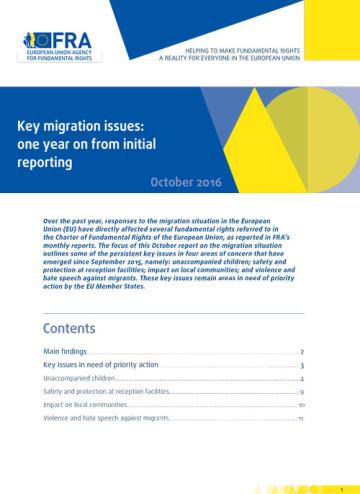
    2016
    In view of the increasing numbers of refugees, asylum seekers and migrants entering the EU, the European Commission asked FRA to collect data about the fundamental rights situation of people arriving in those Member States that have been particularly affected by large migration movements. This month's focus section reviews persistent key issues since initial reporting began one year ago.
  • Fundamental Rights Report
    29
    May
    2016
    This Focus takes a closer look at asylum and migration issues in the European Union (EU) in 2015. It looks at the effectiveness of measures taken or proposed by the EU and its Member States to manage this situation, with particular reference to their fundamental rights compliance.
  • Report / Paper / Summary
    16
    March
    2016
    The fundamental rights of lesbian, gay, bisexual and transgender (LGBT) people are often not respected across the EU. Public officials and other professionals in education, healthcare and law enforcement are entrusted with the duty to ensure that everyone’s fundamental rights are protected and promoted.
  • Report / Paper / Summary
    11
    December
    2015
    While awareness of the rights of lesbian, gay, bisexual, transgender and intersex (LGBTI) persons is on the rise across the European Union, hurdles to their full enjoyment of their fundamental rights remain. This report updates FRA’s 2010 report on homophobia, transphobia and discrimination on grounds of sexual orientation and gender identity.
  • Report / Paper / Summary
    12
    May
    2015
    Trans persons, or those whose gender identity and/or gender expression differs from the sex assigned them at birth, face frequent discrimination, harassment and violence across the European Union (EU) today. This reality triggers fears that persuade many to hide or disguise their true selves. This report examines issues of equal treatment and discrimination on two grounds, namely sexual orientation and gender identity.
  • Report / Paper / Summary
    28
    October
    2014
    In light of a lack of comparable data on the respect, protection and fulfilment of the fundamental rights of lesbian, gay, bisexual and transgender (LGBT) persons, FRA launched in 2012 its European Union (EU) online survey of LGBT persons’ experiences of discrimination, violence and harassment.
  • Report / Paper / Summary
    27
    March
    2014
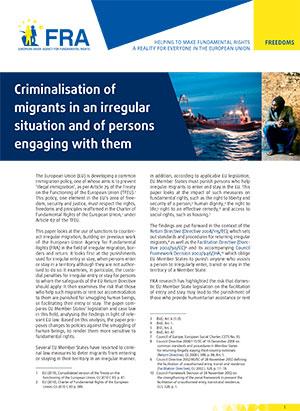
    This paper examines the sanctions applied to counteract irregular migration, building on previous work by the European Union Agency for Fundamental Rights (FRA) on the rights of migrants in an irregular situation.
    FRA 2014
  • Report / Paper / Summary
    6
    August
    2013
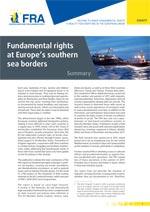
    This FRA report examines the conditions at Europe’s southern sea borders with respect to the most fundamental rights of a person, the right to life and the right not to be sent back to torture, persecution or inhuman treatment. It looks at sea border surveillance and disembarkation procedures, as well as general issues such as European Union (EU) policy, training and Frontex-coordinated operations, and examines practices across the EU Member States researched – Cyprus, Greece, Italy, Malta and Spain.
  • Report / Paper / Summary
    August
    2013
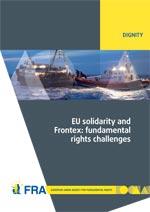
    The majority of irregular arrivals by sea to the European Union (EU) occur in the Mediterranean. Although the phenomenon is not widespread throughout the EU, it affects the EU as a whole. This publication reviews the solidarity measures the EU has established to support those countries most affected by irregular arrivals by sea. It will focus on the fundamental rights challenges raised by such measures but will not discuss whether these measures are sufficient and adequate for genuinely sharing the costs associated with the arrivals. This publication will also touch upon EU funding instruments and intra-EU relocation from Malta and more thoroughly describe the operational cooperation with Frontex.
  • Report / Paper / Summary
    17
    May
    2013
    In light of a lack of comparable data on the respect, protection and fulfilment of the fundamental rights of lesbian, gay, bisexual and transgender (LGBT) persons, the European Union Agency for Fundamental Rights (FRA) launched in 2012 its European Union (EU) online survey of LGBT persons’ experiences of discrimination, violence and harassment.