Η παρούσα καθοδήγηση απευθύνεται στο προσωπικό διαχείρισης των συνόρων των κρατών μελών της Ευρωπαϊκής Ένωσης (ΕΕ) που εργάζεται στο επιχειρησιακό επίπεδο. Αποσκοπεί στο να τους βοηθήσει να εφαρμόζουν, στο πλαίσιο της καθημερινής άσκησης των καθηκόντων τους, τις εγγυήσεις των θεμελιωδών δικαιωμάτων του κώδικα συνόρων του Σένγκεν [κανονισμός (ΕΕ) αριθ. 2016/399] και του συναφούς δικαίου της ΕΕ.
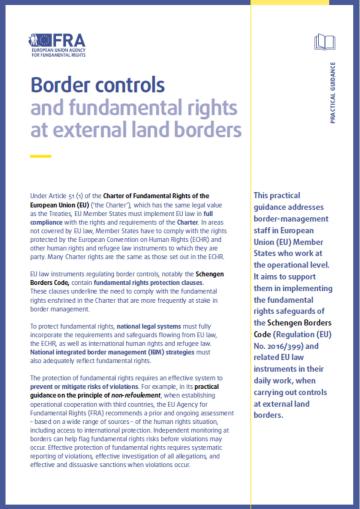
This practical guidance addresses border-management staff in European Union (EU) Member States who work at the operational level. It aims to support them in implementing the fundamental rights safeguards of the Schengen Borders Code (Regulation (EU) No. 2016/399) and related EU law instruments in their daily work, when carrying out controls at external land borders.
La presente guía se dirige al personal de gestión fronteriza de los Estados miembros de la Unión Europea (UE) que trabaja a nivel operativo. Su objetivo es ayudarles a aplicar, en su trabajo diario, las salvaguardias de los derechos fundamentales del Código de fronteras Schengen [Reglamento (UE) 2016/399] y la legislación de la UE relacionada.
Käesolev juhend on ELi liikmesriikide piirivalveametnikele, kes töötavad operatiivtasandil. Juhendi eesmärk on aidata neil rakendada oma igapäevatöös Schengeni piirieeskirjades (määrus (EL) 2016/399) ja seotud ELi õiguses sätestatud põhiõiguste kaitsemeetmeid.
Nämä ohjeet on tarkoitettu EU:n jäsenvaltioiden operatiivisella tasolla työskentelevälle rajavalvontahenkilöstölle. Niiden tarkoituksena on auttaa sitä toteuttamaan päivittäisessä työssään Schengenin rajasäännöstön (asetus (EU) 2016/399) ja siihen liittyvän EU:n lainsäädännön perusoikeuksia koskevia takeita.
Les présentes orientations sont destinées aux agents chargés de la gestion des frontières au sein des États membres de l’Union européenne (UE) qui travaillent au niveau opérationnel. Elles visent à les aider à mettre en oeuvre, dans leurs activités quotidiennes, les garanties relatives aux droits fondamentaux du code frontières Schengen [règlement (UE) 2016/399] et le droit de l’Union correspondant.
Ovaj je priručnik namijenjen službenicima za upravljanje državnim granicama u državama članicama EU-a koji djeluju na operativnoj razini. Svrha mu je pomoći im u njihovu svakodnevnom radu primijeniti mjere za zaštitu temeljnih prava iz Zakonika o schengenskim granicama (Uredba (EU) 2016/399) i povezanog prava EU-a.
Ez az útmutató az EU tagállamaiban műveleti szinten határigazgatást végző személyzetnek készült. Célja, hogy segítséget nyújtson napi munkájuk során abban, hogy az alapjogoknak a Schengeni határ-ellenőrzési kódexben (2016/399/EU rendelet) és a kapcsolódó uniós jogban előírt védelmét biztosítani tudják.
I presenti orientamenti sono destinati al personale addetto alla gestione delle frontiere negli Stati membri dell’Unione europea (UE) che lavora a livello operativo e mirano ad assisterli nell’attuare nel loro lavoro quotidiano, le tutele in materia di diritti fondamentali previste dal codice frontiere Schengen [regolamento (UE) 2016/399] e dal relativo diritto dell’UE.
Šios gairės skirtos ES valstybių narių sienų valdymo pareigūnams, dirbantiems operatyviniu lygmeniu. Jomis siekiama padėti jiems kasdieniame darbe įgyvendinti Šengeno sienų kodekse (Reglamentas (ES) 2016/399) ir susijusiuose ES teisės aktuose nustatytas pagrindinių teisių apsaugos priemones.
Šie norādījumi ir paredzēti robežu pārvaldības darbiniekiem ES dalībvalstīs, kuri strādā operatīvajā līmenī. Norādījumu mērķis ir palīdzēt viņiem ikdienas darbā īstenot Šengenas Robežu kodeksā (Regula (ES) 2016/399) un saistītajos ES tiesību aktos paredzētos pamattiesību aizsardzības pasākumus.
Din il-gwida hija għall-persunal tal-ġestjoni tal-fruntieri fl-Istati Membri tal-UE li jaħdem fuq livell operazzjonali. Din għandha l-għan li tgħinhom jimplimentaw, fil-ħidma tagħhom ta’ kuljum, is-salvagwardji tad-drittijiet fundamentali tal-Kodiċi tal-Fruntieri ta’ Schengen (ir-Regolament (UE) Nru. 2016/399) u l-liġi tal-UE relatata.
Deze richtsnoeren zijn bestemd voor grensbeheerpersoneel in de lidstaten van de Europese Unie (EU) dat op operationeel niveau werkt. Ze zijn bedoeld om deze medewerkers
te helpen bij hun dagelijkse werkzaamheden om de waarborgen op het gebied van de grondrechten van de Schengengrenscode (Verordening (EU) 2016/399) en de daarmee verband houdende EU-wetgeving uit te voeren.
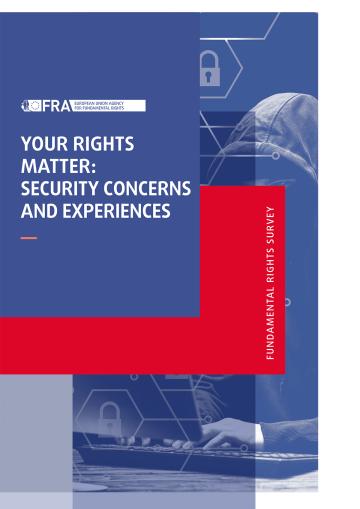
This paper presents people’s concerns and experiences relating to security. It covers worry about crime, including terrorism and online fraud; experience of online fraud; experience of cyberharassment; and concern about illegal access to data.
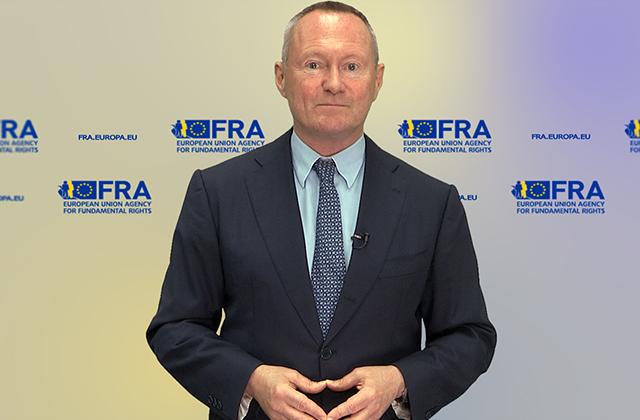
What are the next steps in the digitalisation of justice and of access to justice? This impulse video statement by FRA Director Michael O’Flaherty was recorded for the online conference “Access to Justice in the Digital Age”. The conference takes place on 16 July and is organised by the German Federal Ministry for Justice and Consumer Protection during the German Council Presidency.
Michael O'Flaherty introduces the July edition of FRA's bulletin on the impact for fundamental rights of Covid-19. In this vlog he talks about the important role that people play who are engaged with the promotion and the protection of human rights in these times.
The July edition of the COVID-19 bulletin will be available from 30 July.
The EU Return Directive introduced an important fundamental rights safeguard for third-country nationals ordered to leave the EU because they do not or no longer fulfil the conditions for entry and/or stay. According to the Directive, Member States must provide for an effective forced-return monitoring system.
The EU Return Directive (2008/115/EC) in Article 8 (6) introduced an important fundamental rights safeguard for third-country nationals ordered to leave the EU because they do not or no longer fulfil the conditions for entry and/or stay. According to the directive, Member States must provide for an effective forced-return monitoring system.
The Coronavirus pandemic continues to interrupt everyday life in the EU in unprecedented ways. But the way it affects our societies is shifting. As governments gradually lift some of the measures put in place to contain the spread of COVID-19, new fundamental rights concerns arise: how to ensure that the rights to life and health are upheld as daily life transitions to a ‘new normal’. This Bulletin looks at declarations of states of emergency, or equivalent, and how they came under scrutiny. It considers
the impact on fundamental rights in important areas of daily life, and includes a thematic focus on the pandemic's impact on older people.