Top Menu

  • Informacje o agencji praw podstawowych unii europejskiej
  • Coopération
  • Newsroom
  • Cookies
  • Contact

Select site language

  • Български
  • Čeština
  • Dansk
  • Deutsch
  • Ελληνικά
  • English
  • Español
  • Eesti
  • Suomi
  • Français
  • Gaeilge
  • Hrvatski
  • Magyar
  • Italiano
  • Lietuvių
  • Latviešu
  • Malti
  • Nederlands
  • Polski
  • Português
  • Română
  • Slovenčina
  • Slovenščina
  • Svenska

Custom Topbar

Home

Search the FRA website

      • Work on rights
        • Wymiar sprawiedliwości, prawa ofiar i współpraca sądowa
          • Prawa ofiar
          • Prawa oskarżonych
          • Wymiar sprawiedliwości w sprawach cywilnych
          • Współpraca sądowa i praworządność
          • Bezpieczeństwo
          • Biznes i prawa człowieka
        • Równość, niedyskryminacja i rasizm
          • Dzieci, młodzież i osoby starsze
          • Osoby z niepełnosprawnościami
          • Przestępstwa z nienawiści
          • Pochodzenie rasowe i etniczne
          • Religia i przekonania
          • Romowie
          • Płeć, orientacja seksualna i płeć społeczno-kulturowa
        • Azyl, migracja i granice
          • Dostęp do azylu
          • Grenzen en informatiesystemen
          • Ochrona dziecka
          • Migracja nieuregulowana, powrót i zatrzymanie imigrantów
          • Legalna migracja i integracja
          • Handel ludźmi i wyzysk pracowników
        • Ochrona danych, prywatność i nowe technologie
          • Sztuczna inteligencja i duże zbiory danych
          • Granice i systemy informacyjne
          • Ochrona danych
          • Profilowanie niezgodne z prawem
        • Wsparcie dla systemów praw człowieka i obrońców praw człowieka
          • Karta praw podstawowych UE
          • Międzyrządowe systemy praw człowieka
          • Krajowe systemy i organy w dziedzinie praw człowieka
          • Społeczeństwo obywatelskie
        • Environmental and social sustainability
          • Climate change and environmental protection
          • Just and green transition
          • Business and human rights
          • Human rights due diligence
          • Consumer protection
      • Karta praw podstawowych Unii Europejskiej
        • Czym są prawa podstawowe?
        • What is the EU Charter of Fundamental Rights?
        • Preambuła
        • Tytuł I: Godność
          • 1 - Godność człowieka
          • 2 - Prawo do życia
          • 3 - Prawo człowieka do integralności
          • 4 - Zakaz tortur i nieludzkiego lub poniżającego traktowania albo karania
          • 5 - Zakaz niewolnictwa i pracy przymusowej
        • Tytuł II: Wolności
          • 6 - Prawo do wolności i bezpieczeństwa osobistego
          • 7 - Poszanowanie życia prywatnego i rodzinnego
          • 8 - Ochrona danych osobowych
          • 9 - Prawo do zawarcia małżeństwa i prawo do założenia rodziny
          • 10 - Wolność myśli, sumienia i religii
          • 11 - Wolność wypowiedzi i informacji
          • 12 - Wolność zgromadzania się i stowarzyszania się
          • 13 - Wolność sztuki i nauki
          • 14 - Prawo do nauki
          • 15 - Wolność wyboru zawodu i prawo do podejmowania pracy
          • 16 - Wolność prowadzenia działalności gospodarczej
          • 17 - Prawo własności
          • 18 - Prawo do azylu
          • 19 - Ochrona w przypadku usunięcia z terytorium państwa, wydalenia lub ekstradycji
        • Tytuł III: Równość
          • 20 - Równość wobec prawa
          • 21 - Niedyskryminacja
          • 22 - Różnorodność kulturowa, religijna i językowa
          • 23 - Równość kobiet i mężczyzn
          • 24 - Prawa dziecka
          • 25 - Prawa osób w podeszłym wieku
          • 26 - Integracja osób niepełnosprawnych
        • Tytuł IV: Solidarność
          • 27 - Prawo pracowników do informacji i konsultacji w ramach przedsiębiorstwa
          • 28 - Prawo do rokowań i działań zbiorowych
          • 29 - Prawo dostępu do pośrednictwa pracy
          • 30 - Ochrona w przypadku nieuzasadnionego zwolnienia z pracy
          • 31 - Należyte i sprawiedliwe warunki pracy
          • 32 - Zakaz pracy dzieci i ochrona młodocianych w pracy
          • 33 - Życie rodzinne i zawodowe
          • 34 - Zabezpieczenie społeczne i pomoc społeczna
          • 35 - Ochrona zdrowia
          • 36 - Dostęp do usług świadczonych w ogólnym interesie gospodarczym
          • 37 - Ochrona środowiska
          • 38 - Ochrona konsumentów
        • Tytuł V: Prawa obywatelskie
          • 39 - Prawo głosowania i kandydowania w wyborach do Parlamentu Europejskiego
          • 40 - Prawo głosowania i kandydowania w wyborach lokalnych
          • 41 - Prawo do dobrej administracji
          • 42 - Prawo dostępu do dokumentów
          • 43 - Europejski Rzecznik Praw Obywatelskich
          • 44 - Prawo petycji
          • 45 - Swoboda przemieszczania się i pobytu
          • 46 - Opieka dyplomatyczna i konsularna
        • Tytuł VI: Wymiar sprawiedliwości
          • 47 - Prawo do skutecznego środka prawnego i dostępu do bezstronnego sądu
          • 48 - Domniemanie niewinności i prawo do obrony
          • 49 - Zasady legalności oraz proporcjonalności kar do czynów zabronionych pod groźbą kary
          • 50 - Zakaz ponownego sądzenia lub karania w postępowaniu karnym za ten sam czyn zabroniony pod groźbą kary
        • Tytuł VII: Postanowienia ogólne
          • 51 - Zakres zastosowania
          • 52 - Zakres i wykładnia praw i zasad
          • 53 - Poziom ochrony
          • 54 - Zakaz nadużycia praw
      • Tools
        • EU Fundamental Rights Information System - EFRIS
        • Criminal detention database
        • Anti-Muslim hatred database
        • National human rights structures navigator
        • Case-law database
        • Charterpedia
        • FRA e-learning platform
        • Data visualisation
        • Equality data collection: promising practices
        • Fighting hate crime: promising practices
      • Publikacje i dane
    • About FRA
      • Who we are
        • Structure of FRA
        • Management Board
          • Management Board members
          • Management Board meeting documents
        • Executive Board
        • Scientific Committee
          • Scientific Committee members
        • Director
        • Management team
      • What we do
        • Research and data
        • Capacity-building
        • Advising
        • Convening people
        • FRA for children
          • What are my rights?
          • Where do my rights come from?
        • Areas of work
          • Multi-annual Framework 2007-2022
        • Work Programme
          • Archive
        • Annual Activity report
          • Archive
        • Projects
      • Working at FRA
        • Vacancies and selections
          • Previous vacancies
        • What we offer
        • Work-life balance
        • Application instructions
        • Seconded National Experts
        • Traineeship
        • Study visits at FRA
      • Procurement
        • Ongoing procedures
        • Closed procedures
        • Contracts awarded
      • Finance and budget
        • Financial Rules
        • Financial documents
      • Register of documents
        • Dostęp do dokumentów
        • Application for access to documents
      • Data protection within FRA
        • Records registry
    • Cooperation
      • Instytucje UE i inne organy
        • European Parliament
        • Council of the European Union
        • European Commission
        • EU agencies
          • Justice and Home Affairs Agencies Network
        • European Committee of the Regions
        • European Economic and Social Committee
        • European Ombudsman
        • EU CRPD Framework
          • Promotion
          • Protection
          • Monitoring
          • Review process
          • Resources
      • Państwa członkowskie UE
        • National Liaison Officers
        • National Parliaments
      • Rada Europy
      • Społeczeństwo obywatelskie i platforma praw podstawowych
        • Activities
        • Civic space
        • Platform library
        • How to register
      • Krajowe instytucje ds. praw człowieka, organy ds. równości i instytucje rzeczników praw obywatelskich
      • ONZ, OBWE i inne organizacje międzynarodowe
        • EEA and Norway Grants
      • FRANET
    • Newsroom
      • Media contacts
      • News
      • Press releases
      • Stories
      • Events
        • Past Events
      • FRA products 2026
        • FRA products 2025
        • FRA products 2024
        • FRA products 2023
        • FRA products 2022
        • FRA products 2021
        • FRA Products 2020
        • FRA Products 2019
      • Multimedia
        • Videos
        • Infographics
        • Podcasts
      • Speeches
      • Press packs
        • EU LGBTIQ survey - Press pack
        • Fundamental Rights Survey
        • EU LGBTI survey II
        • From institutions to community living for persons with disabilities: perspectives from the ground
        • Second European Union Minorities and Discrimination Survey – Main results
        • Second European Union Minorities and Discrimination Survey (EU-MIDIS II) Muslims
        • Together in the EU: Promoting the participation of migrants and their descendants
        • Second European Union Minorities and Discrimination Survey (EU-MIDIS II) Roma
        • Severe labour exploitation in the EU
        • Child-friendly justice – perspectives and experiences of professionals: Press pack
        • Fundamental rights at EU borders
        • Violence against women press pack
        • Jewish people’s experiences and perceptions of hate crime, discrimination and antisemitism
        • EU LGBT Press pack
        • Child-friendly justice – perspectives and experiences of children
      • Newsletter
    • Account
      • Log in

Main menu

Home
  • Work on rights
    Work on rights
    • Wymiar sprawiedliwości, prawa ofiar i współpraca sądowa
      • Prawa ofiar
      • Prawa oskarżonych
      • Wymiar sprawiedliwości w sprawach cywilnych
      • Współpraca sądowa i praworządność
      • Bezpieczeństwo
      • Biznes i prawa człowieka
    • Równość, niedyskryminacja i rasizm
      • Dzieci, młodzież i osoby starsze
      • Osoby z niepełnosprawnościami
      • Przestępstwa z nienawiści
      • Pochodzenie rasowe i etniczne
      • Religia i przekonania
      • Romowie
      • Płeć, orientacja seksualna i płeć społeczno-kulturowa
    • Azyl, migracja i granice
      • Dostęp do azylu
      • Grenzen en informatiesystemen
      • Ochrona dziecka
      • Migracja nieuregulowana, powrót i zatrzymanie imigrantów
      • Legalna migracja i integracja
      • Handel ludźmi i wyzysk pracowników
    • Ochrona danych, prywatność i nowe technologie
      • Sztuczna inteligencja i duże zbiory danych
      • Granice i systemy informacyjne
      • Ochrona danych
      • Profilowanie niezgodne z prawem
    • Wsparcie dla systemów praw człowieka i obrońców praw człowieka
      • Karta praw podstawowych UE
      • Międzyrządowe systemy praw człowieka
      • Krajowe systemy i organy w dziedzinie praw człowieka
      • Społeczeństwo obywatelskie
    • Environmental and social sustainability
      • Climate change and environmental protection
      • Just and green transition
      • Business and human rights
      • Human rights due diligence
      • Consumer protection
  • Karta praw podstawowych Unii Europejskiej
    Karta praw podstawowych Unii Europejskiej
    • Czym są prawa podstawowe?
    • What is the EU Charter of Fundamental Rights?
    • Preambuła
    • Tytuł I: Godność
      • 1 - Godność człowieka
      • 2 - Prawo do życia
      • 3 - Prawo człowieka do integralności
      • 4 - Zakaz tortur i nieludzkiego lub poniżającego traktowania albo karania
      • 5 - Zakaz niewolnictwa i pracy przymusowej
    • Tytuł II: Wolności
      • 6 - Prawo do wolności i bezpieczeństwa osobistego
      • 7 - Poszanowanie życia prywatnego i rodzinnego
      • 8 - Ochrona danych osobowych
      • 9 - Prawo do zawarcia małżeństwa i prawo do założenia rodziny
      • 10 - Wolność myśli, sumienia i religii
      • 11 - Wolność wypowiedzi i informacji
      • 12 - Wolność zgromadzania się i stowarzyszania się
      • 13 - Wolność sztuki i nauki
      • 14 - Prawo do nauki
      • 15 - Wolność wyboru zawodu i prawo do podejmowania pracy
      • 16 - Wolność prowadzenia działalności gospodarczej
      • 17 - Prawo własności
      • 18 - Prawo do azylu
      • 19 - Ochrona w przypadku usunięcia z terytorium państwa, wydalenia lub ekstradycji
    • Tytuł III: Równość
      • 20 - Równość wobec prawa
      • 21 - Niedyskryminacja
      • 22 - Różnorodność kulturowa, religijna i językowa
      • 23 - Równość kobiet i mężczyzn
      • 24 - Prawa dziecka
      • 25 - Prawa osób w podeszłym wieku
      • 26 - Integracja osób niepełnosprawnych
    • Tytuł IV: Solidarność
      • 27 - Prawo pracowników do informacji i konsultacji w ramach przedsiębiorstwa
      • 28 - Prawo do rokowań i działań zbiorowych
      • 29 - Prawo dostępu do pośrednictwa pracy
      • 30 - Ochrona w przypadku nieuzasadnionego zwolnienia z pracy
      • 31 - Należyte i sprawiedliwe warunki pracy
      • 32 - Zakaz pracy dzieci i ochrona młodocianych w pracy
      • 33 - Życie rodzinne i zawodowe
      • 34 - Zabezpieczenie społeczne i pomoc społeczna
      • 35 - Ochrona zdrowia
      • 36 - Dostęp do usług świadczonych w ogólnym interesie gospodarczym
      • 37 - Ochrona środowiska
      • 38 - Ochrona konsumentów
    • Tytuł V: Prawa obywatelskie
      • 39 - Prawo głosowania i kandydowania w wyborach do Parlamentu Europejskiego
      • 40 - Prawo głosowania i kandydowania w wyborach lokalnych
      • 41 - Prawo do dobrej administracji
      • 42 - Prawo dostępu do dokumentów
      • 43 - Europejski Rzecznik Praw Obywatelskich
      • 44 - Prawo petycji
      • 45 - Swoboda przemieszczania się i pobytu
      • 46 - Opieka dyplomatyczna i konsularna
    • Tytuł VI: Wymiar sprawiedliwości
      • 47 - Prawo do skutecznego środka prawnego i dostępu do bezstronnego sądu
      • 48 - Domniemanie niewinności i prawo do obrony
      • 49 - Zasady legalności oraz proporcjonalności kar do czynów zabronionych pod groźbą kary
      • 50 - Zakaz ponownego sądzenia lub karania w postępowaniu karnym za ten sam czyn zabroniony pod groźbą kary
    • Tytuł VII: Postanowienia ogólne
      • 51 - Zakres zastosowania
      • 52 - Zakres i wykładnia praw i zasad
      • 53 - Poziom ochrony
      • 54 - Zakaz nadużycia praw
  • Tools
    Tools
    • EU Fundamental Rights Information System - EFRIS
    • Criminal detention database
    • Anti-Muslim hatred database
    • National human rights structures navigator
    • Case-law database
    • Charterpedia
    • FRA e-learning platform
    • Data visualisation
    • Equality data collection: promising practices
    • Fighting hate crime: promising practices
  • Publikacje i dane

You are here

  • Home
  • Work On Rights
  • Environmental and social sustainability
  • Human rights due diligence
  • A Human Rights Approach to Due Diligence: Reflections on key principles
22
October
2025

A Human Rights Approach to Due Diligence: Reflections on key principles

Human rights due diligence
Equality, non-discrimination and racism
Justice, victims’ rights and judicial cooperation
Environmental and social sustainability
This publication discusses how businesses can meet their human rights and environmental responsibilities. It focuses on key elements of mandatory human rights due diligence and presents reflections on principles from international law and EU law. The paper explains why risk-based human rights due diligence is needed and how it should be implemented. It also highlights the importance of stakeholder engagement, access to remedies, and oversight. It aims to inform EU policymakers and stakeholders about ways to effectively promote responsible business conduct and to ensure adequate protection of rightsholders.
Read news item
  • Read Online
  • Related
Export to PDF
Search inside this publication
  • Executive summary
  • Introduction
  • 1. Why is mandatory human rights due diligence needed?
    • 1.1 The EU context
  • 2. A risk-based approach within human rights due diligence
    • 2.1. Business responsibility to respect human rights
    • 2.2. Risk-based approach to identification and assessment of adverse impacts
    • 2.3. Shared responsibility in implementing due diligence across the chain of activities
    • 2.4. Ongoing monitoring in line with a risk-based approach
    • 2.5. A risk-based approach to responsible disengagement
  • 3. Stakeholder engagement
    • 3.1. Conditions and stages of effective stakeholder engagement
  • 4. Access to effective remedies and civil liability
    • 4.1. Civil liability provisions and due diligence obligations
    • 4.2. Overriding mandatory application
    • 4.3. Representation of victims in civil proceedings for effective access to justice
  • 5. Oversight and enforcement
    • 5.1. Supervisory authorities
    • 5.2. Dissuasive penalties and their uniform application
  • About this publication


3. Stakeholder engagement

Stakeholders are persons, groups or communities who have interests that are or could be impacted by a company’s activities, including rights holders in particular [58]
 OECD, OECD Due Diligence Guidance for Responsible Business Conduct, OECD Publishing, Paris, 2018, p. 48.
. Not all interests will be of equal importance and the level of stakeholder engagement should be proportional to the degree of the impact affecting them [59] See footnote 1.


 OECD, ‘Updated commentaries on the OECD guidelines for multinational enterprises on responsible business conduct’, C/MIN(2023)12/ADD2, p. 8.
. Examples of affected or potentially affected stakeholders include communities at the local, regional or national level; workers and employees including those under informal arrangements within supply chains and trade unions; children and other groups in vulnerable and marginalised situations; and consumers or end-users of products. Examples of other relevant stakeholders include non-governmental organisations (NGOs), local civil society organisations, national human rights institutions, community-based organisations and local human rights defenders, industry peers, host governments (local, regional and national), business partners and investors/shareholders.

In line with a risk-based approach, meaningful stakeholder engagement is indispensable to the HRDD process [60] See footnote 11.
. Effective and broad stakeholder involvement can help businesses assess human rights risks accurately, prioritise the risks identified and prevent, mitigate or address adverse effects [61]
 United Nations Development Programme, ‘Human Rights Due Diligence: An Interpretive Guide’, 2021, q. 34.
. It can provide a company with valuable, context-specific insights that cannot be found through desk-based research or internal assessments alone [62]
 Global Business Initiative on Human Rights, ‘What “Good” Looks Like – Meaningful stakeholder engagement’, 2025.
. It can help reduce the likelihood of future complaints or business disturbances. It supports business in developing more sustainable and locally acceptable solutions. Omitting the views of relevant stakeholders can result in poor decisions that interrupt operations and lead to financial loss, reputational damage and costly liabilities [63] See footnote 58.
.

While certain policy approaches seek to substantially restrict the definition of a stakeholder, a rights-based approach to risk identification and management is context-specific and affords companies leeway in identifying which stakeholders (including rights holders) to engage with and how. Should a company be obliged to limit the scope of HRDD, and hence narrow engagement with stakeholders primarily to direct business relationships, this could prevent a deeper scrutiny of supply chains where many harmful impacts occur. This reduces meaningful engagement with indirect suppliers, communities and vulnerable groups, and may cause further marginalisation of vulnerable groups or communities and indigenous peoples. By focusing more on procedural compliance rather than substantive consultations, such an approach risks undermining the purpose of consultations and distorting already well-established, promising practices of more advanced companies. It also fails to fulfil the criteria of ‘free, prior, and informed consent’ processes anchored in international standards [64]
 United Nations, ‘United Nations Declaration on the Rights of Indigenous Peoples’, 61/295, 2007, Articles 10, 11.2, 19, 28, 29.2 and 32.
.


3.1. Conditions and stages of effective stakeholder engagement

According to the OECD Guidelines and UNGPs [65]
 UNGPs 17–21 and their commentaries.
, effective stakeholder engagement requires an ongoing, two-way communication undertaken in good faith with the relevant stakeholders, particularly those of rights holders directly affected by business activities. This engagement must be timely, accessible, appropriate and safe, particularly for stakeholders in vulnerable or marginalised positions. The OECD guidance [66] See footnote 11, pp. 20–22.
highlights the importance of prioritising those most severely impacted and ensuring that their views are taken seriously to inform corporate decision making and risk mitigation. Furthermore, the engagement process should reduce barriers to participation, ensure safe and culturally appropriate conditions for interaction and support the identification, prevention and remediation of adverse human rights impacts. The UNGPs stress that meaningful engagement strengthens legitimacy, accountability and access to remedy, aligning corporate conduct with international human rights standards.

In terms of its stipulation of the conditions of engagement, with which the CSDDD is broadly aligned, these inter alia require that consulted stakeholders receive relevant and comprehensive information. The consultation involves ongoing, regular and genuine interaction, and a dialogue held at the appropriate level of a business activity (such as the project or site level). It asks companies to take due account of barriers to engagement and ensure that stakeholders are free from retaliation and retribution, including by maintaining confidentiality and anonymity. It calls for the consideration of the needs of vulnerable rights holders and asks that attention is paid to overlapping vulnerabilities and intersecting factors, including by considering potentially affected groupings or communities, for example those protected under the UN Declaration on the Rights of Indigenous Peoples and those covered in the UN Declaration on Human Rights Defenders [67] CSDDD, recital 65, Article 13.
.

Meaningful stakeholder engagement is a necessary feature of all stages of the HRDD process. Omitting consultation at any stage in the due diligence process may result in risks not being adequately mapped or prioritised, or in the inadequate or incorrect application of solutions to address shortcomings or mitigate potential adverse impacts.
2. A risk-based approach within human rights due diligence4. Access to effective remedies and civil liability
Related
FRA, 2026
Opinion / Position Paper
Environmental and social sustainability
Climate change and environmental protection
Consumer protection
25
February
2026

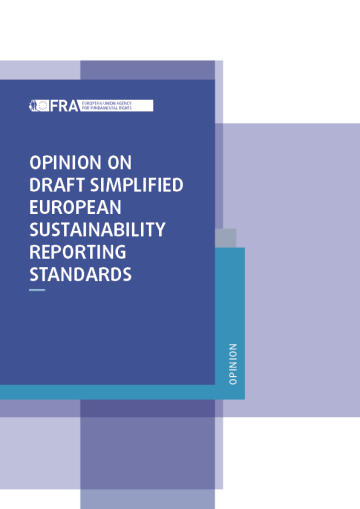
Opinion on Draft Simplified European Sustainability Reporting Standards

This FRA Opinion on the draft simplified European Sustainability Reporting Standards informs the European Commission ahead of the standards’ adoption. This Opinion applies a risk-based human rights approach to assess whether the proposed simplifications preserve essential safeguards for people adversely affected by corporate activities. The Opinion provides practical, proportionate suggestions to strengthen the simplified framework and ensure that efficiency gains do not come at the expense of fundamental rights.
Creative collage of law and justice, gavel and scales
BillionPhotos.com / adobestock.com, 2025
Report / Paper / Summary
EU Charter of Fundamental Rights
Support for human rights systems and defenders
8
December
2025

Better legislation – Human rights impact assessments in lawmaking

This report examines how human rights impact assessments (HRIAs) are built into lawmaking across the EU and its Member States. It highlights that, although progress has been made, the use of HRIAs remains uneven and often superficial. In many EU countries, the EU Charter of Fundamental Rights is frequently overlooked. The report identifies insufficient consultation with external experts, limited stakeholder participation and a lack of evaluation once laws are in force. To address these gaps, it offers practical recommendations for more systematic, inclusive and evidence-based HRIAs that strengthen human rights protection and ensure better, more accountable legislation throughout the EU.
Read news item
Industry smoking chimneys with forest overlay.
Report / Paper / Summary
Consumer protection
Justice, victims’ rights and judicial cooperation
Environmental and social sustainability
7
March
2024

Enforcing consumer rights to combat greenwashing

Tackling greenwashing is an issue where human rights, consumer rights and climate goals align. Companies use greenwashing to convince people to buy products that are not always as environmentally friendly as they claim to be. They mislead consumers and harm the environment. This report shows how a human rights approach can combat greenwashing. It is based on consultations with experts in 10 Member States. The report identifies gaps in existing laws and enforcement. It includes case studies of consumers seeking remedies for misleading environmental claims.
Read news item
Woman watching a virtual screen
HQUALITY © adobestock.com, 2020
Report / Paper / Summary
Artificial intelligence and big data
Data protection, privacy and new technologies
14
December
2020
Slovenian version now available
20 December 2024

Getting the future right – Artificial intelligence and fundamental rights

Artificial intelligence (AI) already plays a role in deciding what unemployment benefits someone gets, where a burglary is likely to take place, whether someone is at risk of cancer, or who sees that catchy advertisement for low mortgage rates. Its use keeps growing, presenting seemingly endless possibilities. But we need to make sure to fully uphold fundamental rights standards when using AI. This report presents concrete examples of how companies and public administrations in the EU are using, or trying to use, AI. It focuses on four core areas – social benefits, predictive policing, health services and targeted advertising.
Read the press release
Watch the launch video
Read press release
© Freshideas / Adobestock
Report / Paper / Summary
Business and human rights
Justice, victims’ rights and judicial cooperation
Environmental and social sustainability
Business and human rights
6
October
2020

Business and human rights – access to remedy

Business activity affects not just customers, employees, and contractors along supply chains, but often entire communities and the environment. This makes it vital that every business complies with human rights. This comparative report looks at the realities victims face when they seek redress for business-related human rights abuses. It presents the findings of fieldwork research on the views of professionals regarding the different ways people can pursue complaints. The findings highlight that obstacles to achieving justice are often multi-layered.
Read news item
Informacje o Agencji Praw Podstawowych Unii Europejskiej

Dowiedz się więcej na temat Agencji i jej działalności.

  • Informacje o Agencji Praw Podstawowych Unii Europejskiej
  • Karta Praw Podstawowych Unii Europejskiej
  • Dokąd zgłosić się o pomoc.
  • Aktualności
  • Zapisz się, aby otrzymywać wiadomości na bieżąco
Napisz do nas
Address
European Union Agency for Fundamental Rights
Schwarzenbergplatz 11
A-1040 Vienna, Austria
E-mail
Skontaktuj się z nami
Newsletter
Zapisz się, aby otrzymywać wiadomości na bieżąco
  • Facebook
  • Twitter
  • LinkedIn
  • YouTube
  • Newsletter
  • E-mail
  • RSS

© European Union Agency for Fundamental Rights, 2007-2026

  • About this website
  • Legal notice
  • Cookies
  • Data Protection
  • Accessibility