eu-charter

Carta drepturilor fundamentale a Uniunii Europene

Articolul 11 - Libertatea de exprimare și de informare

Articolul 11 - Libertatea de exprimare și de informare

(1) Orice persoană are dreptul la libertatea de exprimare. Acest drept cuprinde libertatea de opinie și libertatea de a primi sau de a transmite informații sau idei fără amestecul autorităților publice șifără a ține seama de frontiere.

(2) Libertatea și pluralismul mijloacelor de informare în masă sunt respectate.

Explicaţii

  • Text:

    1. Articolul 11 corespunde articolului 10 din CEDO, având următorul text:
    `(1) Orice persoană are dreptul la libertatea de exprimare. Acest drept cuprinde libertatea de opinie şi libertatea de a primi sau de a comunica informaţii sau idei fără amestecul autorităţilor publice şi fără a ţine seama de frontiere. Prezentul articol nu împiedică statele să supună societăţile de radiodifuziune, de cinematografie sau de televiziune unui regim de autorizare.
    (2) Exercitarea acestor libertăţi ce comportă îndatoriri şi responsabilităţi poate fi supusă unor formalităţi, condiţii, restrângeri sau sancţiuni prevăzute de lege, care constituie măsuri necesare, într-o societate democratică, pentru securitatea naţională, integritatea teritorială sau siguranţa publică, apărarea ordinii şi prevenirea infracţiunilor, protecţia sănătăţii sau a moralei, protecţia reputaţiei sau a drepturilor altora, pentru a împiedica divulgarea de informaţii confidenţiale sau pentru a garanta autoritatea şi imparţialitatea puterii judecătoreşti.`
    În conformitate cu articolul 52 alineatul (3) din cartă acest drept are acelaşi înţeles şi acelaşi domeniu de aplicare ca şi cel garantat prin CEDO. Restrângerile care pot fi aduse acestui drept nu le pot depăşi, prin urmare, pe cele stabilite la articolul 10 alineatul (2), fără a aduce atingere restrângerilor pe care dreptul concurenţei din Uniune le poate impune posibilităţii pe care o au statele membre de a introduce regimurile de autorizare menţionate la articolul 10 alineatul (1) a treia teză din CEDO.
    2. La alineatul (2) din acest articol sunt explicate consecinţele alineatului (1) în ceea ce priveşte libertatea mijloacelor de informare în masă. Acesta se întemeiază în special pe jurisprudenţa Curţii de Justiţie în domeniul televiziunii, în special în cauza C-288/89 (hotărârea din 25 iulie 1991, Stichting Collectieve Antennevoorziening Gouda şi alţii, Rec. p. I-4007) şi pe Protocolul privind sistemul de radiodifuziune publică din statele membre, anexat la Tratatul CE şi de acum înainte la tratate, precum şi pe Directiva 89/552/CEE a Consiliului (a se vedea în special considerentul 17).

    Source:
    Jurnalul Oficial al Uniunii Europene C 303/17 - 14.12.2007
    Preamble - Explanations relating to the Charter of Fundamental Rights:
    Explicaţiile redate în continuare au fost redactate iniţial sub autoritatea prezidiului Convenţiei care a elaborat Carta drepturilor fundamentale a Uniunii Europene. Acestea au fost actualizate sub autoritatea prezidiului Convenţiei Europene, având în vedere adaptarea de către respectiva Convenţie a textului cartei (în special la articolele 51 şi 52), precum şi evoluţia dreptului Uniunii. Cu toate că aceste explicaţii nu au valoare juridică în sine, acestea constituie un preţios instrument de interpretare destinat clarificării dispoziţiilor cartei.

Jurisprudență

Dreptul constituțional național

61 results found

  • КОНСТИТУЦИЯ на Република България
    Țara:
    Bulgaria

    Чл. 38. Никой не може да бъде преследван или ограничаван в правата си поради своите убеждения, нито да бъде задължаван или принуждаван да дава сведения за свои или чужди убеждения. Чл. 39. (1) Всеки има право да изразява мнение и да го разпространява чрез слово - писмено или устно, чрез звук, изображение или по друг начин. (2) Това право не може да се използва за накърняване на правата и доброто име на другиго и за призоваване към насилствена промяна на конституционно установения ред, към извършване на престъпления, към разпалване на вражда или към насилие над личността.Чл. 40. (1) Печатът и другите средства за масова информация са свободни и не подлежат на цензура. (2) Спирането и конфискацията на печатно издание или на друг носител на информация се допускат само въз основа на акт на съдебната власт, когато се накърняват добрите нрави или се съдържат призиви за насилствена промяна на конституционно установения ред, за извършване на престъпление или за насилие над личността. Ако в срок от 24 часа не последва конфискация, спирането преустановява действието си.Чл. 41. (1) Всеки има право да търси, получава и разпространява информация. Осъществяването на това право не може да бъде насочено срещу правата и доброто име на другите граждани, както и срещу националната сигурност, обществения ред, народното здраве и морала. [...]

Legislația UE

15 results found

  • Regulation (EU) 2022/2065 of the European Parliament and of the Council of 19 October 2022 on a Single Market For Digital Services and amending Directive 2000/31/EC (Digital Services Act)

    Article 34: Risk assessment

    1. Providers of very large online platforms and of very large online search engines shall diligently identify, analyse and assess any systemic risks in the Union stemming from the design or functioning of their service and its related systems, including algorithmic systems, or from the use made of their services.

    They shall carry out the risk assessments by the date of application referred to in Article 33(6), second subparagraph, and at least once every year thereafter, and in any event prior to deploying functionalities that are likely to have a critical impact on the risks identified pursuant to this Article. This risk assessment shall be specific to their services and proportionate to the systemic risks, taking into consideration their severity and probability, and shall include the following systemic risks:

    [...]

    (b) any actual or foreseeable negative effects for the exercise of fundamental rights, in particular the fundamental rights to human dignity enshrined in Article 1 of the Charter, to respect for private and family life enshrined in Article 7 of the Charter, to the protection of personal data enshrined in Article 8 of the Charter, to freedom of expression and information, including the freedom and pluralism of the media, enshrined in Article 11 of the Charter, to non-discrimination enshrined in Article 21 of the Charter, to respect for the rights of the child enshrined in Article 24 of the Charter and to a high-level of consumer protection enshrined in Article 38 of the Charter;

  • Council of the European Union: EU Human Rights Guidelines on Freedom of Expression Online and Offline

    ‘14. The right to freedom of expression includes freedom to seek and receive information. It is a key component of democratic governance as the promotion of participatory decision-making processes is unattainable without adequate access to information. For example the exposure of human rights violations may, in some circumstances, be assisted by the disclosure of information held by State entities. Ensuring access to information can serve to promote justice and reparation, in particular after periods of grave violations of human rights. The UN Human Rights Council has emphasized that the public and individuals are entitled to have access, to the fullest extent practicable, to information regarding the actions and decision-making processes of their Government‘
    ‘15. Every individual should have the right to ascertain in an intelligible form, whether, and if so what, personal data is held and stored about them and for what purposes. Every individual should also be able to ascertain which public authorities or private individuals or bodies control or may take decisions affecting the processing of his or her personal data kept in electronic or manual files. If such files contain incorrect personal data or data that have been collected or processed contrary to the provisions of the law, every individual should have the right to have his or her records rectified and in certain circumstances erased. States should make every effort to ensure easy, prompt, effective and practical access to such information. It is recognised that it can be relevant to consider data protection in the context of freedom of expression.‘
    ‘16.The Internet and digital technologies have expanded the possibilities of individuals and media to exercise the right to freedom of expression and freely access online information. Any restriction that prevents the flow of information offline or online must be in line with permissible limitations as set out in international human rights law.‘

  • Regulation (EU) 2015/2120 of the European Parliament and of the Council of 25 November 2015 laying down measures concerning open internet access and amending Directive 2002/22/EC on universal service and users’ rights relating to electronic communicati...

    Article 3 - Safeguarding of open internet access
    ‘1. End-users shall have the right to access and distribute information and content, use and provide applications and services, and use terminal equipment of their choice, irrespective of the end-user’s or provider’s location or the location, origin or destination of the information, content, application or service, via their internet access service.
    This paragraph is without prejudice to Union law, or national law that complies with Union law, related to the lawfulness of the content, applications or services.‘
    ‘3. Providers of internet access services shall not engage in traffic management measures going beyond those set out in the second subparagraph, and in particular shall not block, slow down, alter, restrict, interfere with, degrade or discriminate between specific content, applications or services, or specific categories thereof, except as necessary, and only for as long as necessary, in order to:
    (a) comply with Union legislative acts, or national legislation that complies with Union law, to which the provider of internet access services is subject, or with measures that comply with Union law giving effect to such Union legislative acts or national legislation, including with orders by courts or public authorities vested with relevant powers;
    (b) preserve the integrity and security of the network, of services provided via that network, and of the terminal equipment of end-users;
    (c) prevent impending network congestion and mitigate the effects of exceptional or temporary network congestion, provided that equivalent categories of traffic are treated equally.‘

  • Regulation (EU) 2017/1128 of the European Parliament and of the Council of 14 June 2017 on cross-border portability of online content services in the internal market

    Article 1 - Subject matter and scope
    ‘1. This Regulation introduces a common approach in the Union to the cross-border portability of online content services, by ensuring that subscribers to portable online content services which are lawfully provided in their Member State of residence can access and use those services when temporarily present in a Member State other than their Member State of residence.‘
    Article 3 - Obligation to enable cross-border portability of online content services
    ‘1. The provider of an online content service provided against payment of money shall enable a subscriber who is temporarily present in a Member State to access and use the online content service in the same manner as in the Member State of residence, including by providing access to the same content, on the same range and number of devices, for the same number of users and with the same range of functionalities.‘

  • Communication from the Commission to the European Parliament, the council, the European economic and social committee and the committee of the regions on tackling illegal content online

    ‘2. [...] The guidelines and principles set out in this Communication therefore do not only target the detection and removal of illegal content; they also seek to address concerns in relation to removal of legal content, sometimes called ‘over-removal’, which in turn impacts freedom of expression and media pluralism. Adequate safeguards should therefore be foreseen, and adapted to the specific type of illegal content concerned.‘
    ‘4.2.1 Online platforms should disclose their detailed content policies in their terms of service and clearly communicate this to their users. These terms should not only define the policy for removing or disabling access to content, but also spell out the safeguards that ensure that content-related measures do not lead to over-removal. In particular, online platforms' terms of service should clearly spell out any possibility for the users to contest removal decisions as part of an enhanced transparency of the platforms' general removal policies. This should help reduce the potential negative effect on the users' fundamental right to freedom of expression and information‘

Drept internațional

8 results found

  • Council of Europe Recommendation CM/Rec(2015)6 of the Committee of Ministers to member States on the free, transboundary flow of information on the Internet

    ‘1.1. States have an obligation to guarantee to everyone within their jurisdiction the right to freedom of expression and the right to freedom of assembly and association, in full compliance with Articles 10 and 11 of the ECHR, which apply equally to the Internet. These rights and freedoms must be guaranteed without discrimination on any ground such as gender, sexual orientation, race, colour, language, religion, political or other opinion, national or social origin, association with a national minority, property, birth or other status.‘
    ‘1.2. States should protect and promote the global free flow of information on the Internet. They should ensure that interferences with Internet traffic within their territory pursue the legitimate aims set out in Article 10 of the ECHR and other relevant international agreements and do not have an unnecessary or disproportionate impact on the transboundary flow of information on the Internet.‘

  • Human Rights Committee, General comment No. 34 (2011) - Article 19 Freedoms of opinion and expression

    ‘Freedom of opinion
    9. Paragraph 1 of article 19 requires protection of the right to hold opinions without interference. This is a right to which the Covenant permits no exception or restriction. Freedom of opinion extends to the right to change an opinion whenever and for whatever reason a person so freely chooses. No person may be subject to the impairment of any rights under the Covenant on the basis of his or her actual, perceived or supposed opinions. All forms of opinion are protected, including opinions of a political, scientific, historic, moral or religious nature. It is incompatible with paragraph 1 to criminalize the holding of an opinion. The harassment, intimidation or stigmatization of a person, including arrest, detention, trial or imprisonment for reasons of the opinions they may hold, constitutes a violation of article 19, paragraph 1.
    10. Any form of effort to coerce the holding or not holding of any opinion is prohibited. Freedom to express one’s opinion necessarily includes freedom not to express one’s opinion.
    Freedom of expression
    11. Paragraph 2 requires States parties to guarantee the right to freedom of expression, including the right to seek, receive and impart information and ideas of all kinds regardless of frontiers. This right includes the expression and receipt of communications of every form of idea and opinion capable of transmission to others, subject to the provisions in article 19, paragraph 3, and article 20. It includes political discourse, commentary on one’s own and on public affairs, canvassing, discussion of human rights, journalism, cultural and artistic expression, teaching, and religious discourse. It may also include commercial advertising. The scope of paragraph 2 embraces even expression that may be regarded as deeply offensive, 22 although such expression may be restricted in accordance with the provisions of article 19, paragraph 3 and article 20.
    12. Paragraph 2 protects all forms of expression and the means of their dissemination. Such forms include spoken, written and sign language and such non-verbal expression as images and objects of art. Means of expression include books, newspapers, pamphlets, posters, banners, dress and legal submissions. They include all forms of audio-visual as well as electronic and internet-based modes of expression.‘

  • Recommendation CM/Rec(2016)1 of the Committee of Ministers to member States on protecting and promoting the right to freedom of expression and the right to private life with regard to network neutrality

    ‘1.1. Internet users have the right to freedom of expression, including the right to receive and impart information, by using services, applications and devices of their choice, in full compliance with Article 10 of the Convention. These rights must be enjoyed without discrimination on any ground such as gender, sexual orientation, race, colour, language, religion, political or other opinion, national or social origin, association with a national minority, property, birth or other status.‘
    ‘1.2. Internet users’ right to receive and impart information should not be restricted by means of blocking, slowing down, degrading or discriminating Internet traffic associated with particular content, services, applications or devices, or traffic associated with services provided on the basis of exclusive arrangements or tariffs.‘
    ‘1.3. Internet users should be entitled to an Internet connection with the characteristics defined in the contractual agreements that they have concluded with Internet access service providers on the basis of specific and adequate information that is provided to users with regard to all aspects which might affect their access to the Internet and their right to receive and impart information.‘

  • Recommendation CM/Rec(2016)4 of the Committee of Ministers to member States on the protection of journalism and safety of journalists and other media actors

    ‘2. The right to freedom of expression and information, as guaranteed by Article 10 of the Convention, constitutes one of the essential foundations of a democratic society and one of the basic conditions for its progress and the development of every individual. Freedom of expression is applicable not only to “information” or “ideas” that are favourably received or regarded as inoffensive or as a matter of indifference, but also to those that offend, shock or disturb the State or any sector of the population. In this way, freedom of expression facilitates robust public debate, which is another prerequisite of a democratic society characterised by pluralism, tolerance and broadmindedness. Any interference with the right to freedom of expression of journalists and other media actors therefore has societal repercussions as it is also an interference with the right of others to receive information and ideas and an interference with public debate.‘
    ‘3. The exercise of the right to freedom of expression carries with it duties and responsibilities, as stated in Article 10, paragraph 2. In the context of journalism, relevant duties and responsibilities are understood as including acting in good faith in order to provide accurate and reliable information, in accordance with the ethics of journalism.‘
    ‘5. Moreover, some types of hate speech which incite violence or hatred fall under Article 17 of the Convention (prohibition of abuse of rights) and are therefore not afforded protection because their aim is to destroy some of the rights and freedoms set forth in the Convention.‘
    ‘6. All human rights are universal, indivisible, interdependent and interrelated and there is important interplay between the right to freedom of expression and other human rights, such as the rights to freedom of thought, conscience and religion, the right to freedom of assembly and association and the right to vote in free and fair elections.‘

  • UN General Assembly resolution 71/199 (2017) - The right to privacy in the digital age

    ‘Recalling that the right to privacy is important for the exercise of freedom of expression, including the right to seek, receive and impart information, and contributes to the development of an individual’s ability to participate in political, economic, social and cultural life and that digital technology has a considerable impact on the enjoyment of these rights, ‘
    ‘Noting that, while metadata can provide benefits, certain types of metadata, when aggregated, can reveal personal information and can give an insightinto an individual’s behaviour, social relationships, private preferences and identity‘
    ‘Emphasizing that unlawful or arbitrary surveillance and/or interception of communications, as well as the unlawful or arbitrary collection of personal data, as highly intrusive acts, violate the right to privacy, can interfere with the right to freedom of expression and may contradict the tenets of a democratic society, including when undertaken on a mass scale‘

  • UN Human Rights Council Resolution 23/2 (2013) - The role of freedom of opinion and expression in women’s empowerment

    ‘Acknowledging the important role of women journalists and women human rights defenders in the exercise, promotion and protection of the right to freedom of opinion and expression and, in this context, expressing concern at the risks faced by these women in the exercise of their work, ‘
    ‘Affirms the fundamental role that freedom of opinion and expression plays in the ability of women to interact with society at large, in particular in the realms of economic and political participation, and reaffirmsthat the active participation of women, on equal terms with men, at all levels of decision-making, is essential to the achievement of equality, sustainable development, peace and democracy;‘

  • UN Human Rights Council Resolution 26/13 (2014) - The promotion, protection and enjoyment of human rights on the Internet

    ‘Noting also the importance of building confidence and trust in the Internet, not least with regard to freedom of expression, privacy and other human rights so that the potential of the Internet as, inter alia, an enabler for development and innovation can be realized, ‘
    ‘Affirms that the same rights that people have offline must also be protected online, in particular freedom of expression, which is applicable regardless of frontiers and through any media of one’s choice, in accordance with articles 19 of the Universal Declaration of Human Rights and the International Covenant on Civil and Political Rights; ‘

  • UN Human Rights Council Resolution 33/2 (2016) - The safety of journalists

    ‘Recognizing the crucial role of journalists and media workers in the context of elections, including to inform the public about candidates, their platforms and ongoing debates, and expressing serious concern that attacks against journalists and media workers increase during periods of elections, ‘
    ‘Bearing in mind that impunity for attacks and violence against journalists constitutes one of the greatest challenges to the safety of journalists, and that ensuring accountability for crimes committed against journalists is a key element in preventing future attacks ‘

Produse

  • Report / Paper / Summary
    8
    December
    2022
    Artificial intelligence is everywhere and affects everyone – from deciding what content people see on their social media feeds to determining who will receive state benefits. AI technologies are typically based on algorithms that make predictions to support or even fully automate decision-making.
  • Report / Paper / Summary
    28
    September
    2022
    Actele de terorism periclitează grav viețile și siguranța oamenilor și reprezintă o provocare intensă pentru state în ceea ce privește securitatea. Totodată, legislația, politicile și alte măsuri privind combaterea terorismului pot determina, în mod direct sau indirect, apariția unor restrângeri semnificative ale drepturilor fundamentale și pot afecta negativ persoane, grupuri și societatea în ansamblu. Acest rezumat prezintă constatările principale ale FRA desprinse din raportul său referitor la Directiva (UE) 2017/541 privind combaterea terorismului, principalul instrument de drept penal la nivelul UE în domeniul combaterii terorismului.
  • Report / Paper / Summary
    19
    July
    2022
    Civil society is a key component of Europe’s fundamental rights architecture. From supporting people affected by the pandemic to helping those fleeing the war in Ukraine, civil society plays a crucial role in upholding people’s rights. In so doing, it contributes to a healthy rule of law culture. FRA’s civic space report provides an overview of the many ways in which civil society contributes to the checks and balances that underpin the rule of law.
  • Fundamental Rights Report
    8
    June
    2022
    FRA’s Fundamental Rights Report 2022 reviews major developments in the field in 2021, identifying both achievements and areas of concern. It also presents FRA’s opinions on these developments, including a synopsis of the evidence supporting these opinions.
  • Report / Paper / Summary
    18
    November
    2021
    This report examines the EU’s main criminal law instrument in the field of counter-terrorism, Directive (EU) 2017/541. Specifically, it considers how the directive engages issues of fundamental rights, affecting individuals, groups and society as a whole.
  • Report / Paper / Summary
    22
    September
    2021
    Civil society organisations play a vital role in promoting fundamental rights, but they face diverse challenges across the European Union. This report presents FRA’s findings on a range of such challenges. The findings are based on research, and on two online consultations with civil society organisations, carried out in 2020.
  • Fundamental Rights Report
    10
    June
    2021
    FRA’s Fundamental Rights Report 2021 reviews major developments in the field in 2020, identifying both achievements and areas of concern. It also presents FRA’s opinions on these developments, including a synopsis of the evidence supporting these opinions. This year’s focus chapter explores the impact of the COVID-19 pandemic on fundamental rights. The remaining chapters cover: the EU Charter of Fundamental Rights; equality and non-discrimination; racism, xenophobia and related intolerance; Roma equality and inclusion; asylum, borders and migration; information society, privacy and data protection; rights of the child; access to justice; and the implementation of the Convention on the Rights of Persons with Disabilities.
  • Fundamental Rights Report
    10
    June
    2021
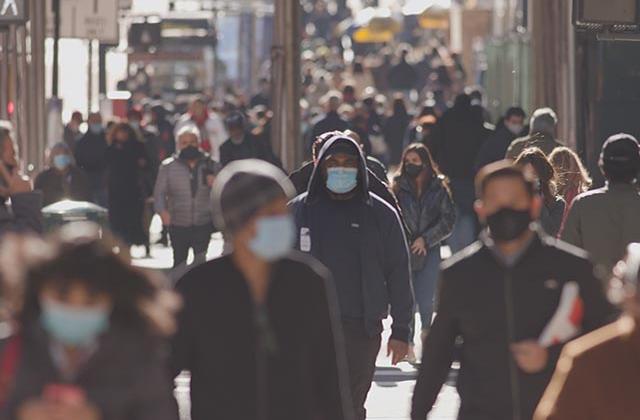
    This focus looks at COVID-19’s impact on fundamental rights. It underscores that a human rights-based approach to tackling the pandemic requires balanced measures that are based on law, necessary, temporary and proportional. It also requires addressing the pandemic’s socio-economic impact, protecting the vulnerable and fighting racism.
  • Report / Paper / Summary
    19
    February
    2021
    This is the second main report from FRA’s Fundamental Rights Survey, which collected data from 35,000 people on a range of issues. This report focuses on respondents’ experiences as victims of selected types of crime, including violence, harassment, and property crime. The report also examines how often these crimes are reported to the police, and presents further details relating to harassment and violence, such as the perpetrators and where the incidents took place.
  • Periodic updates / Series
    30
    June
    2020
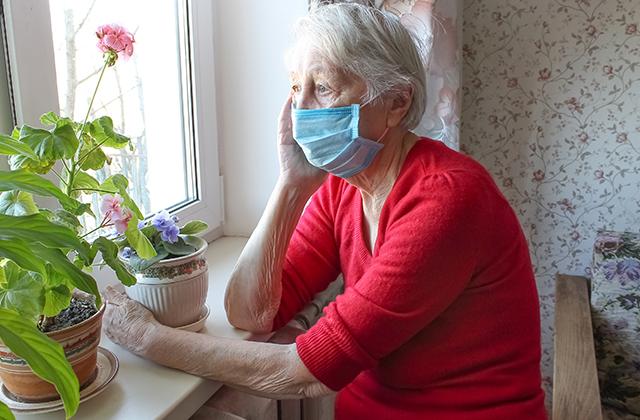
    The Coronavirus pandemic continues to interrupt everyday life in the EU in unprecedented ways. But the way it affects our societies is shifting. As governments gradually lift some of the measures put in place to contain the spread of COVID-19, new fundamental rights concerns arise: how to ensure that the rights to life and health are upheld as daily life transitions to a ‘new normal’. This Bulletin looks at declarations of states of emergency, or equivalent, and how they came under scrutiny. It considers
    the impact on fundamental rights in important areas of daily life, and includes a thematic focus on the pandemic's impact on older people.