eu-charter

Charta základných práv Európskej únie

Článok 35 - Zdravotná starostlivosť

Článok 35 - Zdravotná starostlivosť

Každý má právo na prístup k preventívnej zdravotnej starostlivosti a právo využívať lekársku starostlivosť za podmienok ustanovených vnútroštátnymi právnymi predpismi a praxou. Pri tvorbe a uskutočňovaní všetkých politík a činností Únie sa zabezpečí vysoká úroveň ochrany ľudského zdravia.

Vysvetlivky

  • Text:

    Zásady obsiahnuté v tomto článku sú založené na článku 152 Zmluvy o ES, ktorý je v súčasnosti nahradený článkom 168 Zmluvy o fungovaní Európskej únie, a na článku 11 a 13 Európskej sociálnej charty. Druhá veta článku preberá článok 168 ods. 1.

    Source:
    Úradný vestník Európskej únie C 303/17 - 14.12.2007
    Preamble - Explanations relating to the Charter of Fundamental Rights:
    Ďalej uvedené vysvetlivky boli pôvodne pripravené pod vedením predsedníctva konventu, ktorý vypracoval návrh Charty základných práv Európskej únie. Boli aktualizované pod vedením predsedníctva Európskeho konventu so zreteľom na úpravy, ktoré urobil tento konvent k textu charty (najmä k článkom 51 a 52), a vývoj práva Únie. Hoci tieto vysvetlivky nie sú ako také právne záväzné, predstavujú cenný nástroj výkladu, ktorý je určený na objasnenie ustanovení charty.

Prípadové právo

Vnútroštátne ústavné právo

38 results found

  • Law No. 482 of 1 July 1998 on patients’ rights
    Štát:
    Denmark

    1. The Law shall contribute to ensuring that the patient’s dignity, integrity, and autonomy are respected. The Law shall also contribute to ensuring that the relationship between the patient and the health care provider is one of confidence and confidentiality.

  • Lietuvos Respublikos Konstitucija
    Štát:
    Lithuania

     53 straipsnis. Valstybė rūpinasi žmonių sveikata ir laiduoja medicinos pagalbą bei paslaugas žmogui susirgus. Įstatymas nustato piliečiams nemokamos medicinos pagalbos valstybinėse gydymo įstaigose teikimo tvarką. Valstybė skatina visuomenės kūno kultūrą ir remia sportą. Valstybė ir kiekvienas asmuo privalo saugoti aplinką nuo kenksmingų poveikių.

  • Luxembourg / Constitution of the Grand Ducal of Luxembourg
    Štát:
    Luxembourg

    Art. 34. La sécurité sociale, la protection de la santé et les droits des travailleurs sont réglés par la loi quant à leurs principes.

  • Magyarország Alaptörvénye
    Štát:
    Hungary

    XX. cikk (SZABADSÁG ÉS FELELŐSSÉG) (1) Mindenkinek joga van a testi és lelki egészséghez.
    (2) Az (1) bekezdés szerinti jog érvényesülését Magyarország genetikailag módosított élőlényektől mentes mezőgazdasággal, az egészséges élelmiszerekhez és az ivóvízhez való hozzáférés biztosításával, a munkavédelem és az egészségügyi ellátás megszervezésével, a sportolás és a rendszeres testedzés támogatásával, valamint a környezet védelmének biztosításával segíti elő.

  • Netherlands / Constitution of the Kingdom of the Netherlands
    Štát:
    Netherlands

    Article 22 1. The authorities shall take steps to promote the health of the population. 2. It shall be the concern of the authorities to provide sufficient living accommodation. 3. The authorities shall promote social and cultural development and leisure activities.

  • Portugal / Constitution of the Portuguese Republic
    Štát:
    Portugal

    Article 64 (Health) (1) Everyone has the right to the protection of health and the duty to defend and promote health. (2) The right to the protection of health shall be fulfilled: (a) By means of a universal and general national health service which, with particular regard to the economic and social conditions of the citizens who use it, shall tend to be free of charge; (b) By creating economic, social, cultural and environmental conditions that particularly guarantee the protection of childhood, youth and old age; by systematically improving living and working conditions, and promoting physical fitness and sport at school and among the people; and also by developing the people’s health and hygiene education and healthy living practices. (3) In order to ensure the right to the protection of health, the state is charged, as a priority, with: (a) Guaranteeing access by every citizen, regardless of his economic situation, to preventive, curative and rehabilitative medical care; (b) Guaranteeing a rational and efficient nationwide coverage in terms of human resources and healthcare units; (c) Working towards the socialisation of the costs of medical care and medicines; (d) Disciplining and inspecting entrepreneurial and private forms of medicine and articulating them with the national health service, in such a way as to ensure adequate standards of efficiency and quality in both public and private healthcare institutions; (e) Disciplining and controlling the production, distribution, marketing, sale and use of chemical, biological and pharmaceutical products and other means of treatment and diagnosis; (f) Establishing policies for the prevention and treatment of drug abuse. (4) Management of the national health service shall be decentralised and participatory.

  • Preamble to the Constitution of 27 October 1946
    Štát:
    France

    § 11.It shall guarantee to all, notably to children, mothers and elderly workers, protection of their health, material security, rest and leisure. All people who, by virtue of their age, physical or mental condition, or economic situation, are incapable of working, shall have to the right to receive suitable means of existence from society. 

  • Préambule de la Constitution du 27 Octobre 1946
    Štát:
    France

    § 11.Elle garantit à tous, notamment à l'enfant, à la mère et aux vieux travailleurs, la protection de la santé, la sécurité matérielle, le repos et les loisirs. Tout être humain qui, en raison de son âge, de son état physique ou mental, de la situation économique, se trouve dans l'incapacité de travailler a le droit d'obtenir de la collectivité des moyens convenables d'existence.

  • Romania / Constitution of Romania
    Štát:
    Romania

    Article 34(1) The right to the protection of health is guaranteed. (2) The State shall be bound to take measures to ensure public hygiene and health. (3) The organization of the medical care and social security system in case of sickness, accidents, maternity and recovery, the control over the exercise of medical professions and paramedical activities, as well as other measures to protect physical and mental health of a person shall be established according to the law.

  • Slovensko / Ústava Slovenskej republiky
    Štát:
    Slovensko

    Čl. 40 Každý má právo na ochranu zdravia. Na základe zdravotného poistenia majú občania právo na bezplatnú zdravotnú starostlivosť a na zdravotnícke pomôcky za podmienok, ktoré ustanoví zákon.

  • Slovenia / Constitution of the Republic of Slovenia
    Štát:
    Slovenia

    Article 51 (Right to Health Care) Everyone has the right to health care under conditions provided by law.The rights to health care from public funds shall be provided by law.No one may be compelled to undergo medical treatment except in cases provided by law.

    Article 72 Everyone has the right in accordance with the law to a healthy living environment. The state shall promote a healthy living environment. To this end, the conditions and manner in which economic and other activities are pursued shall be established by law. The law shall establish under which conditions and to what extent a person who has damaged the living environment is obliged to provide compensation. The protection of animals from cruelty shall be regulated by law.

  • Spain / Constitution of the Kingdom of Spain
    Štát:
    Spain

    Section 43 1. The right to health protection is recognised.2. It is incumbent upon the public authorities to organize and watch over public health by means of preventive measures and the necessary benefits and services. The law shall establish the rights and duties of all in this respect.3. The public authorities shall foster health education, physical education and sports. Likewise, they shall encourage the proper use of leisure time.

  • Suomen perustuslaki
    Štát:
    Finland

    19 § Oikeus sosiaaliturvaan (...) Julkisen vallan on turvattava, sen mukaan kuin lailla tarkemmin säädetään, jokaiselle riittävät sosiaali- ja terveyspalvelut ja edistettävä väestön terveyttä. Julkisen vallan on myös tuettava perheen ja muiden lapsen huolenpidosta vastaavien mahdollisuuksia turvata lapsen hyvinvointi ja yksilöllinen kasvu. (...)

  • The Belgian Constitution
    Štát:
    Belgium

    Article 23.Everyone has the right to lead a life in keeping with human dignity.
    To this end, the laws, federate laws and rules referred to in Article 134 guarantee
    economic, social and cultural rights, taking into account corresponding obligations, and
    determine the conditions for exercising them.
    These rights include among others: (...)2) the right to social security, to health care and to social, medical, and legal aid; (...)

  • The Fundamental Law of Hungary
    Štát:
    Hungary

    Article XX (Freedom and Responsibility) (1) Everyone shall have the right to physical and mental health.
    (2) Hungary shall promote the effective application of the right referred to in paragraph (1) through agriculture free of genetically modified organisms, by ensuring access to healthy food and drinking water, by organising safety at work and healthcare provision and by supporting sports and regular physical exercise as well as by ensuring the protection of the environment.

  • Ustav Republike Hrvatske
    Štát:
    Croatia

    Članak 59.
    Svakom se jamči pravo na zdravstvenu zaštitu u skladu sa zakonom.

  • Το Σύνταγμα της Ελλάδας
    Štát:
    Greece

    Άρθρο 5 (5) Καθένας έχει δικαίωμα στην προστασία της υγείας και της γενετικής του ταυτότητας. Νόμος ορίζει τα σχετικά με την προστασία κάθε προσώπου έναντι των βιοϊατρικών παρεμβάσεων. […] Άρθρο 21 (3) To Kράτoς μεριμνά για την υγεία των πoλιτών και παίρνει ειδικά μέτρα για την πρoστασία της νεότητας, τoυ γήρατoς, της αναπηρίας και για την περίθαλψη των απόρων. [...]

  • КОНСТИТУЦИЯ на Република България
    Štát:
    Bulgaria

    Чл. 52(1) Гражданите имат право на здравно осигуряване, гарантиращо им достъпна медицинска помощ, и на безплатно ползване на медицинско обслужване при условия и по ред, определени със закон.(2) Здравеопазването на гражданите се финансира от държавния бюджет, от работодателите, от лични и колективни осигурителни вноски и от други източници при условия и по ред, определени със закон.(3) Държавата закриля здравето на гражданите и насърчава развитието на спорта и туризма.

Právo EÚ

4 results found

  • Directive 2011/95 - Standards for the qualification of third-country nationals or stateless persons as beneficiaries of international protection, for a uniform status for refugees or for persons eligible for subsidiary protection, and for the content of t

    Preamble 

    (10) This Directive respects the fundamental rights and observes the principles recognised in particular by the Charter of Fundamental Rights of the European Union. In particular this Directive seeks to ensure full respect for human dignity and the right to asylum of applicants for asylum and their accompanying family members.

    (16) This Directive respects the fundamental rights and observes the principles recognised in particular by the Charter of Fundamental Rights of the European Union.  In particular this Directive seeks to ensure full respect for  human dignity and the right to asylum of applicants for  asylum and their accompanying family members and to  promote the application of Articles 1, 7, 11, 14, 15, 16, 
    18, 21, 24, 34 and 35 of that Charter, and should  therefore be implemented accordingly.


    (34) With regard to social assistance and health care, the modalities and detail of the provision of core benefits to beneficiaries of subsidiary protection status should be determined by national law. The possibility of limiting the benefits for beneficiaries of subsidiary protection status to core benefits is to be understood in the sense that this notion covers at least minimum income support, assistance in case of illness, pregnancy and parental assistance, in so far as they are granted to nationals according to the legislation of the Member State concerned.

    (35) Access to health care, including both physical and mental health care, should be ensured to beneficiaries of refugee or subsidiary protection status.

    Article 2: Definitions
    For the purposes of this Directive the following definitions shall apply:
    (a) ‘international protection’ means refugee status and subsidiary protection status as defined in points (e) and (g);
    (d) ‘refugee’ means a third-country national who, owing to a well-founded fear of being persecuted for reasons of race, religion, nationality, political opinion or membership of a particular social group, is outside the country of nationality and is unable or, owing to such fear, is unwilling to avail himself or herself of the protection of that country, or a stateless person, who, being outside of the country of former habitual residence for the same reasons as mentioned above, is unable or, owing to such fear, unwilling to return to it, and to whom Article 12 does not apply; [...]
    (e) ‘refugee status’ means the recognition by a Member State of a third-country national or a stateless person as a refugee;
    (f) ‘person eligible for subsidiary protection’ means a third-country national or a stateless person who does not qualify as a refugee but in respect of whom substantial grounds have been shown for believing that the person concerned, if returned to his or her country of origin, or in the case of a stateless person, to his or her country of former habitual residence, would face a real risk of suffering serious harm as defined in Article 15, and to whom Article 17(1) and (2) does not apply, and is unable, or, owing to such risk, unwilling to avail himself or herself of the protection of that country;
    (g) ‘subsidiary protection status’ means the recognition by a Member State of a third-country national or a stateless person as a person eligible for subsidiary protection; [...]

    Article 13: Granting of refugee status
    Member States shall grant refugee status to a third-country national or a stateless person who qualifies as a refugee in accordance with Chapters II and III.‘

    Article 18: Granting of subsidiary protection status
    Member States shall grant subsidiary protection status to a third-country national or a stateless person eligible for subsidiary protection in accordance with Chapters II and V.‘

    Article 21: Protection from refoulement

    1.   Member States shall respect the principle of non-refoulement in accordance with their international obligations.

    2.   Where not prohibited by the international obligations mentioned in paragraph 1, Member States may refoule a refugee, whether formally recognised or not, when:

    (a) there are reasonable grounds for considering him or her as a danger to the security of the Member State in which he or she is present; or

    (b) he or she, having been convicted by a final judgement of a particularly serious crime, constitutes a danger to the community of that Member State.

    3.   Member States may revoke, end or refuse to renew or to grant the residence permit of (or to) a refugee to whom paragraph 2 applies.

    Article 22: Information

    Member States shall provide persons recognised as being in need of international protection, as soon as possible after the respective protection status has been granted, with access to information, in a language likely to be understood by them, on the rights and obligations relating to that status.

    Article 23: Maintaining family unity

    1.   Member States shall ensure that family unity can be maintained.

    2.   Member States shall ensure that family members of the beneficiary of refugee or subsidiary protection status, who do not individually qualify for such status, are entitled to claim the benefits referred to in Articles 24 to 34, in accordance with national procedures and as far as it is compatible with the personal legal status of the family member.

    In so far as the family members of beneficiaries of subsidiary protection status are concerned, Member States may define the conditions applicable to such benefits.

    In these cases, Member States shall ensure that any benefits provided guarantee an adequate standard of living.

    3.   Paragraphs 1 and 2 are not applicable where the family member is or would be excluded from refugee or subsidiary protection status pursuant to Chapters III and V.

    4.   Notwithstanding paragraphs 1 and 2, Member States may refuse, reduce or withdraw the benefits referred therein for reasons of national security or public order.

    5.   Member States may decide that this Article also applies to other close relatives who lived together as part of the family at the time of leaving the country of origin, and who were wholly or mainly dependent on the beneficiary of refugee or subsidiary protection status at that time.

    Article 26: Access to employment

    1.   Member States shall authorise beneficiaries of refugee status to engage in employed or self-employed activities subject to rules generally applicable to the profession and to the public service, immediately after the refugee status has been granted.

    2.   Member States shall ensure that activities such as employment-related education opportunities for adults, vocational training and practical workplace experience are offered to beneficiaries of refugee status, under equivalent conditions as nationals.

    3.   Member States shall authorise beneficiaries of subsidiary protection status to engage in employed or self-employed activities subject to rules generally applicable to the profession and to the public service immediately after the subsidiary protection status has been granted. The situation of the labour market in the Member States may be taken into account, including for possible prioritisation of access to employment for a limited period of time to be determined in accordance with national law. Member States shall ensure that the beneficiary of subsidiary protection status has access to a post for which the beneficiary has received an offer in accordance with national rules on prioritisation in the labour market.

    4.   Member States shall ensure that beneficiaries of subsidiary protection status have access to activities such as employment-related education opportunities for adults, vocational training and practical workplace experience, under conditions to be decided by the Member States.

    5.   The law in force in the Member States applicable to remuneration, access to social security systems relating to employed or self-employed activities and other conditions of employment shall apply.

    Article 27: Access to education

    1.   Member States shall grant full access to the education system to all minors granted refugee or subsidiary protection status, under the same conditions as nationals.

    2.   Member States shall allow adults granted refugee or subsidiary protection status access to the general education system, further training or retraining, under the same conditions as third country nationals legally resident.

    3.   Member States shall ensure equal treatment between beneficiaries of refugee or subsidiary protection status and nationals in the context of the existing recognition procedures for foreign diplomas, certificates and other evidence of formal qualifications.

    Article 28: Social welfare

    1.   Member States shall ensure that beneficiaries of refugee or subsidiary protection status receive, in the Member State that has granted such statuses, the necessary social assistance, as provided to nationals of that Member State.

    2.   By exception to the general rule laid down in paragraph 1, Member States may limit social assistance granted to beneficiaries of subsidiary protection status to core benefits which will then be provided at the same levels and under the same eligibility conditions as nationals.

    Article 29: Health care

    1.   Member States shall ensure that beneficiaries of refugee or subsidiary protection status have access to health care under the same eligibility conditions as nationals of the Member State that has granted such statuses.

    2.   By exception to the general rule laid down in paragraph 1, Member States may limit health care granted to beneficiaries of subsidiary protection to core benefits which will then be provided at the same levels and under the same eligibility conditions as nationals.

    3.   Member States shall provide, under the same eligibility conditions as nationals of the Member State that has granted the status, adequate health care to beneficiaries of refugee or subsidiary protection status who have special needs, such as pregnant women, disabled people, persons who have undergone torture, rape or other serious forms of psychological, physical or sexual violence or minors who have been victims of any form of abuse, neglect, exploitation, torture, cruel, inhuman and degrading treatment or who have suffered from armed conflict.

  • Regulation (EU) 2024/1356 of the European Parliament and of the Council of 14 May 2024 introducing the screening of third-country nationals at the external borders and amending Regulations (EC) No 767/2008, (EU) 2017/2226, (EU) 2018/1240 and (EU) 2019/817

    Preamble 
    (25) During the screening, the best interests of the child should always be a primary consideration in accordance with Article 24(2) of the Charter of Fundamental Rights of the European Union (the ‘Charter’). Child protection authorities should, wherever necessary, be closely involved in the screening to ensure that the best interests of the child are duly taken into account throughout the screening. A representative should be appointed to represent and assist the unaccompanied minor during the screening or, where a representative has not been appointed, a person trained to safeguard the best interests and general wellbeing of the minor should be designated. Where applicable, that representative should be the same as the representative appointed in accordance with the rules on unaccompanied minors in Directive (EU) 2024/1346. The trained person should be the person designated to provisionally act as a representative under that Directive, where that person has been designated.


    (37) A preliminary vulnerability check should be carried out with a view to identifying persons with indications of being vulnerable, of being victims of torture or other inhuman or degrading treatment, or of being stateless, or who may have special reception or procedural needs within the meaning of Directive (EU) 2024/1346 and Regulation (EU) 2024/1348, respectively. This should be without prejudice to further assessment in ensuing procedures following the completion of the screening. The vulnerability check should be carried out by specialised personnel of the screening authorities trained for that purpose.


    (38) During the screening, all persons concerned should be guaranteed a standard of living complying with the Charter and have access to emergency health care and essential treatment of illnesses. Particular attention should be paid to individuals with vulnerabilities, such as pregnant women, elderly persons, single-parent families, persons with an immediately identifiable physical or mental disability, persons visibly having suffered psychological or physical trauma and unaccompanied minors. In particular, in the case of a minor, information should be provided in a child-friendly and age-appropriate manner. All the authorities involved in the performance of the tasks related to the screening should report any situation of vulnerabilities observed or reported to them, should respect human dignity and privacy, and should refrain from any discrimination.

    Article 8 : Requirements concerning the screening

    8.   Member States shall ensure that all persons subject to the screening are accorded a standard of living which guarantees their subsistence, protects their physical and mental health and respects their rights under the Charter.

    Article 10 : Monitoring of fundamental rights

    2.   Each Member State shall provide for an independent monitoring mechanism in accordance with the requirements set out in this Article, which shall:

    (a) monitor compliance with Union and international law, including the Charter, in particular as regards access to the asylum procedure, the principle of non-refoulement, the best interest of the child and the relevant rules on detention, including relevant provisions on detention in national law, during the screening; and

    (b) ensure that substantiated allegations of failure to respect fundamental rights in all relevant activities in relation to the screening are dealt with effectively and without undue delay, trigger, where necessary, investigations into such allegations and monitor the progress of such investigations.

    Article 12: Preliminary health checks and vulnerabilities

    3.   Third-country nationals subjected to the screening referred to in Articles 5 and 7 shall be subject to a preliminary vulnerability check by specialised personnel of the screening authorities trained for that purpose, with a view to identifying whether a third-country national might be a stateless person, vulnerable or a victim of torture or other inhuman or degrading treatment, or have special needs within the meaning of Directive 2008/115/EC, Article 25 of Directive (EU) 2024/1346 and Article 20 of Regulation (EU) 2024/1348. For the purpose of that vulnerability check, the screening authorities may be assisted by non-governmental organisations and, where relevant, by qualified medical personnel.

    Article 13: Guarantees for minors

    1.   During the screening, the best interests of the child shall always be a primary consideration in accordance with Article 24(2) of the Charter.

  • Treaty on the Functioning of the European Union

    Article 168

    (ex Article 152 TEC)

    1. A high level of human health protection shall be ensured in the definition and implementation of all Union policies and activities.

    Union action, which shall complement national policies, shall be directed towards improving public health, preventing physical and mental illness and diseases, and obviating sources of danger to physical and mental health. Such action shall cover the fight against the major health scourges, by promoting research into their causes, their transmission and their prevention, as well as health information and education, and monitoring, early warning of and combating serious cross-border threats to health.

    The Union shall complement the Member States' action in reducing drugs-related health damage, including information and prevention.

    2. The Union shall encourage cooperation between the Member States in the areas referred to in this Article and, if necessary, lend support to their action. It shall in particular encourage cooperation between the Member States to improve the complementarity of their health services in cross-border areas.

    Member States shall, in liaison with the Commission, coordinate among themselves their policies and programmes in the areas referred to in paragraph 1. The Commission may, in close contact with the Member States, take any useful initiative to promote such coordination, in particular initiatives aiming at the establishment of guidelines and indicators, the organisation of exchange of best practice, and the preparation of the necessary elements for periodic monitoring and evaluation. The European Parliament shall be kept fully informed.

    3. The Union and the Member States shall foster cooperation with third countries and the competent international organisations in the sphere of public health.

    4. By way of derogation from Article 2(5) and Article 6(a) and in accordance with Article 4(2)(k) the European Parliament and the Council, acting in accordance with the ordinary legislative procedure and after consulting the Economic and Social Committee and the Committee of the Regions, shall contribute to the achievement of the objectives referred to in this Article through adopting in order to meet common safety concerns:

    (a) measures setting high standards of quality and safety of organs and substances of human origin, blood and blood derivatives; these measures shall not prevent any Member State from maintaining or introducing more stringent protective measures;

    (b) measures in the veterinary and phytosanitary fields which have as their direct objective the protection of public health;

    (c) measures setting high standards of quality and safety for medicinal products and devices for medical use.

    5. The European Parliament and the Council, acting in accordance with the ordinary legislative procedure and after consulting the Economic and Social Committee and the Committee of the Regions, may also adopt incentive measures designed to protect and improve human health and in particular to combat the major cross-border health scourges, measures concerning monitoring, early warning of and combating serious cross-border threats to health, and measures which have as their direct objective the protection of public health regarding tobacco and the abuse of alcohol, excluding any harmonisation of the laws and regulations of the Member States.

    6. The Council, on a proposal from the Commission, may also adopt recommendations for the purposes set out in this Article.

    7. Union action shall respect the responsibilities of the Member States for the definition of their health policy and for the organisation and delivery of health services and medical care. The responsibilities of the Member States shall include the management of health services and medical care and the allocation of the resources assigned to them. The measures referred to in paragraph 4(a) shall not affect national provisions on the donation or medical use of organs and blood.

  • Directive 2013/33/EU of the European Parliament and of the Council of 26 June 2013 laying down standards for the reception of applicants for international protection

    Article 17 General rules on material reception conditions and health care
    ‘1. Member States shall ensure that material reception conditions are available to applicants when they make their application for international protection.
    2. Member States shall ensure that material reception conditions provide an adequate standard of living for applicants, which guarantees their subsistence and protects their physical and mental health.
    Member States shall ensure that that standard of living is met in the specific situation of vulnerable persons, in accordance with Article 21, as well as in relation to the situation of persons who are in detention.
    3. Member States may make the provision of all or some of the material reception conditions and health care subject to the condition that applicants do not have sufficient means to have a standard of living adequate for their health and to enable their subsistence.
    4. Member States may require applicants to cover or contribute to the cost of the material reception conditions and of the health care provided for in this Directive, pursuant to the provision of paragraph 3, if the applicants have sufficient resources, for example if they have been working for a reasonable period of time.
    If it transpires that an applicant had sufficient means to cover material reception conditions and health care at the time when those basic needs were being covered, Member States may ask the applicant for a refund.
    5. Where Member States provide material reception conditions in the form of financial allowances or vouchers, the amount thereof shall be determined on the basis of the level(s) established by the Member State concerned either by law or by the practice to ensure adequate standards of living for nationals. Member States may grant less favourable treatment to applicants compared with nationals in this respect, in particular where material support is partially provided in kind or where those level(s), applied for nationals, aim to ensure a standard of living higher than that prescribed for applicants under this Directive.‘
    Article 19 Health care
    ‘1. Member States shall ensure that applicants receive the necessary health care which shall include, at least, emergency care and essential treatment of illnesses and of serious mental disorders.
    2. Member States shall provide necessary medical or other assistance to applicants who have special reception needs, including appropriate mental health care where needed.‘

Medzinárodné právo

7 results found

  • Council of Europe, Guidelines on child-friendly health care
  • Human Rights Council Resolution 26/21 (2014): Promotion of the right of migrants to the enjoyment of the highest attainable standard of physical and mental health
  • Committee on Economic, Social and Cultural Rights, General Comment No. 14 (2000) - The right to the highest attainable standard of health (article 12 of the International Covenant on Economic, Social and Cultural Rights)
  • Committee on Economic, Social and Cultural Rights, General Comment No. 20 Non-discrimination in economic, social and cultural rights (art. 2, para. 2, of the International Covenant on Economic, Social and Cultural Rights)

    ‘30. The ground of nationality should not bar access to Covenant rights, e.g. all children within a State, including those with an undocumented status, have a right to receive education and access to adequate food and affordable health care. The Covenant rights apply to everyone including non-nationals, such as refugees, asylum-seekers, stateless persons, migrant workers and victims of international trafficking, regardless of legal status and documentation.‘
    ‘35. Individuals and groups of individuals must not be arbitrarily treated on account of belonging to a certain economic or social group or strata within society. A person’s social and economic situation when living in poverty or being homeless may result in pervasive discrimination, stigmatization and negative stereotyping which can lead to the refusal of, or unequal access to, the same quality of education and health care as others, as well as the denial of or unequal access to public places.‘

  • Human Rights Council Resolution 36/13 (2017): Mental health and human rights

    ‘Acknowledging that the Convention on the Rights of Persons with Disabilities laid the foundation for a paradigm shift in mental health and created the momentum for deinstitutionalization and the identification of a model of care based on respect for human rights that, inter alia, addresses the global burden of obstacles in mental health, provides effective mental health and community-based services and respects the enjoyment of legal capacity on an equal basis with others,‘
    ‘Reaffirming that the right to the enjoyment of the highest attainable standard of physical and mental health is an inclusive right, and reaffirming also the need to address issues related to health care and to the underlying determinants of health in this context, ‘
    ‘Reaffirming the right of refugees and migrants to the enjoyment of the highest attainable standard of physical and mental health, and underscoring the vulnerable situations that can have a negative impact on the mental health of persons on the move, ‘

  • Parliamentary Assembly Resolution 1946 (2013): Equal access to health care

    6. The Assembly therefore calls on the Council of Europe member States to:
    ‘6.1. reduce, where appropriate, the proportion of health expenditure payable by the most disadvantaged patients and take all other necessary measures to ensure that the cost of care does not hinder access to care, including the promotion of increased use of generic drugs;
    6.2. ensure the accessibility of health care facilities and health professionals throughout the territory by taking appropriate measures, having recourse where appropriate to incentive measures;
    6.3. ensure the accessibility of information on the health system, including vaccination and screening programmes, and set up health education programmes, while taking account of the specific needs of the different vulnerable groups and of the requirement to reduce language barriers to a minimum;
    6.4. ensure that pregnant women and children, as a particularly vulnerable group, have full access to health care and social protection, irrespective of their status;
    6.5. simplify the administrative procedures required to be able to receive health care;
    6.6. introduce measures to combat corruption in the health sector, in close co-operation with the Group of States against Corruption (GRECO);
    6.7. dissociate their security and immigration policies from health policy, where appropriate by abolishing the obligation on health professionals to report migrants in an irregular situation;
    6.8. introduce training policies for health professionals stressing the need to combat arbitrary applications, discrimination and corruption in the health sector. ‘

  • UN Committee on the Rights of the Child, General comment No. 15 (2013) on the right of the child to the enjoyment of the highest attainable standard of health (art. 24)

Informačné materiály

  • Report / Paper / Summary
    28
    February
    2023
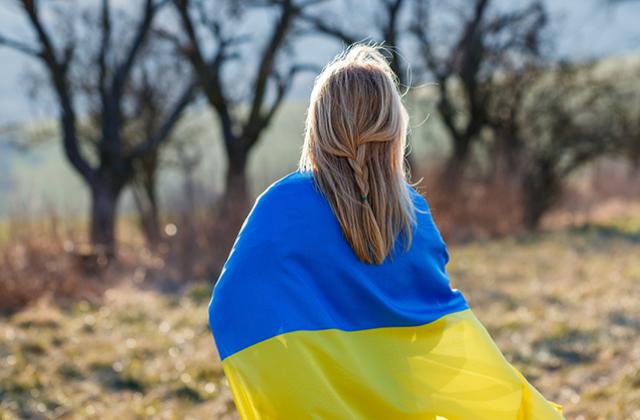
    Vojenská agresia Ruska voči Ukrajine vyvolala situácie, ktoré Európa celé desaťročia nezažila. Odvtedy prináša smrť, spôsobuje rozsiahle ničenie a neopísateľné utrpenie. Vyvolala aj masový pohyb ľudí, ktorý od druhej svetovej vojny nemá obdobu. V záujme ich ochrany EÚ prvýkrát aktivovala smernicu o dočasnej ochrane. Všetky členské štáty EÚ sú teda povinné poskytnúť ochranu osobám vysídleným z Ukrajiny.
  • Report / Paper / Summary
    25
    October
    2022
    02 November 2022
    This report presents findings from FRA’s 2021 survey on Roma in Croatia, Czechia, Greece, Hungary, Italy, Portugal, Romania and Spain, as well as in North Macedonia and Serbia. The survey includes interviews with more than 8,400 Roma, collecting information on more than 20,000 individuals living in their households. By focusing on Roma, the survey provides unique data and information that are not available from European general population surveys, which do not disaggregate on grounds of ethnic origin. The findings present a bleak but familiar picture of exclusion, deprivation, discrimination and racism.
  • Report / Paper / Summary
    16
    December
    2020
    V tomto zhrnutí sú uvedené hlavné poznatky
    z prvej správy agentúry FRA založenej na
    prieskume základných práv, ktorý uskutočnila
    agentúra. V prieskume boli zhromaždené údaje
    približne od 35 000 osôb o skúsenostiach, vnímaní
    a názoroch týkajúcich sa celého radu záležitostí,
    ktoré sa rôznym spôsobom týkajú ľudských práv.
  • Report / Paper / Summary
    24
    June
    2020
    Summary version now available
    07 December 2020
    FRA’s Fundamental Rights Survey collected data from 35,000 people about their experiences, perceptions and opinions on a range of issues that are variously encompassed by human rights. This report presents a small selection of the survey results. It focuses on findings with respect to respondents’ opinions about human – or fundamental rights; their views and perceptions on the functioning of democratic societies – as a pillar on which human rights can flourish; and on their thoughts on and engagement with public services that have a duty to enforce human rights law and to protect people’s rights.
  • Report / Paper / Summary
    14
    April
    2026
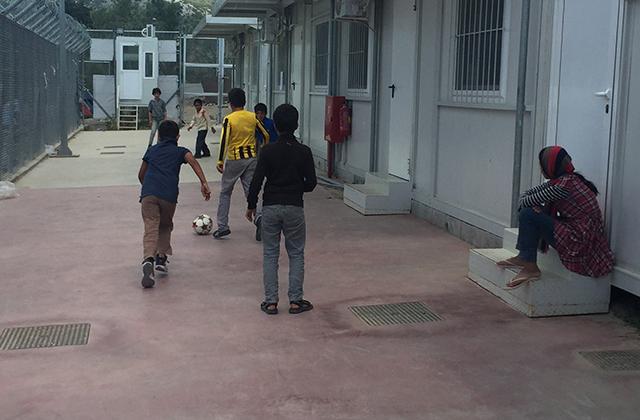
    In response to increased arrivals of asylum seekers, in 2015 the European Commission introduced the hotspot approach. Under this approach, the European Commission and EU agencies supported Greece and Italy in identifying, registering and fingerprinting newly arrived people. FRA regularly visited the initial reception facilities hosting them. This report looks back at the lessons learnt from 10 years of FRA visits. It identifies recurring risks to rights and highlights practical measures and promising practices to prevent or address them. These ‘lessons learnt’ can inform the implementation of the 2024 Pact on Migration and Asylum in line with the EU Charter of Fundamental Rights.
  • Report / Paper / Summary
    24
    February
    2026
    The start of Russia’s war of aggression against Ukraine on 24 February 2022 shocked the global community and gave rise to a
    series of urgent fundamental rights challenges across Europe. While much attention has focused on the scale of devastation and its wider impact on all Ukrainians, the war has also inflicted profound personal harm. This report sheds light on the violence, sexual harassment and exploitation experienced by women displaced from Ukraine. Drawing on a survey and in-depth interviews with women from Ukraine, the report documents the prevalence, forms and patterns of gender-based violence and sets out practical measures to improve safety, access to justice and support.
  • Report / Paper / Summary
    2
    October
    2025
    This report examines the fundamental rights and living conditions of Roma and Travellers across 10 EU Member States and
    3 accession countries. The survey evaluates progress towards the EU Roma strategic framework’s 2030 objectives, covering areas such as discrimination, poverty, education, employment, health, and housing.
  • Report / Paper / Summary
    17
    September
    2025
    This report highlights the discrimination, harassment, violence, and non-consensual medical interventions faced by intersex people across 30 European countries, based on responses from nearly 2,000 participants in FRA's 2023 EU LGBTIQ Survey III. It reveals that many intersex individuals also identify as trans, non-binary, gender-diverse and have varied sexual orientations, which further compounds their experiences of discrimination. The report aims to support the development of laws and policies that promote the inclusion and dignity of intersex people.
  • Opinion / Position Paper
    6
    February
    2025
    This FRA Position Paper outlines the Agency’s position on the creation of 'return hubs' in non-EU countries for migrants who have been ordered to leave the EU. Considering the serious fundamental rights risks connected with running return hubs, this legal analysis presents the conditions that would have to be met for return hubs to respect fundamental rights and comply with EU law. These include setting up agreements with the host countries and creating independent human rights monitoring mechanisms. The position paper does not examine centres in third countries that process asylum applications.