eu-charter

Listina Evropske unije o temeljnih pravicah

Člen 15 - Svoboda izbire poklica in pravica do dela

Člen 15 - Svoboda izbire poklica in pravica do dela

1. Vsakdo ima pravico do dela in do opravljanja svobodno izbranega ali sprejetega poklica.
2. Vsakemu državljanu Unije je v kateri koli državi članici zagotovljena svoboda iskanja zaposlitve, dela, ustanavljanja in opravljanja storitev.
3. Državljani tretjih držav, ki smejo delati na ozemlju držav članic, imajo pravico do enakih delovnih pogojev kot državljani Unije.

Pojasnila

  • Text:

    Pravico do izbire poklica, kot je zagotovljena v členu 15(1), priznava sodna praksa Sodišča (glej med drugim sodbe z dne 14. maja 1974 v zadevi Nold, 4/73, rec. 1974, str. 491, točke od 12 do 14, z dne 13. decembra 1979 v zadevi Hauer, 44/79, rec. 1979, str. 3727, in z dne 8. oktobra 1986 v zadevi Keller, 234/85, rec. 1986, str. 2897, točka 8).
    Ta odstavek se prav tako sklicuje na 1. člen, drugi odstavek Evropske socialne listine, ki je bila podpisana 18. oktobra 1961 in so jo ratificirale vse države članice, ter na točko 4 Listine Skupnosti o temeljnih socialnih pravicah delavcev z dne 9. decembra 1989. Izraz `delovni pogoji` je treba razumeti v smislu člena 156 Pogodbe o delovanju Evropske unije.
    Odstavek 2 obravnava tri pravice, ki jih zagotavljajo členi 26, 45, 49 in 56 Pogodbe o delovanju Evropske unije, to so pravica do prostega gibanja delavcev, pravica do ustanavljanja in pravica opravljanja storitev.
    Odstavek 3 temelji na členu 153(1)(g) Pogodbe o delovanju Evropske unije in na četrtem odstavku 19. člena Evropske socialne listine, podpisane 18. oktobra 1961, ki so jo ratificirale vse države članice. Člen 52(2) Listine se tako uporablja. Vprašanje zaposlovanja mornarjev z državljanstvom tretjih držav kot članov posadk plovil pod zastavo države članice Unije ureja pravo Unije ter nacionalna zakonodaja in praksa.

    Source:
    Uradni list Evropske unije C 303/17 - 14.12.2007
    Preamble - Explanations relating to the Charter of Fundamental Rights:
    V nadaljevanju navedena pojasnila so bila prvotno pripravljena pod vodstvom predsedstva Konvencije, ki je sestavilo Listino Evropske unije o temeljnih pravicah. Ta pojasnila so bila posodobljena pod vodstvom predsedstva Evropske konvencije zaradi prilagoditve besedila Listine s strani omenjene konvencije (zlasti členov 51 in 52) in nadaljnjega razvoja prava Unije. Čeprav sama nimajo pravne veljave, so dragocena pomoč pri razlagi in pojasnjevanju določb Listine.

Sodna praksa

Nacionalnem ustavnem pravu

41 results found

  • Latvijas Republikas Satversme
    Država:
    Latvia

    106. Ikvienam ir tiesības brīvi izvēlēties nodarbošanos un darbavietu atbilstoši savām spējām un kvalifikācijai. Piespiedu darbs ir aizliegts. Par piespiedu darbu netiek uzskatīta iesaistīšana katastrofu un to seku likvidēšanā un nodarbināšana saskaņā ar tiesas nolēmumu. 116. Personas tiesības, kas noteiktas Latvijas Republikas Satversmes deviņdesmit sestajā, deviņdesmit septītajā, deviņdesmit astotajā, simtajā, simt otrajā, simt trešajā, simt sestajā un simt astotajā pantā, var ierobežot likumā paredzētajos gadījumos, lai aizsargātu citu cilvēku tiesības, demokrātisko valsts iekārtu, sabiedrības drošību, labklājību un tikumību. Uz šajā pantā minēto nosacījumu pamata var ierobežot arī reliģiskās pārliecības paušanu.

  • Lietuvos Respublikos Konstitucija
    Država:
    Lithuania

    48 straipsnis. Kiekvienas žmogus gali laisvai pasirinkti darbą bei verslą ir turi teisę turėti tinkamas, saugias ir sveikas darbo sąlygas, gauti teisingą apmokėjimą už darbą ir socialinę apsaugą nedarbo atveju. Užsieniečių darbą Lietuvos Respublikoje reguliuoja įstatymas. Priverčiamasis darbas draudžiamas. Priverčiamuoju darbu nelaikoma tarnyba kariuomenėje ar ją pakeičianti alternatyvioji tarnyba, taip pat piliečių darbas karo, stichinės nelaimės, epidemijos ar kitais ypatingais atvejais. Priverčiamuoju darbu nelaikomas ir įstatymo reguliuojamas teismo nuteistųjų darbas.

  • Luxembourg / Constitution of the Grand Ducal of Luxembourg
    Država:
    Luxembourg

    Art. 38. L’Etat garantit le droit au travail et veille à assurer l’exercice de ce droit.

  • Magyarország Alaptörvénye
    Država:
    Hungary

    XI. cikk (SZABADSÁG ÉS FELELŐSSÉG) [...] (3) Törvény a felsőfokú oktatásban való részesülés anyagi támogatását meghatározott időtartamú olyan foglalkoztatásban való részvételhez, illetve vállalkozási tevékenység gyakorlásához kötheti, amelyet a magyar jog szabályoz.

    XII. cikk (SZABADSÁG ÉS FELELŐSSÉG) (1) Mindenkinek joga van a munka és a foglalkozás szabad megválasztásához, valamint a vállalkozáshoz. Képességeinek és lehetőségeinek megfelelő munkavégzéssel mindenki köteles hozzájárulni a közösség gyarapodásához.
    (2) Magyarország törekszik megteremteni annak feltételeit, hogy minden munkaképes ember, aki dolgozni akar, dolgozhasson.

  • Netherlands / Constitution of the Kingdom of the Netherlands
    Država:
    Netherlands

    Article 19 1. It shall be the concern of the authorities to promote the provision of sufficient employment. 2. Rules concerning the legal status and protection of working persons and concerning co-determination shall be laid down by Act of Parliament. 3. The right of every Dutch national to a free choice of work shall be recognised, without prejudice to the restrictions laid down by or pursuant to Act of Parliament.

  • Portugal / Constitution of the Portuguese Republic
    Država:
    Portugal

    Article 47 (Freedom to choose a profession and of access to the public service) (1) Everyone has the right to choose a profession or type of work freely, subject to the legal restrictions that are imposed in the collective interest or the restrictions that are inherent in a person’s own capabilities. Article 58 (Right to work) (1) Everyone shall possess the right to work. (2) In order to ensure the right to work, the state shall be charged with promoting: (a) The implementation of full-employment policies; (b) Equal opportunities in the choice of profession or type of work, and the conditions needed to avoid the gender-based preclusion or limitation of access to any position, work or professional category; (c) Cultural and technical training and vocational development for workers.

  • Preamble to the Constitution of 27 October 1946
    Država:
    France

    § 5 Each person has the duty to work and the right to employment. No person may suffer prejudice in his work or employment by virtue of his origins, opinions or beliefs.

  • Préambule de la Constitution du 27 octobre 1946
    Država:
    France

    § 5Chacun a le devoir de travailler et le droit d'obtenir un emploi. Nul ne peut être lésé, dans son travail ou son emploi, en raison de ses origines, de ses opinions ou de ses croyances.

  • Romania / Constitution of Romania
    Država:
    Romania

    Article 41 (1) The right to work shall not be restricted. Everyone has a free choice of his/her profession, trade or occupation, as well as work place. (...)

  • Slovakia / Constitution of the Slovak Republic
    Država:
    Slovakia

    Article 35 (1) Everyone has the right to a free choice of profession and to appropriate training, as well as the right to conduct entrepreneurial or other gainful activity. (2) Conditions and restrictions with regard to the execution of certain professions or activities may be laid down by law. (3) Citizens have the right to work. The State shall guarantee, within appropriate extent, the material welfare of those who cannot enjoy this right without their own fault. The conditions shall be laid down by law. (4) A law may provide different regulation of the rights specified in paragraphs 1 to 3 with regard to the aliens.

    Article 38 (1) Women, minors and persons with disabilities are entitled to an enhanced health protection at work as well as to special working conditions. (2) Minors and persons with disabilities are entitled to special protection in labour relations as well as to assistance in professional training.(3) Details concerning rights listed in paragraphs 1 and 2 shall be laid down by law.

  • Slovenija / Ustava Republike Slovenije
    Država:
    Slovenija

    13. členTujci imajo v Sloveniji v skladu z mednarodnimi pogodbami vse pravice, zagotovljene s to ustavo in z zakoni, razen tistih, ki jih imajo po ustavi ali po zakonu samo državljani Slovenije.

    49. člen Zagotovljena je svoboda dela. Vsakdo prosto izbira zaposlitev. Vsakomur je pod enakimi pogoji dopustno vsako delovno mesto. Prisilno delo je prepovedano.

    66. člen Država ustvarja možnosti za zaposlovanje in za delo ter zagotavlja njuno zakonsko varstvo.

    79. člen V Sloveniji zaposleni tujci in člani njihovih družin imajo posebne pravice, določene z zakonom.

  • Spain / Constitution of the Kingdom of Spain
    Država:
    Spain

    Section 35 (1) All Spaniards have the duty to work and the right to work, to the free choice of profession or trade, to advancement through work, and to a sufficient remuneration for the satisfaction of their needs and those of their families. Under no circumstances may they be discriminated on account of their sex. (2) The law shall regulate a Workers' Statute.

  • Suomen perustuslaki
    Država:
    Finland

    18 § Oikeus työhön ja elinkeinovapaus Jokaisella on oikeus lain mukaan hankkia toimeentulonsa valitsemallaan työllä, ammatilla tai elinkeinolla. Julkisen vallan on huolehdittava työvoiman suojelusta. Julkisen vallan on edistettävä työllisyyttä ja pyrittävä turvaamaan jokaiselle oikeus työhön. Oikeudesta työllistävään koulutukseen säädetään lailla. Ketään ei saa ilman lakiin perustuvaa syytä erottaa työstä.

  • The Belgian Constitution
    Država:
    Belgium

    Article 23. Everyone has the right to lead a life in keeping with human dignity. 10 To this end, the laws, federate laws and rules referred to in Article 134 guarantee economic,social and cultural rights, taking into account corresponding obligations, and determine the conditions for exercising them. These rights include among others: 1° the right to employment and to the free choice of an occupation within the context of a general employment policy, aimed among others at ensuring a level of employment that is as stable and high as possible, the right to fair terms of employment and to fair remuneration,as well as the right to information,consultation and collective negotiation; (...)

  • The Constitution of the Republic of Cyprus
    Država:
    Cyprus

    Article 25
    1. Every person has the right to practice any profession or to carry on any occupation, trade or business.
    2. The exercise of this right may be subject to such formalities, conditions or restrictions as are prescribed by law and relate exclusively to the qualifications usually required for the exercise of any profession or are necessary only in the interests of the security of the Republic or the constitutional order or the public safety or the public order or the public health or the public morals or for the protection of the rights and liberties guaranteed by this Constitution to any person or in the public interest:
    Provided that no such formalities, conditions or restrictions purporting to be in the public interest shall be prescribed by a law if such formality, condition or restriction is contrary to the interests of either Community.
    3. As an exception to the aforesaid provisions of this Article a law may provide, if it is in the public interest, that certain enterprises of the nature of an essential public service or relating to the exploitation of sources of energy or other natural resources shall be carried out exclusively by the Republic or a municipal corporation or by a public corporate body created for the purpose by such law and administered under the control of the Republic, and having a capital which may be derived from public and private funds or from either such source only:
    Provided that where such enterprise has been carried out by any person, other than a municipal corporation or a public corporate body, the installations used for such enterprise shall, at the request of such person, be acquired on payment of a just price, by the Republic or such municipal corporation or such public corporate body, as the case may be.

  • The Constitutional Act of Denmark
    Država:
    Denmark

    Section 75 . Subsection 1. In order to advance the public interest, efforts shall be made to guarantee work for every able-bodied citizen on terms that will secure his existence.

  • The Fundamental Law of Hungary
    Država:
    Hungary

    Article XI (Freedom and Responsibility ) [...] (3) An Act may provide that financial support of higher education studies shall be subject to participation for a specific period in employment or to performing entrepreneurial activities for a specific period, regulated by Hungarian law.
    Article XII (Freedom and Responsibility) (1) Everyone shall have the right to choose his or her work, and employment freely and to
    engage in entrepreneurial activities. Everyone shall be obliged to contribute to the enrichment of the community through his or her work, in accordance with his or her abilities and potential.
    (2) Hungary shall strive to create the conditions that ensure that everyone who is able and willing to work has the opportunity to do so.

  • Tο Σύνταγμα της Κυπριακής Δημοκρατίας
    Država:
    Cyprus

    ΑΡΘΡΟΝ 25
    1. Έκαστος έχει το δικαίωμα να ασκή οιονδήποτε επάγγελμα ή να επιδίδεται εις οιανδήποτε απασχόλησιν, εμπόριον ή επικερδή εργασίαν.
    2. Η άσκησις του δικαιώματος τούτου δύναται να υπαχθή εις τους υπό του νόμου τιθεμένους όρους, περιορισμούς ή διατυπώσεις, αναφερομένους αποκλειστικώς εις τα συνήθως απαιτούμενα διά την άσκησιν οιουδήποτε επαγγέλματος προσόντα ή οίτινες είναι απαραίτητοι μόνον προς το συμφέρον της ασφαλείας της Δημοκρατίας ή της συνταγματικής τάξεως ή της δημοσίας ασφαλείας ή της δημοσίας τάξεως ή της δημοσίας υγιείας ή των δημοσίων ηθών ή της προστασίας των δικαιωμάτων και ελευθεριών των ηγγυημένων υπό του Συντάγματος εις οιονδήποτε πρόσωπον ή προς το δημόσιον συμφέρον υπό τον όρον ότι διατυπώσεις, όροι και περιορισμοί δεν θα τίθενται διά νόμου κατ’ επίκλησιν του δημοσίου συμφέροντος εφ’ όσον είναι αντίθετοι προς τα συμφέροντα εκατέρας κοινότητος.
    3. Κατ’ εξαίρεσιν των προμνησθεισών διατάξεων του παρόντος άρθρου ο νόμος δύναται να ορίση, εφ’ όσον τούτο συνάδη προς το δημόσιον συμφέρον, ότι ωρισμέναι επιχειρήσεις παρέχουσαι ουσιώδη δημοσίαν υπηρεσίαν ή σχετικαί προς την εκμετάλλευσιν των πηγών ενεργείας ή άλλων φυσικών πόρων θα ασκώνται αποκλειστικώς υπό της Δημοκρατίας ή υπό δήμου ή υπό νομικού προσώπου δημοσίου δικαίου ιδρυομένου προς τον σκοπόν τούτον υπό του ανωτέρω νόμου και διοικουμένου υπό τον έλεγχον της Δημοκρατίας και του οποίου το κεφάλαιον δύναται να προέρχηται εκ δημοσίων και ιδιωτικών πόρων ή μόνον εξ εκατέρας των πηγών τούτων.Εφ’ όσον όμως τοιαύτη επιχείρησις ησκείτο υπό οιουδήποτε προσώπου, πλην δήμου ή νομικού προσώπου δημοσίου δικαίου, αι χρησιμοποιηθείσαι διά την τοιαύτην επιχείρησιν εγκαταστάσεις τη αιτήσει του ενδιαφερομένου εξαγοράζονται επί τη καταβολή δικαίου τιμήματος υπό της Δημοκρατίας ή του δήμου ή του νομικού προσώπου δημοσίου δικαίου, αναλόγως της περιπτώσεως.

  • Ustav Republike Hrvatske
    Država:
    Croatia

    Članak 55.
    Svatko ima pravo na rad i slobodu rada.
    Svatko slobodno bira poziv i zaposlenje i svakomu je pod jednakim uvjetima dostupno svako radno mjesto i dužnost.

  • Το Σύνταγμα της Ελλάδας
    Država:
    Greece

    Άρθρo 22 (1). H εργασία απoτελεί δικαίωμα και πρoστατεύεται από τo Kράτoς, πoυ μεριμνά για τη δημιoυργία συνθηκών απασχόλησης όλων των πoλιτών και για την ηθική και υλική εξύψωση τoυ εργαζόμενoυ αγρoτικoύ και αστικoύ πληθυσμoύ. Όλoι oι εργαζόμενoι, ανεξάρτητα από φύλo ή άλλη διάκριση, έχoυν δικαίωμα ίσης αμoιβής για παρεχόμενη εργασία ίσης αξίας. [...]

Pravo EU

14 results found

  • Directive 2014/36/EU of the European Parliament and of the Council of 26 February 2014 on the conditions of entry and stay of third-country nationals for the purpose of employment as seasonal workers

    Preamble

    ‘(46) Third-country national seasonal workers should be granted equal treatment in respect of those branches of social security listed in Article 3 of Regulation (EC) No 883/2004 of the European Parliament and of the Council (13). This Directive does not harmonise the social security legislation of Member States and does not cover social assistance. It is limited to applying the principle of equal treatment in the field of social security to the persons falling within its scope. This Directive should not confer more rights than those already provided in existing Union legislation in the field of social security for third-country nationals who have cross-border interests between Member States.
    Due to the temporary nature of the stay of seasonal workers and without prejudice to Regulation (EU) No 1231/2010 of the European Parliament and of the Council (14), Member States should be able to exclude family benefits and unemployment benefits from equal treatment between seasonal workers and their own nationals and should be able to limit the application of equal treatment in relation to education and vocational training, as well as tax benefits.
    This Directive does not provide for family reunification. Furthermore, this Directive does not grant rights in relation to situations which lie outside the scope of Union law such as, for example, situations where family members reside in a third country. That should not, however, affect the right of survivors who derive rights from the seasonal worker to receive survivor’s pensions when residing in a third country. This should be without prejudice to the non-discriminatory application by Member States of national law providing for de minimis rules on contributions to pension systems. Mechanisms should be in place in order to ensure effective social security coverage during the stay and the exporting of acquired rights of the seasonal workers, where applicable.
    (47) Union law does not limit the power of the Member States to organise their social security schemes. In the absence of harmonisation at Union level, it is for each Member State to lay down the conditions under which social security benefits are granted, as well as the amount of such benefits and the period for which they are granted. However, when exercising that power, Member States should comply with Union law.‘

    (52) This Directive respects the fundamental rights and observes the principles recognised by the Charter of Fundamental Rights of the European Union, in particular, Articles 7, 15(3), 17, 27, 28, 31 and 33(2) thereof, in accordance with Article 6 TEU

    Article 23 - Right to equal treatment

    ‘1. Seasonal workers shall be entitled to equal treatment with nationals of the host Member State at least with regard to:
    (a) terms of employment, including the minimum working age, and working conditions, including pay and dismissal, working hours, leave and holidays, as well as health and safety requirements at the workplace;
    (b) the right to strike and take industrial action, in accordance with the host Member State’s national law and practice, and freedom of association and affiliation and membership of an organisation representing workers or of any organisation whose members are engaged in a specific occupation, including the rights and benefits conferred by such organisations, including the right to negotiate and conclude collective agreements, without prejudice to the national provisions on public policy and public security;
    (c) back payments to be made by the employers, concerning any outstanding remuneration to the third-country national;
    (d) branches of social security, as defined in Article 3 of Regulation (EC) No 883/2004;
    (e) access to goods and services and the supply of goods and services made available to the public, except housing, without prejudice to the freedom of contract in accordance with Union and national law;
    (f) advice services on seasonal work afforded by employment offices;
    (g) education and vocational training;
    (h) recognition of diplomas, certificates and other professional qualifications in accordance with the relevant national procedures;
    (i) tax benefits, in so far as the seasonal worker is deemed to be resident for tax purposes in the Member State concerned.
    Seasonal workers moving to a third country, or the survivors of such seasonal workers residing in a third-country deriving rights from the seasonal worker, shall receive statutory pensions based on the seasonal worker’s previous employment and acquired in accordance with the legislation set out in Article 3 of Regulation (EC) No 883/2004, under the same conditions and at the same rates as the nationals of the Member States concerned when they move to a third country.
    2. Member States may restrict equal treatment:
    (i) under point (d) of the first subparagraph of paragraph 1 by excluding family benefits and unemployment benefits, without prejudice to Regulation (EU) No 1231/2010;
    (ii) under point (g) of the first subparagraph of paragraph 1 by limiting its application to education and vocational training which is directly linked to the specific employment activity and by excluding study and maintenance grants and loans or other grants and loans;
    (iii) under point (i) of the first subparagraph of paragraph 1 with respect to tax benefits by limiting its application to cases where the registered or usual place of residence of the family members of the seasonal worker for whom he/she claims benefits, lies in the territory of the Member State concerned.
    3. The right to equal treatment provided for in paragraph 1 shall be without prejudice to the right of the Member State to withdraw or to refuse to extend or renew the authorisation for the purpose of seasonal work in accordance with Articles 9 and 15.‘

  • Directive (EU) 2016/801 of the European Parliament and of the Council of 11 May 2016 on the conditions of entry and residence of third-country nationals for the purposes of research, studies, training, voluntary service, pupil exchange schemes or educa...

    Article 23 - Teaching by researchers
    ‘Researchers may, in addition to research activities, teach in accordance with national law. Member States may set a maximum number of hours or of days for the activity of teaching.‘
    Article 24 - Economic activities by students
    ‘1. Outside their study time and subject to the rules and conditions applicable to the relevant activity in the Member State concerned, students shall be entitled to be employed and may be entitled to exercise self-employed economic activity, subject to the limitations provided for in paragraph 3.
    2. Where necessary, Member States shall grant students and/or employers prior authorisation in accordance with national law.
    3. Each Member State shall determine the maximum number of hours per week or days or months per year allowed for such an activity, which shall not be less than 15 hours per week, or the equivalent in days or months per year. The situation of the labour market in the Member State concerned may be taken into account.‘
    Article 25 - Stay for the purpose of job-searching or entrepreneurship for researchers and students
    ‘1. The completion of research or studies, researchers and students shall have the possibility to stay on the territory of the Member State that issued an authorisation under Article 17, on the basis of the residence permit referred to in paragraph 3 of this Article, for a period of at least nine months in order to seek employment or set up a business. [...]‘

  • Directive 2014/54/EU of the European Parliament and of the Council of 16 April 2014 on measures facilitating the exercise of rights conferred on workers in the context of freedom of movement for workers Text with EEA relevance

    Preamble:
    ‘(3) The free movement of workers gives every citizen of the Union, irrespective of his or her place of residence, the right to move freely to another Member State in order to work there and/or to reside there for work purposes. It protects them against discrimination on grounds of nationality as regards access to employment, conditions of employment and work, in particular with regard to remuneration, dismissal, and tax and social advantages, by ensuring their equal treatment, under national law, practice and collective agreements, in comparison to nationals of that Member State. Such rights should be enjoyed without discrimination by all Union citizens exercising their right to free movement, including permanent, seasonal and frontier workers. The free movement of workers needs to be distinguished from the freedom to provide services, which includes the right of undertakings to provide services in another Member State, for which they may post their own workers to another Member State temporarily in order for them to carry out the work necessary to provide services in that Member State.‘
    ‘(17) Protection against discrimination based on the grounds of nationality would itself be strengthened by the existence of effective bodies with appropriate expertise in each Member State with competence to promote equal treatment, to analyse the problems faced by Union workers and members of their family, to study possible solutions and to provide specific assistance to them. The competence of those bodies should include, inter alia, the provision to Union workers and members of their family of independent legal and/or other assistance, such as the provision of legal advice on the application to them of the relevant Union and national rules on free movement of workers, of information about complaint procedures, and of help to protect the rights of workers and members of their family. It may also include assistance in legal proceedings.‘

  • Directive 2014/66/EU of the European Parliament and of the Council of 15 May 2014 on the conditions of entry and residence of third-country nationals in the framework of an intra-corporate transfer

    Preamble:
    ‘(25) This Directive aims to facilitate mobility of intra-corporate transferees within the Union (‘intra-EU mobility’) and to reduce the administrative burden associated with work assignments in several Member States. For this purpose, this Directive sets up a specific intra-EU mobility scheme whereby the holder of a valid intra-corporate transferee permit issued by a Member State is allowed to enter, to stay and to work in one or more Member States in accordance with the provisions governing short-term and long-term mobility under this Directive. [...]‘

Mednarodno pravo

5 results found

  • Committee on Economic, Social and Cultural Rights, General comment No. 23 (2016) on the right to just and favourable conditions of work (article 7 of the International Covenant on Economic, Social and Cultural Rights)
  • Human Rights Council resolution 22/3 (2013) - The work and employment of persons with disabilities
  • Human Rights Council resolution 28/15 (2015) - The right to work
  • Human Rights Council Resolution 31/15 (2016) - The right to work
  • R205 - Employment and Decent Work for Peace and Resilience Recommendation, 2017 (No. 205)

    ‘7. In taking measures on employment and decent work in response to crisis situations arising from conflicts and disasters, and with a view to prevention, Members should take into account the following:
    (a) the promotion of full, productive, freely chosen employment and decent work which are vital to promoting peace, preventing crises, enabling recovery and building resilience;
    (b) the need to respect, promote and realize the fundamental principles and rights at work, other human rights and other relevant international labour standards, and to take into account other international instruments and documents, as appropriate and applicable; [...].‘

Gradivo

  • Fundamental Rights Report
    10
    June
    2021
    This focus looks at COVID-19’s impact on fundamental rights. It underscores that a human rights-based approach to tackling the pandemic requires balanced measures that are based on law, necessary, temporary and proportional. It also requires addressing the pandemic’s socio-economic impact, protecting the vulnerable and fighting racism.
  • Fundamental Rights Report
    10
    June
    2021
    FRA’s Fundamental Rights Report 2021 reviews major developments in the field in 2020, identifying both achievements and areas of concern. It also presents FRA’s opinions on these developments, including a synopsis of the evidence supporting these opinions. This year’s focus chapter explores the impact of the COVID-19 pandemic on fundamental rights. The remaining chapters cover: the EU Charter of Fundamental Rights; equality and non-discrimination; racism, xenophobia and related intolerance; Roma equality and inclusion; asylum, borders and migration; information society, privacy and data protection; rights of the child; access to justice; and the implementation of the Convention on the Rights of Persons with Disabilities.
  • Periodic updates / Series
    30
    November
    2020
    This report outlines some of the measures EU Member States have put in place to protect public health as Europe faces the ‘second wave’ of the Coronavirus pandemic. It highlights how these may affect fundamental rights, especially social rights.
  • Periodic updates / Series
    29
    September
    2020
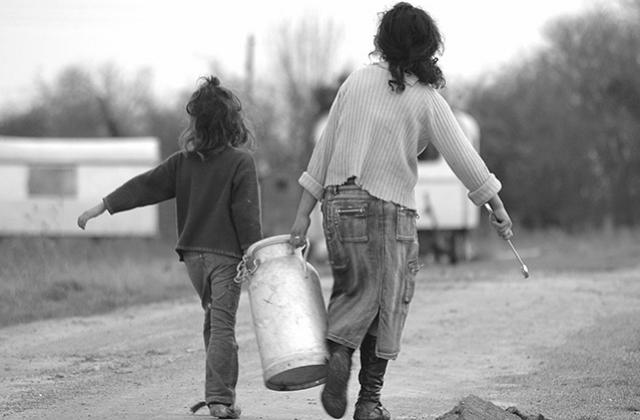
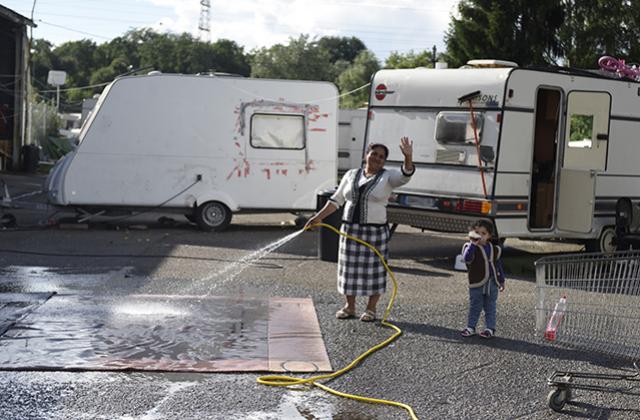
    Often living in substandard and overcrowded housing conditions, Roma and Travellers face an increased risk of contracting COVID-19. They are also disproportionately affected by measures taken to contain the virus. This FRA Bulletin takes a closer look at this reality in 15 EU Member States, focusing on education; employment; poverty; healthcare; housing; and anti-Gypsyism. It also outlines civil society efforts to tackle the diverse challenges triggered by the Coronavirus pandemic.
  • Report / Paper / Summary
    23
    September
    2020
    This report presents findings from FRA’s 2019 survey on Roma and Travellers in Belgium, France, Ireland, the Netherlands, Sweden and the United Kingdom. The survey included interviews with almost 4,700 Roma and Travellers, collecting information on more than 8,200 individuals living in their households.
  • Periodic updates / Series
    29
    July
    2020
    As we enter the second half of 2020, the constraints on our daily lives brought about by the Coronavirus pandemic have become a firm reality. New local lockdowns and the reintroduction of restrictive measures prompted by fresh outbreaks of the virus are a stark reminder that COVID-19 continues to shape our lives – and our enjoyment of fundamental rights – in profound ways. There is compelling evidence of how the pandemic has exacerbated existing challenges in our societies. This FRA Bulletin outlines some of the measures EU Member States adopted to safely reopen their societies and economies while continuing to mitigate the spread of COVID-19. It highlights the impact these measures may have on civil, political and socioeconomic rights.
  • Periodic updates / Series
    30
    June
    2020
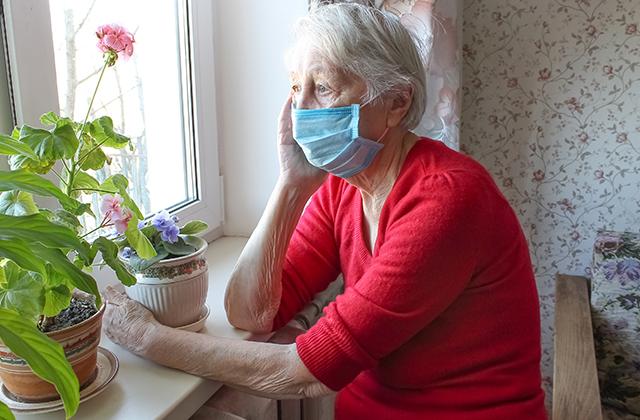
    The Coronavirus pandemic continues to interrupt everyday life in the EU in unprecedented ways. But the way it affects our societies is shifting. As governments gradually lift some of the measures put in place to contain the spread of COVID-19, new fundamental rights concerns arise: how to ensure that the rights to life and health are upheld as daily life transitions to a ‘new normal’. This Bulletin looks at declarations of states of emergency, or equivalent, and how they came under scrutiny. It considers
    the impact on fundamental rights in important areas of daily life, and includes a thematic focus on the pandemic's impact on older people.
  • Periodic updates / Series
    28
    May
    2020
    The Coronavirus pandemic continues to interrupt everyday life in the EU in unprecedented ways. But the way it affects our societies is shifting. As governments gradually lift some of the measures put in place to contain the spread of COVID-19, new fundamental rights concerns arise: how to ensure that the rights to life and health are upheld as daily life transitions to a ‘new normal’. This Bulletin looks at declarations of states of emergency, or equivalent, and how they came under scrutiny. It considers the impact on fundamental rights in important areas of daily life, and includes a thematic focus on the processing of users’ data to help contain COVID-19, particularly by contact-tracing apps. It covers the period 21 March – 30 April 2020.
  • Periodic updates / Series
    8
    April
    2020
    The outbreak of COVID-19 affects people’s daily life in the 27 EU Member States. As the number of infected people in the EU territory began to mount rapidly in February and March, governments put in place a raft of measures – often introduced in a period of only a few days – in an effort to contain the spread of the virus. Many of these measures reflect how, in exceptional emergency situations, the urgent need to save lives justifies restrictions on other rights, such as the freedom of movement and of assembly. This report outlines some of the measures EU Member States have put in place to protect public health during the COVID-19 pandemic. It covers the period 1 February – 20 March 2020.
  • Report / Paper / Summary
    11
    November
    2019
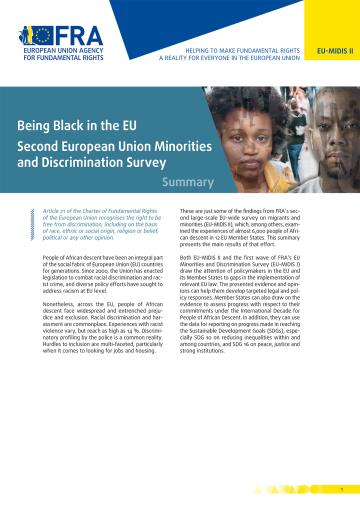
    Across the EU, people of African descent face widespread and entrenched prejudice and exclusion. Racial discrimination and harassment are commonplace. Experiences with racist violence vary, but reach as high as 14 %. Discriminatory profiling by the police is a common reality. Hurdles to inclusion are multi-faceted, particularly when it comes to looking for jobs and housing.