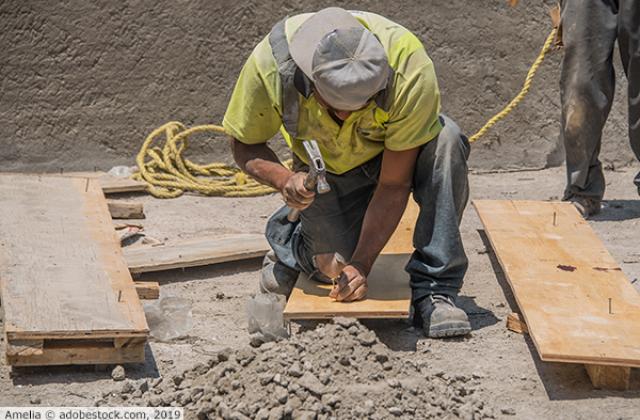
eu-charter

EU-stadgan om de grundläggande rättigheterna

Artikel 31 - Rättvisa arbetsförhållanden

Artikel 31 - Rättvisa arbetsförhållanden

1. Varje arbetstagare har rätt till hälsosamma, säkra och värdiga arbetsförhållanden.
2. Varje arbetstagare har rätt till en begränsning av den maximala arbetstiden samt till dygns- och veckovila och årlig betald semester.

Förklaringar

  • Text:

    1. Punkt 1 i denna artikel grundas på direktiv 89/391/EEG om åtgärder för att främja förbättringar av arbetstagarnas säkerhet och hälsa i arbetet. Den har även inspirerats av artikel 3 i den sociala stadgan och punkt 19 i gemenskapsstadgan om arbetstagares rättigheter samt, när det gäller rätten till värdiga arbetsförhållanden, av artikel 26 i den reviderade sociala stadgan. Uttrycket `arbetsförhållanden` bör tolkas på samma sätt som uttrycket `arbetsvillkor` i artikel 156 i fördraget om Europeiska unionens funktionssätt.

    2. Punkt 2 grundas på direktiv 93/104/EG om arbetstidens förläggning i vissa avseenden samt på artikel 2 i europeiska sociala stadgan och punkt 8 i gemenskapsstadgan om arbetstagares rättigheter.

    Source:
    Europeiska unionens officiella tidning C 303/17 - 14.12.2007
    Preamble - Explanations relating to the Charter of Fundamental Rights:
    Förklaringarna utarbetades ursprungligen på initiativ av presidiet för det konvent som utarbetade Europeiska unionens stadga om de grundläggande rättigheterna. De har uppdaterats på initiativ av Europeiska konventets presidium mot bakgrund av de justeringar av stadgetexten som gjorts av det senare konventet (särskilt artiklarna 51 och 52) samt unionsrättens vidare utveckling. Även om förklaringarna inte i sig har rättslig status, utgör de ett värdefullt tolkningsverktyg avsett att klargöra stadgans bestämmelser.

Rättspraxis

Nationell statsrätt

45 results found

  • The Fundamental Law of Hungary
    Land:
    Hungary

    Article XVII (Freedom and Responsibility) […] (3) Every employee shall have the right to working conditions which ensure respect for his or her health, safety and dignity.
    (4) Every employee shall have the right to daily and weekly rest periods and to a period of annual paid leave.

  • Ustav Republike Hrvatske
    Land:
    Croatia

    Članak 56.
    Svaki zaposleni ima pravo na zaradu kojom može osigurati sebi i obitelji slobodan i dostojan život.
    Najduže radno vrijeme određuje se zakonom.
    Svaki zaposleni ima pravo na tjedni odmor i plaćeni godišnji odmor i ovih se prava ne može odreći.
    Zaposleni mogu imati, u skladu sa zakonom, udjela pri odlučivanju u poduzeću.

  • ΜΕΡΟΣ 02: Περί των Θεμελιωδών Δικαιωμάτων και Ελευθεριών
    Land:
    Cyprus

    ΑΡΘΡΟΝ 26(1). Έκαστος έχει το δικαίωμα του συμβάλλεσθαι ελευθέρως. Τούτο υπέκειται εις όρους, περιορισμούς ή δεσμεύσεις τιθεμένους επί τη βάσει των γενικών αρχών του δικαίου των συμβάσεων. Νόμος θέλει προβλέψει διά την πρόληψιν εκμεταλλεύσεως υπό προσώπων, άτινα διαθέτουσιν ιδιάζουσαν οικονομικήν ισχύν.2. Νόμος δύναται να ρυθμίση τας συλλογικάς συμβάσεις εργασίας, υποχρεωτικώς εφαρμοζομένας υπό των εργοδοτών και των εργαζομένων, προστατευομένων επαρκώς των δικαιωμάτων οιουδήποτε ατόμου αδιακρίτως της αντιπροσωπεύσεως τούτου κατά την σύναψιν τοιαύτης συμβάσεως.

  • Το Σύνταγμα της Ελλάδας
    Land:
    Greece

    Άρθρo 22 (1). H εργασία απoτελεί δικαίωμα και πρoστατεύεται από τo Kράτoς, πoυ μεριμνά για τη δημιoυργία συνθηκών απασχόλησης όλων των πoλιτών και για την ηθική και υλική εξύψωση τoυ εργαζόμενoυ αγρoτικoύ και αστικoύ πληθυσμoύ. […]

  • КОНСТИТУЦИЯ на Република България
    Land:
    Bulgaria

    Чл. 16 Трудът се гарантира и защитава от закона. Чл. 48 [...] (5) Работниците и служителите имат право на здравословни и безопасни условия на труд, на минимално трудово възнаграждение и на заплащане, съответстващо на извършената работа, както и на почивка и отпуск, при условия и по ред, определени със закон.

EU-rätt

11 results found

  • Directive 2014/36/EU of the European Parliament and of the Council of 26 February 2014 on the conditions of entry and stay of third-country nationals for the purpose of employment as seasonal workers

    Preamble

    ‘(46) Third-country national seasonal workers should be granted equal treatment in respect of those branches of social security listed in Article 3 of Regulation (EC) No 883/2004 of the European Parliament and of the Council (13). This Directive does not harmonise the social security legislation of Member States and does not cover social assistance. It is limited to applying the principle of equal treatment in the field of social security to the persons falling within its scope. This Directive should not confer more rights than those already provided in existing Union legislation in the field of social security for third-country nationals who have cross-border interests between Member States.
    Due to the temporary nature of the stay of seasonal workers and without prejudice to Regulation (EU) No 1231/2010 of the European Parliament and of the Council (14), Member States should be able to exclude family benefits and unemployment benefits from equal treatment between seasonal workers and their own nationals and should be able to limit the application of equal treatment in relation to education and vocational training, as well as tax benefits.
    This Directive does not provide for family reunification. Furthermore, this Directive does not grant rights in relation to situations which lie outside the scope of Union law such as, for example, situations where family members reside in a third country. That should not, however, affect the right of survivors who derive rights from the seasonal worker to receive survivor’s pensions when residing in a third country. This should be without prejudice to the non-discriminatory application by Member States of national law providing for de minimis rules on contributions to pension systems. Mechanisms should be in place in order to ensure effective social security coverage during the stay and the exporting of acquired rights of the seasonal workers, where applicable.
    (47) Union law does not limit the power of the Member States to organise their social security schemes. In the absence of harmonisation at Union level, it is for each Member State to lay down the conditions under which social security benefits are granted, as well as the amount of such benefits and the period for which they are granted. However, when exercising that power, Member States should comply with Union law.‘

    (52) This Directive respects the fundamental rights and observes the principles recognised by the Charter of Fundamental Rights of the European Union, in particular, Articles 7, 15(3), 17, 27, 28, 31 and 33(2) thereof, in accordance with Article 6 TEU

    Article 23 - Right to equal treatment

    ‘1. Seasonal workers shall be entitled to equal treatment with nationals of the host Member State at least with regard to:
    (a) terms of employment, including the minimum working age, and working conditions, including pay and dismissal, working hours, leave and holidays, as well as health and safety requirements at the workplace;
    (b) the right to strike and take industrial action, in accordance with the host Member State’s national law and practice, and freedom of association and affiliation and membership of an organisation representing workers or of any organisation whose members are engaged in a specific occupation, including the rights and benefits conferred by such organisations, including the right to negotiate and conclude collective agreements, without prejudice to the national provisions on public policy and public security;
    (c) back payments to be made by the employers, concerning any outstanding remuneration to the third-country national;
    (d) branches of social security, as defined in Article 3 of Regulation (EC) No 883/2004;
    (e) access to goods and services and the supply of goods and services made available to the public, except housing, without prejudice to the freedom of contract in accordance with Union and national law;
    (f) advice services on seasonal work afforded by employment offices;
    (g) education and vocational training;
    (h) recognition of diplomas, certificates and other professional qualifications in accordance with the relevant national procedures;
    (i) tax benefits, in so far as the seasonal worker is deemed to be resident for tax purposes in the Member State concerned.
    Seasonal workers moving to a third country, or the survivors of such seasonal workers residing in a third-country deriving rights from the seasonal worker, shall receive statutory pensions based on the seasonal worker’s previous employment and acquired in accordance with the legislation set out in Article 3 of Regulation (EC) No 883/2004, under the same conditions and at the same rates as the nationals of the Member States concerned when they move to a third country.
    2. Member States may restrict equal treatment:
    (i) under point (d) of the first subparagraph of paragraph 1 by excluding family benefits and unemployment benefits, without prejudice to Regulation (EU) No 1231/2010;
    (ii) under point (g) of the first subparagraph of paragraph 1 by limiting its application to education and vocational training which is directly linked to the specific employment activity and by excluding study and maintenance grants and loans or other grants and loans;
    (iii) under point (i) of the first subparagraph of paragraph 1 with respect to tax benefits by limiting its application to cases where the registered or usual place of residence of the family members of the seasonal worker for whom he/she claims benefits, lies in the territory of the Member State concerned.
    3. The right to equal treatment provided for in paragraph 1 shall be without prejudice to the right of the Member State to withdraw or to refuse to extend or renew the authorisation for the purpose of seasonal work in accordance with Articles 9 and 15.‘

Internationell rätt

1 results found

  • R204 - Transition from the Informal to the Formal Economy Recommendation, 2015 (No. 204)

    V. Rights and social protection
    ‘17. Members should:
    (a) take immediate measures to address the unsafe and unhealthy working conditions that often characterize work in the informal economy; and
    (b) promote and extend occupational safety and health protection to employers and workers in the informal economy.
    18. Through the transition to the formal economy, Members should progressively extend, in law and practice, to all workers in the informal economy, social security, maternity protection, decent working conditions and a minimum wage that takes into account the needs of workers and considers relevant factors, including but not limited to the cost of living and the general level of wages in their country.
    19. In building and maintaining national social protection floors within their social security system and facilitating the transition to the formal economy, Members should pay particular attention to the needs and circumstances of those in the informal economy and their families.
    20. Through the transition to the formal economy, Members should progressively extend the coverage of social insurance to those in the informal economy and, if necessary, adapt administrative procedures, benefits and contributions, taking into account their contributory capacity.
    21. Members should encourage the provision of and access to affordable quality childcare and other care services in order to promote gender equality in entrepreneurship and employment opportunities and to enable the transition to the formal economy.‘

Produkter

  • Periodic updates / Series
    21
    October
    2022
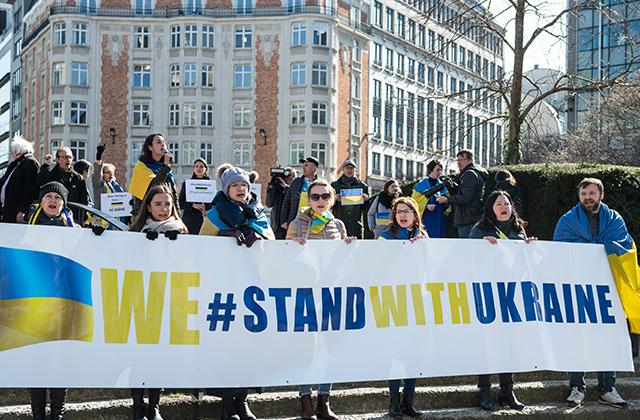
    The Russian invasion of Ukraine triggered solidarity from EU governments, local authorities and society as they welcomed more than 7 million people fleeing the aggression. The European Union’s rapid response, activating the EU Temporary Protection Directive, offered welcome relief and much-needed support to those in need. It allowed displaced persons the opportunity to quickly settle and to work, travel and access services across the EU. But other pressing human rights issues have come to the fore and remain high on the EU’s agenda, such as human trafficking, sexual and gender-based violence, hate crime and hate-fuelled disinformation.
  • Fundamental Rights Report
    8
    June
    2022
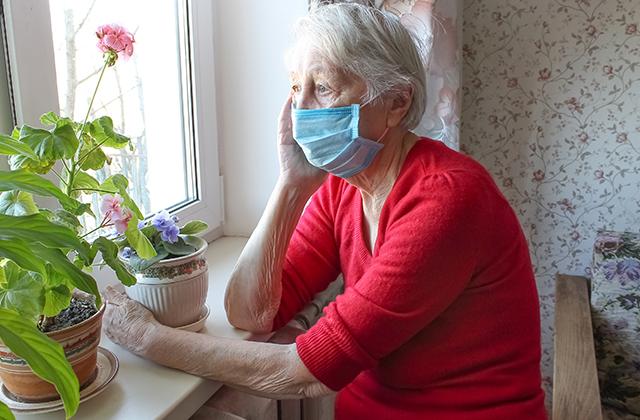
    This focus looks at the impact of the pandemic on social rights. It examines the measures in national recovery and resilience plans that address the social vulnerabilities among a variety of population groups in the EU, including women, children and young people in situations of vulnerability, people with disabilities, older people, Roma and people in precarious working conditions.
  • Fundamental Rights Report
    8
    June
    2022
    FRA’s Fundamental Rights Report 2022 reviews major developments in the field in 2021, identifying both achievements and areas of concern. It also presents FRA’s opinions on these developments, including a synopsis of the evidence supporting these opinions.
  • Fundamental Rights Report
    10
    June
    2021
    This focus looks at COVID-19’s impact on fundamental rights. It underscores that a human rights-based approach to tackling the pandemic requires balanced measures that are based on law, necessary, temporary and proportional. It also requires addressing the pandemic’s socio-economic impact, protecting the vulnerable and fighting racism.
  • Periodic updates / Series
    30
    November
    2020
    This report outlines some of the measures EU Member States have put in place to protect public health as Europe faces the ‘second wave’ of the Coronavirus pandemic. It highlights how these may affect fundamental rights, especially social rights.
  • Periodic updates / Series
    29
    July
    2020
    As we enter the second half of 2020, the constraints on our daily lives brought about by the Coronavirus pandemic have become a firm reality. New local lockdowns and the reintroduction of restrictive measures prompted by fresh outbreaks of the virus are a stark reminder that COVID-19 continues to shape our lives – and our enjoyment of fundamental rights – in profound ways. There is compelling evidence of how the pandemic has exacerbated existing challenges in our societies. This FRA Bulletin outlines some of the measures EU Member States adopted to safely reopen their societies and economies while continuing to mitigate the spread of COVID-19. It highlights the impact these measures may have on civil, political and socioeconomic rights.
  • Periodic updates / Series
    30
    June
    2020
    The Coronavirus pandemic continues to interrupt everyday life in the EU in unprecedented ways. But the way it affects our societies is shifting. As governments gradually lift some of the measures put in place to contain the spread of COVID-19, new fundamental rights concerns arise: how to ensure that the rights to life and health are upheld as daily life transitions to a ‘new normal’. This Bulletin looks at declarations of states of emergency, or equivalent, and how they came under scrutiny. It considers
    the impact on fundamental rights in important areas of daily life, and includes a thematic focus on the pandemic's impact on older people.
  • Fundamental Rights Report
    11
    June
    2020
    FRA’s Fundamental Rights Report 2020 reviews major developments in the field in 2019, identifying both achievements and areas of concern. It also presents FRA’s opinions on these developments, including a synopsis of the evidence supporting these opinions. This year’s focus chapter explores how to unlock the full potential of the EU Charter of Fundamental Rights.
  • Periodic updates / Series
    28
    May
    2020
    The Coronavirus pandemic continues to interrupt everyday life in the EU in unprecedented ways. But the way it affects our societies is shifting. As governments gradually lift some of the measures put in place to contain the spread of COVID-19, new fundamental rights concerns arise: how to ensure that the rights to life and health are upheld as daily life transitions to a ‘new normal’. This Bulletin looks at declarations of states of emergency, or equivalent, and how they came under scrutiny. It considers the impact on fundamental rights in important areas of daily life, and includes a thematic focus on the processing of users’ data to help contain COVID-19, particularly by contact-tracing apps. It covers the period 21 March – 30 April 2020.
  • Report / Paper / Summary
    25
    June
    2019
    This report is the EU Fundamental Rights Agency’s fourth on the topic of severe labour exploitation. Based on interviews with 237 exploited workers, it paints a bleak picture of severe exploitation and abuse. The workers include both people who came to the EU, and EU nationals who moved to another EU country. They were active in diverse sectors, and their legal status also varied.