eu-charter

EU-stadgan om de grundläggande rättigheterna

Artikel 40 - Rösträtt och valbarhet i kommunala val

Artikel 40 - Rösträtt och valbarhet i kommunala val

Varje unionsmedborgare ska ha rösträtt och vara valbar i kommunala val i den medlemsstat där han eller hon är bosatt, på samma villkor som medborgarna i den staten.

Förklaringar

  • Text:

    Denna artikel motsvarar den rättighet som garanteras enligt artikel 20.2 i fördraget om Europeiska unionens funktionssätt (jfr även den rättsliga grunden i artikel 22 i fördraget om Europeiska unionens funktionssätt för antagande av de närmare arrangemangen för utövandet av denna rättighet). Den gäller i enlighet med artikel 52.2 på de villkor som föreskrivs i dessa artiklar i fördragen.

    Source:
    Europeiska unionens officiella tidning C 303/17 - 14.12.2007
    Preamble - Explanations relating to the Charter of Fundamental Rights:
    Förklaringarna utarbetades ursprungligen på initiativ av presidiet för det konvent som utarbetade Europeiska unionens stadga om de grundläggande rättigheterna. De har uppdaterats på initiativ av Europeiska konventets presidium mot bakgrund av de justeringar av stadgetexten som gjorts av det senare konventet (särskilt artiklarna 51 och 52) samt unionsrättens vidare utveckling. Även om förklaringarna inte i sig har rättslig status, utgör de ett värdefullt tolkningsverktyg avsett att klargöra stadgans bestämmelser.

Rättspraxis

Nationell statsrätt

45 results found

  • (Partie Législative)
    Land:
    France

    Sect. Ibis Dispositions spéciales à l'exercice par les ressortissants d'un Etat membre de l'Union européenne autre que la France du droit de vote pour l'élection des conseillers municipaux et des membres du Conseil de Paris.

  • A Magyar Köztársaság Alkotmánya
    Land:
    Hungary

     70. § (1) A Magyar Köztársaság területén lakóhellyel rendelkező minden nagykorú magyar állampolgárt megillet az a jog, hogy az országgyűlési képviselők választásán választó és választható legyen, valamint országos népszavazásban és népi kezdeményezésben részt vegyen.(2) A Magyar Köztársaság területén lakóhellyel rendelkező minden nagykorú magyar állampolgárt és az Európai Unió más tagállamának a Magyar Köztársaság területén lakóhellyel rendelkező nagykorú állampolgárát megilleti az a jog, hogy a helyi önkormányzati képviselők és a polgármesterek választásán választható és - amennyiben a választás, illetve a népszavazás napján a Magyar Köztársaság területén tartózkodik - választó legyen, valamint helyi népszavazásban és népi kezdeményezésben részt vegyen. Polgármesterré és fővárosi főpolgármesterré magyar állampolgár választható.(3) A Magyar Köztársaságban minden menekültként, bevándoroltként vagy letelepedettként elismert nagykorú személyt megillet az a jog, hogy a helyi önkormányzati képviselők és a polgármesterek választásán - amennyiben a választás, illetve a népszavazás napján a Magyar Köztársaság területén tartózkodik - választó legyen, valamint a helyi népszavazásban és népi kezdeményezésben részt vegyen.(4) A Magyar Köztársaság területén lakóhellyel rendelkező minden nagykorú magyar állampolgárt és az Európai Unió más tagállamának a Magyar Köztársaság területén lakóhellyel rendelkező nagykorú állampolgárát megillet az a jog, hogy az európai parlamenti választáson választható és választó legyen.(5) Nincs választójoga annak, aki jogerős ítélet alapján a cselekvőképességet korlátozó vagy kizáró gondnokság, illetőleg a közügyek gyakorlásától eltiltás hatálya alatt áll, szabadságvesztés büntetését vagy büntetőeljárásban elrendelt intézeti kényszergyógykezelését tölti. Az Európai Unió más tagállamának a Magyar Köztársaság területén lakóhellyel rendelkező nagykorú állampolgára akkor sem választható, ha az állampolgársága szerinti állam jogszabálya, bírósági vagy más hatósági döntése alapján hazájában kizárták e jog gyakorlásából.(6) Minden magyar állampolgárnak joga van ahhoz, hogy rátermettségének, képzettségének és szakmai tudásának megfelelően közhivatalt viseljen.

  • Basic Law for the Federal Republic of Germany
    Land:
    Germany

    Article 28 (1) The constitutional order in the Länder must conform to the principles of a republican, democratic and social state governed by the rule of law, within the meaning of this Basic Law. In each Land, county and municipality the people shall be represented by a body chosen in general, direct, free, equal and secret elections. In county and municipal elections, persons who possess citizenship in any member state of the European Community are also eligible to vote and to be elected in accord with European Community law. In municipalities a local assembly may take the place of an elected body.

  • Bundes-Verfassungsgesetz (B-VG)
    Land:
    Austria

    Artikel 117(...) (2) Der Gemeinderat wird auf Grund des gleichen, unmittelbaren, persönlichen, freien und geheimen Wahlrechtes der männlichen und weiblichen Staatsbürger, die in der Gemeinde ihren Hauptwohnsitz haben, nach den Grundsätzen der Verhältniswahl gewählt. Die Wahlordnung kann jedoch vorsehen, dass auch Staatsbürger, die in der Gemeinde einen Wohnsitz, nicht aber den Hauptwohnsitz haben, wahlberechtigt sind. Die Wahlordnung darf die Bedingungen des Wahlrechtes und der Wählbarkeit nicht enger ziehen als die Landtagswahlordnung; es kann jedoch bestimmt werden, dass Personen, die sich noch nicht ein Jahr in der Gemeinde aufhalten, dann nicht wahlberechtigt und wählbar sind, wenn ihr Aufenthalt in der Gemeinde offensichtlich nur vorübergehend ist. Unter den in der Wahlordnung festzulegenden Bedingungen sind auch Staatsangehörige anderer Mitgliedstaaten der Europäischen Union wahlberechtigt und wählbar. Die Wahlordnung kann bestimmen, dass die Wähler ihr Wahlrecht in Wahlkreisen ausüben, von denen jeder ein geschlossenes Gebiet umfassen muss. Eine Gliederung der Wählerschaft in andere Wahlkörper ist nicht zulässig. Art. 26 Abs. 6 ist sinngemäß anzuwenden. Für den Fall, dass keine Wahlvorschläge eingebracht werden, kann in der Wahlordnung bestimmt werden, dass Personen als gewählt gelten, deren Namen auf den Stimmzetteln am häufigsten genannt werden.

  • Code Electoral
    Land:
    France
  • Constitution
    Land:
    France

    Article 88-3Subject to reciprocity and in accordance with the terms of the Treaty on European Union signed on 7 February 1992, the right to vote and stand as a candidate in municipal elections shall be granted only to citizens of the Union residing in France. Such citizens shall neither exercise the office of mayor or deputy mayor nor participate in the designation of Senate electors or in the election of senators. An institutional Act passed in identical terms by the two houses shall determine the manner of implementation of this article. 

  • Constitution
    Land:
    France

    Article 88-3Sous réserve de réciprocité et selon les modalités prévues par le Traité sur l'Union européenne signé le 7 février 1992, le droit de vote et d'éligibilité aux élections municipales peut être accordé aux seuls citoyens de l'Union résidant en France. Ces citoyens ne peuvent exercer les fonctions de maire ou d'adjoint ni participer à la désignation des électeurs sénatoriaux et à l'élection des sénateurs. Une loi organique votée dans les mêmes termes par les deux assemblées détermine les conditions d'application du présent article.

  • Constitution of Finland
    Land:
    Finland

    Section 14 Electoral and participatory rights (...) Every Finnish citizen and every foreigner permanently resident in Finland, having attained eighteen years of age, has the right to vote in municipal elections and municipal referendums, as provided by an Act. Provisions on the right to otherwise participate in municipal government are laid down by an Act.

  • Constitution of Malta
    Land:
    Malta

    Article 57 Subject to the provisions of article 58 of this Constitution, a person shall be qualified to be registered as a voter for the election of members of the House of Representatives if, and shall not be qualified to be so registered unless -(a) he is a citizen of Malta;(b) he has attained the age of eighteen years; and(c) he is resident in Malta and has during the eighteen months immediately preceding his registration been a resident for a continuous period of six months or for periods amounting in the aggregate to six months: Provided that this paragraph shall not apply to a person who is ordinarily resident in Malta but has not been resident in Malta as required by this paragraph by reason of service abroad in the public service, including service in the offices referred to in subarticle (3) of article 124 of this Constitution, or by reason of service abroad in, or as a member of, a disciplined force as defined in article 47 of this Constitution.58. No person shall be qualified to be registered as a voter for the election of members of the House of Representatives if -(a) he is interdicted or incapacitated for any mental infirmity by a court in Malta or is otherwise determined in Malta to be of unsound mind;(b) he is under sentence of death imposed on him by any court in Malta or is serving a sentence of imprisonment (by whatever name called) exceeding twelve months imposed on him by such a court or substituted by competent authority for some other sentence imposed on him by such a court, or is under such a sentence of imprisonment the execution of which has been suspended; or(c) he is disqualified for registration as a voter by or under any law for the time being in force in Malta by reason of his having been convicted of any offence connected with the election of members of the House of Representatives.

  • Constitution of the Republic of Austria
    Land:
    Austria

    Article 117(...) (2) The municipal council is elected on the basis of proportional representation by equal, direct, personal and secret suffrage by the male and female federal nationals who have their principal domicile in the municipality. The election regulations laws can however stipulate that also national who have a domicile, but not their principal domicile, in the municipality, are entitled to vote. In the electoral regulations the conditions for suffrage and electoral eligibility may not be more restrictive than in the electoral regulations for the Provincial Parliament; the provision can however be made that individuals who have not yet been a year resident in the municipality shall not be entitled to vote or to stand for election to the municipal council if their residence in the municipality is manifestly temporary. Among the conditions to be laid down by the election regulation is the entitlement to suffrage and electoral eligibility also for nationals of other European member states. The electoral regulation can provide that the voters exercise their suffrage in self-contained constituencies. A division of the electorate into other electoral bodies is not admissible. Art. 26 para 6 shall apply mutatis mutandis. The electoral regulations can, in cases where no election proposals are brought forward, decree that individuals shall be deemed elected whose names appear most frequently on the ballot papers.

  • Constitution of the Republic of Bulgaria
    Land:
    Bulgaria

    Art. 10. All elections, and national and local referendums shall be held on the basis of universal, equal and direct suffrage by secret ballot.
    Art. 42(1) Every citizen above the age of 18, with the exception of those placed under judicial interdiction or serving a prison sentence, shall be free to elect state and local authorities and vote in referendums.(2) The organization and procedure for the holding of elections and referendums shall be established by law.(3) (new, SG 18/05) The elections for Members of the European Parliament and the participation of European Union citizens in the elections for local authorities shall be regulated by law.

  • Constitution of the Republic of Croatia
    Land:
    Croatia

    Article 146
    Citizens of the Republic of Croatia shall be European Union citizens and shall enjoy the rights guaranteed by the European Union acquis communautaire, and in particular:
    (...)
    – active and passive voting rights in European parliamentary elections and in local elections in another Member State, in accordance with that Member State’s law,
    (...)
    All rights shall be exercised in compliance with the conditions and limitations laid down in the founding treaties of the European Union and the measures undertaken pursuant to such treaties.
    In the Republic of Croatia, all rights guaranteed by the European Union acquis
    communautaire shall be enjoyed by all citizens of the European Union.

  • Constitution of the Republic of Estonia
    Land:
    Estonia

    Article 156. The representative body of a local authority is its council which is elected in a free election for a term of four years. The term of office of a council may be reduced by law due to a merger or division of local authorities or to inability of the council to act. Elections of local authority councils are general, uniform and direct. Voting is secret. [RT I 2003, 29, 174 - jõust. 17.10.2005]
    In elections to local authority councils, the right to vote is held, under conditions established by law, by persons who reside permanently in the territory of the local authority and have attained at least sixteen years of age. [RT I, 15.05.2015, 1 - entry into force 13.08.2015]

  • Constitution of the Republic of Hungary
    Land:
    Hungary

    Article 70 (1) All adult Hungarian citizens residing in the territory of the Republic of Hungary shall have the right to be elected and the right to vote in Parliamentary elections; they shall have the right, furthermore, to participate in national referenda and popular initiatives.(2) All adult Hungarian citizens residing in the territory of the Republic of Hungary and all adult citizens of other Member States of the European Union who reside in the territory of the Republic of Hungary shall have the right to be elected in local ballots for the election of representatives and mayors; they shall have the right to vote, provided that they are in the territory of the Republic of Hungary on the day of the election or referendum, and, furthermore, to participate in local referenda and popular initiatives. Only Hungarian citizens may be elected to the post of mayor in any local government and the City of Budapest.(3) All adult persons holding refugee, immigrant or permanent resident status in the Republic of Hungary shall have the right to vote in local ballots for the election of representatives and mayors, provided that they are in the territory of the Republic of Hungary on the day of the election or referendum, and furthermore to participate in local referenda or popular initiatives.(4) All adult Hungarian citizens residing in the territory of the Republic of Hungary and all adult citizens of other Member States of the European Union who reside in the territory of the Republic of Hungary shall have the right to be elected and the right to vote in elections for the European Parliament.(5) The right to vote shall not be granted to persons whose capacity is limited or restricted by being subject to guardianship, or who are subject to the final judgment of a court forbidding them to participate in public affairs, or who are imprisoned on the basis of a final legal judgment or are under compulsory institutional care on the basis of a final judgment rendered in criminal proceedings. Furthermore, adult citizens of other Member States of the European Union who reside in the territory of the Republic of Hungary shall not have the right to be elected if they have been deprived of such right in their country of citizenship by the laws of that country or by a judicial or other official decision.(6) All Hungarian citizens shall have the right to hold public office in accordance with their suitability, education and professional ability.

  • Constitution of the Republic of Latvia
    Land:
    Latvia

    101. Every citizen of Latvia has the right, as provided for by law, to participate in the work of the State and of local government, and to hold a position in the civil service. Local governments shall be elected by Latvian citizens and citizens of the European Union who permanently reside in Latvia. Every citizen of the European Union who permanently resides in Latvia has the right, as provided by law, to participate in the work of local governments. The working language of local governments is the Latvian language.

  • Constitution of the Republic of Lithuania
    Land:
    Lithuania

    Article 34. Citizens who, on the day of election, have reached 18 years of age, shall have the electoral right.The right to be elected shall be established by the Constitution of the Republic of Lithuania and by the election laws. Citizens who are recognised incapable by court shall not participate in elections.

  • Constitution of the Republic of Poland
    Land:
    Poland

    Article 62.1. If, no later than on the day of vote, he has attained 18 years of age, Polish citizen shall have the right to participate in a referendum and the right to vote for the President of the Republic of Poland as well as representatives to the Sejm and Senate and organs of local government. 2. Persons who, by a final judgment of a court, have been subjected to legal incapacitation or deprived of public or electoral rights, shall have no right to participate in a referendum nor a right to vote.Article 99.1. Every citizen having the right to vote, who, no later than on the day of the elections, has attained the age of 21 years, shall be eligible to be elected to the Sejm.2. Every citizen having the right to vote, who, no later than on the day of the elections, has attained the age of 30 years, shall be eligible to be elected to the Senate.3. No person sentenced to imprisonment by a final judgment for an intentional indictable offence may be elected to the Sejm or the Senate.

  • Constitution of the Republic of Poland
    Land:
    Poland

    Article 621. If, no later than on the day of vote, he has attained 18 years of age, Polish citizen shall have the right to participate in a referendum and the right to vote for the President of the Republic of Poland as well as representatives to the Sejm and Senate and organs of local government. 2. Persons who, by a final judgment of a court, have been subjected to legal incapacitation or deprived of public or electoral rights, shall have no right to participate in a referendum nor a right to vote.Article 991. Every citizen having the right to vote, who, no later than on the day of the elections, has attained the age of 21 years, shall be eligible to be elected to the Sejm.2. Every citizen having the right to vote, who, no later than on the day of the elections, has attained the age of 30 years, shall be eligible to be elected to the Senate.3. No person sentenced to imprisonment by a final judgment for an intentional indictable offence may be elected to the Sejm or the Senate.

  • Czechia / Charter of Fundamental Rights and Freedoms
    Land:
    Czechia

    Article 21 (1) Citizens have the right to participate in the administration of public affairs either directly or through the free election of their representatives. (2) Elections must be held within terms not exceeding the regular electoral terms provided for by law. (3) The right to vote is universal and equal, and shall be exercised by secret ballot. The conditions for exercising the right to vote shall be provided for by law. (4) Citizens shall have access, on an equal basis, to any elective and other public office.

  • Danmarks Riges Grundlov
    Land:
    Denmark

    § 29. Stk. 1. Valgret til folketinget har enhver, som har dansk indfødsret, fast bopæl i riget og har nået den i stk. 2 omhandlede valgretsalder, medmindre vedkommende er umyndiggjort. Det bestemmes ved lov, i hvilket omfang straf og understøttelse, der i lovgivningen betragtes som fattighjælp, medfører tab af valgret. Stk. 2. Valgretsalderen er den, som har opnået flertal ved folkeafstemning i overensstemmelse med lov af 25. marts 1953. Ændring af den til enhver tid gældende valgretsalder kan ske ved lov. Et af folketinget vedtaget forslag til en sådan lov kan først stadfæstes af kongen, når bestemmelsen om ændring af valgretsalderen i overensstemmelse med § 42, stk. 5, har været undergivet en folkeafstemning, der ikke har medført bestemmelsens bortfald.
    § 30. Stk. 1. Valgbar til folketinget er enhver, som har valgret til dette, medmindre vedkommende er straffet for en handling, der i almindeligt omdømme gør ham uværdig til at være medlem af folketinget.
    § 86. Valgretsalderen til de kommunale råd og menighedsrådene er den for valg til folketinget til enhver tid gældende. For Færøernes og Grønlands vedkommende fastsættes valgretsalderen til de kommunale råd og menighedsrådene ved lov eller i henhold til lov.

EU-rätt

5 results found

  • Treaty on the Functioning of the European Union

    Article 22

    (ex Article 19 TEC)

    1. Every citizen of the Union residing in a Member State of which he is not a national shall have the right to vote and to stand as a candidate at municipal elections in the Member State in which he resides, under the same conditions as nationals of that State. This right shall be exercised subject to detailed arrangements adopted by the Council, acting unanimously in accordance with a special legislative procedure and after consulting the European Parliament; these arrangements may provide for derogations where warranted by problems specific to a Member State.

    2. Without prejudice to Article 223(1) and to the provisions adopted for its implementation, every citizen of the Union residing in a Member State of which he is not a national shall have the right to vote and to stand as a candidate in elections to the European Parliament in the Member State in which he resides, under the same conditions as nationals of that State. This right shall be exercised subject to detailed arrangements adopted by the Council, acting unanimously in accordance with a special legislative procedure and after consulting the European Parliament; these arrangements may provide for derogations where warranted by problems specific to a Member State.

  • Treaty on the Functioning of the European Union

    Article 20

    (ex Article 17 TEC)

    2. Citizens of the Union shall enjoy the rights and be subject to the duties provided for in the Treaties. They shall have, inter alia:

    (a) the right to move and reside freely within the territory of the Member States;

    (b) the right to vote and to stand as candidates in elections to the European Parliament and in municipal elections in their Member State of residence, under the same conditions as nationals of that State;

    (c) the right to enjoy, in the territory of a third country in which the Member State of which they are nationals is not represented, the protection of the diplomatic and consular authorities of any Member State on the same conditions as the nationals of that State;

    (d) the right to petition the European Parliament, to apply to the European Ombudsman, and to address the institutions and advisory bodies of the Union in any of the Treaty languages and to obtain a reply in the same language.

    These rights shall be exercised in accordance with the conditions and limits defined by the Treaties and by the measures adopted thereunder.

  • Council Directive 2013/19/EU of 13 May 2013 adapting Directive 94/80/EC laying down detailed arrangements for the exercise of the right to vote and to stand as a candidate in municipal elections by citizens of the Union residing in a Member State of wh...
  • European Parliament resolution of 11 November 2015 on the reform of the electoral law of the European Union (2015/2035(INL))
  • Opinion of the Committee of the Regions on ‘Strengthening EU citizenship: promotion of EU citizens’ electoral rights’

Internationell rätt

0 results found

Produkter

  • Fundamental Rights Report
    10
    June
    2025
    The Fundamental Rights Report 2025 is the annual report of the European Union Agency for Fundamental Rights (FRA). It provides an overview of the state of fundamental rights in the EU and highlights selected critical developments and trends in 2024. The report covers issues such as inclusive elections, gender-based violence, and the implementation of the EU Charter of Fundamental Rights. It presents FRA’s opinions on these developments, setting out the actions that the EU and Member States should take. This annual publication is a valuable resource for those seeking to stay informed about the EU’s shifting landscape of fundamental rights.
  • Fundamental Rights Report
    5
    June
    2024
    FRA’s Fundamental Rights Report 2024 analyses the year’s developments in fundamental rights. It focuses on the most pressing fundamental rights concerns facing Europe in 2023: the cost-of-living crisis, rights concerns at the EU’s external borders and migration, and threats to democracy. Re-structured, this year’s new approach is a shorter and sharper analysis. It also presents FRA’s opinions on these developments, including a summary of the evidence supporting these opinions.
  • Report / Paper / Summary
    29
    May
    2024
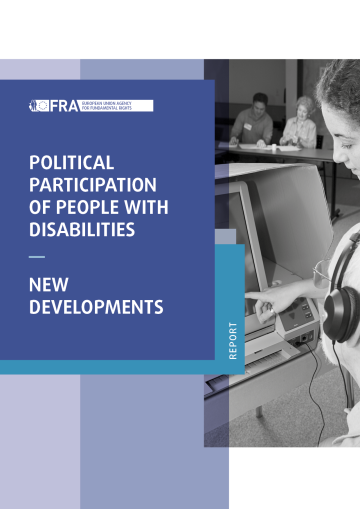
    Ahead of the EU elections, this report explores the political participation of people with disabilities. Although some Member States removed restrictions on the right to vote and to stand for elections, barriers still exist. This report is an update of new developments following FRA’s last report published in 2014. It sets out ways forward to ensure people with disabilities have equal opportunities, in line with the EU Charter of Fundamental Rights and the Convention on the Rights of Persons with Disabilities.
    Lisa F. Young/Adobe Stock
  • Fundamental Rights Report
    11
    June
    2020
    FRA’s Fundamental Rights Report 2020 reviews major developments in the field in 2019, identifying both achievements and areas of concern. It also presents FRA’s opinions on these developments, including a synopsis of the evidence supporting these opinions. This year’s focus chapter explores how to unlock the full potential of the EU Charter of Fundamental Rights.
  • Report / Paper / Summary
    29
    August
    2018
    The founding treaties, the EU Charter of Fundamental Rights and secondary EU law all provide for EU citizens’ freedom to move and reside freely in any EU country of their choice. Growing numbers of citizens, and their family members, are making use of this freedom and related rights, such as the right not to be discriminated against based on nationality and the right to vote in certain elections in the host Member State. But making these rights a reality remains a challenge. This report presents an EU-wide, comparative overview of the application of the Free Movement Directive (2004/38/EC) across the 28 Member States based on a review of select case law at national level.
  • Report / Paper / Summary
    25
    April
    2018
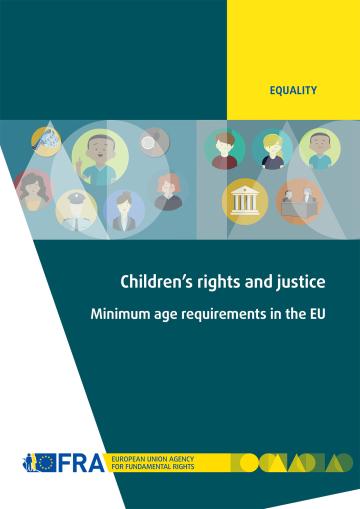
    This report outlines Member States’ approaches to age requirements and limits
    regarding child participation in judicial proceedings; procedural safeguards for, and rights of, children involved in criminal
    proceedings; as well as issues related to depriving children of their liberty.
  • Report / Paper / Summary
    25
    April
    2018
    The methods used to determine the age of
    an applicant may include “invasive” medical tests which interfere with the rights of the child, including their right to dignity,
    integrity and privacy. It is often a challenge to find the right balance between protecting children from harm and promoting
    their participation in these procedures. This report provides important insights and identifies the implications of collecting
    children’s biometric data and conducting age assessments.
  • Report / Paper / Summary
    21
    May
    2014
    The opportunity to be involved in political life, whether by standing for elected office, joining a political party, or following political news stories in the media, is at the heart of what it means to live in a democratic society. The report analyses data on the situation of political participation of persons with disabilities collected from across the 28 European Union (EU) Member States by the European Union Agency for Fundamental Rights (FRA) and the European Commission-funded Academic Network of European Disability Experts (ANED).
  • Report / Paper / Summary
    29
    April
    2014
    The report analyses data on the situation of political participation of persons with disabilities collected from across the 28 European Union (EU) Member States by the European Union Agency for Fundamental Rights (FRA) and the European Commission-funded Academic Network of European Disability Experts (ANED).
  • Report / Paper / Summary
    8
    November
    2010
    This report provides the first results from a legal study carried out by the European Union Agency for Fundamental Rights (FRA) in the context of its project on the "Fundamental rights of persons with intellectual disabilities and persons with mental health problems".
    FRA