eu-charter

EU-stadgan om de grundläggande rättigheterna

Artikel 40 - Rösträtt och valbarhet i kommunala val

Artikel 40 - Rösträtt och valbarhet i kommunala val

Varje unionsmedborgare ska ha rösträtt och vara valbar i kommunala val i den medlemsstat där han eller hon är bosatt, på samma villkor som medborgarna i den staten.

Förklaringar

  • Text:

    Denna artikel motsvarar den rättighet som garanteras enligt artikel 20.2 i fördraget om Europeiska unionens funktionssätt (jfr även den rättsliga grunden i artikel 22 i fördraget om Europeiska unionens funktionssätt för antagande av de närmare arrangemangen för utövandet av denna rättighet). Den gäller i enlighet med artikel 52.2 på de villkor som föreskrivs i dessa artiklar i fördragen.

    Source:
    Europeiska unionens officiella tidning C 303/17 - 14.12.2007
    Preamble - Explanations relating to the Charter of Fundamental Rights:
    Förklaringarna utarbetades ursprungligen på initiativ av presidiet för det konvent som utarbetade Europeiska unionens stadga om de grundläggande rättigheterna. De har uppdaterats på initiativ av Europeiska konventets presidium mot bakgrund av de justeringar av stadgetexten som gjorts av det senare konventet (särskilt artiklarna 51 och 52) samt unionsrättens vidare utveckling. Även om förklaringarna inte i sig har rättslig status, utgör de ett värdefullt tolkningsverktyg avsett att klargöra stadgans bestämmelser.

Rättspraxis

Nationell statsrätt

45 results found

  • The Constitutional Act of Denmark
    Land:
    Denmark

    Section 29. subsection 1. Any Danish subject who is permanently domiciled in the Realm, and who has the age qualification for suffrage as provided for in sub-section (2) of this section shall have the right to vote at Folketing elections, provided that he has not been declared incapable of conducting his own affairs. It shall be laid down by statute to what extent conviction and public assistance amounting to poor relief within the meaning of the law shall entail disfranchisement. Subsection 2. The age qualification for suffrage shall be as determined by the referendum held under the Act dated March 25, 1953. Such age qualification for suffrage may be altered at any time by statute. A Bill passed by the Folketing for the purpose of such enactment shall receive the Royal Assent only when the provision for altering the age qualification for suffrage has been submitted to a referendum in accordance with sub-section (5) of section 42, and which has not resulted in the rejection of the provision.
    Section 30. Subsection 1. Any person who is entitled to vote at Folketing elections shall be eligible for membership of the Folketing, unless he has been convicted of an act which in the eyes of the public makes him unworthy to be a member of the Folketing.
    Section 86. The age qualification for local government electors and congregational council electors shall be that applying at any time to Folketing electors. In respect of the Faroe Islands and Greenland, the age qualification for local government electors and congregational council electors shall be as may be provided for by statute, or determined in accordance with statute.

  • The Fundamental Law of Hungary
    Land:
    Hungary

    Article XXIII (Freedom and Responsibility) (1) Every adult Hungarian citizen shall have the right to vote and to be voted for in elections of Members of the National Assembly, of local government representatives and mayors and of Members of the European Parliament.
    (2) Every adult citizen of another Member State of the European Union with residence in Hungary shall have the right to vote and to be voted for in elections of local government representatives and mayors and of Members of the European Parliament.
    […]
    (5) In elections of local government representatives and mayors, voters may vote at their place of residence or registered place of stay. Voters may exercise their right to vote at their place of residence or registered place of stay.
    (6) Those disenfranchised by a court for a criminal offence or limited mental capacity shall not have the right to vote and to be voted for. Citizens of another Member State of the European Union with residence in Hungary shall not have the right to be voted for if they have been excluded from the exercise of this right in their country pursuant to the law, a court decision or an authority decision of their State of citizenship. […]

  • Tο Σύνταγμα της Κυπριακής Δημοκρατίας
    Land:
    Cyprus

    ΑΡΘΡΟΝ 31
    Τηρουμένων των διατάξεων του Συντάγματος και οιωνδήποτε δυνάμει τούτου ψηφιζομένων εκλογικών νόμων της Δημοκρατίας ή της αρμοδίας Κοινοτικής Συνελεύσεως, πας πολίτης δικαιούται να ψηφίζη εις οιανδήποτε εκλογήν διενεργουμένην συμφώνως τω Συντάγματι και οιωδήποτε τοιούτω νόμω.

  • Ustav Republike Hrvatske
    Land:
    Croatia

    Članak 146.
    Državljani Republike Hrvatske su građani Europske unije i uživaju prava koja im jamči pravna stečevina Europske unije, a osobito:
    (...)
    – aktivno i pasivno biračko pravo na izborima za Europski parlament i na lokalnim izborima u drugoj državi članici, sukladno propisima te države članice,
    (...)
    Sva prava ostvaruju se u skladu s uvjetima i ograničenjima propisanima ugovorima na kojima se temelji Europska unija te mjerama prihvaćenima na temelju tih ugovora.
    U Republici Hrvatskoj sva prava zajamčena pravnom stečevinom Europske unije uživaju svi građani Europske unije.

  • КОНСТИТУЦИЯ на Република България
    Land:
    Bulgaria

    Чл. 10. Изборите, националните и местните референдуми се произвеждат въз основа на общо, равно и пряко избирателно право с тайно гласуване. Чл. 42(1) Гражданите, навършили 18 години, с изключение на поставените под запрещение и изтърпяващите наказание лишаване от свобода, имат право да избират държавни и местни органи и да участват в допитвания до народа.(2) Организацията и редът за произвеждане на избори и референдуми се определят със закон.(3) (Нова - ДВ, бр. 18 от 2005 г.) Изборите за членове на Европейския парламент и участието на граждани на Европейския съюз в избори за местни органи се уреждат със закон.

EU-rätt

5 results found

  • Treaty on the Functioning of the European Union

    Article 22

    (ex Article 19 TEC)

    1. Every citizen of the Union residing in a Member State of which he is not a national shall have the right to vote and to stand as a candidate at municipal elections in the Member State in which he resides, under the same conditions as nationals of that State. This right shall be exercised subject to detailed arrangements adopted by the Council, acting unanimously in accordance with a special legislative procedure and after consulting the European Parliament; these arrangements may provide for derogations where warranted by problems specific to a Member State.

    2. Without prejudice to Article 223(1) and to the provisions adopted for its implementation, every citizen of the Union residing in a Member State of which he is not a national shall have the right to vote and to stand as a candidate in elections to the European Parliament in the Member State in which he resides, under the same conditions as nationals of that State. This right shall be exercised subject to detailed arrangements adopted by the Council, acting unanimously in accordance with a special legislative procedure and after consulting the European Parliament; these arrangements may provide for derogations where warranted by problems specific to a Member State.

  • Treaty on the Functioning of the European Union

    Article 20

    (ex Article 17 TEC)

    2. Citizens of the Union shall enjoy the rights and be subject to the duties provided for in the Treaties. They shall have, inter alia:

    (a) the right to move and reside freely within the territory of the Member States;

    (b) the right to vote and to stand as candidates in elections to the European Parliament and in municipal elections in their Member State of residence, under the same conditions as nationals of that State;

    (c) the right to enjoy, in the territory of a third country in which the Member State of which they are nationals is not represented, the protection of the diplomatic and consular authorities of any Member State on the same conditions as the nationals of that State;

    (d) the right to petition the European Parliament, to apply to the European Ombudsman, and to address the institutions and advisory bodies of the Union in any of the Treaty languages and to obtain a reply in the same language.

    These rights shall be exercised in accordance with the conditions and limits defined by the Treaties and by the measures adopted thereunder.

  • Council Directive 2013/19/EU of 13 May 2013 adapting Directive 94/80/EC laying down detailed arrangements for the exercise of the right to vote and to stand as a candidate in municipal elections by citizens of the Union residing in a Member State of wh...
  • European Parliament resolution of 11 November 2015 on the reform of the electoral law of the European Union (2015/2035(INL))
  • Opinion of the Committee of the Regions on ‘Strengthening EU citizenship: promotion of EU citizens’ electoral rights’

Internationell rätt

0 results found

Produkter

  • Fundamental Rights Report
    10
    June
    2025
    The Fundamental Rights Report 2025 is the annual report of the European Union Agency for Fundamental Rights (FRA). It provides an overview of the state of fundamental rights in the EU and highlights selected critical developments and trends in 2024. The report covers issues such as inclusive elections, gender-based violence, and the implementation of the EU Charter of Fundamental Rights. It presents FRA’s opinions on these developments, setting out the actions that the EU and Member States should take. This annual publication is a valuable resource for those seeking to stay informed about the EU’s shifting landscape of fundamental rights.
  • Fundamental Rights Report
    5
    June
    2024
    FRA’s Fundamental Rights Report 2024 analyses the year’s developments in fundamental rights. It focuses on the most pressing fundamental rights concerns facing Europe in 2023: the cost-of-living crisis, rights concerns at the EU’s external borders and migration, and threats to democracy. Re-structured, this year’s new approach is a shorter and sharper analysis. It also presents FRA’s opinions on these developments, including a summary of the evidence supporting these opinions.
  • Report / Paper / Summary
    29
    May
    2024
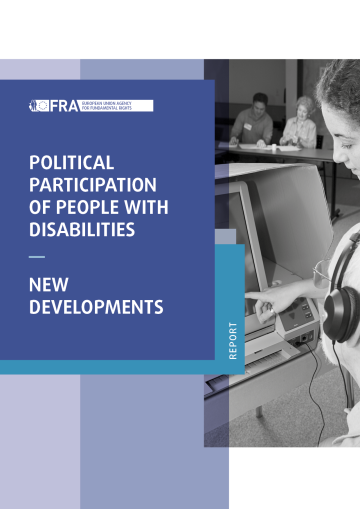
    Ahead of the EU elections, this report explores the political participation of people with disabilities. Although some Member States removed restrictions on the right to vote and to stand for elections, barriers still exist. This report is an update of new developments following FRA’s last report published in 2014. It sets out ways forward to ensure people with disabilities have equal opportunities, in line with the EU Charter of Fundamental Rights and the Convention on the Rights of Persons with Disabilities.
    Lisa F. Young/Adobe Stock
  • Fundamental Rights Report
    11
    June
    2020
    FRA’s Fundamental Rights Report 2020 reviews major developments in the field in 2019, identifying both achievements and areas of concern. It also presents FRA’s opinions on these developments, including a synopsis of the evidence supporting these opinions. This year’s focus chapter explores how to unlock the full potential of the EU Charter of Fundamental Rights.
  • Report / Paper / Summary
    29
    August
    2018
    The founding treaties, the EU Charter of Fundamental Rights and secondary EU law all provide for EU citizens’ freedom to move and reside freely in any EU country of their choice. Growing numbers of citizens, and their family members, are making use of this freedom and related rights, such as the right not to be discriminated against based on nationality and the right to vote in certain elections in the host Member State. But making these rights a reality remains a challenge. This report presents an EU-wide, comparative overview of the application of the Free Movement Directive (2004/38/EC) across the 28 Member States based on a review of select case law at national level.
  • Report / Paper / Summary
    25
    April
    2018
    This report outlines Member States’ approaches to age requirements and limits
    regarding child participation in judicial proceedings; procedural safeguards for, and rights of, children involved in criminal
    proceedings; as well as issues related to depriving children of their liberty.
  • Report / Paper / Summary
    25
    April
    2018
    The methods used to determine the age of
    an applicant may include “invasive” medical tests which interfere with the rights of the child, including their right to dignity,
    integrity and privacy. It is often a challenge to find the right balance between protecting children from harm and promoting
    their participation in these procedures. This report provides important insights and identifies the implications of collecting
    children’s biometric data and conducting age assessments.
  • Report / Paper / Summary
    21
    May
    2014
    The opportunity to be involved in political life, whether by standing for elected office, joining a political party, or following political news stories in the media, is at the heart of what it means to live in a democratic society. The report analyses data on the situation of political participation of persons with disabilities collected from across the 28 European Union (EU) Member States by the European Union Agency for Fundamental Rights (FRA) and the European Commission-funded Academic Network of European Disability Experts (ANED).
  • Report / Paper / Summary
    29
    April
    2014
    The report analyses data on the situation of political participation of persons with disabilities collected from across the 28 European Union (EU) Member States by the European Union Agency for Fundamental Rights (FRA) and the European Commission-funded Academic Network of European Disability Experts (ANED).
  • Report / Paper / Summary
    8
    November
    2010
    This report provides the first results from a legal study carried out by the European Union Agency for Fundamental Rights (FRA) in the context of its project on the "Fundamental rights of persons with intellectual disabilities and persons with mental health problems".
    FRA