eu-charter

EU Charter of Fundamental Rights

Article 23 - Equality between women and men

Article 23 - Equality between women and men

Equality between women and men must be ensured in all areas, including employment, work and pay. The principle of equality shall not prevent the maintenance or adoption of measures providing for specific advantages in favour of the under-represented sex.

Explanations

  • Text:

    The first paragraph has been based on Articles 2 and 3(2) of the EC Treaty, now replaced by Article 3 of the Treaty on European Union and Article 8 of the Treaty on the Functioning of the European Union which impose the objective of promoting equality between men and women on the Union, and on Article 157(1) of the Treaty on the Functioning of the European Union. It draws on Article 20 of the revised European Social Charter of 3 May 1996 and on point 16 of the Community Charter on the rights of workers.

    It is also based on Article 157(3) of the Treaty on the Functioning of the European Union and Article 2(4) of Council Directive 76/207/EEC on the implementation of the principle of equal treatment for men and women as regards access to employment, vocational training and promotion, and working conditions.

    The second paragraph takes over in shorter form Article 157(4) of the Treaty on the Functioning of the European Union which provides that the principle of equal treatment does not prevent the maintenance or adoption of measures providing for specific advantages in order to make it easier for the under-represented sex to pursue a vocational activity or to prevent or compensate for disadvantages in professional careers. In accordance with Article 52(2), the present paragraph does not amend Article 157(4).

    Source:
    Official Journal of the European Union C 303/17 - 14.12.2007
    Preamble - Explanations relating to the Charter of Fundamental Rights:
    These explanations were originally prepared under the authority of the Praesidium of the Convention which drafted the Charter of Fundamental Rights of the European Union. Although they do not as such have the status of law, they are a valuable tool of interpretation intended to clarify the provisions of the Charter.

Case Law References

National Constitutional Law

57 results found

  • Constitution of the Republic of Lithuania
    Country:
    Lithuania

    Article 29. All persons shall be equal before the law, courts, and other state institutions and officials. Human rights may not be restricted; no one may be granted any privileges on the grounds of gender, race, nationality, language, origin, social status, belief, convictions, or views.

  • Constitution of the Republic of Poland
    Country:
    Poland

    Article 33.1. Men and women shall have equal rights in family, political, social and economic life in the Republic of Poland.2. Men and women shall have equal rights, in particular, regarding education, employment and promotion, and shall have the right to equal compensation for work of similar value, to social security, to hold offices, and to receive public honours and decorations.

  • Constitution of the Republic of Poland
    Country:
    Poland

    Article 33.1. Men and women shall have equal rights in family, political, social and economic life in the Republic of Poland.2. Men and women shall have equal rights, in particular, regarding education, employment and promotion, and shall have the right to equal compensation for work of similar value, to social security, to hold offices, and to receive public honours and decorations.

  • Costituzione della Repubblica Italiana
    Country:
    Italy

    Art. 3. Tutti i cittadini hanno pari dignità sociale e sono eguali davanti alla legge, senza distinzione di sesso, di razza, di lingua, di religione, di opinioni politiche, di condizioni personali e sociali. (...) Art. 29. (...) Il matrimonio è ordinato sull'eguaglianza morale e giuridica dei coniugi, con i limiti stabiliti dalla legge a garanzia dell'unità familiare. Art. 37. La donna lavoratrice ha gli stessi diritti e, a parità di lavoro, le stesse retribuzioni che spettano al lavoratore. Le condizioni di lavoro devono consentire l'adempimento della sua essenziale funzione familiare e assicurare alla madre e al bambino una speciale e adeguata protezione. (...) Art. 48. Sono elettori tutti i cittadini, uomini e donne, che hanno raggiunto la maggiore età (...) Art. 51. Tutti i cittadini dell’uno o dell’altro sesso possono accedere agli uffici pubblici e alle cariche elettive in condizioni di eguaglianza, secondo i requisiti stabiliti dalla legge. A tale fine la Repubblica promuove con appositi provvedimenti le pari opportunità tra donne e uomini. (...) Art. 117. (...) Le leggi regionali rimuovono ogni ostacolo che impedisce la piena parità degli uomini e delle donne nella vita sociale, culturale ed economica e promovuono la parità di accesso tra donne e uomini alle cariche elettive (...)

  • Czechia / Charter of Fundamental Rights and Freedoms
    Country:
    Czechia

    Article 3 (1) Everyone is guaranteed the enjoyment of her fundamental rights and basic freedoms without regard to gender, race, colour of skin, language, faith and religion, political or other conviction, national or social origin, membership in a national or ethnic minority, property, birth, or other status.

  • De Belgische Grondwet
    Country:
    Belgium

    Artikel 10 (...) De gelijkheid van vrouwen en mannen is gewaarborgd. Artikel 11bis.De wet, het decreet of de in artikel 134 bedoelde regel waarborgen voor vrouwen en mannen de gelijke uitoefening van hun rechten en vrijheden, en bevorderen meer bepaald hun gelijke toegang tot de door verkiezing verkregen mandaten en de openbare mandaten.De Ministerraad en de Gemeenschaps- en Gewestregeringen tellen personen van verschillend geslacht.De wet, het decreet of de in artikel 134 bedoelde regel organiseren de aanwezigheid van personen van verschillend geslacht binnen de bestendige deputaties van de provincieraden, de colleges van burgemeester en schepenen, de raden voor maatschappelijk welzijn, de vaste bureaus van de openbare centra voor maatschappelijk welzijn en in de uitvoerende organen van elk ander interprovinciaal, bovengemeentelijk, intercommunaal of binnengemeentelijk territoriaal orgaan.Het voorgaande lid is niet van toepassing wanneer de wet, het decreet of de in artikel 134 bedoelde regel de rechtstreekse verkiezing organiseren van de bestendig afgevaardigden van de provincieraden, van de schepenen, van de leden van de raad voor maatschappelijk welzijn, van de leden van het vast bureau van de openbare centra voor maatschappelijk welzijn of van de leden van de uitvoerende organen van elk ander interprovinciaal,bovengemeentelijk, intercommunaal of binnengemeentelijk territoriaal orgaan.

  • Eesti Vabariigi Põhiseadus
    Country:
    Estonia

    § 12. Kõik on seaduse ees võrdsed. Kedagi ei tohi diskrimineerida rahvuse, rassi, nahavärvuse, soo, keele, päritolu, usutunnistuse, poliitiliste või muude veendumuste, samuti varalise ja sotsiaalse seisundi või muude asjaolude tõttu.
    § 27. (…) Abikaasad on võrdõiguslikud.(…) 

  • Equal Treatment Act
    Country:
    Estonia

    § 1. Purpose and scope of Act
    (1) The purpose of this Act is to ensure the protection of persons against discrimination on grounds of nationality (ethnic origin), race, colour, religion or other beliefs, age, disability or sexual orientation. (...)
    § 2. Scope of application of Act
    (...) (2) Discrimination of persons on grounds of religion or other beliefs, age, disability or sexual orientation is prohibited upon:
    1) establishment of conditions for access to employment, to self-employment or to occupation, including selection criteria and recruitment conditions, as well as upon promotion;
    2) entry into employment contracts or contracts for the provision of services, appointment or election to office, establishment of working conditions, giving instructions, remuneration, termination or cancellation of employment contracts or contracts for the provision of services, release from office;
    3) access to vocational guidance, vocational training, advanced vocational training and retraining, practical work experience;
    4) membership in an organisation of employees or employers, including a professional organisation, and grant of benefits by such organisations. (...)

  • Gender Equality (Consolidation) Act
    Country:
    Denmark

    Consolidation Act No. 553 of 2 July 2002Purpose of the Act1. The purpose of this Act is to promote gender equality, including equal integration, equal influence and equal opportunities in all functions in society on the basis of women's and men's equal status. The purpose of the Act is also to counteract direct and indirect discrimination on the ground of gender and to counteract sexual harassment.

  • Gender Equality Act
    Country:
    Estonia

    § 1. Purpose and scope of Act
    (1) The purpose of this Act is to ensure equal treatment of men and women as provided for in the Constitution of the Republic of Estonia and to promote equality of men and women as a fundamental human right and for the public good in all areas of social life.
    (2) To achieve this purpose, this Act provides for:
    1) the prohibition of discrimination on the grounds of sex in the private and public sectors;
    2) the obligation of state and local government authorities, educational and research institutions and employers to promote equality between men and women;
    3) the right to claim compensation for damage.
    § 2. Scope of application of Act
    (1) This Act applies to all areas of social life.
    (2) The requirements of this Act do not apply to:
    1) professing and practising faith or working as a minister of a religion in a registered religious association;
    2) relations in family or private life. (...)

  • Grundgesetz für die Bundesrepublik Deutschland
    Country:
    Germany

    Artikel 3 (...) (2) Männer und Frauen sind gleichberechtigt. Der Staat fördert die tatsächliche Durchsetzung der Gleichberechtigung von Frauen und Männern und wirkt auf die Beseitigung bestehender Nachteile hin. (...)

  • Konstytucja Rzeczypospolitej Polskiej
    Country:
    Poland

    Art. 33.1. Kobieta i mężczyzna w Rzeczypospolitej Polskiej mają równe prawa w życiu rodzinnym, politycznym, społecznym i gospodarczym.2. Kobieta i mężczyzna mają w szczególności równe prawo do kształcenia, zatrudnienia i awansów, do jednakowego wynagradzania za pracę jednakowej wartości, do zabezpieczenia społecznego oraz do zajmowania stanowisk, pełnienia funkcji oraz uzyskiwania godności publicznych i odznaczeń.

  • La Constitution Belge
    Country:
    Belgium

    Article 10 (...)L'égalité des femmes et des hommes est garantie. Article 11bis.La loi, le décret ou la règle visée à l'article 134 garantissent aux femmes et aux hommes l'égal exercice de leurs droits et libertés, et favorisent notamment leur égal accès aux mandats électifs et publics.Le Conseil des ministres et les Gouvernements de communauté et de région comptent des personnes de sexe différent.La loi, le décret ou la règle visée à l'article 134 organisent la présence de personnes de sexe différent au sein des députations permanentes des conseils provinciaux, des collèges des bourgmestre et échevins, des conseils de l'aide sociale, des bureaux permanents des centres publics d'aide sociale et dans les exécutifs de tout autre organe territorial interprovincial, supracommunal, intercommunal ou intracommunal.L'alinéa qui précède ne s'applique pas lorsque la loi, le décret ou la règle visée à l'article 134 organisent l'élection directe des députés permanents des conseils provinciaux, des échevins, des membres du conseil de l'aide sociale, des membres du bureau permanent des centres publics d'aide sociale ou des membres des exécutifs de tout autre organe territorial interprovincial, supracommunal, intercommunal ou intracommunal.

  • Latvijas Republikas Satversme
    Country:
    Latvia

    91. Visi cilvēki Latvijā ir vienlīdzīgi likuma un tiesas priekšā. Cilvēka tiesības tiek īstenotas bez jebkādas diskriminācijas.

  • Law 202/2002 on equal opportunities for women and men
    Country:
    Romania

    (establishes the legal framework in the field of equal opportunities for women and men. The law is based on the concept of multiple discriminations, which covers all grounds of discrimination, including gender and race.)

  • Lietuvos Respublikos Konstitucija
    Country:
    Lithuania

    29 straipsnis. Įstatymui, teismui ir kitoms valstybės institucijoms ar pareigūnams visi asmenys lygūs. Žmogaus teisių negalima varžyti ir teikti jam privilegijų dėl jo lyties, rasės, tautybės, kalbos, kilmės, socialinės padėties, tikėjimo, įsitikinimų ar pažiūrų pagrindu.

  • Luxembourg / Constitution of the Grand Ducal of Luxembourg
    Country:
    Luxembourg

    Art. 15. ... (3) Les femmes et les hommes sont égaux en droits et en devoirs. 

    L’Etat veille à promouvoir activement l’élimination des entraves pouvant exister en matière d’égalité entre femmes et hommes. 

    ...

  • Magyarország Alaptörvénye
    Country:
    Hungary

    XV. cikk (SZABADSÁG ÉS FELELŐSSÉG) […] (2) Magyarország az alapvető jogokat mindenkinek bármely megkülönböztetés, nevezetesen faj, szín, nem, fogyatékosság, nyelv, vallás, politikai vagy más vélemény, nemzeti vagy társadalmi származás, vagyoni, születési vagy egyéb helyzet szerinti különbségtétel nélkül biztosítja.
    (3) A nők és a férfiak egyenjogúak.
    (4) Magyarország az esélyegyenlőség és a társadalmi felzárkózás megvalósulását külön intézkedésekkel segíti.
    (5) Magyarország külön intézkedésekkel védi a családokat, a gyermekeket, a nőket, az időseket és a fogyatékkal élőket. XIX. cikk (SZABADSÁG ÉS FELELŐSSÉG) […] (4) Magyarország az időskori megélhetés biztosítását a társadalmi szolidaritáson alapuló egységes állami nyugdíjrendszer fenntartásával és önkéntesen létrehozott társadalmi intézmények működésének lehetővé tételével segíti elő. Törvény az állami nyugdíjra való jogosultság feltételeit a nők fokozott védelmének követelményére tekintettel is megállapíthatja.

  • Netherlands / Constitution of the Kingdom of the Netherlands
    Country:
    Netherlands

    Article 1 All persons in the Netherlands shall be treated equally in equal circumstances. Discrimination on the grounds of religion, belief, political opinion, race or sex, disability, sexual orientation or on any other grounds whatsoever shall not be permitted.

  • Non-Discrimination Act (21/2004) (as amended by Act No 50/2006)
    Country:
    Finland

EU Law

19 results found

  • Council Directive 79/7/EEC of 19 December 1978 on the progressive implementation of the principle of equal treatment for men and women in matters of social security

    Article 1

    The purpose of this Directive is the progressive implementation, in the field of social security and other elements of social protection provided for in Article 3, of the principle of equal treatment for men and women in matters of social security, hereinafter referred to as ‘the principle of equal treatment’.

    Article 4

    1.   The principle of equal treatment means that there shall be no discrimination whatsoever on ground of sex either directly, or indirectly by reference in particular to marital or family status, in particular as concerns:

    — the scope of the schemes and the conditions of access thereto,

    — the obligation to contribute and the calculation of contributions,

    — the calculation of benefits including increases due in respect of a spouse and for dependants and the conditions governing the duration and retention of entitlement to benefits.

    2.   The principle of equal treatment shall be without prejudice to the provisions relating to the protection of women on the grounds of maternity.

    Article 6

    Member States shall introduce into their national legal systems such measures as are necessary to enable all persons who consider themselves wronged by failure to apply the principle of equal treatment to pursue their claims by judicial process, possibly after recourse to other competent authorities.

  • Council Directive 2004/113/EC of 13 December 2004 implementing the principle of equal treatment between men and women in the access to and supply of goods and services

    Preamble 
    (4) Equality between men and women is a fundamental principle of the European Union. Articles 21 and 23 of the Charter of Fundamental Rights of the European Union prohibit any discrimination on grounds of sex and require equality between men and women to be ensured in all areas.

    Article 1: Purpose

    The purpose of this Directive is to lay down a framework for combating discrimination based on sex in access to and supply of goods and services, with a view to putting into effect in the Member States the principle of equal treatment between men and women.

    Article 4: Principle of equal treatment

    1.   For the purposes of this Directive, the principle of equal treatment between men and women shall mean that

    (a) there shall be no direct discrimination based on sex, including less favourable treatment of women for reasons of pregnancy and maternity;

    (b) there shall be no indirect discrimination based on sex.

    2.   This Directive shall be without prejudice to more favourable provisions concerning the protection of women as regards pregnancy and maternity.

    3.   Harassment and sexual harassment within the meaning of this Directive shall be deemed to be discrimination on the grounds of sex and therefore prohibited. A person's rejection of, or submission to, such conduct may not be used as a basis for a decision affecting that person.

    4.   Instruction to direct or indirect discrimination on the grounds of sex shall be deemed to be discrimination within the meaning of this Directive.

    5.   This Directive shall not preclude differences in treatment, if the provision of the goods and services exclusively or primarily to members of one sex is justified by a legitimate aim and the means of achieving that aim are appropriate and necessary.

    Article 6: Positive action

    With a view to ensuring full equality in practice between men and women, the principle of equal treatment shall not prevent any Member State from maintaining or adopting specific measures to prevent or compensate for disadvantages linked to sex.

    Article 7: Minimum requirements

    1.   Member States may introduce or maintain provisions which are more favourable to the protection of the principle of equal treatment between men and women than those laid down in this Directive.

    2.   The implementation of this Directive shall in no circumstances constitute grounds for a reduction in the level of protection against discrimination already afforded by Member States in the fields covered by this Directive.

  • Directive (EU) 2024/1385 of the European Parliament and of the Council of 14 May 2024 on combating violence against women and domestic violence

    Preamble  


    (2) Equality between women and men and non-discrimination are core values of the Union and fundamental rights enshrined, respectively, in Article 2 of the Treaty on European Union (TEU) and in Articles 21 and 23 of the Charter of Fundamental Rights of the European Union (the ‘Charter’). Violence against women and domestic violence endanger those very values and rights, undermining women and girls’ rights to equality in all areas of life and hindering their equal societal and professional participation.

    (3) Violence against women and domestic violence is a violation of fundamental rights such as the right to human dignity, the right to life and integrity of the person, the prohibition of inhuman or degrading treatment or punishment, the right to respect for private and family life, the right to liberty and security, the right to the protection of personal data, the right to non-discrimination, including on the grounds of sex, and the rights of the child, as enshrined in the Charter and the United Nations Convention on the Rights of the Child.


    (6) Violence against women and domestic violence can be exacerbated where it intersects with discrimination based on a combination of sex and any other ground or grounds of discrimination as referred to in Article 21 of the Charter, namely race, colour, ethnic or social origin, genetic features, language, religion or belief, political or any other opinion, membership of a national minority, property, birth, disability, age or sexual orientation (‘intersectional discrimination’). Member States should therefore pay due regard to victims affected by such intersectional discrimination by taking specific measures. Persons affected by intersectional discrimination are at a heightened risk of experiencing gender-based violence. Consequently, Member States should take that heightened level of risk into consideration when implementing the measures provided for by this Directive, especially regarding the individual assessment to identify victims’ protection needs, specialist support to victims and training and information for professionals likely to come into contact with victims.


    (20) The dissemination of images, videos or other material depicting sexually explicit activities or the intimate parts of a person without that person’s consent to the public by means of ICT should not be criminalised, where such non-criminalisation is necessary to safeguard the fundamental rights protected under the Charter, in particular the freedom of expression, including the freedom to receive and impart information and ideas in an open and democratic society, as well as the freedom of the arts and sciences, including academic freedom. Moreover, the offence should not cover the handling of material by public authorities, in particular to conduct criminal proceedings or to prevent, detect or investigate crime, and Member States should be able to exempt a person from responsibility under specific circumstances, for example where telephone or internet helplines handle material in order to report an offence to authorities.


    (26) The offence of cyber incitement to violence or hatred presupposes that the incitement is not expressed in a purely private context but publicly through the use of ICT. Therefore, it should require dissemination to the public, which should be understood as entailing making a given item of material which amounts to incitement to violence or hatred accessible, through ICT, to a potentially unlimited number of persons, namely making the material easily accessible to users in general, without requiring further action by the person who provided the material, irrespective of whether those persons actually access the information in question. Accordingly, where access to the material requires registration or admittance to a group of users, that information should be considered to be disseminated to the public only where users seeking to access the material are automatically registered or admitted without a human decision or without selecting to whom access is granted. In assessing whether material qualifies as amounting to incitement to hatred or violence, the competent authorities should take into account the fundamental right to freedom of expression as enshrined in Article 11 of the Charter.


    (33) In the case of domestic violence and violence against women, especially where committed by close family members or intimate partners, victims might be under such duress from the offender that they fear to reach out to the competent authorities, even if their lives are in danger. Therefore, Member States should ensure that their confidentiality rules do not constitute an obstacle for healthcare professionals to report to the competent authorities, where they have reasonable grounds to believe that there is an imminent risk of serious physical harm. Such reporting is justified because such acts might not be reported by those who experience or directly witness them. Similarly, instances of domestic violence or violence against women which affect children are often only intercepted by third parties noticing irregular behaviour or physical harm to the child. Children need to be effectively protected from such forms of violence and adequate measures promptly taken. Therefore, professionals who come into contact with child victims, including healthcare, social services or education professionals, should not be constrained by confidentiality rules where they have reasonable grounds to believe that serious physical harm has been inflicted on a child. Where professionals report such instances of violence, Member States should ensure that they are not held liable for breach of confidentiality. However, legal professional privilege should be protected, in accordance with Article 7 of the Charter, as justified by the fundamental role assigned to lawyers in a democratic society. Where provided for by national law, the clergy-penitent privilege, or equivalent principles applicable in order to safeguard the freedom of religion, should also be protected. In addition, the possibility for professionals to report such instances of violence is without prejudice to national rules on confidentiality of sources applicable in the context of the media.


    (42) Victims are often in need of specific support. To ensure they effectively receive offers of support, the competent authorities should refer victims to appropriate support services. That should, in particular, be the case where an individual assessment has found that the victim has particular support needs. When determining whether to refer child victims to support services, the best interests of those victims should be a primary consideration, as laid down in Article 24 of the Charter. Member States should ensure that the processing of related personal data by competent authorities is based on law, in accordance with the relevant provisions concerning the lawfulness of processing set out in Regulation (EU) 2016/679 of the European Parliament and of the Council  and in accordance with Directive (EU) 2016/680 of the European Parliament and of the Council. Such law should include appropriate personal data safeguards that respect the essence of the right to data protection and provide for suitable and specific measures to safeguard the fundamental rights and the interests of individuals. Where competent authorities transfer victims’ personal data to support services for the purposes of victim referral, they should ensure that the data transferred are limited to what is necessary to inform the support services of the circumstances of the case, so that victims receive appropriate support and protection. A support service should only store personal data for as long as necessary and, in any event, for no longer than five years, or a shorter period of time if established in national law, after the last contact between the support service and the victim.


    (68) To effectively address negative consequences for children, support measures for children should include specialised psychological counselling adapted to the age, developmental needs and individual situation of the child, together with paediatric care where necessary, and be provided as soon as the competent authorities have reasonable grounds to believe that children might have been victims, including child witnesses. When providing support to children, the rights of the child, as laid down in Article 24 of the Charter, should be a primary consideration.

    Article 16: Individual assessment to identify victims’ protection needs

    4.   The individual assessment as referred to in paragraph 2 shall take into account the victim’s individual circumstances, including whether the victim experiences discrimination based on a combination of sex and any other ground or grounds of discrimination as referred to in Article 21 of the Charter (‘intersectional discrimination’), and, therefore, faces a heightened risk of violence, and the victim’s own account and assessment of the situation. It shall be conducted in the best interest of the victim, paying special attention to the need to avoid secondary or repeat victimisation.

    Article 23: Measures to remove certain online material

    4.   Member States shall ensure that the orders and other measures referred to in paragraph 1 are taken following transparent procedures and are subject to adequate safeguards, in particular to ensure that those orders and other measures are limited to what is necessary and proportionate and that due account is taken of the rights and interests of all relevant parties involved, including their fundamental rights in accordance with the Charter.

    Member States shall ensure that hosting service providers, other relevant intermediary service providers and content providers affected by an order as referred to in the second subparagraph of paragraph 1 have a right to an effective judicial remedy. Such right shall include the right to challenge such an order before the courts of the Member State of the competent authority that issued the order.

    Article 47: Freedom of the press and freedom of expression in other media

    This Directive shall not affect special liability regimes relating to fundamental principles on the freedom of the press and the freedom of expression in protected media which exist in Member States as of 13 June 2024, provided that such regimes can be applied in full compliance with the Charter.

  • Treaty on the Functioning of the European Union

    Article 157

    (ex Article 141 TEC)

    1. Each Member State shall ensure that the principle of equal pay for male and female workers for equal work or work of equal value is applied.

    2. For the purpose of this Article, "pay" means the ordinary basic or minimum wage or salary and any other consideration, whether in cash or in kind, which the worker receives directly or indirectly, in respect of his employment, from his employer.

    Equal pay without discrimination based on sex means:

    (a) that pay for the same work at piece rates shall be calculated on the basis of the same unit of measurement;

    (b) that pay for work at time rates shall be the same for the same job.

    3. The European Parliament and the Council, acting in accordance with the ordinary legislative procedure, and after consulting the Economic and Social Committee, shall adopt measures to ensure the application of the principle of equal opportunities and equal treatment of men and women in matters of employment and occupation, including the principle of equal pay for equal work or work of equal value.

    4. With a view to ensuring full equality in practice between men and women in working life, the principle of equal treatment shall not prevent any Member State from maintaining or adopting measures providing for specific advantages in order to make it easier for the underrepresented sex to pursue a vocational activity or to prevent or compensate for disadvantages in professional careers.

  • Treaty on the Functioning of the European Union

    Article 8

    (ex Article 3(2) TEC) [2]

    In all its activities, the Union shall aim to eliminate inequalities, and to promote equality, between men and women.

  • Treaty on the European Union

    Article 3

    (ex Article 2 TEU)

    1. The Union's aim is to promote peace, its values and the well-being of its peoples.

    2. The Union shall offer its citizens an area of freedom, security and justice without internal frontiers, in which the free movement of persons is ensured in conjunction with appropriate measures with respect to external border controls, asylum, immigration and the prevention and combating of crime.

    3. The Union shall establish an internal market. It shall work for the sustainable development of Europe based on balanced economic growth and price stability, a highly competitive social market economy, aiming at full employment and social progress, and a high level of protection and improvement of the quality of the environment. It shall promote scientific and technological advance.

    It shall combat social exclusion and discrimination, and shall promote social justice and protection, equality between women and men, solidarity between generations and protection of the rights of the child.

    It shall promote economic, social and territorial cohesion, and solidarity among Member States.

    It shall respect its rich cultural and linguistic diversity, and shall ensure that Europe's cultural heritage is safeguarded and enhanced.

    4. The Union shall establish an economic and monetary union whose currency is the euro.

    5. In its relations with the wider world, the Union shall uphold and promote its values and interests and contribute to the protection of its citizens. It shall contribute to peace, security, the sustainable development of the Earth, solidarity and mutual respect among peoples, free and fair trade, eradication of poverty and the protection of human rights, in particular the rights of the child, as well as to the strict observance and the development of international law, including respect for the principles of the United Nations Charter.

    6. The Union shall pursue its objectives by appropriate means commensurate with the competences which are conferred upon it in the Treaties.

  • Council Directive 2000/43/EC of 29 June 2000 implementing the principle of equal treatment between persons irrespective of racial or ethnic origin

    Preamble 

    (3) The right to equality before the law and protection against discrimination for all persons constitutes a universal right recognised by the Universal Declaration of Human Rights, the United Nations Convention on the Elimination of all forms of Discrimination Against Women, the International Convention on the Elimination of all forms of Racial Discrimination and the United Nations Covenants on Civil and Political Rights and on Economic, Social and Cultural Rights and by the European Convention for the Protection of Human Rights and Fundamental Freedoms, to which all Member States are signatories.

    (9) Discrimination based on racial or ethnic origin may undermine the achievement of the objectives of the EC Treaty, in particular the attainment of a high level of employment and of social protection, the raising of the standard of living and quality of life, economic and social cohesion and solidarity. It may also undermine the objective of developing the European Union as an area of freedom, security and justice.

    (13) To this end, any direct or indirect discrimination based on racial or ethnic origin as regards the areas covered by this Directive should be prohibited throughout the Community. This prohibition of discrimination should also apply to nationals of third countries, but does not cover differences of treatment based on nationality and is without prejudice to provisions governing the entry and residence of third-country nationals and their access to employment and to occupation.

    (14) In implementing the principle of equal treatment irrespective of racial or ethnic origin, the Community should, in accordance with Article 3(2) of the EC Treaty, aim to eliminate inequalities, and to promote equality between men and women, especially since women are often the victims of multiple discrimination.

    (19) Persons who have been subject to discrimination based on racial and ethnic origin should have adequate means of legal protection. To provide a more effective level of protection, associations or legal entities should also be empowered to engage, as the Member States so determine, either on behalf or in support of any victim, in proceedings, without prejudice to national rules of procedure concerning representation and defence before the courts.

    Article 1: Purpose

    The purpose of this Directive is to lay down a framework for combating discrimination on the grounds of racial or ethnic origin, with a view to putting into effect in the Member States the principle of equal treatment.

    Article 2: Concept of discrimination

    1. For the purposes of this Directive, the principle of equal treatment shall mean that there shall be no direct or indirect discrimination based on racial or ethnic origin.

    2. For the purposes of paragraph 1:

    (a) direct discrimination shall be taken to occur where one person is treated less favourably than another is, has been or would be treated in a comparable situation on grounds of racial or ethnic origin;

    (b) indirect discrimination shall be taken to occur where an apparently neutral provision, criterion or practice would put persons of a racial or ethnic origin at a particular disadvantage compared with other persons, unless that provision, criterion or practice is objectively justified by a legitimate aim and the means of achieving that aim are appropriate and necessary.

    3. Harassment shall be deemed to be discrimination within the meaning of paragraph 1, when an unwanted conduct related to racial or ethnic origin takes place with the purpose or effect of violating the dignity of a person and of creating an intimidating, hostile, degrading, humiliating or offensive environment. In this context, the concept of harassment may be defined in accordance with the national laws and practice of the Member States.

    4. An instruction to discriminate against persons on grounds of racial or ethnic origin shall be deemed to be discrimination within the meaning of paragraph 1.

    Article 7: Defence of rights

    1. Member States shall ensure that judicial and/or administrative procedures, including where they deem it appropriate conciliation procedures, for the enforcement of obligations under this Directive are available to all persons who consider themselves wronged by failure to apply the principle of equal treatment to them, even after the relationship in which the discrimination is alleged to have occurred has ended.

    2. Member States shall ensure that associations, organisations or other legal entities, which have, in accordance with the criteria laid down by their national law, a legitimate interest in ensuring that the provisions of this Directive are complied with, may engage, either on behalf or in support of the complainant, with his or her approval, in any judicial and/or administrative procedure provided for the enforcement of obligations under this Directive.

  • Directive 2010/41/EU of the European Parliament and of the Council of 7 July 2010 on the application of the principle of equal treatment between men and women engaged in an activity in a self-employed capacity and repealing Council Directive 86/613/EEC

    .

  • Council Directive 92/85/EEC of 19 October 1992 on the introduction of measures to encourage improvements in the safety and health at work of pregnant workers and workers who have recently given birth or are breastfeeding

    .

  • Community Charter of the Fundamental Social Rights of Workers (not in force)

    Equal treatment for men and women
    17. Equal treatment for men and women must be
    assured; Equal opportunities for men and women must be
    developed.
    To this end, action should be intensified to ensure the
    implementation of the principle of equality between men
    and women as regards in particular access to employment,
    remuneration, working conditions, social protection, education, vocational training and career development.
    Measures should also be developed enabling men and
    women to reconcile their occupational and family obligations

International Law

8 results found

Publications and data

  • Report / Paper / Summary
    16
    December
    2020
    All language versions now available
    20 July 2021
    The EU is founded on the values of democracy, rule of law and respect for human rights. Yet these values, and discussions on fundamental rights at the EU and Member State level, can seem remote in people’s daily lives. With this in mind, FRA explored what people understand, know and experience with respect to their fundamental rights in practice. The resulting data provide comprehensive and comparable evidence on these aspects.
  • Report / Paper / Summary
    24
    June
    2020
    Summary version now available
    07 December 2020
    FRA’s Fundamental Rights Survey collected data from 35,000 people about their experiences, perceptions and opinions on a range of issues that are variously encompassed by human rights. This report presents a small selection of the survey results. It focuses on findings with respect to respondents’ opinions about human – or fundamental rights; their views and perceptions on the functioning of democratic societies – as a pillar on which human rights can flourish; and on their thoughts on and engagement with public services that have a duty to enforce human rights law and to protect people’s rights.
  • Report / Paper / Summary
    3
    March
    2026
    Violence against women remains widespread in the European Union (EU). This joint report by the EU Agency for Fundamental Rights (FRA) and the European Institute for Gender Equality (EIGE) presents detailed findings from the EU gender-based violence survey. It offers in-depth analysis of the scale, nature and drivers of violence and exposes the structural gender inequality. Building on the 2024 publication, EU gender-based violence survey - Key results, and following up on FRA’s 2014 report, Violence against women: an EU-wide survey, this report tracks trends over the last decade across the EU. Eurostat, FRA, and EIGE jointly conducted the survey. It is based on over 100,000 interviews covering all 27 EU Member States.
  • Report / Paper / Summary
    24
    February
    2026
    The start of Russia’s war of aggression against Ukraine on 24 February 2022 shocked the global community and gave rise to a
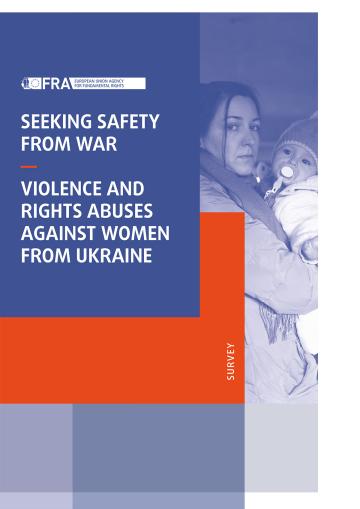
    series of urgent fundamental rights challenges across Europe. While much attention has focused on the scale of devastation and its wider impact on all Ukrainians, the war has also inflicted profound personal harm. This report sheds light on the violence, sexual harassment and exploitation experienced by women displaced from Ukraine. Drawing on a survey and in-depth interviews with women from Ukraine, the report documents the prevalence, forms and patterns of gender-based violence and sets out practical measures to improve safety, access to justice and support.
  • Report / Paper / Summary
    4
    December
    2025
    Artificial Intelligence comes with both benefits and risks. Safe AI use that accounts for fundamental rights is thus crucial. While the 2024 EU AI Act was a milestone in this regard, its broad definitions regarding AI systems and high-risk AI could introduce loopholes for fundamental rights compliance. This report offers an empirical basis for much-needed practical guidance on the Act’s implementation. Based on interviews with AI developers, sellers, and users, FRA addresses challenges of its use in critical domains, like asylum, education, and employment. Our findings help guide next steps in realising the AI Act’s potential to ensure responsible innovation.
  • Report / Paper / Summary
    25
    November
    2024
    This report presents key results of the EU gender-based violence survey based on data from all 27 Member States. The report focuses on the overall prevalence of physical violence or threats and/or sexual violence by any perpetrator, violence perpetrated by women’s intimate partners and by other people (non-partners) and women’s experiences of sexual harassment at work.
  • Fundamental Rights Report
    5
    June
    2024
    FRA’s Fundamental Rights Report 2024 analyses the year’s developments in fundamental rights. It focuses on the most pressing fundamental rights concerns facing Europe in 2023: the cost-of-living crisis, rights concerns at the EU’s external borders and migration, and threats to democracy. Re-structured, this year’s new approach is a shorter and sharper analysis. It also presents FRA’s opinions on these developments, including a summary of the evidence supporting these opinions.