This guide can help cities wishing to improve their efforts to respect human rights. It aims to encourage local authorities to adopt higher human rights standards. The idea is to encourage and foster mutual learning on human and fundamental rights. The European Union Agency for Fundamental Rights (FRA), a group of human rights cities and various practitioners in the EU worked together to produce this guide. The guide draws on the promising practices and experiences of cities, regions, experts, international organisations and networks that can be found in the FRA report Human rights cities in the EU: A framework for reinforcing rights locally.
Deze gids kan steden helpen zich sterker in te zetten om de mensenrechten te eerbiedigen. Het doel ervan is lokale overheden aan te moedigen strengere mensenrechtennormen vast te stellen. Het idee is om wederzijds te leren over mensenrechten en grondrechten aan te moedigen en te bevorderen. Het Bureau van de Europese Unie voor de grondrechten (FRA), een groep mensenrechtensteden en diverse beroepsbeoefenaars in de EU hebben de handen ineengeslagen om deze gids op te stellen. De gids bouwt voort op de veelbelovende praktijken en ervaringen van steden, regio’s, deskundigen, internationale organisaties en netwerken die te vinden zijn in het FRA-verslag Human Rights cities in the EU: A framework for reinforcing rights locally.
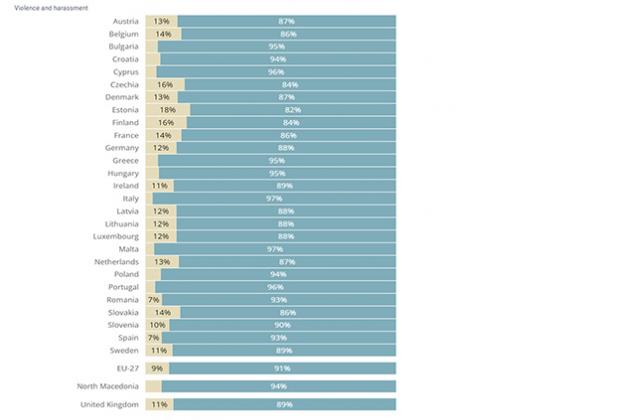
The Fundamental Rights Survey is the first survey to collect comprehensive and comparable data on people’s experiences and views of their rights in the EU-27. The survey included questions related to rights in a number of different areas, including crime victimisation and safety, data protection and privacy, functioning of the democracy, views on human rights and experiences with public services.
Children are full-fledged holders of rights. They are beneficiaries of all human and fundamental rights and subjects of special regulations, given their specific characteristics. This handbook aims to illustrate how European law and case law accommodate the specific interests and needs of children. It also considers the importance of parents and guardians or other legal representatives and makes reference, where appropriate, to situations in which rights and responsibilities are most prominently vested in children’s carers. It is a point of reference on both European Union (EU) and Council of Europe (CoE) law related to these subjects, explaining how each issue is regulated under EU law, including the Charter of Fundamental Rights of the European Union, as well as under the European Convention on Human Rights, the European Social Charter and other CoE instruments.
Kinderen hebben net als ieder ander rechten. Zij genieten alle mensen- en grondrechten en vallen onder speciale regelgeving in verband met hun specifieke kenmerken. Dit handboek wil illustreren hoe de Europese wetgeving en jurisprudentie voorzien in de specifieke belangen en behoeften van kinderen, maar laat ook zien hoe belangrijk ouders en voogden en andere wettelijke vertegenwoordigers zijn. Het geeft in voorkomend geval aan op welke gebieden de rechten en verantwoordelijkheden voornamelijk bij de verzorgers van kinderen liggen. Dit handboek beoogt om de bekendheid met en de kennis van de rechtsnormen die de rechten van het kind in Europa beschermen en bevorderen, te vergroten. Het is een naslagwerk over het recht van de Europese Unie (EU) en de Raad van Europa (RvE) met betrekking tot deze onderwerpen en licht toe hoe elk onderwerp is geregeld in het EU-recht, met inbegrip van het Handvest van de grondrechten van de Europese Unie, en in het Europees Verdrag voor de Rechten van de Mens (EVRM), het Europees Sociaal Handvest (ESH) en andere RvE-instrumenten.
The EU is facing a large-scale humanitarian crisis. Over 10 days at the beginning of March, the EU Agency for Fundamental Rights (FRA) visited all EU countries bordering Ukraine and Moldova – Hungary, Poland, Romania and Slovakia.
The EU Agency for Fundamental Rights has been regularly collecting data on asylum and migration since September 2015. This report focuses on the fundamental rights situation of people arriving in Member States and EU candidate countries particularly affected by migration. It addresses fundamental rights concerns between 1 October and 31 December 2021.
The Fundamental Rights Forum 2021 was the space for dialogue on the human rights challenges facing the EU today. In this video, participants talk about the challenges of fundamental rights in the digital age.
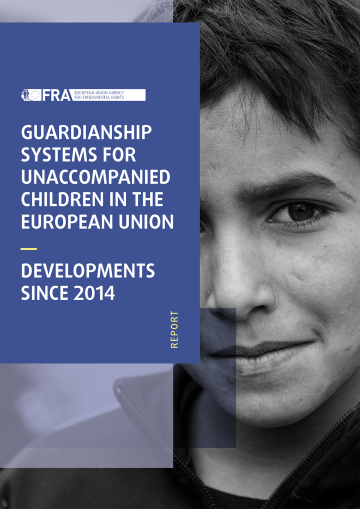
In 2015 and 2016, the numbers of unaccompanied children arriving in Europe increased dramatically, straining national guardianship systems. This report looks at how EU Member States, as well as North Macedonia and Serbia, have adapted their guardianship systems for unaccompanied children since that time.
The EU Agency for Fundamental Rights has been regularly collecting data on asylum and migration since September 2015. This report focuses on the fundamental rights situation of people arriving in Member States and EU candidate countries particularly affected by migration. It addresses fundamental rights concerns between 1 July and 30 September 2021.
Since 2014, FRA has been publishing an annual update of the forced return monitoring systems EU Member States have set up under Article 8 (6) of the EU’s Return Directive. This overview describes different indicators for an effective forced return monitoring system. It includes the organisation responsible for monitoring forced return, the number of operations monitored in 2020, the phases of monitored return operations, the number of staff trained and working as monitors, and whether the monitoring body issued public reports about their monitoring.
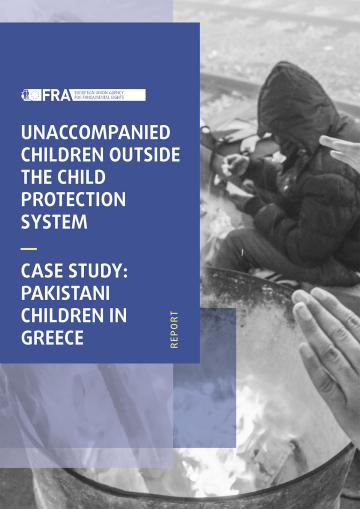
This report sheds light on the realities faced by unaccompanied migrant children who are not in the care of child protection systems in the EU. Presented as a case study, it tells the story of children and young adults from Pakistan who travelled alone to the EU without their parents or other adults.
В Становище 1/21 на Агенцията на Европейския съюз за основните права (FRA) са илюстрирани степента и естеството на преживените случаи на неравенство и дискриминация в ЕС. Становището посочва основанията на дискриминация и областите на живот, обхванати в директивите за равенство между расите и за равно третиране во бластта на заетостта, както и в предложената Директива за равно третиране. То е издадено на 30 април 2021 г. В настоящото резюме са представени основните препоръки („Основни констатации и становища“), описани в Становище 1/21 на FRA.
FRA’s udtalelse 1/21 viser omfanget og arten af de faktiske erfaringer med ulighed og forskelsbehandling i hele EU. Det gør den med henvisning til de grunde til forskelsbehandling og de livsområder, der er omfattet af direktivet om racelighed og direktivet om ligebehandling på beskæftigelsesområdet, samt det foreslåede ligebehandlingsdirektiv. Den blev udfærdiget den 30. april 2021. Dette sammendrag indeholder de vigtigste anbefalinger (»Vigtigste resultater og udtalelser«), der er beskrevet i FRA’s udtalelse 1/21.
Η γνωμοδότηση 1/21 του FRA αποτυπώνει την έκταση και τις μορφές ανισότητας και διακρίσεων που βιώνουν οι πολίτες σε όλες τις χώρες της ΕΕ. Πιο συγκεκριμένα, εστιάζεται στους λόγους διάκρισης και στους τομείς της καθημερινής ζωής που καλύπτονται τόσο από τις οδηγίες για τη φυλετική ισότητα και για την ισότητα στην απασχόληση, όσο και από την πρόταση οδηγίας για την ίση μεταχείριση. Η γνωμοδότηση εκδόθηκε στις 30 Απριλίου 2021. Η παρούσα σύνοψη παρουσιάζει τις σημαντικότερες συστάσεις («Κύρια ευρήματα και γνώμες») που περιλαμβάνονται στη γνωμοδότηση 1/21 του FRA.
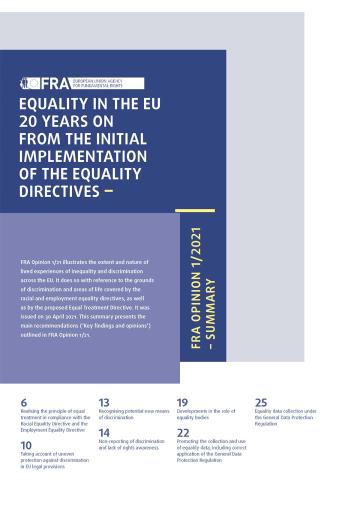
FRA Opinion 1/21 illustrates the extent and nature of lived experiences of inequality and discrimination across the EU. It does so with reference to the grounds of discrimination and areas of life covered by the racial and employment equality directives, as well as by the proposed Equal Treatment Directive. It was issued on 30 April 2021. This summary presents the main recommendations (‘Key findings and opinions’) outlined in FRA Opinion 1/21.
FRA:n lausunnossa 1/21 valotetaan koetun eriarvoisuuden ja syrjinnän laajuutta ja luonnetta eri puolilla EU:ta. Siinä käydään läpi rotusyrjintädirektiivin ja työsyrjintädirektiivin sekä ehdotetun yhdenvertaista kohtelua koskevan direktiivin alaan kuuluvia syrjintäperusteita ja elämänalueita. Lausunto julkaistiin 30. huhtikuuta 2021. Tässä yhteenvedossa esitetään FRA:n lausunnossa 1/21 tehdyt keskeiset suositukset (”Keskeiset havainnot ja lausunnot”).
Az FRA (az Európai Unió Alapjogi Ügynöksége) 1/21. véleménye bemutatja az egyenlőtlenséggel és hátrányos megkülönböztetéssel kapcsolatos tapasztalatok mértékét és jellegét az Unióban. Ehhez a faji és a foglalkoztatási egyenlőségi irányelvben, valamint az egyenlő bánásmódról szóló irányelvre irányuló javaslatban meghatározott megkülönböztetési okokat és területeket veszi alapul. A véleményt 2021. április 30-án adták ki. Ez az összefoglaló az FRA 1/21. véleményében megfogalmazott főbb ajánlásokat („Főbb megállapítások és vélemények”) mutatja be.
In FRA-advies 1/2021 worden de omvang en de aard van doorleefde ervaringen met ongelijkheid en discriminatie in de EU geschetst. Hierbij wordt verwezen naar de discriminatiegronden en terreinen van het leven die onder de richtlijn rassengelijkheid en de richtlijn gelijke behandeling in arbeid en beroep vallen, alsook onder de voorgestelde richtlijn inzake gelijke behandeling van personen. Het advies werd op 30 april 2021 gepubliceerd. In deze samenvatting komen de voornaamste aanbevelingen (“belangrijkste bevindingen en adviezen”) aan bod die in FRAadvies
1/2021 zijn uiteengezet.