eu-charter

EU Charter of Fundamental Rights

Article 52 - Scope and interpretation

Article 52 - Scope and interpretation

1. Any limitation on the exercise of the rights and freedoms recognised by this Charter must be provided for by law and respect the essence of those rights and freedoms. Subject to the principle of proportionality, limitations may be made only if they are necessary and genuinely meet objectives of general interest recognised by the Union or the need to protect the rights and freedoms of others.
2. Rights recognised by this Charter for which provision is made in the Treaties shall be exercised under the conditions and within the limits defined by those Treaties.
3. In so far as this Charter contains rights which correspond to rights guaranteed by the Convention for the Protection of Human Rights and Fundamental Freedoms, the meaning and scope of those rights shall be the same as those laid down by the said Convention. This provision shall not prevent Union law providing more extensive protection.
4. In so far as this Charter recognises fundamental rights as they result from the constitutional traditions common to the Member States, those rights shall be interpreted in harmony with those traditions.
5. The provisions of this Charter which contain principles may be implemented by legislative and executive acts taken by institutions, bodies, offices and agencies of the Union, and by acts of Member States when they are implementing Union law, in the exercise of their respective powers. They shall be judicially cognisable only in the interpretation of such acts and in the ruling on their legality.
6. Full account shall be taken of national laws and practices as specified in this Charter.
7. The explanations drawn up as a way of providing guidance in the interpretation of this Charter shall be given due regard by the courts of the Union and of the Member States.

Explanations

  • Text:

    The purpose of Article 52 is to set the scope of the rights and principles of the Charter, and to lay down rules for their interpretation. Paragraph 1 deals with the arrangements for the limitation of rights. The wording is based on the case-law of the Court of Justice: ‘... it is well established in the case-law of the Court that restrictions may be imposed on the exercise of fundamental rights, in particular in the context of a common organisation of the market, provided that those restrictions in fact correspond to objectives of general interest pursued by the Community and do not constitute, with regard to the aim pursued, disproportionate and unreasonable interference undermining the very substance of those rights’ (judgment of 13 April 2000, Case C-292/97, paragraph 45 of the grounds). The reference to general interests recognised by the Union covers both the objectives mentioned in Article 3 of the Treaty on European Union and other interests protected by specific provisions of the Treaties such as Article 4(1) of the Treaty on European Union and Articles 35(3), 36 and 346 of the Treaty on the Functioning of the European Union.

    Paragraph 2 refers to rights which were already expressly guaranteed in the Treaty establishing the European Community and have been recognised in the Charter, and which are now found in the Treaties (notably the rights derived from Union citizenship). It clarifies that such rights remain subject to the conditions and limits applicable to the Union law on which they are based, and for which provision is made in the Treaties. The Charter does not alter the system of rights conferred by the EC Treaty and taken over by the Treaties.

    Paragraph 3 is intended to ensure the necessary consistency between the Charter and the ECHR by establishing the rule that, in so far as the rights in the present Charter also correspond to rights guaranteed by the ECHR, the meaning and scope of those rights, including authorised limitations, are the same as those laid down by the ECHR. This means in particular that the legislator, in laying down limitations to those rights, must comply with the same standards as are fixed by the detailed limitation arrangements laid down in the ECHR, which are thus made applicable for the rights covered by this paragraph, without thereby adversely affecting the autonomy of Union law and of that of the Court of Justice of the European Union.

    The reference to the ECHR covers both the Convention and the Protocols to it. The meaning and the scope of the guaranteed rights are determined not only by the text of those instruments, but also by the case-law of the European Court of Human Rights and by the Court of Justice of the European Union. The last sentence of the paragraph is designed to allow the Union to guarantee more extensive protection. In any event, the level of protection afforded by the Charter may never be lower than that guaranteed by the ECHR.

    The Charter does not affect the possibilities of Member States to avail themselves of Article 15 ECHR, allowing derogations from ECHR rights in the event of war or of other public dangers threatening the life of the nation, when they take action in the areas of national defence in the event of war and of the maintenance of law and order, in accordance with their responsibilities recognised in Article 4(1) of the Treaty on European Union and in Articles 72 and 347 of the Treaty on the Functioning of the European Union.

    The list of rights which may at the present stage, without precluding developments in the law, legislation and the Treaties, be regarded as corresponding to rights in the ECHR within the meaning of the present paragraph is given hereafter. It does not include rights additional to those in the ECHR.

    1. Articles of the Charter where both the meaning and the scope are the same as the corresponding Articles of the ECHR:

    — Article 2 corresponds to Article 2 of the ECHR,
    — Article 4 corresponds to Article 3 of the ECHR,
    — Article 5(1) and (2) corresponds to Article 4 of the ECHR,
    — Article 6 corresponds to Article 5 of the ECHR,
    — Article 7 corresponds to Article 8 of the ECHR,
    — Article 10(1) corresponds to Article 9 of the ECHR,
    — Article 11 corresponds to Article 10 of the ECHR without prejudice to any restrictions which Union law may impose on Member States' right to introduce the licensing arrangements referred to in the third sentence of Article 10(1) of the ECHR,
    — Article 17 corresponds to Article 1 of the Protocol to the ECHR,
    — Article 19(1) corresponds to Article 4 of Protocol No 4,
    — Article 19(2) corresponds to Article 3 of the ECHR as interpreted by the European Court of Human Rights,
    — Article 48 corresponds to Article 6(2) and(3) of the ECHR,
    — Article 49(1) (with the exception of the last sentence) and (2) correspond to Article 7 of the ECHR.

    Articles where the meaning is the same as the corresponding Articles of the ECHR, but where the scope is wider:

    — Article 9 covers the same field as Article 12 of the ECHR, but its scope may be extended to other forms of marriage if these are established by national legislation,
    — Article 12(1) corresponds to Article 11 of the ECHR, but its scope is extended to European Union level,
    — Article 14(1) corresponds to Article 2 of the Protocol to the ECHR, but its scope is extended to cover access to vocational and continuing training,
    — Article 14(3) corresponds to Article 2 of the Protocol to the ECHR as regards the rights of parents,
    — Article 47(2) and (3) corresponds to Article 6(1) of the ECHR, but the limitation to the determination of civil rights and obligations or criminal charges does not apply as regards Union law and its implementation,
    — Article 50 corresponds to Article 4 of Protocol No 7 to the ECHR, but its scope is extended to European Union level between the Courts of the Member States,
    — Finally, citizens of the European Union may not be considered as aliens in the scope of the application of Union law, because of the prohibition of any discrimination on grounds of nationality. The limitations provided for by Article 16 of the ECHR as regards the rights of aliens therefore do not apply to them in this context.

    The rule of interpretation contained in paragraph 4 has been based on the wording of Article 6(3) of the Treaty on European Union and takes due account of the approach to common constitutional traditions followed by the Court of Justice (e.g., judgment of 13 December 1979, Case 44/79 Hauer [1979] ECR 3727; judgment of 18 May 1982, Case 155/ 79 AM&S [1982] ECR 1575). Under that rule, rather than following a rigid approach of ‘a lowest common denominator’, the Charter rights concerned should be interpreted in a way offering a high standard of protection which is adequate for the law of the Union and in harmony with the common constitutional traditions.

    Paragraph 5 clarifies the distinction between ‘rights’ and ‘principles’ set out in the Charter. According to that distinction, subjective rights shall be respected, whereas principles shall be observed (Article 51(1)). Principles may be implemented through legislative or executive acts (adopted by the Union in accordance with its powers, and by the Member States only when they implement Union law); accordingly, they become significant for the Courts only when such acts are interpreted or reviewed. They do not however give rise to direct claims for positive action by the Union's institutions or Member States authorities. This is consistent both with case-law of the Court of Justice (cf. notably case-law on the ‘precautionary principle’ in Article 191(2) of the Treaty on the Functioning of the European Union: judgment of the CFI of 11 September 2002, Case T-13/99 Pfizer v Council, with numerous references to earlier case-law; and a series of judgments on Article 33 (ex-39) on the principles of agricultural law, e.g. judgment of the Court of Justice in Case 265/85 Van den Berg [1987] ECR 1155: scrutiny of the principle of market stabilisation and of reasonable expectations) and with the approach of the Member States' constitutional systems to ‘principles’, particularly in the field of social law. For illustration, examples for principles, recognised in the Charter include e.g. Articles 25, 26 and 37. In some cases, an Article of the Charter may contain both elements of a right and of a principle, e.g. Articles 23, 33 and 34.

    Paragraph 6 refers to the various Articles in the Charter which, in the spirit of subsidiarity, make reference to national laws and practices.

    Source:
    Official Journal of the European Union C 303/17 - 14.12.2007
    Preamble - Explanations relating to the Charter of Fundamental Rights:
    These explanations were originally prepared under the authority of the Praesidium of the Convention which drafted the Charter of Fundamental Rights of the European Union. Although they do not as such have the status of law, they are a valuable tool of interpretation intended to clarify the provisions of the Charter.

Case Law References

National Constitutional Law

25 results found

  • The Belgian Constitution
    Country:
    Belgium

    Article 10. (...) Belgians are equal before the law;they alone are eligible for civil and military service,
    but for the exceptions that can be created by a law for particular cases.(...) Article 11bis.(...) The law,federate law or rule referred to inArticle 134 provides for women and men to sit on the permanent deputations of the provincial councils, the colleges of the burgomasters and aldermen,the councils and permanent committees of the public centres
    for social welfare and on the executives of any other inter-provincial, supra-municipal,
    inter-municipal or intra-municipal territorial body.
    The preceding paragraph does not apply when the law, federate law or rule referred
    to in Article 134 provides for the direct election of the members of the permanent
    deputations of the provincial councils, of aldermen, of the members of the councils and
    permanent committees of the social welfare centres or of the members of the executives
    of any other inter-provincial, supra-municipal, inter-municipal or intra-municipal territorial body Article 12. The freedom of the individual is guaranteed.
    No one can be prosecuted except in the cases provided for by the law, and in the
    form prescribed by the law Article 15. One’s home is inviolable no house search may take place except in the cases provided for by the law and in the form prescribed by the law. Article 16. No one can be deprived of his property except in the case of expropriation for a public purpose, in the cases and manner established by the law and in return for fair
    compensation paid beforehand. Article 21. A civil wedding should always precede the blessing of the marriage, apart from the exceptions to be established by the law if needed.
    Article 22. Everyone has the right to the respect of his private and family life, except in the cases and conditions determined by the law. Article 29. The confidentiality of letters is inviolable.
    The law determines which officials may violate the confidentiality of letters entrusted
    to the postal service. Article 31. No authorisation is necessary prior to taking legal action against civil
    servants for offences resulting from their administration, except with regard to what
    has been ruled on concerning ministers and members of the Community and Regional
    Government Article 32. Everyone has the right to consult any administrative document and to obtain a
    copy, except in the cases and conditions stipulated by the laws, federate laws or rules
    referred to in Article 134. Article 117. Members of the Community and Regional Parliaments are elected for a period of five years. The Community and Regional Parliaments are re-elected as a whole every fi e years.
    Elections for the Community and Regional Parliaments take place on the same day
    and coincide with elections for the European Parliament.
    In execution of a law as described in Article 118, § 2, fourth sub-paragraph, a federate
    law or a rule referred to in Article 134, passed in accordance with Article 118, § 2,
    fourth sub-paragraph, may derogate from the first and second paragraphs.”. Article 170 § 2.Taxes to the benefit of a Community or Region can only be introduced by a federate law or a rule as described in Article 134.
    The law determines, with respect to the taxes referred to in the first sub-paragraph,
    the exceptions that are proved to be necessary. § 3.A charge or tax can only be introduced by a province or a supra-municipal collectivity
    by the decision of its council.
    The law determines, with respect to the taxes described in the first paragraph, the
    exceptions that are proved to be necessary.
    The law can abolish, either totally or partially, the taxes referred to in the first
    sub-paragraph.
    § 4. A charge or tax can only be introduced by the metropolitan districts, federations
    of municipalities or by the municipalities by a decision of their council.
    The law determines, with respect to the taxes referred to in the first sub-paragraph,
    the exceptions that are proved to be necessary. Article 172. No privileges with regard to taxes can be introduced.
    No exemption or reduction of taxes can be introduced except by a law. Article 173. Except to the benefit of the provinces, the bodies responsible for polders and for draining and flood protection, and except for the cases formally excepted by the laws, the federate laws and rules referred to in Article 134, charges can only be claimed from citizens in the form of taxes to the benefit of the State, the Community,the Region, the metropolitan district, the federation of municipalities or the municipality. Article 185. Foreign troops may only be admitted to the service of the State, or occupy or crossthe territory by virtue of a law. Article 186. Military personnel can only be deprived of rank, honours and pensions in the manner described by the law. Article 191. All foreigners on Belgian soil benefit from the protection provided to persons and property, except for those exceptions provided for by the law.

  • The Constitution of the Republic of Cyprus
    Country:
    Cyprus

    ARTICLE 1A
    No provision of the Constitution is deemed as annulling laws adopted, deeds carried out or measures taken by the Republic which are rendered necessary as a result of the obligations of the Republic as a member state of the European Union nor does it preclude Regulations, Directives or other acts or binding measures of a legislative character adopted by the European Union or by the European Communities or by the institutions or competent bodies under the treaties setting up the European Communities or the European Union from having legal force in the Republic.
    ARTICLE 179
    1. Without prejudice to the provisions of article 1A, the Constitution is the supreme law of the Republic.
    2. No law or decision of the House of Parliament or of each Communal Chamber and no act or decision of any organ, authority or person in the Republic exercising executive power or any administrative function shall in any way be repugnant to, or inconsistent with, any of the provisions of this Constitution.

  • Tο Σύνταγμα της Κυπριακής Δημοκρατίας
    Country:
    Cyprus

    ΑΡΘΡΟΝ 1A
    Ουδεμία διάταξη του Συντάγματος θεωρείται ότι ακυρώνει νόμους που θεσπίζονται, πράξεις που διενεργούνται ή μέτρα που λαμβάνονται από τη Δημοκρατία τα οποία καθίστανται αναγκαία από τις υποχρεώσεις της ως κράτους μέλους της Ευρωπαϊκής Ένωσης ούτε εμποδίζει Κανονισμούς, Οδηγίες ή άλλες πράξεις ή δεσμευτικά μέτρα νομοθετικού χαρακτήρα που θεσπίζονται από την Ευρωπαϊκή Ένωση ή από τις Ευρωπαϊκές Κοινότητες ή από τα θεσμικά τους όργανα ή από τα αρμόδιά τους σώματα στη βάση των συνθηκών που ιδρύουν τις Ευρωπαϊκές Κοινότητες ή την Ευρωπαϊκή Ένωση από του να έχουν νομική ισχύ στη Δημοκρατία.
    ΑΡΘΡΟΝ 179
    1. Τηρουμένων των διατάξεων του άρθρου 1Α, το Σύνταγμα είναι ο υπέρτατος νόμος της Δημοκρατίας.
    2. Ουδείς νόμος ή απόφασις της Βουλής των Αντιπροσώπων ή εκατέρας Κοινοτικής Συνελεύσεων ως και ουδεμία πράξις ή απόφασις ιουδήποτε οργάνου, αρχής ή προσώπου εν τη Δημοκρατία ασκούντος εκτελεστικήν εξουσίαν ή οιονδήποτε διοικητικόν λειτούργημα δύναται να είναι καθ’ οιονδήποτε τρόπον αντίθετος ή ασύμφωνος προς οιανδήποτε των διατάξεων του Συντάγματος ή προς οποιαδήποτε υποχρέωση επιβάλλεται στη Δημοκρατία ως αποτέλεσμα της συμμετοχής της ως κράτους μέλους στην Ευρωπαϊκή Ένωση.

  • Ustav Republike Hrvatske
    Country:
    Croatia

    Članak 3.
    Sloboda, jednakost, nacionalna ravnopravnost i ravnopravnost spolova, mirotvorstvo, socijalna pravda, poštivanje prava čovjeka, nepovredivost vlasništva, očuvanje prirode i čovjekova okoliša, vladavina prava i demokratski višestranački sustav najviše su vrednote ustavnog poretka Republike Hrvatske i temelj za tumačenje Ustava.

    Članak 16.
    Slobode i prava mogu se ograničiti samo zakonom da bi se zaštitila sloboda i prava drugih ljudi te pravni poredak, javni moral i zdravlje.
    Svako ograničenje slobode ili prava mora biti razmjerno naravi potrebe za ograničenjem u svakom pojedinom slučaju.

    Članak 17.
    U doba ratnog stanja ili neposredne ugroženosti neovisnosti i jedinstvenosti države, te velikih prirodnih nepogoda pojedine slobode i prava zajamčena Ustavom mogu se ograničiti. O tome odlučuje Hrvatski sabor dvotrećinskom većinom svih zastupnika, a ako se Hrvatski sabor ne može sastati, na prijedlog Vlade i uz supotpis predsjednika Vlade, Predsjednik Republike.

    Opseg ograničenja mora biti primjeren naravi pogibelji, a za posljedicu ne može imati nejednakost osoba s obzirom na rasu, boju kože, spol, jezik, vjeru, nacionalno ili socijalno podrijetlo.

    Niti u slučaju neposredne opasnosti za opstanak države ne može se ograničiti primjena odredbi Ustava o pravu na život, zabrani mučenja, surovog ili ponižavajućeg postupanja ili kažnjavanja, o pravnoj određenosti kažnjivih djela i kazni, te o slobodi misli, savjesti i vjeroispovijedi.

  • КОНСТИТУЦИЯ на Република България
    Country:
    Bulgaria

    Чл. 57. (1) Основните права на гражданите са неотменими.
    (2) Не се допуска злоупотреба с права, както и тяхното упражняване, ако то накърнява права или законни интереси на други.
    (3) При обявяване на война, на военно или друго извънредно положение със закон може да бъде временно ограничено упражняването на отделни права на гражданите с изключение на правата, предвидени в чл. 28, 29, 31, ал. 1, 2 и 3, чл. 32, ал. 1 и чл. 37.

EU Law

5 results found

  • Regulation (EU) 2024/1083 of the European Parliament and of the Council of 11 April 2024 establishing a common framework for media services in the internal market and amending Directive 2010/13/EU

    Preamble 


    (15) This Regulation does not affect the freedom of expression and information guaranteed to individuals under the Charter. The European Court of Human Rights has observed that in such a sensitive sector as the audiovisual media sector, in addition to its negative duty of non-interference, the public powers have a positive obligation to put in place an appropriate legislative and administrative framework to guarantee effective media pluralism


    (20) In order to avoid circumvention of the protection of journalistic sources and confidential communications and guarantee adequate respect for one’s private and family life, home and communications in accordance with the Charter, safeguards should also apply to persons who, because of their regular private or professional relationship with media service providers or members of their editorial staff, are likely to have information that could identify journalistic sources or confidential communications. That should include persons living in a close relationship in a joint household and on a stable and continuous basis and persons who are or have been professionally involved in the preparation, production or dissemination of programmes or press publications and who are only targeted due to their close links with media service providers, journalists or other members of the editorial staff. The protection of journalistic sources and confidential communications should also benefit the staff of media service providers, such as the technical staff, including cybersecurity experts, who could be targeted given the important support role they provide to journalists in their daily work, which requires solutions to ensure the confidentiality of journalists’ work, and the resulting likelihood that they have access to information concerning journalistic sources or confidential communications.

    (21) Protecting journalistic sources and confidential communications is consistent with and contributes to the protection of the fundamental right enshrined in Article 11 of the Charter. It is also crucial for safeguarding the ‘public watchdog’ role of media service providers and, in particular investigative journalists in democratic societies and for upholding the rule of law. In light thereof, ensuring an adequate level of protection for journalistic sources and confidential communications requires that measures for obtaining such information be authorised by an authority that can independently and impartially assess whether it is justified by an overriding reason of public interest, such as a court, a judge, a prosecutor acting in a judicial capacity, or another such authority with competence to authorise those measures in accordance with national law. It also requires that surveillance measures be subject to regular review by such an authority to ascertain whether the conditions justifying the use of the measure in question continue to be fulfilled. That requirement is also met where the purpose of the regular review is to verify whether the conditions justifying an extension of the authorisation for the use of the measure have been fulfilled.


    (26) Intrusive surveillance software should only be deployed where it is justified by an overriding reason of public interest, it is provided for in Union or national law, it is in compliance with Article 52(1) of the Charter as interpreted by the Court of Justice and with other Union law, it has been authorised ex ante or, in exceptional and urgent cases, subsequently confirmed by a judicial authority or an independent and impartial decision-making authority, it occurs in investigations of offences listed in Article 2(2) of Council Framework Decision 2002/584/JHA (9) punishable in the Member State concerned by a custodial sentence or a detention order of a maximum period of at least three years or in investigations of other serious offences punishable in the Member State concerned by a custodial sentence or a detention order of a maximum period of at least five years, as determined by the national law of that Member State, and provided that no other less restrictive measure would be adequate and sufficient to obtain the information sought. According to the principle of proportionality, limitations can be made to an individual’s rights and freedoms only if they are necessary and genuinely meet objectives of general interest recognised by the Union. Thus, as regards specifically the deployment of intrusive surveillance software, it is necessary to ascertain whether the offence in question attains a threshold of seriousness as laid down in this Regulation, whether, following an individual assessment of all the relevant circumstances in a given case, the investigation and prosecution of that offence merit the particularly intrusive interference with fundamental rights and economic freedoms consisting in the deployment of intrusive surveillance software, whether there is sufficient evidence that the offence in question has been committed, and whether the deployment of intrusive surveillance software is relevant for the purpose of establishing the facts related to the investigation and prosecution of that offence.


    (77) This Regulation respects the fundamental rights and observes the principles recognised by the Charter, in particular Articles 7, 8, 11, 16, 47, 50 and 52 thereof. Accordingly, this Regulation should be interpreted and applied with due respect for those rights and principles. In particular, nothing in this Regulation should be interpreted as interfering with the freedom of information, editorial freedom or the freedom of the press as enshrined in national constitutional law that is consistent with the Charter or as incentivising Member States to introduce requirements for the editorial content of press publications.

    Article 4: Rights of media service providers 

    4.   By way of derogation from paragraph 3, points (a) and (b), of this Article, Member States may take a measure referred to therein, provided that it:

    (a) is provided for by Union or national law;

    (b) is in compliance with Article 52(1) of the Charter and other Union law;

    (c) is justified on a case-by-case basis by an overriding reason of public interest and is proportionate; and

    (d) is subject to prior authorisation by a judicial authority or an independent and impartial decision-making authority or, in duly justified exceptional and urgent cases, is subsequently authorised by such an authority without undue delay.

    8.   Member States shall ensure that media service providers, their editorial staff or any persons who, because of their regular or professional relationship with a media service provider or its editorial staff, might have information related to or capable of identifying journalistic sources or confidential communications have a right to effective judicial protection, in line with Article 47 of the Charter, in cases regarding breaches of paragraphs 3 to 7 of this Article.

    Article 6: Duties of media services providers

    3.   Without prejudice to national constitutional law consistent with the Charter, media service providers providing news and current affairs content shall take measures that they deem appropriate with a view to guaranteeing the independence of editorial decisions. In particular, such measures shall aim to:

    (a) guarantee that editorial decisions can be taken freely within the established editorial line of the media service provider concerned; and

    (b) ensure that any actual or potential conflicts of interest that might affect the provision of news and current affairs content are disclosed.

  • Directive 2014/59/EU of the European Parliament and of the Council of 15 May 2014 establishing a framework for the recovery and resolution of credit institutions and investment firms

    (24) Where an institution does not present an adequate recovery plan, competent authorities should be empowered to require that institution to take measures necessary to redress the material deficiencies of the plan. That requirement may affect the freedom to conduct a business as guaranteed by Article 16 of the Charter. The limitation of that fundamental right is however necessary to meet the objectives of financial stability. More specifically, such a limitation is necessary in order to strengthen the business of institutions and avoid institutions growing excessively or taking excessive risks without being able to tackle setbacks and losses and to restore their capital base. The limitation is proportionate because it permits preventative action to the extent that it is necessary to address the deficiencies and therefore complies with Article 52 of the Charter.

    [...]

    (49) The limitations on the rights of shareholders and creditors should be in accordance with Article 52 of the Charter. The resolution tools should therefore be applied only to those institutions that are failing or likely to fail, and only when it is necessary to pursue the objective of financial stability in the general interest. In particular, resolution tools should be applied where the institution cannot be wound up under normal insolvency proceedings without destabilising the financial system and the measures are necessary in order to ensure the rapid transfer and continuation of systemically important functions and where there is no reasonable prospect for any alternative private solution, including any increase of capital by the existing shareholders or by any third party sufficient to restore the full viability of the institution. In addition, when applying resolutions tools and exercising resolution powers, the principle of proportionality and the particularities of the legal form of an institution should be taken into account.

    [...]

    (88) In accordance with Article 47 of the Charter, the parties concerned have a right to due process and to an effective remedy against the measures affecting them. Therefore, the decisions taken by the resolution authorities should be subject to a right of appeal.

  • Regulation (EU) 2021/1232 of the European Parliament and of the Council of 14 July 2021 on a temporary derogation from certain provisions of Directive 2002/58/EC as regards the use of technologies by providers

    Article 1

    Subject matter and scope

    1. This Regulation lays down temporary and strictly limited rules derogating from certain obligations laid down in Directive 2002/58/EC, with the sole objective of enabling providers of certain number-independent interpersonal communications services (‘providers’) to use, without prejudice to Regulation (EU) 2016/679, specific technologies for the processing of personal and other data to the extent strictly necessary to detect online child sexual abuse on their services and report it and to remove online child sexual abuse material from their services.

    2. This Regulation does not apply to the scanning of audio communications.

  • Directive (EU) 2022/2381 of the European Parliament and of the Council of 23 November 2022 on improving the gender balance among directors of listed companies and related measures

    Article 1

    Purpose

    This Directive aims to achieve a more balanced representation of women and men among the directors of listed companies by establishing effective measures that aim to accelerate progress towards gender balance, while allowing listed companies sufficient time to make the necessary arrangements for that purpose.

  • Directive (EU) 2018/1972 of the European Parliament and of the Council of 11 December 2018 establishing the European Electronic Communications Code

    (5) This Directive creates a legal framework to ensure freedom to provide electronic communications networks and services, subject only to the conditions laid down in this Directive and to any restrictions in accordance with Article 52(1) of the Treaty on the Functioning of the European Union (TFEU), in particular measures regarding public policy, public security and public health, and consistent with Article 52(1) of the Charter of Fundamental Rights of the European Union (the ‘Charter’).

    (6) This Directive is without prejudice to the possibility for each Member State to take the necessary measures to ensure the protection of its essential security interests, to safeguard public policy and public security, and to permit the investigation, detection and prosecution of criminal offences, taking into account that any limitation to the exercise of the rights and freedoms recognised by the Charter, in particular in Articles 7, 8 and 11 thereof, such as limitations regarding the processing of data, are to be provided for by law, respect the essence of those rights and freedoms and be subject to the principle of proportionality, in accordance with Article 52(1) of the Charter.

International Law

0 results found

Publications and data

  • Handbook / Guide / Manual
    23
    October
    2018
    UA version now available
    30 April 2026
    As a very modern human rights catalogue containing many rights not found in established bills of rights, the Charter indeed looks good on paper. Those familiar with the main principles of EU law can usually quickly recite that the Charter is always binding on the EU, and binding on Member States only when they are "implementing EU law". But what does this often-quoted language from Article 51 of the Charter actually mean?
  • Handbook / Guide / Manual
    19
    August
    2022
    DA, ET, FI, LT, PT, SV versions now available
    30 July 2024
    The Charter of Fundamental Rights of the European Union (CFREU) is the EU’s bill of rights. It always binds the EU institutions and the Member States when they act within the scope of EU law. However, it is far from easy to assess whether a concrete case falls within the scope of EU law. This is why it is necessary to provide training and training material to legal professionals so that they can understand the field of application of the Charter as laid out in its Article 51. This trainer’s manual aims at providing guidance on both the organisation and the implementation of such trainings based on a series of case studies,
    which will be extended in the future.
  • Handbook / Guide / Manual
    25
    May
    2018
    Arabic version now available
    18 July 2024
    The rapid development of information technology has exacerbated the need for robust personal data protection, the right to which is safeguarded by both European Union (EU) and Council of Europe (CoE) instruments. Safeguarding this important right entails new and significant challenges as technological advances expand the frontiers of areas such as surveillance, communication interception and data storage. This handbook is designed to familiarise legal practitioners not specialised in data protection with this emerging area of the law.
  • Handbook / Guide / Manual
    5
    December
    2018
    Last versions available are EL and NL
    11 March 2021
    This guide explains what profiling is, the legal frameworks that regulate it, and why conducting profiling lawfully is both necessary to comply with fundamental rights and crucial for effective policing and border management. The guide also provides practical guidance on how to avoid unlawful profiling in police and border management operations.
  • Report / Paper / Summary
    14
    April
    2026
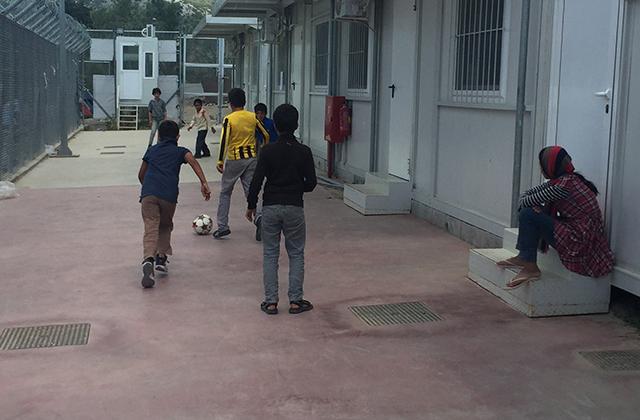
    In response to increased arrivals of asylum seekers, in 2015 the European Commission introduced the hotspot approach. Under this approach, the European Commission and EU agencies supported Greece and Italy in identifying, registering and fingerprinting newly arrived people. FRA regularly visited the initial reception facilities hosting them. This report looks back at the lessons learnt from 10 years of FRA visits. It identifies recurring risks to rights and highlights practical measures and promising practices to prevent or address them. These ‘lessons learnt’ can inform the implementation of the 2024 Pact on Migration and Asylum in line with the EU Charter of Fundamental Rights.
  • Report / Paper / Summary
    22
    January
    2026
    Online terrorist content is a threat to fundamental rights, rule of law and democracy. EU measures to tackle such content aim to prevent terrorism while upholding these values. FRA’s report looks at how online terrorist content is detected and removed under EU legislation. It highlights challenges in interpreting rules, risks of over-removal and potential impacts on freedom of expression. It finds that moderation practices by authorities and platforms can disproportionately affect certain groups, such as Muslims and Arabic speakers, while far-right content often receives less scrutiny. The findings, based on research and expert interviews with those addressing online terrorist content, offer ways to improve transparency in content moderation and to better balance public security and fundamental rights, contributing to wider debates on regulating online content responsibly.
  • Report / Paper / Summary
    12
    December
    2025
    As the EU prepares to join the European Convention on Human Rights (ECHR), this report outlines the main changes that accession would bring, offering an overview of the legal and operational implications. Presented in a Q&A format, it provides answers to 19 key questions for legal professionals and a broader audience. It describes the steps needed to conclude accession, the expected benefits for protecting rights, and some of the challenges that may come up. This legal analysis contributes to the current discussions on EU accession.
  • Handbook / Guide / Manual
    8
    October
    2025
    The Entry/Exit System (EES), launching in 2025, will register non-EU nationals crossing the EU’s external borders. This FRA guidance supports managers overseeing the operation of the new system. It helps them to ensure compliance with EU fundamental rights. It outlines operational considerations: clear communication, dignified biometric data collection and data protection. It also addresses staff training needs. Based on fieldwork at 10 border crossing points in 6 Member States, the guidance will ensure rights are respected under the new system. A separate guidance publication for border guards accompanies this publication.
  • Handbook / Guide / Manual
    8
    October
    2025
    The Entry/Exit System (EES), launching in 2025, will register non-EU nationals crossing the EU’s external borders. This FRA guidance helps border guards apply the new rules in line with EU fundamental rights. It offers practical tips on informing people, collecting biometric data and supporting people with specific needs. Based on fieldwork at 10 border crossing points in 6 Member States, the guidance will ensure rights are respected under the new system. A separate guidance publication for managers accompanies this publication.
  • Opinion / Position Paper
    23
    July
    2025
    This position paper examines how the EU can counter the instrumentalisation of migrants while also upholding fundamental rights. Instrumentalisation refers to countries outside the EU using migration to exert political pressure. This position paper defines the phenomenon, provides examples, and outlines legal obligations under EU law. It provides legal analysis and warns that some responses risk undermining fundamental rights at the EU’s external borders, including the right to asylum. To counter instrumentalisation and uphold fundamental rights, the position paper proposes practical measures for Member States to take, such as sanctions, border controls, and cooperation with private operators.