EU-mandated migration-related fundamental rights monitoring and investigations - 2026 Update

TABLE OF CONTENT
Search inside this publication
Serious fundamental rights concerns persist at the EU’s external border. The Frontex fundamental rights officer describes credible reports of collective expulsions, inhuman or degrading treatment, excessive use of force, confiscation or destruction of property, and unlawful detention of migrants in its Annual Report published in July 2026.
For decades, national statutory human rights institutions as well as treaty bodies and other actors within the United Nations and the Council of Europe systems have been monitoring compliance with human rights. Monitoring improves transparency and accountability. It enhances trust in public authorities, particularly for state activities in places where the public has limited or no access, such as detention centres and borders.
An effective and independent fundamental rights monitoring system is preventative, reducing the risk of rights violations. By providing objective, evidence-based and unbiased analysis and reporting, monitoring may also support investigations into allegations of rights violations. It enhances the protection of victims and protects authorities from false allegations.
In recent years, the EU has also enacted legislation to ensure that certain asylum and immigration law enforcement activities carried out to implement EU law are subject to fundamental rights monitoring. Such EU-mandated fundamental rights monitoring duties in the field of asylum and migration include:
- National monitoring of the screening of third-country nationals and of the asylum border procedure under the EU Pact on migration and asylum;
- Monitoring forced returns by national monitoring bodies and by the Frontex pool of forced return monitors;
- Monitoring by the fundamental rights office of Frontex, the EUAA and Europol of activities carried out by these three EU home affairs agencies.
Article 10 of the Screening Regulation (EU) 2024/1356, together with Article 43 (4) of the Asylum Procedure Regulation (EU) 2024/1348, require that Member States adopt relevant provisions in their domestic laws to ensure that allegations of non-respect for fundamental rights in relation to the screening and the asylum border procedure are duly investigated. In the past, recommendations resulting from the Schengen evaluation and monitoring mechanism under Regulation (EU) 2022/922 noted gaps relating to investigations. Examples include Greece in 2021 and Croatia in 2024.
To reflect the increased importance of rights monitoring and investigations, the updated edition of the FRA and the European Court of Human Rights Handbook on European law relating to asylum, borders and immigration, published in June 2026, contains a new chapter dedicated to monitoring compliance with fundamental rights and investigations into rights violations (see Chapter 10).
FRA provides annual updates on fundamental rights monitoring and on investigations. This report gives an overview of the functioning of EU-mandated monitoring in the field of asylum, borders and returns. It first describes fundamental rights monitoring under the Pact, followed by the monitoring of forced returns and ending with EU agencies’ monitoring work.
This publication expands the scope of FRA’s annual updates on fundamental rights monitoring under EU law, published since 2014. Previously, updates only covered forced returns. Considering the close link between monitoring and investigations, this report also encompasses an update on investigations of alleged rights violations at borders, on which in the past FRA issued separate reports (see FRA’s 2024 report and FRA’s 2025 report).
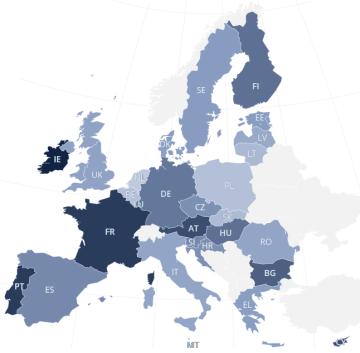
This FRA report provides EU and national policy makers with an overview of the functioning of fundamental rights monitoring mechanisms (section 1), as well as on the state of play of investigation into rights violations at borders (section 2). This EU-wide evidence may be used to improve monitoring and investigation arrangements and guides FRA’s future work, as described at the end of this report.