EU-mandated migration-related fundamental rights monitoring and investigations - 2026 Update

TABLE OF CONTENT
Search inside this publication
This section gives the state of affairs of monitoring fundamental rights in the three areas required by EU law, namely monitoring under the Pact on Migration and Asylum (the Pact), forced return monitoring, as well as monitoring activities by Frontex, the EUAA and Europol.
Article 10 of the Screening Regulation and Article 43 (4) of the Asylum Procedure Regulation require that Member States have an independent mechanism to monitor compliance with fundamental rights during the screening of third-country nationals and when assessing asylum claims at EU borders.
Member States must ensure that monitoring bodies are independent, have unrestricted access to locations and documents, and are allocated adequate resources. This obligation is applied as of June 2026.
Pursuant to Article 10 (2) of the Screening Regulation, in 2024, FRA issued general guidance, advising Member States on how to set up effective and sustainable national independent monitoring mechanisms.
The obligation to monitor concerns the screening of various categories of third-country nationals who did not undergo border checks upon entering the EU. These include, for example, those disembarked following rescue at sea, those apprehended after their irregular crossing of an EU external border, those found without papers within Member States’ territories or those who have applied for asylum at a border crossing point. Such screening consists in an identity, a preliminary health and vulnerability and a security check and includes the collection and verification of biometric data.
Member States must also monitor the asylum border procedure. While there is an obligation for the Member States to monitor forced returns, there is no such obligation under EU law to monitor the return border procedure under Regulation (EU) 2024/1349.
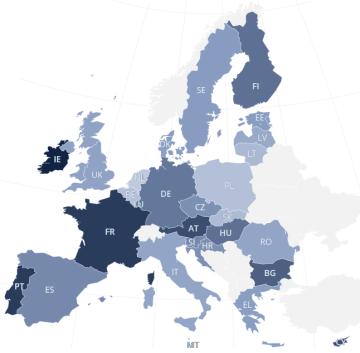
Table 1 shows that all EU Member States, except Hungary, Italy, Malta, Poland and Sweden, had designated the national entity in charge of monitoring or had pending legislation appointing such entity.
All entities designated so far are mandated to monitor the screening and the asylum border procedure, although, for Latvia, only the legal basis for monitoring the screening has passed; the legal basis for monitoring the asylum border procedure is still to be adopted. In 11 Member States, the monitoring entity (or one of them, if there are multiple) is also mandated to monitor forced returns as listed in the annex.
Despite FRA’s suggestion that the monitoring entity be designated by law, only 15 Member States had adopted a legal basis designating the independent monitoring mechanism by 1 September 2026. In four Member States, legislative changes were pending. In France, Romania and Spain, national statutory human rights bodies have been identified as monitoring entities but without a specific legal basis. They are expected to monitor based on their pre-existing mandates.
The lack of solid legal basis in national law leads to uncertainties and may delay the start of the monitoring work. It may negatively impact access to facilities, documents and information as well as to additional human and financial resources beyond those which the institutions receive for their other mandates. Further uncertainties are also expected regarding whether and to which extend monitoring should entail on-site visits rather than or in combination with remote monitoring methods.
Most Member States assigned the monitoring tasks under the Pact to one of their national statutory human rights bodies. In 19 Member States, the monitoring body is also the National Preventive Mechanism in charge of monitoring tasks under the Optional Protocol to the United Nations Convention against Torture (OPCAT).
In 15 Member States, the monitoring body is a member of the European Network for National Human Rights Institutions, ENNHRI. This builds on the provisions in Article 10 (2) of the Screening Regulation, whereby national human rights institutions, including Ombudspersons, must participate in the monitoring mechanism and may be appointed as monitors. This not only ensures monitoring by an independent entity with human rights expertise but also allows for immediate operational preparedness.
In France, Germany and the Netherlands, more than one body is in charge of monitoring. In France and Germany, national statutory human rights body share the task. The Netherlands also involve the police supervisory authority, the Inspectie Justitie en Veiligheid. Where multiple actors are monitoring, there is a need for clear cooperation and coordination arrangements. They must ensure coherence in the monitoring and allowing the monitoring mechanism to speak with one voice.
A few Member States are considering outsourcing some monitoring tasks – typically the field visits – to civil society actors. A public call in Lithuania and a forthcoming call in Croatia will identify a non-governmental actor to support the appointed monitoring body. In Belgium and Denmark, the legal basis (pending for Belgium) identifies other statutory human rights bodies with whom the organisation responsible for the monitoring should cooperate. Monitoring bodies in other Member States also envisage cooperation with other actors but in most cases, formal cooperation arrangements have not yet been agreed.
Three Member States, Croatia, Greece and Ireland did not select an existing national statutory human rights body. In Croatia, the Office for Human Rights and the Rights of National Minorities will carry out the monitoring. Greece has entrusted the monitoring to its National Transparency Authority. Ireland has created a new body, the Chief Inspector of Asylum Border Procedures. Among the three, only Ireland has so far envisaged a formal involvement of national statutory human rights bodies, through an Advisory Board which supports the work of the Chief Inspector.
Table 1 – Independent national monitoring mechanisms under the Pact, 27 EU Member States
|
EU Member State |
Organisation responsible |
Appointed |
Legal source |
ENNHRI* member |
National preventive mechanism** |
Monitors forced returns*** |
|
Austria |
Austrian Ombudsman(Volksanwaltschaft) |
Yes |
Article 148a (3) of the Federal Constitutional Act in conjunction with Section 11 (1a) of the Ombudsman Board Act 1982 (Bundesgesetz das Volksanwaltschaftsgesetz 1982) adopted by Federal Law N. 41/2026 on 20 May2026 |
Yes |
Yes |
No |
|
Belgium |
Federal Ombudsman(Federaal Ombudsman) |
Pending adoption |
Amendments to the Act of 22 March 1995 establishing the Federal Ombudsmen are expected to be adopted |
No |
No |
No |
|
Bulgaria |
Ombudsman of the Republic of Bulgaria (Омбудсман на Република България) |
Pending adoption |
A law amending and supplementing the Law on Asylum and Refugees has been tabled |
Yes |
Yes |
Yes |
|
Croatia |
Office for human rights and the rights of national minorities(Ured za ljudska prava i prava nacionalnih manjina) who will be supported by a contracted non-governmental actor |
Yes |
Article 180b (4) of the Law on Foreigners (Clanak 180.b Zakon o strancima), 4 April 2026 |
No |
No |
No |
|
Cyprus |
Commissioner for Administration and the Protection of Human Rights (Επίτροπος Διοικήσεως και Προστασίας Ανθρωπίνων Δικαιωμάτων) |
Yes |
Article 8, Part 2, Refugee Law of 2026 (Ο περί Προσφύγων Νόμος του 2026) Ν. 115(Ι)/2026, 8 May 2026 |
Yes |
Yes |
Yes |
|
Czechia |
Public Defender of Rights(Veřejnýochráncepráv) |
Yes |
Part 5, Article VIII, § 21ca of the Law amending Act No. 325/1999 Coll., on Asylum, as amended; Act No. 326/1999 Coll., on the Residence of Foreign Nationals in the Territory of the Czech Republic and on Amendments to Certain Acts, as amended, and other related acts (Zákon ze dne 23. července 2025, kterým se mění zákon č. 325/1999 Sb., o azylu, ve znění pozdějších předpisů, zákon č. 326/1999 Sb., o pobytu cizinců na území České republiky a o změně některých zákonů, ve znění pozdějších předpisů, a další související zákony) |
Yes |
Yes |
Yes |
|
Denmark |
Parliamentary Ombudsman (FolketingetsOmbudsmand) |
Yes |
Law No. 726 of 1 September 2026, Section 1 No. 19 Subsection 4 |
No |
Yes |
Yes |
|
Estonia |
Chancellor of Justice(Õiguskantsler) |
Yes |
Section 2, § 7 (4) and Section 5, § 129 of Act on Granting International Protection to Aliens 831 SE (2. Jagu, § 7 (4), Välismaalasele rahvusvahelise kaitse andmise seadus 831 SE), 23 February2026 |
Yes |
Yes |
No |
|
Finland |
Non-Discrimination Ombudsman (Yhdenvertaisuusvaltuutettu) |
Yes |
Sections 16 j, 104 a and 208 of the Aliens Acts 301/2004 (Ulkomaalaislaki 301/2004), 3 June 2026 |
No |
No |
Yes |
|
France |
General Inspector of All Places of Deprivation of Liberty (Contrôleur généraldeslieuxdeprivation deliberté) |
No |
No specific legal basis. The three entities monitor based on their pre-existing mandates |
No |
Yes |
Yes |
|
France |
The Defender of Rights (Défenseur des droits) |
No |
No specific legal basis. The three entities monitor based on their pre-existing mandates |
No |
No |
No |
|
France |
Consultative Human Rights Commission(Commission nationale consultative des droits de l’homme) |
No |
No specific legal basis. The three entities monitor based on their pre-existing mandates |
Yes |
No |
No |
|
Germany |
German Institute for Human Rights(Deutsches Institut für Menschenrechte) |
Yes |
Article 12, paragraph 1, b), 3 of the Act on the Adaptation of National Law to the Reform of the Common European Asylum System (Artikel 12, 1§, b), 3 Gesetz zur Anpassung des nationalen Rechts an die Reform des Gemeinsamen Europäischen Asylsystems), 28 April 2026 |
Yes |
No |
No |
|
Germany |
National Agency for the Prevention of Torture(Nationale Stelle zur Verhütung von Folter) |
Yes |
Article 12, paragraph 1, b), 3 of the Act on the Adaptation of National Law to the Reform of the Common European Asylum System (Artikel 12, 1§, b), 3 Gesetz zur Anpassung des nationalen Rechts an die Reform des Gemeinsamen Europäischen Asylsystems), 28 April 2026 |
No |
Yes |
Yes |
|
Greece |
National Transparency Authority(Εθνική Αρχή Διαφάνειας) |
Yes |
Article 39 of Law No. 5303/2026 on Reform of inheritance law and other provisions (Άρθρο 39 Ν. 5303/2026 Αναμόρφωση του κληρονομικού δικαίου και άλλες διατάξεις), Gov. Gazette A’81, 22 May 2026 |
No |
No |
No |
|
Hungary |
No mechanism |
No |
Not applicable. |
- |
- |
- |
|
Ireland |
Chief Inspector of Asylum Border Procedures (new body) |
Yes |
Article 263 (1) of International Protection Act 2026, 22 April 2026 |
No |
No |
No |
|
Italy |
No mechanism |
No |
Not applicable |
- |
- |
- |
|
Latvia |
Latvian Ombudsman’s Office(Tiesībsargabirojs) |
Yes |
For the screening: Article 62 of the Immigration bill 2026/167 (Imigrācijas likums 2026/167.1), 15 September 2026. For the asylum border procedure the Asylum Law is expected to regulate the monitoring |
Yes |
Yes |
Yes |
|
Lithuania |
Parliamentary Ombudspersons of Lithuania(Seimo kontrolierių įstaiga) supported by actors to be contracted |
Pending adoption |
Article 88 of Draft Law Amending Law No. IX-2206 on the Legal Status of Foreigners (Įstatymo „Dėl užsieniečių teisinės padėties“ Nr. IX-2206 pakeitimo įstatymo projektas), No XVP-1636, 12 June 2026 |
Yes |
Yes |
No |
|
Luxembourg |
Mediator of the Grand-Duchy of Luxembourg(Médiateur du Grand-Duché de Luxembourg) |
Yes |
Article 17 of the Act implementing the EU Pact on Migration and Asylum (Article 17 de la loi portant sur la mise en œuvre du Pacte), 11 June 2026 |
No |
Yes |
No |
|
Malta |
No |
The authorities identified the Board as the likely entity for the monitoring |
No |
Yes |
Yes |
|
|
Netherlands |
Netherlands Institute for Human Rights(College voor de Rechten van de Mens) |
Yes |
Articles 2hh and 2ii of the 2000 Aliens Act, as inserted by the 2026 Implementation Act for the Asylum and Migration Pact (Uitvoerings- en implementatiewet Asiel- en migratiepact 2026), 2 April 2026 |
Yes |
Yes |
No |
|
Netherlands |
Inspectorate of Justice and Security(Inspectie Justitie en Veiligheid) |
Yes |
Articles 2hh and 2ii of the 2000 Aliens Act, as inserted by the 2026 Implementation Act for the Asylum and Migration Pact (Uitvoerings- en implementatiewet Asiel- en migratiepact 2026), 2 April 2026 |
No |
No |
Yes |
|
Poland |
Commissioner for Human Rights(Rzecznik Praw Obywatelskich) |
No |
The authorities identified the Commissioner as the likely entity for the monitoring |
Yes |
Yes |
No |
|
Portugal |
Portuguese Ombudsman(Provedor de Justiça) |
Yes |
Articles 5 and 7 of Law No. 62/2026 amending respectively Article 40-N of Law 27/2008 and Article 23-A of Law 27/2008 |
Yes |
Yes |
No |
|
Romania |
People’s Advocate(Avocatul Poporului) |
No |
No specific legal basis appointing the Ombudsperson |
No |
Yes |
No |
|
Slovakia |
Public Defender of Rights(Verejný ochranca práv) |
Yes |
Article 3 (4) of the Act No. 564/2001 on the Public Defender of Rights (§3 (4) Zákon o verejnom ochrancovi práv), 12 June 2026 |
No |
Yes |
No |
|
Slovenia |
Human Rights Ombudsman of the Republic of Slovenia(Varuh človekovih pravic) |
Pending adoption |
Article 131 of Draft law on the transposition and implementation of certain EU legal acts in the field of migration and international protection (25.e člen Zakon o prenosu in izvajanju nekaterih pravnih aktov EU s področja migracij in mednarodne zaščite), 13 August 2026 |
Yes |
Yes |
No |
|
Spain |
Ombudsman of Spain(Defensor del Pueblo) |
No |
No specific legal basis. The Ombudsperson monitors based on its pre-existing mandate |
Yes |
Yes |
Yes |
|
Sweden |
No mechanism |
No |
Not applicable |
- |
- |
- |
Notes: In Latvia, the information covers only the screening; there is not yet a legal basis to monitor the asylum border procedure.
* The European Network of National Human Rights Institutions (ENNHRI) brings together 51 National Human Rights Institutions across Europe. For more information, see ENNHRI’s website.
** Indicates organisations designated as National Preventive Mechanisms (NPMs) under the 2002 Optional Protocol to the UN Convention Against Torture (OPCAT).
*** This column indicates if the monitoring body has also been assigned to monitor forced returns under Article 8 (6) of the Return Directive 2008/115/EC.
Source: FRA (2026), based on input by independent monitoring mechanisms.
FRA asked monitoring bodies what they see as the main challenges for effective monitoring. Their replies identified the need to adopt the corresponding legal basis, resources and access to facilities, documents and information as the three main issues.
Concerning resources, and in particular staffing, several monitoring bodies noted the unpredictable workload and the difficulty to adjust, should migrant arrivals increase. Only few monitoring bodies have applied or been allocated resources from EU Home Affairs funds. National statutory human rights bodies often cannot access such funds, as it would undermine their independence. This is because the authority managing these funds often sits in the same ministries responsible for implementing some of the activities that they must monitor. Some monitoring bodies also noted that project funding raises sustainability issues, when funding ends.
Regarding access, one monitoring body raised concerns about possible excessive restrictions linked to security clearance requirements. Other challenges noted include the need to have adequate monitoring tools to ensure effective, independent and coherent monitoring as well as training of monitors.
In the first months after the entry into force of the Pact, monitoring bodies have mainly undertaken preparatory work, such as making arrangements with the authorities for information sharing, recruiting monitoring staff and adjusting methodological materials. In six Member States – Austria, Estonia, Greece, Ireland, Luxembourg, and Slovakia – first monitoring visits took place.
These visits focused on issues, such as detention at borders, screening and asylum border procedures, the preliminary health checks and the situation of children. Some of these visits had also a familiarisation component. As a promising practice of transparency, in Luxembourg, the Ombudsman published the first two reports from its observations of the screening in June 2026 and in August 2026.
Establishing functioning national monitoring mechanisms is a priority for FRA. To promote a coherent approach to monitoring across the EU, FRA developed a common monitoring methodology and shared with monitoring bodies for piloting. FRA also provided workshops on fundamental rights monitoring.
In response to requests by national monitoring bodies to facilitate the exchange of experiences, FRA is establishing an EU-wide network or platform of national monitoring entities in partnership with the Frontex fundamental rights office, the Council of Europe and the European Network of National Human Rights Institutions.
1.2. Forced return monitoring
In 2008, Article 8 (6) of the EU’s Return Directive (2008/115/EC) introduced a duty for Member States to provide for an effective forced return monitoring system. This was the first EU law provision on fundamental rights monitoring in the field of migration.
In 2026, the EU co-legislators agreed on a new legal instrument which will replace the directive. This new Return Regulation, whose publication in the Official Journal of the EU is forthcoming, strengthens the monitoring of removals. It requires monitoring to be independent and allows Member States to use the monitoring mechanisms set up under the Pact described in section 1.1.
Under EU law, two frameworks for monitoring forced returns co-exist: one for removals by Member States and one for Frontex forced returns. In addition, the Council of Europe’s Committee for the Prevention of Torture (CPT) carries out country visits to monitor places of deprivation of liberty, including forced returns.
According to Eurostat data in 2025 (data code migr_eirtn), some 139,270 third-country nationals were returned from the 27 EU Member States. Over 63,000 people were returned with the support of Frontex. Most were voluntary departures.
Some 53,855 persons were forcibly returned from the EU (Eurostat data code migr_eirtn1), whereby Frontex supported over 22,100 forced returns (over 40 % of total forced returns), most through scheduled flights. Frontex data also include returns from Iceland, Norway and Switzerland, and are published in the 2025 bi-annual evaluation reports of return operations available through Frontex transparency page.
Monitoring forced returns by Member States
Since 2014, FRA has published annual updates on forced return monitoring systems in EU Member States, based on information from national monitoring bodies. These updates provide an overview of their functioning.
Every year, FRA presents key data on forced return monitoring in an overview table. This report’s annex provides monitoring data for 2025.
Concerning the independence of the monitoring entity, in Germany and Sweden, monitors are part of the same authority responsible for parts of the return procedure, namely the Federal Office for Migration and Refugees in Germany and the Swedish Migration Agency. There is a lack of institutional separation, and thereby a lack of independence. In Belgium, monitoring staff of the General Inspectorate of the Police, includes police officers seconded from other services, which also raises questions of independence.
Concerning effectiveness, FRA noted with concern that five Member States (Croatia, France, Italy, Poland and Spain) had not monitored any national forced return in 2024. In 2025, monitoring of national forced returns took place in these Member States, although limited to one return operation in France, Poland and Spain. The data also show that in 2025, Austria did not monitor any national forced return operation but monitored a significant number of Frontex returns. This reflects a shift in more returns being implemented through Frontex’s support.
The publication of findings from monitoring activities is a key aspect of effective monitoring. By end August 2026, several monitoring bodies had not issued a public report on their 2025 activities: Austria, Belgium, Bulgaria, Croatia, Cyprus, the German federal monitoring system, Hungary, Italy, Luxembourg, Malta, Poland, Sweden and Slovenia. Furthermore, the report from Denmark does not contain findings or recommendations. In sum, information on monitoring findings and suggested actions on how to address these are available in less than half of the Member States.
To allow for an effective planning, monitoring entities must be adequately informed of the return operations well in advance. Information should include data on the breakdown of returnees’ gender and age as well as on their vulnerabilities. Monitoring bodies in 18 Member States (Austria, Belgium, Czechia, Denmark, Estonia, Spain, France, Croatia, Italy, Latvia, Lithuania, Luxembourg, Malta, Netherlands, Romania, Sweden, Slovenia, and Slovakia) consider the information they receive to be timely and sufficient.
Half a dozen monitoring entities reported information gaps to FRA, particularly regarding information on vulnerabilities. A Polish civil society organisation told FRA that they filed a complaint with the Ministry of the Interior on practical obstacles, such as late notifications, which hindered their monitoring of specific forced return operations.
Among the reported challenges, one key concern is the systematic use, in some Member States, of coercive measures without individually assessing the need for it. Additional challenges concern the identification and handling of vulnerable persons, family separations, lack of interpreters and of medical staff and issues relating to fit to fly certificates. Commonly voiced concerns also relate to the follow up on recommendations.
Monitoring forced return by Frontex
Under Article 50 (5) of Regulation (EU) 2019/1896, every return operation organised or coordinated by the agency must be monitored.
Frontex-supported forced returns may be implemented via scheduled flights or charter flights. To monitor return operations supported by Frontex, a dedicated pool of forced return monitors has been set up within Frontex pursuant to Article 51 of Regulation (EU) 2019/1896 on the European Border and Coast Guard. Although in practice the Frontex pool of forced return monitors has operational autonomy, FRA suggested that for a credible oversight the monitors should be managed by an independent body outside Frontex.
Monitors from the Frontex pool are not always available, leading the Frontex fundamental rights officer to step in to fill the gap. In 2025, he provided monitors for 36 (16 %) out of the 222 Frontex-coordinated return operations with monitors on board. Some forced returns were monitored by the national monitoring bodies, who in some cases were not aware whether the return is Frontex-coordinated or not.
In 2025, monitors were on board of 222 (86 %) flights out of a total of 258 Frontex-coordinated return flights. While the ratio of monitored flights has steadily increased over the past three years (see Frontex fundamental rights officer 2025 Annual Report), a gap remains. The gap concerns Frontex-supported operations with returnees from one Member State only.
The main fundamental rights challenge in Frontex-coordinated return is the continued practice in some Member States of systematically applying restraint measures on all returnees. This occurs during the pre-departure and embarkation phases and its stated intent is as a preventive measure. The Frontex fundamental rights office stressed that any use of force and restraints must be based on individual risk assessment, be applied when strictly necessary and be proportionate to the threat posed by the returnee. Other observations concern the returnees’ privacy and dignity, as described in section 2.1 of the 2025 Annual Report of the Frontex fundamental rights officer.
1.3. Monitoring by fundamental rights officers in EU home affairs agencies
EU legislation requires Frontex (Regulation (EU) 2019/1896, Article 110), the EUAA (Regulation (EU) 2021/2303, Article 49) and Europol (Regulation (EU) 2016/794, Article 41c) to have independent fundamental rights officers. Their tasks include monitoring compliance with EU and international fundamental rights law in the implementation of the respective EU agencies’ mandates. Within Frontex, in view of its large field presence, fundamental rights monitors continuously visit the agency’s operational areas and, with their findings, enable the fundamental rights officer to give evidence-based advice conscious of operational realities. Being a promising practice, the EU Authority for Anti-Money Laundering and Countering the Financing of Terrorism (AMLA) is also recruiting a fundamental rights officer.
Through their work, fundamental rights officers contribute to ensuring that the EU’s operational work respects the EU’s core values of human dignity, the rule of law and fundamental rights. They constitute an important achievement for the structural protection of the EU’s core values enshrined in Article 2 of the Treaty on European Union (TEU). The EU should prevent any regression in the protection of such values, including as regards fundamental rights, in the same spirit as the Court of Justice of the EU (Full Court) held for national legislation in European Commission v. Hungary (Case C-769/22, judgment of 21 April 2026, paragraph 524).
This sub-section describes the monitoring work of the two EU home affairs agencies with a larger field presence, namely Frontex and the EUAA.
Within Frontex, the fundamental rights office has monitors who conduct monitoring missions at operational locations and engage with national authorities, national human rights institutions and other stakeholders. As of September 2026, over 50 fundamental rights monitors continuously covered Frontex activities in the field. In 2025, they carried out 131 monitoring missions in 17 EU Member States and six third countries where Frontex was operational. This corresponds to some 1,600 field monitoring days.
The Frontex fundamental rights office collects findings, including good practices, suggests mitigating measures and, where relevant, recommends the suspension of parts of operations presenting a high risk of fundamental rights violations as per Article 46 of Regulation (EU) 2019/1896. Key fundamental rights issues identified relate to access to asylum, allegations of collective expulsions and the excessive use of force (see 2025 Annual Report).
The EUAA fundamental rights office monitors EUAA’s compliance with fundamental rights when the agency provides operational and technical support to Member States. It conducts visits to operational locations to identify fundamental rights risks, assesses mitigating measures and issues observations to the EUAA.
In 2025, the fundamental rights officer visited EUAA operations in Bulgaria, Cyprus, Greece, Italy and Romania. The observations published in 2025 addressed, among other issues, safeguards in asylum procedures, reception conditions, child protection and support to asylum applicants in vulnerable situations.